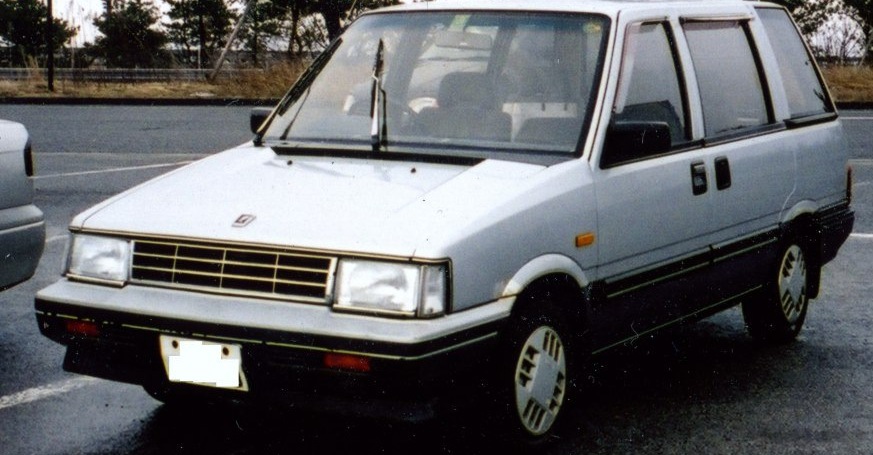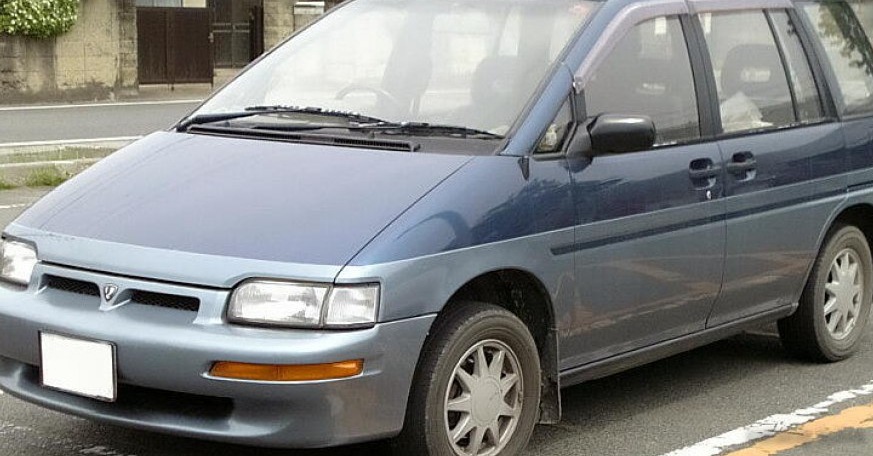
The Nissan Prairie (M11), produced from 1988 to 1998, was a compact minivan primarily aimed at the Japanese domestic market (JDM). Positioned as a versatile and family-oriented vehicle, the Prairie offered a unique blend of practicality and affordability. The 2.0i variant, equipped with a 98 horsepower engine and a four-speed automatic transmission, represented a mid-range offering within the M11 lineup, balancing performance with ease of use. While never officially sold in the United States, the Prairie found its way into some US collections as a JDM import, appreciated for its distinctive styling and unique features. This particular configuration, with its all-wheel drive system, was designed to provide enhanced traction in varied weather conditions, a significant benefit in many parts of Japan.
Technical Specifications
| Brand | Nissan |
| Model | Prairie |
| Generation | Prairie (M11) |
| Type | 2.0 i (98 Hp) 4X4 Automatic |
| Start of production | 1988 |
| End of production | 1998 |
| Powertrain Architecture | Internal Combustion engine |
| Body type | Minivan |
| Seats | 5 |
| Doors | 4 |
| Fuel consumption (urban) | 12.6 l/100 km (18.7 US mpg, 22.4 UK mpg, 7.9 km/l) |
| Fuel consumption (extra urban) | 7.9 l/100 km (29.8 US mpg, 35.8 UK mpg, 12.7 km/l) |
| Fuel consumption (combined) | 10.6 l/100 km (22.2 US mpg, 26.6 UK mpg, 9.4 km/l) |
| Fuel Type | Petrol (Gasoline) |
| Maximum speed | 165 km/h (102.53 mph) |
| Weight-to-power ratio | 13.3 kg/Hp, 75.4 Hp/tonne |
| Weight-to-torque ratio | 8.7 kg/Nm, 115.4 Nm/tonne |
| Power | 98 Hp @ 5200 rpm |
| Power per litre | 49.6 Hp/l |
| Torque | 150 Nm @ 2400 rpm (110.63 lb.-ft. @ 2400 rpm) |
| Engine layout | Front, Transverse |
| Engine displacement | 1974 cm3 (120.46 cu. in.) |
| Number of cylinders | 4 |
| Engine configuration | Inline |
| Cylinder Bore | 84.5 mm (3.33 in.) |
| Piston Stroke | 88 mm (3.46 in.) |
| Compression ratio | 8.5:1 |
| Number of valves per cylinder | 2 |
| Fuel injection system | Multi-port manifold injection |
| Engine aspiration | Naturally aspirated engine |
| Valvetrain | OHC |
| Kerb Weight | 1300 kg (2866.01 lbs.) |
| Fuel tank capacity | 60 l (15.85 US gal, 13.2 UK gal) |
| Length | 4350 mm (171.26 in.) |
| Width | 1690 mm (66.54 in.) |
| Height | 1650 mm (64.96 in.) |
| Wheelbase | 2595 mm (102.17 in.) |
| Front track | 1460 mm (57.48 in.) |
| Rear track | 1430 mm (56.3 in.) |
| Drive wheel | All wheel drive (4×4) |
| Number of gears | 4 |
| Gearbox type | Automatic transmission |
| Front suspension | Wishbone |
| Rear suspension | Spring Strut |
| Front brakes | Ventilated discs |
| Rear brakes | Drum |
| Assisting systems | ABS (Anti-lock braking system) |
| Steering type | Steering rack and pinion |
| Power steering | Hydraulic Steering |
| Tires size | 195/70 R14 |
| Wheel rims size | 14 |
Powertrain & Engine Architecture
The heart of the Prairie 2.0i 4×4 Automatic is the Nissan CA20S engine, a 1.974-liter inline-four cylinder gasoline engine. This engine utilizes a single overhead camshaft (OHC) valvetrain with two valves per cylinder. The CA20S employed multi-port fuel injection, a relatively modern technology for its time, contributing to improved fuel efficiency and smoother operation compared to carbureted engines. The engine’s 8.5:1 compression ratio was a compromise between performance and fuel economy. Paired with this engine is a four-speed automatic transmission, designed for ease of driving. This transmission wasn’t known for particularly quick shifts, but it provided a comfortable and convenient driving experience, especially in urban environments. The all-wheel drive system was a part-time system, engaging the rear wheels when traction was needed, enhancing stability in slippery conditions.
Driving Characteristics
The 98 horsepower output of the CA20S in the Prairie 2.0i 4×4 Automatic translated to adequate, but not exhilarating, performance. Acceleration was modest, and overtaking required careful planning. The automatic transmission, while convenient, contributed to a somewhat sluggish feel, particularly when compared to the five-speed manual versions available in other Prairie trims. The gear ratios were optimized for fuel economy and everyday drivability rather than outright speed. The all-wheel drive system did improve traction, especially on loose surfaces, but also added to the vehicle’s weight, slightly impacting overall performance. The steering was light and easy, making it maneuverable in city traffic, but lacked the precision found in more performance-oriented vehicles.
Equipment & Trim Levels
The 2.0i 4×4 Automatic trim of the Nissan Prairie typically included features such as power steering, air conditioning, and an AM/FM radio. Interior upholstery was generally cloth, with a practical and durable design. Optional extras included power windows, central locking, and upgraded audio systems. The dashboard layout was functional and straightforward, prioritizing ease of use. Higher trim levels within the Prairie range offered features like alloy wheels, woodgrain interior trim, and more sophisticated audio systems, but the 2.0i 4×4 Automatic was positioned as a well-equipped, mid-range option.
Chassis & Braking
The Prairie M11 utilized a relatively simple chassis design, featuring an independent wishbone suspension at the front and a spring strut suspension at the rear. This setup provided a comfortable ride, absorbing bumps and irregularities in the road surface effectively. Braking duties were handled by ventilated discs at the front and drum brakes at the rear. Anti-lock braking system (ABS) was included as a standard safety feature, enhancing braking performance and stability, particularly on slippery surfaces. The suspension was tuned for comfort rather than sporty handling, reflecting the Prairie’s intended role as a family vehicle.
Market Reception & Comparison
The Nissan Prairie 2.0i 4×4 Automatic was generally well-received in Japan as a practical and reliable family vehicle. Critics praised its spacious interior, comfortable ride, and the added security of all-wheel drive. However, some reviewers noted its modest performance and somewhat dated styling. Compared to other Prairie trims, such as the 1.8-liter versions, the 2.0i offered a noticeable performance boost, but at a higher price point. The 1.8L models were more fuel-efficient, while the higher-spec 2.0L variants with manual transmissions appealed to drivers seeking a more engaging driving experience. The automatic transmission, while convenient, was often criticized for its lack of responsiveness.
Legacy
The Nissan Prairie M11, particularly the 2.0i 4×4 Automatic variant, has developed a cult following among JDM enthusiasts. The CA20S engine is known for its durability and relative simplicity, making it a relatively easy engine to maintain. While not a high-performance machine, the Prairie offers a unique blend of practicality, reliability, and retro charm. In the used car market, well-maintained examples of the Prairie 2.0i 4×4 Automatic are becoming increasingly sought after, particularly by collectors and enthusiasts looking for a distinctive and affordable JDM vehicle. Parts availability can be a challenge outside of Japan, but a growing network of online suppliers and dedicated enthusiasts is helping to keep these vehicles on the road.