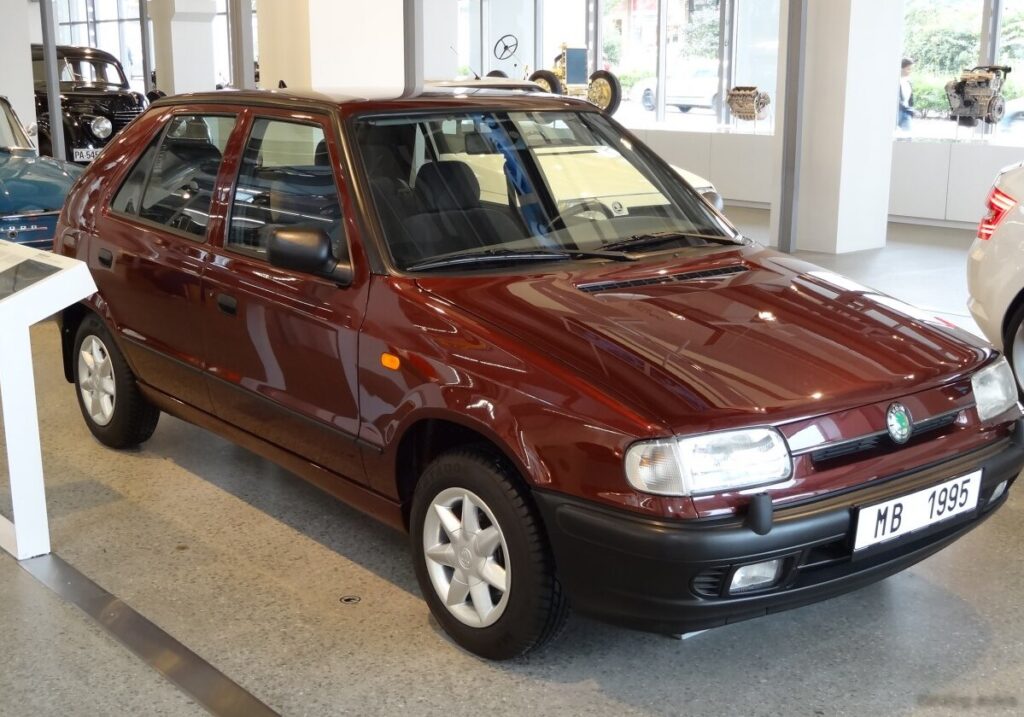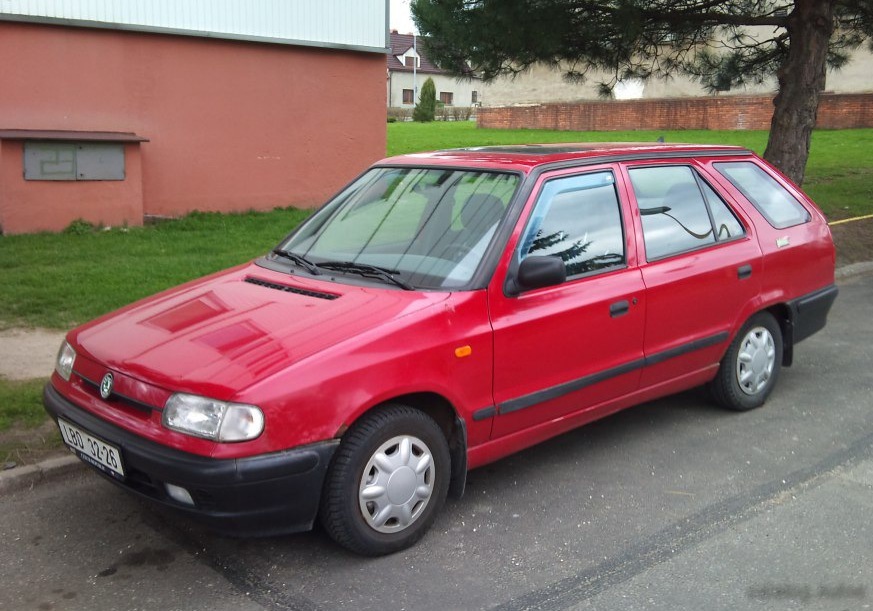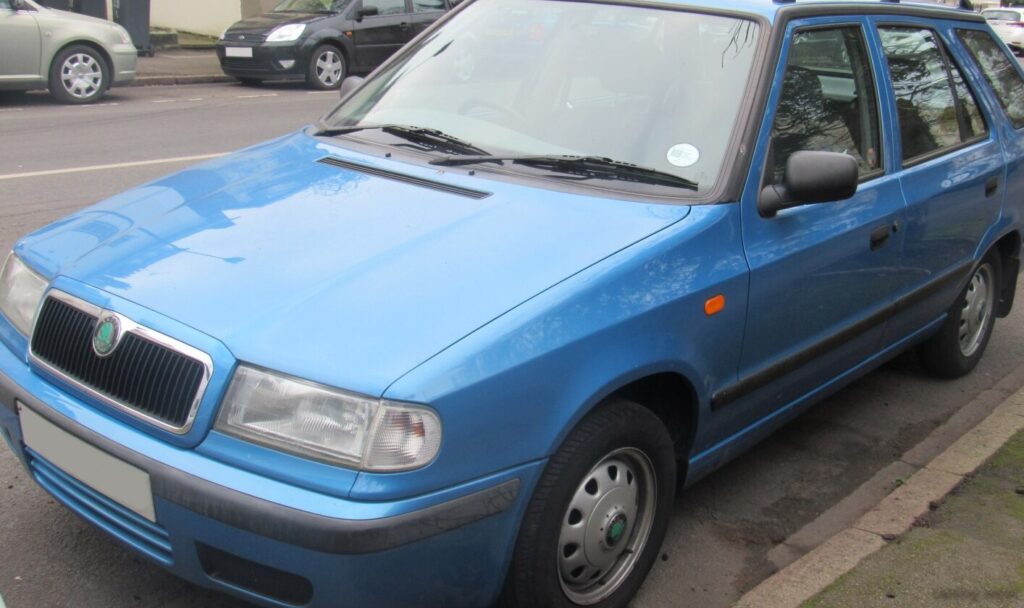
The Skoda Felicia II Combi 1.3, produced from January 1998 to August 2000, represented an affordable and practical entry point into Skoda’s expanding lineup. Positioned as the base model of the Felicia Combi (estate) range, it offered a spacious and versatile vehicle aimed at families and those requiring a larger cargo capacity. The Felicia II Combi built upon the success of the original Felicia, utilizing the updated platform and offering improved refinement and features. This particular 1.3-liter variant was primarily sold in European markets, where fuel economy and practicality were highly valued. It served as a direct replacement for the earlier 1.3 Favorit models, offering a more modern and well-equipped package.
Technical Specifications
| Brand | Skoda |
| Model | Felicia |
| Generation | Felicia II Combi |
| Type (Engine) | 1.3 (58 Hp) |
| Start of production | January, 1998 |
| End of production | August, 2000 |
| Powertrain Architecture | Internal Combustion engine |
| Body type | Station wagon (estate) |
| Seats | 5 |
| Doors | 5 |
| Fuel Type | Petrol (Gasoline) |
| Acceleration 0 – 100 km/h | 18 sec |
| Acceleration 0 – 62 mph | 18 sec |
| Acceleration 0 – 60 mph | 17.1 sec |
| Maximum speed | 145 km/h (90.1 mph) |
| Weight-to-power ratio | 16.8 kg/Hp, 59.5 Hp/tonne |
| Weight-to-torque ratio | 10.4 kg/Nm, 96.4 Nm/tonne |
| Power | 58 Hp @ 5000 rpm |
| Power per litre | 45 Hp/l |
| Torque | 94 Nm @ 3000 rpm (69.33 lb.-ft. @ 3000 rpm) |
| Engine layout | Front, Transverse |
| Engine Model/Code | AMJ |
| Engine displacement | 1289 cm3 (78.66 cu. in.) |
| Number of cylinders | 4 |
| Engine configuration | Inline |
| Cylinder Bore | 75.5 mm (2.97 in.) |
| Piston Stroke | 72 mm (2.83 in.) |
| Compression ratio | 8.8:1 |
| Number of valves per cylinder | 2 |
| Fuel injection system | Carburettor |
| Engine aspiration | Naturally aspirated engine |
| Engine oil capacity | 4.5 l (4.76 US qt | 3.96 UK qt) |
| Coolant | 6 l (6.34 US qt | 5.28 UK qt) |
| Kerb Weight | 975 kg (2149.51 lbs.) |
| Max. weight | 1460 kg (3218.75 lbs.) |
| Max load | 485 kg (1069.24 lbs.) |
| Trunk (boot) space – minimum | 447 l (15.79 cu. ft.) |
| Trunk (boot) space – maximum | 1365 l (48.2 cu. ft.) |
| Fuel tank capacity | 42 l (11.1 US gal | 9.24 UK gal) |
| Length | 4237 mm (166.81 in.) |
| Width | 1635 mm (64.37 in.) |
| Height | 1420 mm (55.91 in.) |
| Wheelbase | 2450 mm (96.46 in.) |
| Front track | 1420 mm (55.91 in.) |
| Rear (Back) track | 1380 mm (54.33 in.) |
| Drivetrain Architecture | The Internal combustion engine (ICE) drives the front wheels of the vehicle. |
| Drive wheel | Front wheel drive |
| Number of gears and type of gearbox | 5 gears, manual transmission |
| Front suspension | Coil spring |
| Rear suspension | Coil spring |
| Front brakes | Disc |
| Rear brakes | Drum |
| Assisting systems | ABS (Anti-lock braking system) |
| Steering type | Steering rack and pinion |
| Power steering | Hydraulic Steering |
| Tires size | 165/70 R13 |
| Wheel rims size | 5.5J x 13 |
Powertrain & Engine Architecture
The heart of the Felicia II Combi 1.3 was the 1.3-liter, inline four-cylinder engine, designated the AMJ code. This engine, a descendant of the long-running Favorit engine family, featured a relatively simple design with a single overhead camshaft operating two valves per cylinder. Notably, this variant utilized a carburetor fuel system, a cost-saving measure that distinguished it from the fuel-injected engines offered in higher trim levels. The carburetor, while less efficient than modern fuel injection, contributed to the engine’s simplicity and ease of maintenance. The engine produced 58 horsepower at 5000 rpm and 94 Nm (69.33 lb-ft) of torque at 3000 rpm. The engine was transversely mounted, driving the front wheels through a standard five-speed manual transmission. An automatic transmission was not offered with this engine.
Driving Characteristics
The 1.3-liter engine in the Felicia Combi provided adequate, but not exhilarating, performance. Acceleration from 0-60 mph took approximately 17.1 seconds, and the top speed was around 90 mph. The carburetor-fed engine delivered a somewhat flat power curve, meaning that usable torque was available across a relatively narrow band. This made it suitable for everyday driving, but overtaking maneuvers required careful planning. Compared to the more powerful 1.6-liter versions, the 1.3 felt noticeably slower, particularly when fully loaded. The five-speed manual transmission was well-matched to the engine’s characteristics, allowing drivers to keep the engine in its optimal power range. The gear ratios were spaced to prioritize fuel economy rather than outright performance.
Equipment & Trim Levels
The 1.3 Combi typically represented the entry-level trim in the Felicia Combi range. Standard equipment included basic steel wheels with hubcaps, cloth upholstery, and a simple dashboard layout. Power steering was often included, but air conditioning, central locking, and electric windows were typically optional extras. Interior trim was functional and durable, prioritizing practicality over luxury. The base model often featured black plastic trim and relatively basic seat fabrics. Optional extras could include upgraded seat upholstery, a radio/cassette player, and a sunroof.
Chassis & Braking
The Felicia II Combi utilized a relatively simple chassis design. Front suspension consisted of coil springs and independent wishbones, while the rear suspension employed a twist beam axle with coil springs. Braking was provided by disc brakes on the front wheels and drum brakes on the rear. ABS (Anti-lock Braking System) was often included as standard equipment, enhancing safety. The suspension setup was tuned for comfort and ride quality, rather than sporty handling. Stabilizer bars were typically omitted on the base 1.3 model, contributing to a slightly more pronounced body roll in corners.
Market Reception & Comparison
The Felicia II Combi 1.3 was generally well-received as an affordable and practical family car. Critics praised its spacious interior, large cargo capacity, and relatively low running costs. However, the engine’s lack of power was often cited as a drawback. Compared to the 1.6-liter versions, the 1.3 offered significantly less performance, but it also achieved better fuel economy. The 1.9 diesel variants offered even better fuel economy but were considerably slower and noisier. The 1.3’s carburetor-based fuel system was seen as outdated by some, but it contributed to its simplicity and ease of maintenance.
Legacy
The Skoda Felicia II Combi 1.3, while not a performance icon, remains a popular choice among budget-conscious buyers and classic car enthusiasts. The AMJ engine, while simple, is known for its reliability and durability, provided it is properly maintained. Parts availability is generally good, and the car’s straightforward design makes it relatively easy to repair. Today, well-maintained examples of the Felicia Combi 1.3 can be found for very reasonable prices, making them an attractive option for those seeking a practical and affordable classic car. Its enduring appeal lies in its blend of practicality, affordability, and simple, robust engineering.