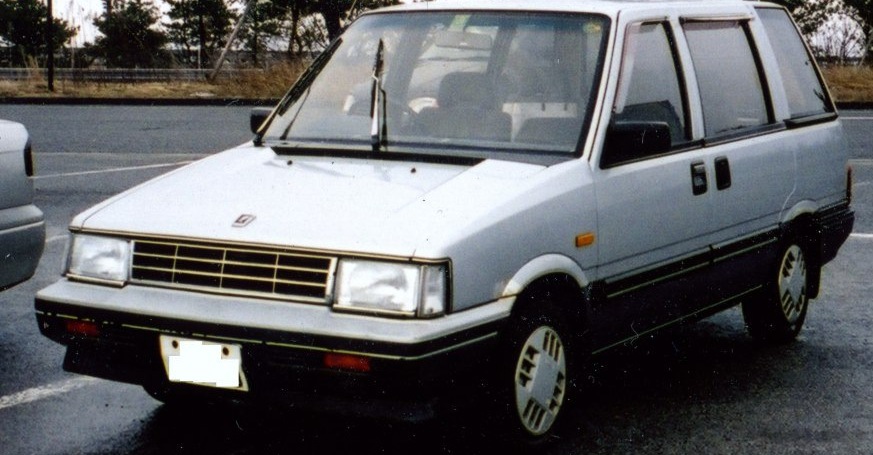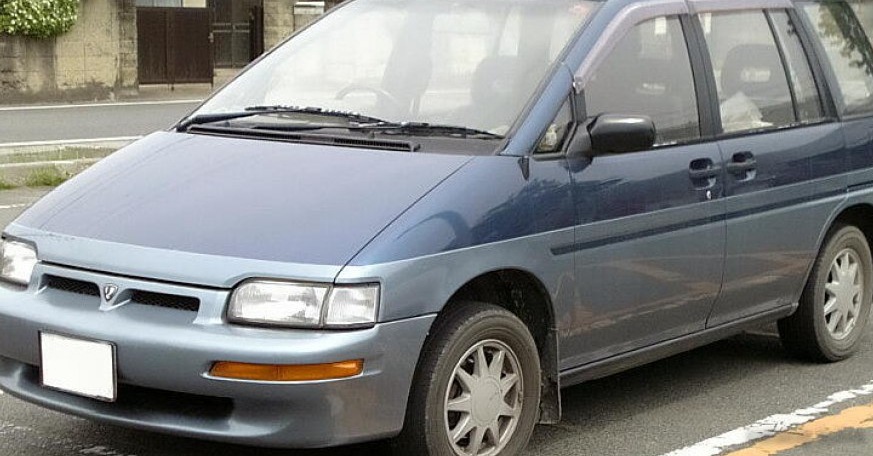
The Nissan Prairie (M11), specifically the 2.0i variant with 98 horsepower and an automatic transmission, was a key model in Nissan’s lineup during its production run from 1988 to 1998. Positioned as a comfortable and practical family vehicle, the Prairie M11 competed with other compact MPVs (Multi-Purpose Vehicles) popular in the Japanese domestic market and, to a lesser extent, in export markets like Europe and Australia. This particular engine and transmission combination represented a mid-range offering within the M11 series, balancing affordability with reasonable performance and convenience. It was designed to appeal to families seeking a spacious and easy-to-drive vehicle for everyday use.
Technical Specifications
| Brand | Nissan |
| Model | Prairie |
| Generation | Prairie (M11) |
| Type (Engine) | 2.0 i (98 Hp) Automatic |
| Start of production | 1988 year |
| End of production | 1998 year |
| Powertrain Architecture | Internal Combustion engine |
| Body type | Minivan |
| Seats | 5 |
| Doors | 4 |
| Fuel consumption (economy) – urban | 11.1 l/100 km (21.2 US mpg, 25.4 UK mpg, 9 km/l) |
| Fuel consumption (economy) – extra urban | 7.3 l/100 km (32.2 US mpg, 38.7 UK mpg, 13.7 km/l) |
| Fuel consumption (economy) – combined | 9.6 l/100 km (24.5 US mpg, 29.4 UK mpg, 10.4 km/l) |
| Fuel Type | Petrol (Gasoline) |
| Maximum speed | 165 km/h (102.53 mph) |
| Weight-to-power ratio | 12 kg/Hp, 83.1 Hp/tonne |
| Weight-to-torque ratio | 7.9 kg/Nm, 127.1 Nm/tonne |
| Power | 98 Hp @ 5200 rpm |
| Power per litre | 49.6 Hp/l |
| Torque | 150 Nm @ 2400 rpm (110.63 lb.-ft. @ 2400 rpm) |
| Engine layout | Front, Transverse |
| Engine displacement | 1974 cm3 (120.46 cu. in.) |
| Number of cylinders | 4 |
| Engine configuration | Inline |
| Cylinder Bore | 84.5 mm (3.33 in.) |
| Piston Stroke | 88 mm (3.46 in.) |
| Compression ratio | 8.5:1 |
| Number of valves per cylinder | 2 |
| Fuel injection system | Multi-port manifold injection |
| Engine aspiration | Naturally aspirated engine |
| Valvetrain | OHC |
| Kerb Weight | 1180 kg (2601.45 lbs.) |
| Fuel tank capacity | 65 l (17.17 US gal | 14.3 UK gal) |
| Length | 4350 mm (171.26 in.) |
| Width | 1690 mm (66.54 in.) |
| Height | 1625 mm (63.98 in.) |
| Wheelbase | 2610 mm (102.76 in.) |
| Front track | 1460 mm (57.48 in.) |
| Rear (Back) track | 1430 mm (56.3 in.) |
| Drivetrain Architecture | The Internal combustion engine (ICE) drives the front wheels of the vehicle. |
| Drive wheel | Front wheel drive |
| Number of gears and type of gearbox | 4 gears, automatic transmission |
| Front suspension | Wishbone |
| Rear suspension | Spring Strut |
| Front brakes | Ventilated discs |
| Rear brakes | Drum |
| Assisting systems | ABS (Anti-lock braking system) |
| Steering type | Steering rack and pinion |
| Power steering | Hydraulic Steering |
| Tires size | 195/70 R14 |
| Wheel rims size | 14 |
Powertrain & Engine Architecture
The heart of the Prairie 2.0i Automatic was Nissan’s GA20DE engine, a 1.974-liter inline-four cylinder powerplant. This engine utilized a single overhead camshaft (SOHC) valvetrain with two valves per cylinder. The GA20DE was known for its relative simplicity and durability, making it a reliable choice for family transportation. Fuel delivery was handled by a multi-port fuel injection system, contributing to improved fuel efficiency and smoother operation compared to earlier carbureted engines. The engine produced 98 horsepower at 5200 rpm and 150 Nm (110.63 lb-ft) of torque at 2400 rpm. Paired with this engine was a four-speed automatic transmission, designed for ease of use and comfortable cruising. This transmission wasn’t particularly sporty, prioritizing smooth shifts over aggressive acceleration.
Driving Characteristics
The 2.0i Automatic version of the Prairie offered a comfortable, if not particularly exhilarating, driving experience. The automatic transmission, while convenient, did detract from the engine’s potential. Acceleration was adequate for everyday driving, but passing maneuvers required planning. The gear ratios were tuned for fuel economy and smooth cruising, rather than outright performance. Compared to the five-speed manual transmission available on some Prairie models, the automatic version felt noticeably slower. The front-wheel-drive configuration provided predictable handling, but the Prairie wasn’t designed for spirited cornering. The suspension, tuned for comfort, absorbed bumps well but allowed for some body roll in turns.
Equipment & Trim Levels
The 2.0i Automatic trim level typically included features such as power steering, central locking, and electric windows. Interior upholstery was usually cloth, with a relatively simple dashboard layout. Optional extras could include air conditioning, a radio/cassette player, and upgraded interior trim. The Prairie aimed for a balance between practicality and affordability, so it didn’t offer the same level of luxury as some of its competitors. The focus was on providing a functional and comfortable space for families.
Chassis & Braking
The Prairie M11 utilized a front independent suspension with wishbones and a rear suspension featuring a spring strut setup. This configuration provided a comfortable ride, but wasn’t particularly sophisticated. Braking duties were handled by ventilated discs on the front wheels and drum brakes on the rear. An Anti-lock Braking System (ABS) was often included as standard equipment, enhancing safety. The steering system employed a rack and pinion setup with hydraulic power assistance, making it relatively easy to maneuver at low speeds.
Market Reception & Comparison
The Nissan Prairie 2.0i Automatic was generally well-received as a practical and affordable family vehicle. Critics praised its spacious interior and comfortable ride. However, the automatic transmission and relatively low horsepower were often cited as drawbacks. Compared to other trims in the Prairie lineup, such as those with the five-speed manual transmission, the 2.0i Automatic offered less engaging driving dynamics. Fuel economy was reasonable for its class, but not exceptional. The Prairie competed with vehicles like the Toyota Estima (Previa) and Honda Odyssey, but generally positioned itself as a more budget-friendly option.
Legacy
The Nissan Prairie M11, particularly the 2.0i Automatic variant, has proven to be a relatively reliable vehicle over the long term. The GA20DE engine is known for its durability, and the automatic transmission, while not the most advanced, is generally dependable. Today, the Prairie M11 is becoming increasingly sought after by collectors and enthusiasts, particularly in Japan. Parts availability can be a challenge in some markets, but the vehicle’s simple design makes it relatively easy to maintain. The Prairie M11 represents a significant example of Nissan’s early foray into the compact MPV segment, and the 2.0i Automatic version remains a popular choice for those seeking a practical and affordable classic vehicle.