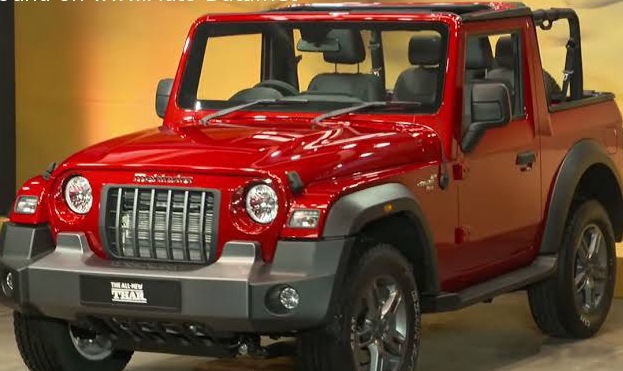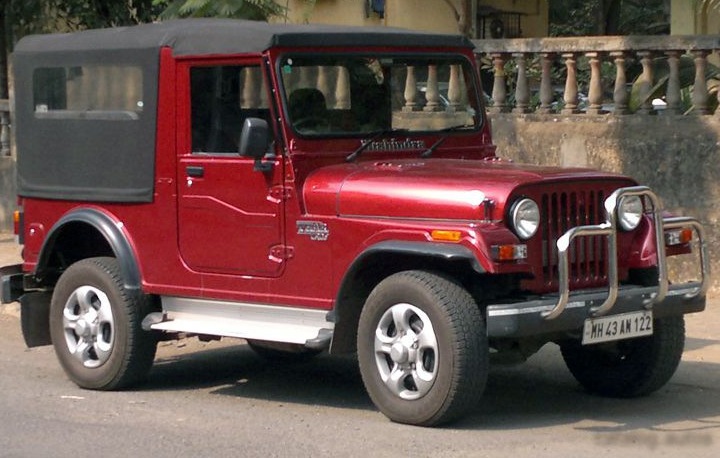
The Mahindra Thar I 2.5 d (106 Hp) 4×4, produced from 2010 to 2020, represents a significant iteration of Mahindra’s iconic off-road vehicle. Positioned as a rugged, utilitarian vehicle, the 2.5 d variant served as a core offering within the first generation Thar (2006-2020), appealing to buyers seeking a capable 4×4 without the complexities of more modern SUVs. It was primarily sold in the Indian domestic market, where it gained a strong following for its affordability, simplicity, and go-anywhere ability. The Thar I was based on the proven Mahindra Major platform, a lineage tracing back to the original Jeep CJ design, but with significant updates to meet evolving safety and emissions standards.
Technical Specifications
| Brand | Mahindra |
| Model | Thar |
| Generation | Thar I |
| Type (Engine) | 2.5 d (106 Hp) 4×4 |
| Start of production | 2010 |
| End of production | 2020 |
| Powertrain Architecture | Internal Combustion engine |
| Body type | Off-road vehicle, Cabriolet |
| Seats | 6 |
| Doors | 3 |
| Fuel consumption (combined) | 6 l/100 km (39.2 US mpg, 47.1 UK mpg, 16.7 km/l) |
| Fuel Type | Diesel |
| Acceleration 0 – 100 km/h | 15.8 sec |
| Acceleration 0 – 62 mph | 15.8 sec |
| Acceleration 0 – 60 mph | 15 sec |
| Maximum speed | 154 km/h (95.69 mph) |
| Weight-to-power ratio | 16.5 kg/Hp (60.6 Hp/tonne) |
| Weight-to-torque ratio | 7.1 kg/Nm (141.1 Nm/tonne) |
| Power | 106 Hp @ 3800 rpm |
| Power per litre | 42.4 Hp/l |
| Torque | 247 Nm @ 1800-2000 rpm (182.18 lb.-ft. @ 1800-2000 rpm) |
| Engine layout | Front, Transverse |
| Engine displacement | 2498 cm3 (152.44 cu. in.) |
| Number of cylinders | 4 |
| Cylinder Bore | 94 mm (3.7 in.) |
| Piston Stroke | 90 mm (3.54 in.) |
| Number of valves per cylinder | 4 |
| Fuel injection system | Diesel Commonrail |
| Engine aspiration | Turbocharger, Intercooler |
| Engine oil capacity | 6 l (6.34 US qt | 5.28 UK qt) |
| Coolant | 10 l (10.57 US qt | 8.8 UK qt) |
| Kerb Weight | 1750 kg (3858.09 lbs.) |
| Trunk (boot) space – maximum | 600 l (21.19 cu. ft.) |
| Fuel tank capacity | 60 l (15.85 US gal | 13.2 UK gal) |
| Length | 3920 mm (154.33 in.) |
| Width | 1726 mm (67.95 in.) |
| Height | 1930 mm (75.98 in.) |
| Wheelbase | 2430 mm (95.67 in.) |
| Front track | 1445 mm (56.89 in.) |
| Rear (Back) track | 1346 mm (52.99 in.) |
| Ride height (ground clearance) | 200 mm (7.87 in.) |
| Minimum turning circle | 11.5 m (37.73 ft.) |
| Drive wheel | All wheel drive (4×4) |
| Number of gears and type of gearbox | 5 gears, manual transmission |
| Front suspension | Independent coil spring |
| Rear suspension | Leaf spring |
| Front brakes | Disc |
| Rear brakes | Drum |
| Tires size | 235/70 R16 |
| Wheel rims size | 6.5 J x 16 |
Powertrain & Engine Architecture
The heart of the Thar I 2.5 d is a 2.5-liter, four-cylinder diesel engine. This engine, often identified by internal codes like TCI, is a direct-injection diesel utilizing a common rail fuel injection system and a turbocharger with intercooler. The common rail system allowed for more precise fuel delivery, improving efficiency and reducing emissions compared to older mechanical injection systems. The turbocharger significantly boosted power output, bringing it to 106 horsepower at 3800 rpm and 247 Nm (182 lb-ft) of torque between 1800-2000 rpm. The engine’s transverse mounting within the chassis contributed to a more compact engine bay, aiding in off-road maneuverability. The 2.5 d was paired exclusively with a five-speed manual transmission, chosen for its robustness and simplicity, crucial for the intended application.
Driving Characteristics
The 2.5 d powertrain delivers a driving experience focused on capability rather than outright speed. Acceleration is modest, taking approximately 15.8 seconds to reach 62 mph. However, the engine’s torque output, readily available from low RPMs, provides ample pulling power for off-road situations and for navigating challenging terrain. The five-speed manual transmission offers a reasonable spread of gears, but the ratios are geared towards low-speed crawling and maintaining momentum rather than rapid acceleration. Compared to potential higher-output variants (which weren’t commonly offered in this generation), the 2.5 d prioritizes fuel efficiency and durability over performance. The manual transmission provides a more engaging driving experience than an automatic would, and allows for greater control in off-road scenarios.
Equipment & Trim Levels
The Thar I 2.5 d was intentionally kept relatively basic in terms of equipment, reflecting its utilitarian purpose. Standard features typically included basic steel wheels, vinyl or cloth upholstery, a simple dashboard layout, and minimal creature comforts. Air conditioning was often an optional extra, as were power windows and central locking. The interior focused on durability and ease of cleaning, with hard-wearing materials used throughout. The convertible soft-top was a defining feature, offering an open-air driving experience. Trim levels were generally limited, with variations primarily revolving around optional accessories and paint colors.
Chassis & Braking
The Thar I utilizes a body-on-frame construction, providing a robust and durable chassis capable of withstanding the stresses of off-road driving. Front suspension is independent with coil springs, offering a degree of ride comfort and articulation. The rear suspension employs a traditional leaf spring setup, known for its strength and load-carrying capacity. Braking is comprised of disc brakes on the front wheels and drum brakes on the rear. While adequate for the vehicle’s weight and intended use, the braking system isn’t particularly sophisticated. The vehicle’s high ground clearance (200mm / 7.87 inches) and short wheelbase contribute to its excellent off-road capability, allowing it to navigate obstacles and tight trails with ease.
Market Reception & Comparison
The Mahindra Thar I 2.5 d was well-received in the Indian market, particularly among enthusiasts and those seeking a rugged, affordable 4×4. Critics praised its off-road capability, simple mechanicals, and low running costs. However, it was also criticized for its basic interior, limited safety features, and relatively slow performance. Compared to other trims within the Thar I lineup (if available), the 2.5 d represented the entry-level option, prioritizing affordability and fuel economy over power and refinement. It offered a compelling alternative to more expensive and complex SUVs.
Legacy
The Mahindra Thar I 2.5 d powertrain has proven to be remarkably durable and reliable. Many examples remain on the road today, testament to the engine’s robust design and the simplicity of the overall mechanical package. In the used car market, the 2.5 d variant is often sought after by those looking for a capable and affordable off-road vehicle. Maintenance is relatively straightforward and parts are readily available, making it an attractive option for DIY mechanics. The Thar I 2.5 d laid the foundation for the continued success of the Thar nameplate, establishing it as a beloved icon in the Indian automotive landscape and a symbol of rugged individualism.