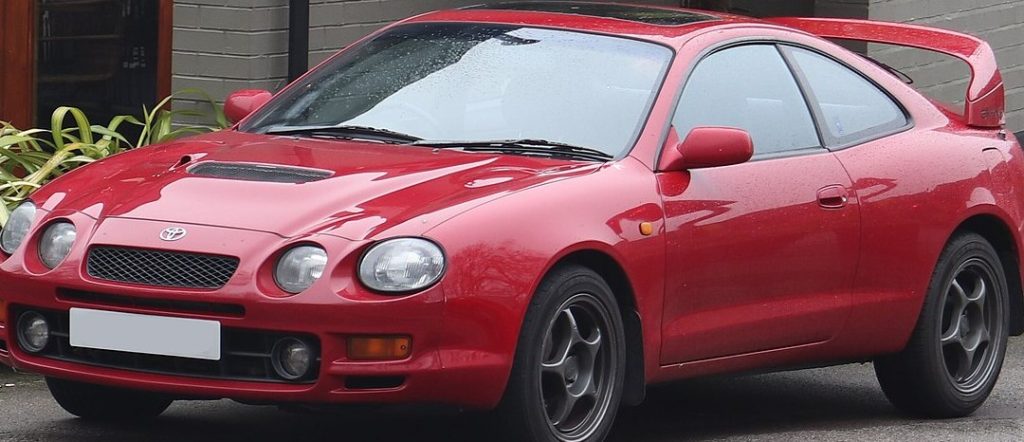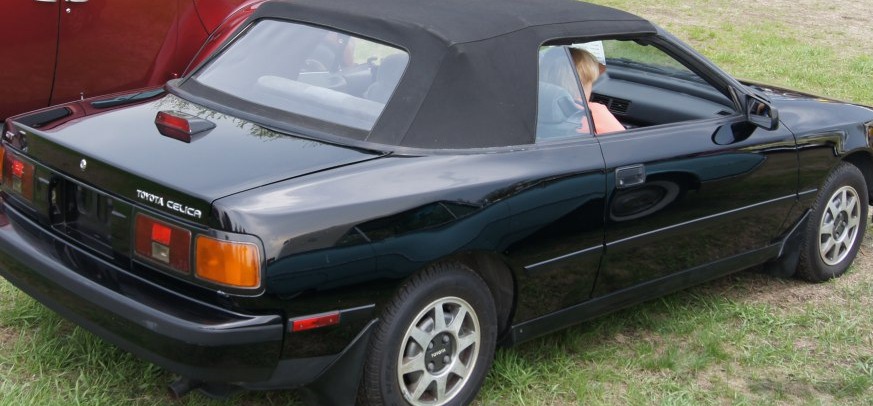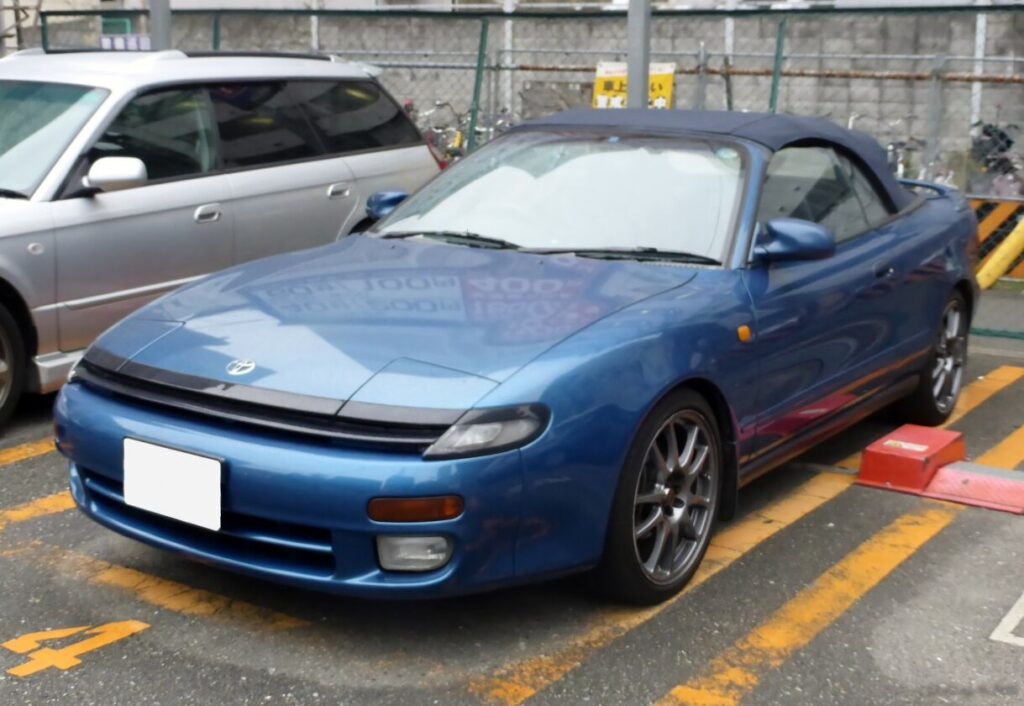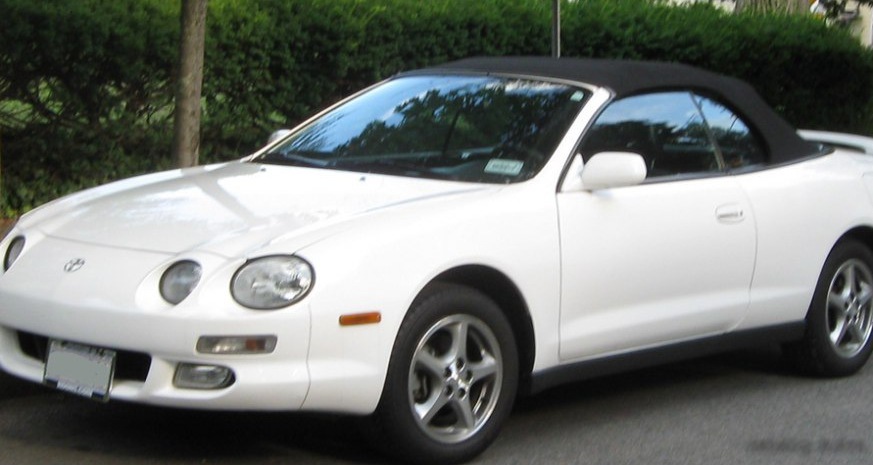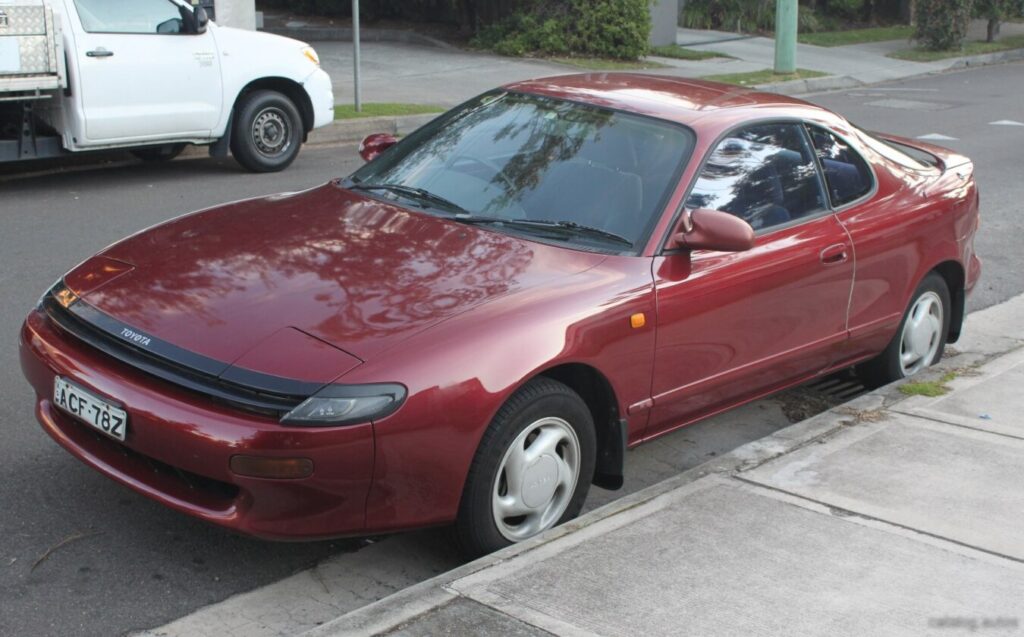
The Toyota Celica T18, produced between 1993 and 1994, represented the sixth generation of Toyota’s iconic sports coupe. Positioned as an affordable and stylish entry into the compact sports car market, the 1.8i 16V variant with 115 horsepower served as a key model within the T18 lineup, offering a balance between performance and economy. It was built on the A30 platform, sharing components with other Toyota models of the era, but distinguished itself with its distinctive coupe styling and focus on driver engagement. This generation marked a shift towards a more rounded and less angular design compared to its predecessor, appealing to a broader audience.
Technical Specifications
| Brand | Toyota |
| Model | Celica |
| Generation | Celica (T18) |
| Type (Engine) | 1.8i 16V (115 Hp) |
| Start of production | 1993 |
| End of production | 1994 |
| Powertrain Architecture | Internal Combustion engine |
| Body type | Coupe |
| Seats | 5 |
| Doors | 3 |
| Fuel consumption (urban) | 11 l/100 km (21.4 US mpg) |
| Fuel consumption (extra urban) | 7 l/100 km (33.6 US mpg) |
| Fuel Type | Petrol (Gasoline) |
| Maximum speed | 195 km/h (121.17 mph) |
| Weight-to-power ratio | 10.4 kg/Hp |
| Weight-to-torque ratio | 7.7 kg/Nm |
| Power | 115 Hp @ 5400 rpm |
| Power per litre | 65.3 Hp/l |
| Torque | 155 Nm @ 2800 rpm (114.32 lb.-ft. @ 2800 rpm) |
| Engine layout | Front, Transverse |
| Engine Model/Code | 7A-FE |
| Engine displacement | 1762 cm3 (107.52 cu. in.) |
| Number of cylinders | 4 |
| Engine configuration | Inline |
| Cylinder Bore | 81 mm (3.19 in.) |
| Piston Stroke | 85.5 mm (3.37 in.) |
| Compression ratio | 9.5:1 |
| Number of valves per cylinder | 4 |
| Fuel injection system | Multi-port manifold injection |
| Engine aspiration | Naturally aspirated engine |
| Valvetrain | DOHC |
| Engine oil capacity | 3.7 l (3.91 US qt | 3.26 UK qt) |
| Coolant capacity | 6.1 l (6.45 US qt | 5.37 UK qt) |
| Kerb Weight | 1200 kg (2645.55 lbs.) |
| Trunk (boot) space | 320 l (11.3 cu. ft.) |
| Fuel tank capacity | 60 l (15.85 US gal | 13.2 UK gal) |
| Length | 4420 mm (174.02 in.) |
| Width | 1690 mm (66.54 in.) |
| Height | 1300 mm (51.18 in.) |
| Wheelbase | 2525 mm (99.41 in.) |
| Front track | 1465 mm (57.68 in.) |
| Rear track | 1430 mm (56.3 in.) |
| Drivetrain Architecture | Front wheel drive |
| Number of gears | 5 |
| Type of gearbox | Manual transmission |
| Front suspension | Spring Strut |
| Rear suspension | Coil spring |
| Front brakes | Ventilated discs |
| Rear brakes | Disc |
| Steering type | Steering rack and pinion |
| Power steering | Hydraulic Steering |
| Tires size | 185/70 R14 |
| Wheel rims size | 14 |
Powertrain & Engine Architecture
The heart of the Celica 1.8i 16V was the 7A-FE engine, a 1.8-liter inline-four cylinder powerplant. This engine featured a double overhead camshaft (DOHC) valvetrain operating 16 valves, contributing to its relatively high output for its displacement. It utilized a multi-port fuel injection system, delivering fuel directly to each cylinder for improved efficiency and responsiveness. The 7A-FE was known for its durability and relatively simple design, making it a reliable unit. The 115 horsepower was achieved at 5400 rpm, while peak torque of 155 Nm (114 lb-ft) arrived at 2800 rpm. This engine was paired with a five-speed manual transmission, providing drivers with direct control over the power delivery. The transmission’s gear ratios were tuned for a balance of acceleration and fuel economy, though it wasn’t geared for outright performance.
Driving Characteristics
The 1.8i 16V Celica offered a comfortable and engaging driving experience, though it wasn’t a particularly fast car by contemporary standards. The 115 hp engine provided adequate power for everyday driving, with reasonable acceleration. The five-speed manual transmission allowed drivers to keep the engine in its optimal power band, but the car lacked the punch of the higher-spec Celica variants, such as those equipped with the 2.2-liter 5S-FE engine. Compared to the more powerful models, the 1.8i felt less eager to rev and required more downshifting to maintain momentum. The front-wheel-drive configuration provided predictable handling, but could exhibit some understeer when pushed hard. The suspension was tuned for comfort, offering a relatively smooth ride over most road surfaces.
Equipment & Trim Levels
The 1.8i 16V Celica typically came with a reasonable level of standard equipment. Interior features included cloth upholstery, a basic stereo system, and manual windows and locks. Air conditioning was often included, but could be optional depending on the specific market. The dashboard layout was functional and straightforward, with clearly marked gauges. Optional extras included power windows, upgraded audio systems, and alloy wheels. The trim level of the 1.8i generally positioned it as the entry-level or mid-range Celica, offering a good value proposition for buyers seeking a stylish and reliable coupe without the expense of the higher-performance models.
Chassis & Braking
The Celica T18 utilized a front-engine, front-wheel-drive layout. The front suspension employed a MacPherson strut design, while the rear suspension featured a coil spring setup. This configuration provided a good balance of ride comfort and handling. Braking duties were handled by ventilated discs at the front and solid discs at the rear. The braking system was assisted by an Anti-lock Braking System (ABS), enhancing safety and control during hard braking. The steering was a rack-and-pinion system with hydraulic power assistance, providing precise and responsive steering feel.
Market Reception & Comparison
The Celica 1.8i 16V was generally well-received by automotive critics as an affordable and stylish sports coupe. It was praised for its reliability, fuel efficiency, and comfortable ride. However, some critics noted that its performance was somewhat underwhelming compared to its rivals and the higher-spec Celica models. Compared to the 2.2-liter Celica, the 1.8i offered significantly less power and acceleration, but it also delivered better fuel economy and lower running costs. The 1.8i appealed to buyers who prioritized practicality and affordability over outright performance.
Legacy
The Toyota Celica T18 1.8i 16V has maintained a modest following among enthusiasts. The 7A-FE engine is known for its durability and relatively low maintenance requirements, making it a reliable choice for classic car ownership. While not as sought-after as the higher-performance Celica variants, the 1.8i offers a more accessible entry point into Celica ownership. Today, well-maintained examples can be found on the used car market, often at reasonable prices. Its simple design and readily available parts contribute to its continued viability as a classic Japanese sports coupe.