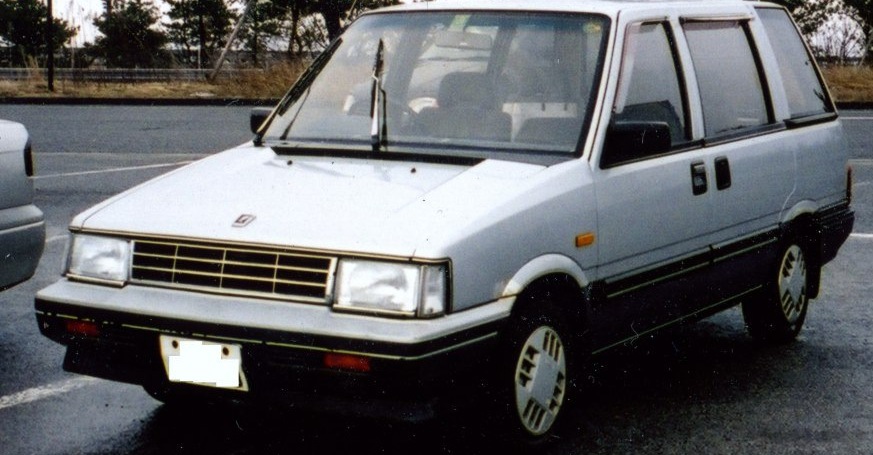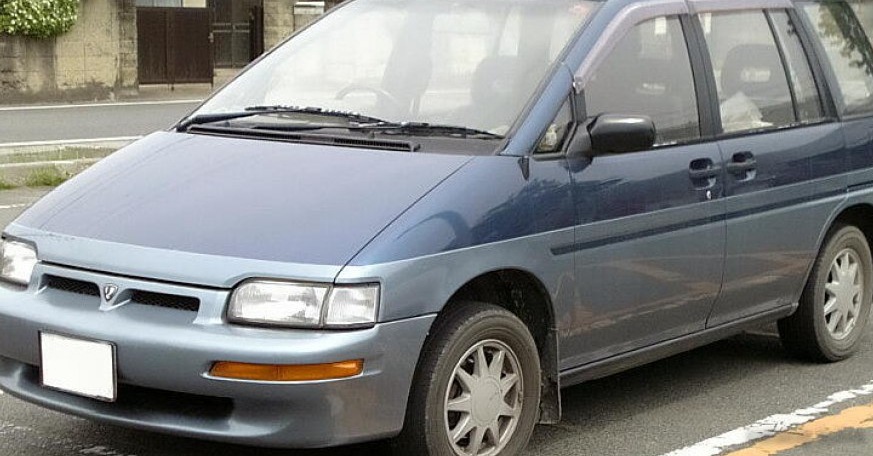
The Nissan Prairie (M11), produced between 1992 and 1998, was a compact minivan marketed primarily in Japan and Australia. Representing Nissan’s entry into the increasingly popular minivan segment, the M11 Prairie aimed to provide a practical and spacious vehicle for families. This particular variant, the 2.4i 4×4, featured a 2.4-liter inline-four engine producing 133 horsepower, coupled with a five-speed manual transmission and a full-time four-wheel drive system. It occupied a mid-range position within the Prairie lineup, offering a balance between performance, practicality, and affordability. While not officially sold in the United States, the Prairie provides an interesting case study of a vehicle designed for specific market needs and preferences.
Technical Specifications
| Brand | Nissan |
| Model | Prairie |
| Generation | Prairie (M11) |
| Type (Engine) | 2.4 i (133 Hp) 4×4 |
| Start of production | 1992 |
| End of production | 1998 |
| Powertrain Architecture | Internal Combustion engine |
| Body type | Minivan |
| Seats | 5 |
| Doors | 4 |
| Fuel consumption (combined) | 10.9 l/100 km (21.6 US mpg, 25.9 UK mpg, 9.2 km/l) |
| Fuel Type | Petrol (Gasoline) |
| Acceleration 0 – 100 km/h | 11.9 sec |
| Acceleration 0 – 62 mph | 11.9 sec |
| Acceleration 0 – 60 mph | 11.3 sec |
| Maximum speed | 178 km/h (110.6 mph) |
| Weight-to-power ratio | 10.8 kg/Hp, 92.7 Hp/tonne |
| Weight-to-torque ratio | 7.5 kg/Nm, 133.8 Nm/tonne |
| Power | 133 Hp @ 5600 rpm |
| Power per litre | 55.7 Hp/l |
| Torque | 192 Nm @ 2800 rpm (141.61 lb.-ft. @ 2800 rpm) |
| Engine layout | Front, Transverse |
| Engine displacement | 2389 cm3 (145.79 cu. in.) |
| Number of cylinders | 4 |
| Engine configuration | Inline |
| Cylinder Bore | 89 mm (3.5 in.) |
| Piston Stroke | 96 mm (3.78 in.) |
| Compression ratio | 8.6:1 |
| Number of valves per cylinder | 3 |
| Fuel injection system | Multi-port manifold injection |
| Engine aspiration | Naturally aspirated engine |
| Valvetrain | OHC |
| Kerb Weight | 1435 kg (3163.63 lbs.) |
| Max. weight | 1985 kg (4376.18 lbs.) |
| Max load | 550 kg (1212.54 lbs.) |
| Trunk (boot) space – minimum | 370 l (13.07 cu. ft.) |
| Trunk (boot) space – maximum | 1500 l (52.97 cu. ft.) |
| Fuel tank capacity | 60 l (15.85 US gal | 13.2 UK gal) |
| Length | 4360 mm (171.65 in.) |
| Width | 1690 mm (66.54 in.) |
| Height | 1660 mm (65.35 in.) |
| Wheelbase | 2595 mm (102.17 in.) |
| Front track | 1460 mm (57.48 in.) |
| Rear (Back) track | 1430 mm (56.3 in.) |
| Drive wheel | All wheel drive (4×4) |
| Number of gears and type of gearbox | 5 gears, manual transmission |
| Front suspension | Wishbone |
| Rear suspension | Spring Strut |
| Front brakes | Ventilated discs |
| Rear brakes | Drum |
| Assisting systems | ABS (Anti-lock braking system) |
| Steering type | Steering rack and pinion |
| Power steering | Hydraulic Steering |
| Tires size | 195/70 R14 |
Powertrain & Engine Architecture
The heart of the Prairie 2.4i 4×4 is the Nissan KA24E engine, a 2.4-liter inline-four cylinder powerplant. This engine, part of Nissan’s KA series, is known for its relative simplicity and durability. It utilizes a single overhead camshaft (OHC) design with three valves per cylinder (two intake, one exhaust). Fuel delivery is managed by a multi-port fuel injection system, contributing to improved fuel efficiency and smoother operation compared to earlier carbureted engines. The KA24E produces 133 horsepower at 5600 rpm and 192 Nm (141.61 lb-ft) of torque at 2800 rpm. The five-speed manual transmission provides a reasonably direct connection to the engine, allowing for controlled acceleration. The 4×4 system is a full-time setup, meaning it constantly distributes power to all four wheels, enhancing traction in various conditions.
Driving Characteristics
The Prairie 2.4i 4×4, with its 133 hp and manual transmission, offered a respectable, if not exhilarating, driving experience. Acceleration to 60 mph took around 11.3 seconds, and top speed was approximately 110.6 mph. The manual gearbox allowed drivers to make the most of the engine’s torque, providing adequate power for everyday driving and occasional highway cruising. Compared to other Prairie variants, such as those with automatic transmissions, the manual version felt more responsive and engaging. While not as sporty as some contemporary hatchbacks, the Prairie’s 4×4 system provided enhanced stability and grip, particularly on slippery surfaces. The gear ratios were tuned for practicality rather than outright performance, prioritizing fuel economy and ease of use.
Equipment & Trim Levels
The 2.4i 4×4 trim level of the Nissan Prairie typically included features such as power steering, ABS brakes, and a basic audio system. Interior upholstery was generally cloth, with a functional and durable design. Depending on the specific market and optional packages, features like air conditioning, power windows, and central locking could be added. The dashboard layout was straightforward and focused on practicality, with clearly labeled controls. The Prairie was designed to be a family vehicle, so comfort and convenience were prioritized over luxury.
Chassis & Braking
The Prairie M11 utilized a front wishbone and rear spring strut suspension system. This setup provided a comfortable ride quality, absorbing bumps and irregularities in the road surface effectively. The front brakes were ventilated discs, offering good stopping power, while the rear brakes were drums, a cost-saving measure common in vehicles of this class. The 4×4 system added to the vehicle’s overall weight, but also contributed to improved handling and stability. Stabilizer bars were included to reduce body roll during cornering.
Market Reception & Comparison
The Nissan Prairie was generally well-received in its target markets, particularly in Japan and Australia, as a practical and reliable family vehicle. Critics praised its spacious interior, comfortable ride, and available four-wheel drive system. However, some reviewers noted that its performance was not particularly exciting, and its styling was somewhat conservative. Compared to other Prairie variants, the 2.4i 4×4 offered a good balance between performance and fuel economy. The manual transmission appealed to drivers who preferred a more engaging driving experience, while the 4×4 system provided added security and capability in challenging conditions.
Legacy
The Nissan Prairie M11, while not a globally recognized model, holds a significant place in the history of Japanese minivans. The KA24E engine proved to be a durable and reliable powerplant, and many examples are still on the road today. The Prairie’s 4×4 system was a notable feature, offering a level of all-weather capability not commonly found in vehicles of its class. In the used car market, the Prairie 2.4i 4×4 is often sought after by enthusiasts and collectors who appreciate its practicality, reliability, and unique character. Its relative rarity outside of its primary markets adds to its appeal.