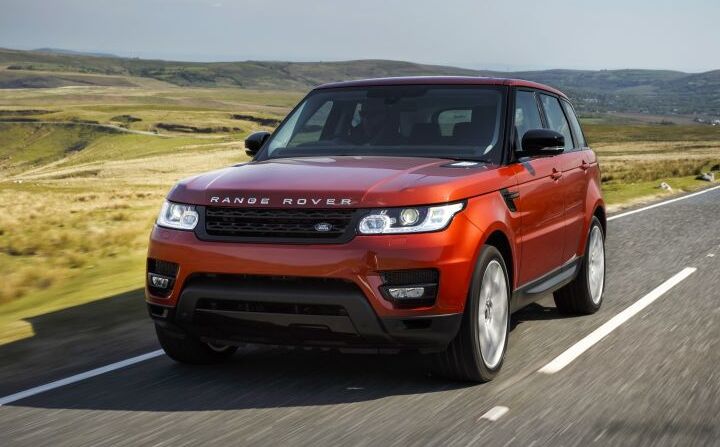
The Land Rover Range Rover Sport II 3.0 V6, producing 292 horsepower, was a significant variant within the second-generation Range Rover Sport (2013-2015) lineup. Positioned as a mid-range offering, it aimed to balance performance, fuel efficiency, and luxury within the Range Rover Sport’s established framework. This model represented Land Rover’s continued push towards more efficient engine options without sacrificing the brand’s core values of off-road capability and refined comfort. It served as a key competitor in the luxury SUV segment, appealing to buyers seeking a versatile vehicle for both daily driving and occasional off-road adventures.
Technical Specifications
| Brand | Land Rover |
| Model | Range Rover Sport |
| Generation | Range Rover Sport II |
| Type (Engine) | 3.0 V6 (292 Hp) AWD Automatic |
| Start of production | 2013 |
| End of production | 2015 |
| Powertrain Architecture | Internal Combustion engine |
| Body type | SUV |
| Seats | 5 |
| Doors | 5 |
| Fuel consumption (combined) | 7.5 l/100 km (31.4 US mpg, 37.7 UK mpg, 13.3 km/l) |
| CO2 emissions | 199 g/km |
| Fuel Type | Diesel |
| Acceleration 0 – 100 km/h | 7.2 sec |
| Acceleration 0 – 62 mph | 7.2 sec |
| Acceleration 0 – 60 mph | 6.8 sec |
| Maximum speed | 209 km/h (129.87 mph) |
| Emission standard | Euro 5 |
| Weight-to-power ratio | 7.2 kg/Hp, 138.1 Hp/tonne |
| Weight-to-torque ratio | 3.5 kg/Nm, 283.7 Nm/tonne |
| Power | 292 Hp |
| Power per litre | 97.6 Hp/l |
| Torque | 600 Nm @ 2000 rpm (442.54 lb.-ft. @ 2000 rpm) |
| Engine layout | Front, Longitudinal |
| Engine Model/Code | 306DT |
| Engine displacement | 2993 cm3 (182.64 cu. in.) |
| Number of cylinders | 6 |
| Engine configuration | V-engine |
| Cylinder Bore | 84 mm (3.31 in.) |
| Piston Stroke | 90 mm (3.54 in.) |
| Compression ratio | 16.1:1 |
| Number of valves per cylinder | 4 |
| Fuel injection system | Diesel Commonrail |
| Engine aspiration | BiTurbo, Intercooler |
| Engine oil capacity | 6 l (6.34 US qt | 5.28 UK qt) |
| Coolant | 8.93 l (9.44 US qt | 7.86 UK qt) |
| Kerb Weight | 2115 kg (4662.78 lbs.) |
| Fuel tank capacity | 77 l (20.34 US gal | 16.94 UK gal) |
| Length | 4850 mm (190.94 in.) |
| Width | 1983 mm (78.07 in.) |
| Width with mirrors folded | 2073 mm (81.61 in.) |
| Height | 1780 mm (70.08 in.) |
| Wheelbase | 2923 mm (115.08 in.) |
| Drag coefficient (Cd) | 0.34 |
| Minimum turning circle | 12.6 m (41.34 ft.) |
| Approach angle | 33.0° |
| Departure angle | 31.0° |
| Drive wheel | All wheel drive (4×4) |
| Number of gears | 8 |
| Gearbox type | automatic transmission |
| Front suspension | Air suspension |
| Rear suspension | Air suspension |
| Front brakes | Ventilated discs |
| Rear brakes | Ventilated discs |
| Assisting systems | ABS (Anti-lock braking system) |
| Steering type | Steering rack and pinion |
| Power steering | Electric Steering |
Powertrain & Engine Architecture
The heart of the Range Rover Sport II 3.0 V6 was the 306DT engine, a 3.0-liter turbocharged diesel V6. This engine utilized a sequential bi-turbocharger setup, employing a small turbocharger for immediate response at low engine speeds and a larger turbocharger to deliver increased power at higher RPMs. The engine featured direct injection with a common rail system, operating at a high compression ratio of 16.1:1. This configuration allowed for a good balance between power output and fuel efficiency. The engine produced 600 Nm (442.54 lb-ft) of torque at just 2000 rpm, providing strong pulling power. The eight-speed automatic transmission, sourced from ZF, was a crucial component, offering smooth and efficient gear changes. This transmission was known for its wide gear ratio spread, contributing to both improved fuel economy and responsive acceleration.
Driving Characteristics
The 3.0 V6 automatic powertrain delivered a refined and capable driving experience. While not as overtly sporty as the supercharged V6 or V8 models, it provided ample power for everyday driving and confident highway cruising. The 0-60 mph time of around 6.8 seconds was respectable for a vehicle of this size and weight. The eight-speed transmission helped to keep the engine in its optimal power band, minimizing turbo lag and providing smooth acceleration. The automatic transmission, while generally smooth, could occasionally exhibit hesitant shifts, particularly in lower gears. Compared to the manual transmission options available on other Range Rover Sport models, the automatic prioritized comfort and ease of use over outright driver engagement. The all-wheel-drive system provided excellent traction in various conditions, making it a capable vehicle both on and off-road.
Equipment & Trim Levels
The 3.0 V6 model typically came well-equipped, reflecting the Range Rover Sport’s luxury positioning. Standard features included leather upholstery, dual-zone climate control, a touchscreen infotainment system, and a suite of safety features such as ABS, traction control, and multiple airbags. Optional extras included features like a panoramic sunroof, upgraded audio systems (often Meridian), adaptive cruise control, and various driver assistance technologies. Interior trim options varied, with choices in wood veneers, aluminum accents, and different leather colors. The HSE trim level, often paired with the 3.0 V6, added further enhancements such as heated seats, parking sensors, and upgraded exterior styling elements.
Chassis & Braking
The Range Rover Sport II utilized a robust chassis construction, incorporating a combination of high-strength steel and aluminum to minimize weight while maximizing rigidity. The suspension system featured air suspension on both the front and rear axles, providing a comfortable ride and the ability to adjust ride height for off-road use. Braking duties were handled by ventilated discs on all four wheels, providing ample stopping power. The electronic parking brake with hill hold assist was standard. Stabilizer bars were fitted to both the front and rear axles to reduce body roll during cornering. The steering system employed an electric power-assisted rack and pinion setup, offering precise and responsive steering feel.
Market Reception & Comparison
The Range Rover Sport II 3.0 V6 Automatic received generally positive reviews from automotive critics. It was praised for its comfortable ride, refined interior, and capable all-wheel-drive system. The fuel economy of around 31.4 US mpg was considered good for a vehicle of its size and class. However, some critics noted that the engine could be somewhat noisy under hard acceleration, and the automatic transmission occasionally lacked responsiveness. Compared to the higher-output V6 and V8 models, the 3.0 V6 offered a more affordable entry point into the Range Rover Sport lineup, appealing to buyers who prioritized fuel efficiency and comfort over outright performance. Against competitors like the Porsche Cayenne Diesel and BMW X5, the Range Rover Sport II 3.0 V6 offered a unique blend of luxury, off-road capability, and fuel efficiency.
Legacy
The 306DT engine, while not without its complexities, proved to be a relatively reliable powertrain when properly maintained. Common issues included turbocharger failures and problems with the diesel particulate filter (DPF), particularly on vehicles that were primarily used for short trips. However, with regular servicing and preventative maintenance, these engines could provide many years of reliable service. In the used car market, the Range Rover Sport II 3.0 V6 Automatic remains a popular choice, offering a good balance of luxury, capability, and affordability. Its reputation for comfort and all-weather performance continues to attract buyers seeking a versatile and refined SUV.