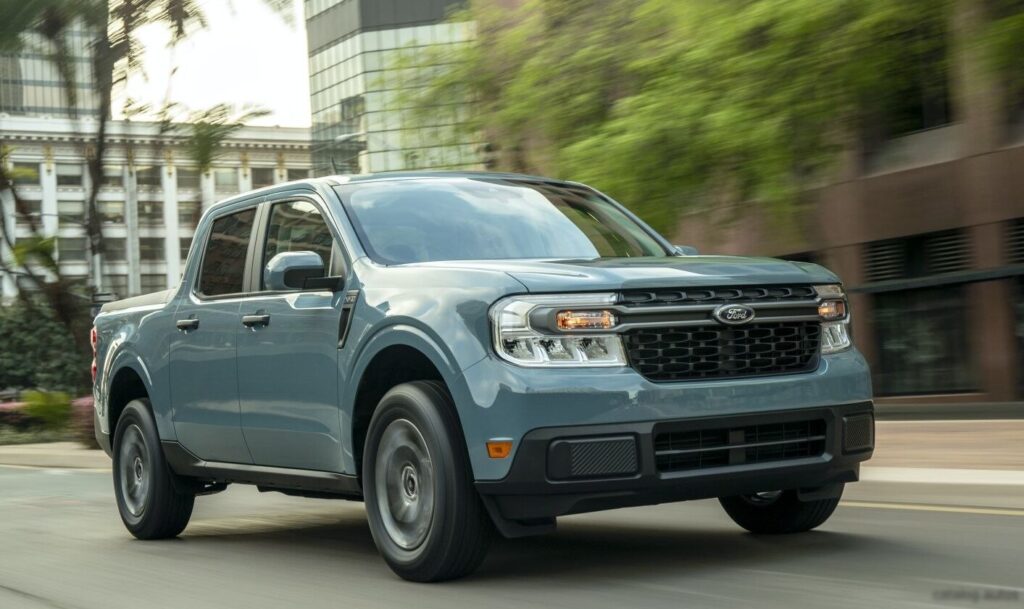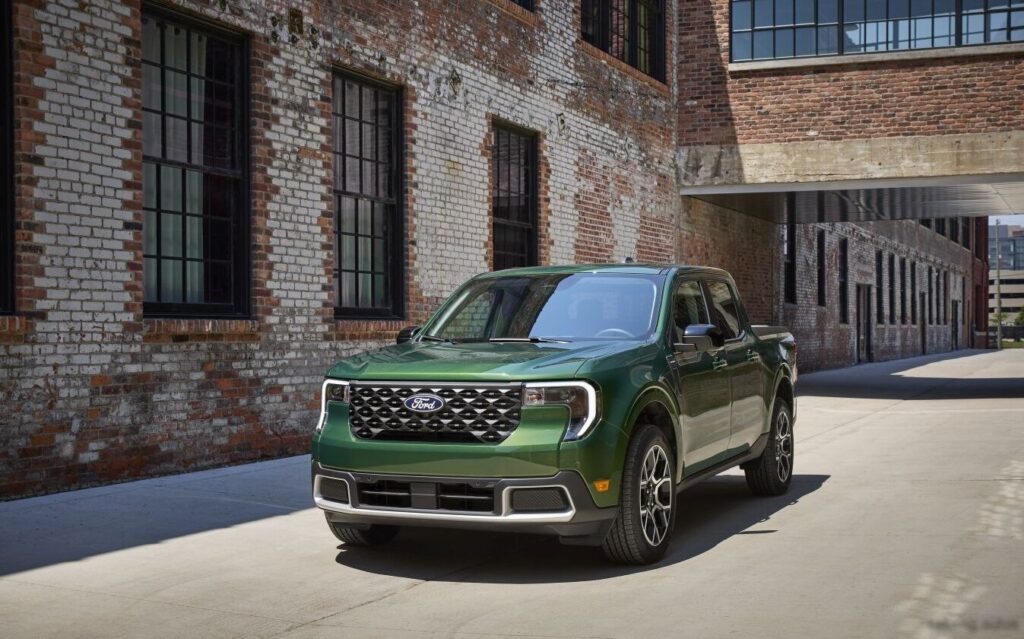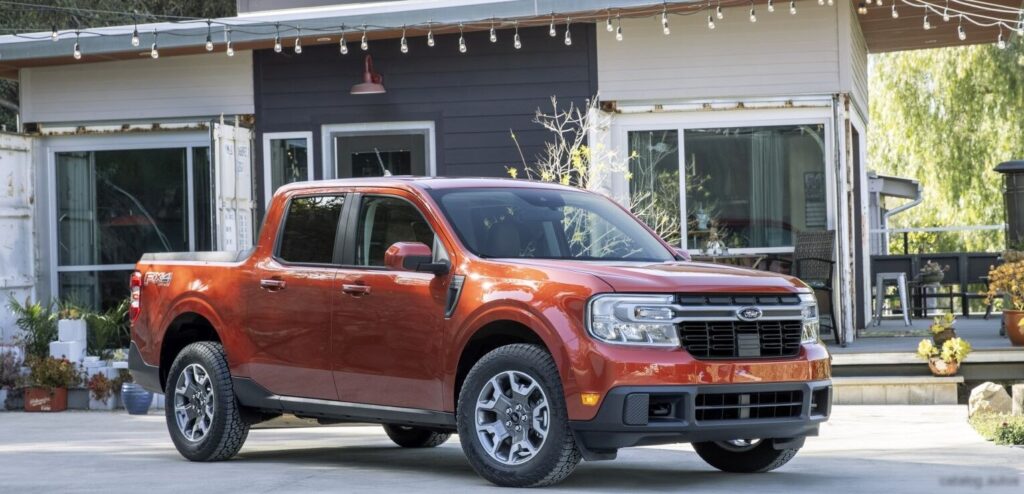
The Ford Maverick 2.0 EcoBoost AWD Automatic, introduced in June 2021 and produced through July 2024, represents a significant entry in the compact pickup truck segment. Positioned as a mid-range offering within the first generation (2021-present) Maverick lineup, it aimed to bridge the gap between the base 2.5L hybrid model and the more utilitarian, fleet-focused trims. The Maverick, built on the Ford C2 platform, was a deliberate attempt to attract a new demographic to the pickup market – those seeking affordability, fuel efficiency, and a versatile vehicle for both work and personal use. This 2.0L EcoBoost AWD variant offered a substantial power upgrade over the hybrid, appealing to buyers needing more towing capacity and overall performance.
Technical Specifications
| Brand | Ford |
| Model | Maverick |
| Generation | Maverick (2021) |
| Type (Engine) | 2.0 EcoBoost (250 Hp) AWD Automatic |
| Start of production | June, 2021 |
| End of production | July, 2024 |
| Powertrain Architecture | Internal Combustion engine |
| Body type | Pick-up |
| Seats | 5 |
| Doors | 4 |
| Fuel Type | Petrol (Gasoline) |
| Weight-to-power ratio | 6.8 kg/Hp, 147.8 Hp/tonne |
| Weight-to-torque ratio | 4.5 kg/Nm, 222.2 Nm/tonne |
| Power | 250 Hp @ 5500 rpm |
| Power per litre | 125.1 Hp/l |
| Torque | 376 Nm @ 3000 rpm, 277.32 lb.-ft. @ 3000 rpm |
| Engine displacement | 1999 cm3, 121.99 cu. in. |
| Number of cylinders | 4 |
| Engine configuration | Inline |
| Cylinder Bore | 87.38 mm, 3.44 in. |
| Piston Stroke | 83.06 mm, 3.27 in. |
| Compression ratio | 9.3:1 |
| Number of valves per cylinder | 4 |
| Fuel injection system | Direct injection |
| Engine aspiration | Turbocharger, Intercooler |
| Valvetrain | DOHC, Ti-VCT |
| Engine oil capacity | 5.2 l, 5.49 US qt | 4.58 UK qt |
| Coolant | 8.2 l, 8.66 US qt | 7.21 UK qt |
| Kerb Weight | 1692 kg, 3730.22 lbs |
| Trunk (boot) space – minimum | 943 l, 33.3 cu. ft |
| Fuel tank capacity | 62 l, 16.38 US gal | 13.64 UK gal |
| Permitted trailer load with brakes (12%) | 1814 kg, 3999.19 lbs |
| Length | 5072 mm, 199.69 in |
| Width | 1844 mm, 72.6 in |
| Width with mirrors folded | 1979 mm, 77.91 in |
| Width including mirrors | 2121 mm, 83.5 in |
| Height | 1745 mm, 68.7 in |
| Wheelbase | 3076 mm, 121.1 in |
| Front track | 1610 mm, 63.39 in |
| Rear (Back) track | 1595 mm, 62.8 in |
| Front overhang | 866 mm, 34.09 in |
| Rear overhang | 1130 mm, 44.49 in |
| Ride height (ground clearance) | 218 mm, 8.58 in |
| Minimum turning circle (turning diameter) | 12.2 m, 40.03 ft |
| Drivetrain Architecture | The Internal combustion engine (ICE) drives the front wheels permanently, and the rear wheels are driven through an electrically or mechanically operated clutch if necessary. |
| Drive wheel | All wheel drive (4×4) |
| Number of gears and type of gearbox | 8 gears, automatic transmission |
| Front suspension | Independent, type McPherson with coil spring and anti-roll bar |
| Rear suspension | Independent multi-link spring suspension with stabilizer |
| Front brakes | Ventilated discs |
| Rear brakes | Ventilated discs |
| Assisting systems | ABS (Anti-lock braking system) |
| Steering type | Steering rack and pinion |
| Power steering | Electric Steering |
| Tires size | 235/65 R17; 225/60 R18 |
Powertrain & Engine Architecture
At the heart of the Maverick 2.0 EcoBoost AWD is the Ford EcoBoost 2.0-liter inline-four cylinder engine. This engine, part of Ford’s EcoBoost family, utilizes direct fuel injection and a single turbocharger with an intercooler to deliver a robust 250 horsepower and 277 lb-ft of torque. The engine features a double overhead camshaft (DOHC) valvetrain with Twin Independent Variable Camshaft Timing (Ti-VCT), optimizing engine breathing for improved performance and efficiency. The engine code is generally identified as a variant within the broader EcoBoost family, often seen in other Ford vehicles. The eight-speed automatic transmission, sourced from Ford and co-developed with General Motors, is a key component of this powertrain. It provides smooth and responsive shifting, contributing to both drivability and fuel economy. The AWD system is an intelligent, on-demand system, primarily front-wheel drive but capable of engaging the rear wheels when traction is needed. This is achieved through a clutch pack that engages the rear axle, providing all-wheel drive capability without the constant drag of a traditional four-wheel drive system.
Driving Characteristics
The 2.0 EcoBoost AWD Maverick offers a noticeably more spirited driving experience compared to the hybrid model. Acceleration is brisk, and the turbocharger provides a readily available boost of power. The eight-speed automatic transmission is well-tuned, offering quick and seamless gear changes. While not a sports truck, the 2.0L engine provides ample power for merging onto highways and passing other vehicles. The AWD system enhances traction, particularly in inclement weather or on loose surfaces. Compared to a manual transmission equipped version (not widely offered), the automatic prioritizes convenience and ease of use, but may sacrifice some driver engagement. The gear ratios are optimized for a balance of acceleration and fuel efficiency, with a relatively tall final drive ratio contributing to highway fuel economy.
Equipment & Trim Levels
The 2.0 EcoBoost AWD Maverick typically came standard with features such as Ford’s SYNC 4 infotainment system with an 8-inch touchscreen, Apple CarPlay and Android Auto compatibility, and a suite of driver-assistance technologies including automatic emergency braking and lane-keeping assist. Interior upholstery was typically cloth, with options for upgraded leather or vinyl seating available on higher trims. Common optional extras included a power moonroof, upgraded sound system, and various appearance packages. Trim levels like XLT and Lariat offered progressively more features and premium materials. The bed was a key feature, offering a flexible cargo area with multiple tie-down points and available bed accessories.
Chassis & Braking
The Maverick utilizes an independent McPherson strut front suspension and an independent multi-link rear suspension. This setup provides a comfortable ride quality while maintaining reasonable handling characteristics. Stabilizer bars are included at both ends to reduce body roll during cornering. Braking duties are handled by ventilated discs on all four wheels, providing adequate stopping power for the vehicle’s weight. The ABS (Anti-lock Braking System) is standard, enhancing safety during emergency braking situations. The chassis is designed for a balance of strength and weight reduction, utilizing high-strength steel in key areas.
Market Reception & Comparison
The Ford Maverick 2.0 EcoBoost AWD Automatic was generally well-received by automotive critics. It was praised for its affordability, versatility, and fuel efficiency. The 2.0L engine was considered a significant upgrade over the hybrid, providing more power and towing capacity. However, some critics noted that the interior materials were somewhat basic, and the ride quality could be firm on rough roads. Compared to the hybrid model, the 2.0 EcoBoost AWD offered lower fuel economy but significantly more performance. Compared to larger pickup trucks, the Maverick offered a more manageable size and lower price point, making it an attractive option for urban dwellers and first-time truck buyers.
Legacy
The Ford Maverick 2.0 EcoBoost AWD Automatic has proven to be a reliable and durable powertrain. The EcoBoost engine, while turbocharged, has demonstrated good long-term reliability when properly maintained. The eight-speed automatic transmission has also proven to be robust. On the used car market, these Mavericks hold their value relatively well, due to their popularity and versatility. Regular maintenance, including oil changes and timely servicing of the turbocharger, is crucial for ensuring the longevity of this powertrain. The Maverick’s success has demonstrated a clear demand for affordable, compact pickup trucks, influencing other manufacturers to consider similar offerings.