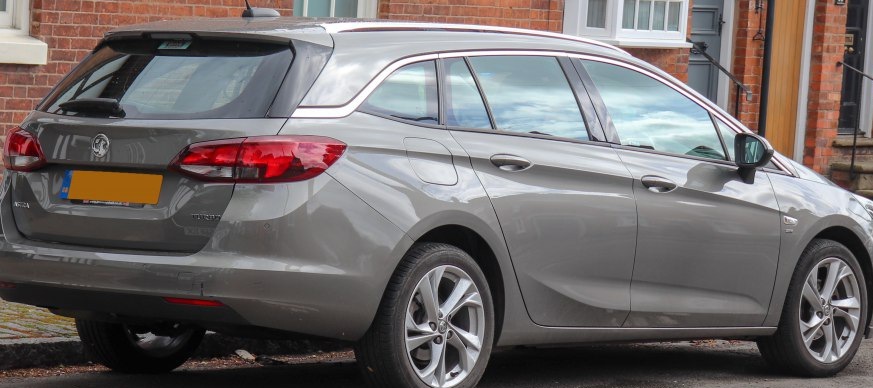
The Vauxhall Astra Mk VII Sports Tourer 1.4 (100 hp) was a station wagon variant produced between 2015 and 2019, representing a key offering within the broader Astra Mk VII range, which spanned from 2009 to 2021. Positioned as an entry-level to mid-range option, it aimed to provide practicality and reasonable fuel economy for families and individuals needing versatile cargo space. This model was part of the J platform, specifically the A3 variant, shared with other Opel/Vauxhall and Chevrolet models. The Sports Tourer body style, or estate as it’s known in some markets, offered a significant increase in cargo capacity compared to the hatchback version, making it a popular choice for those prioritizing load-lugging ability.
Technical Specifications
| Brand | Vauxhall |
| Model | Astra |
| Generation | Astra Mk VII Sports Tourer |
| Type (Engine) | 1.4 (100 Hp) |
| Start of production | 2015 |
| End of production | 2019 |
| Powertrain Architecture | Internal Combustion engine |
| Body type | Station wagon (estate) |
| Seats | 5 |
| Doors | 5 |
| Fuel consumption (urban) | 7.5 l/100 km (31.4 US mpg) |
| Fuel consumption (extra urban) | 4.3 l/100 km (54.7 US mpg) |
| Fuel consumption (combined) | 5.5 l/100 km (42.8 US mpg) |
| CO2 emissions | 127 g/km |
| Fuel Type | Petrol (Gasoline) |
| Acceleration 0 – 100 km/h | 13.9 sec |
| Acceleration 0 – 62 mph | 13.9 sec |
| Acceleration 0 – 60 mph | 13.2 sec |
| Maximum speed | 185 km/h (114.95 mph) |
| Emission standard | Euro 6 |
| Weight-to-power ratio | 12 kg/Hp |
| Weight-to-torque ratio | 9.2 kg/Nm |
| Power | 100 Hp @ 6000 rpm |
| Torque | 130 Nm @ 4300 rpm (95.88 lb.-ft. @ 4300 rpm) |
| Engine layout | Front, Transverse |
| Engine Model/Code | B14XE |
| Engine displacement | 1399 cm3 (85.37 cu. in.) |
| Number of cylinders | 4 |
| Engine configuration | Inline |
| Cylinder Bore | 74 mm (2.91 in.) |
| Piston Stroke | 81.3 mm (3.2 in.) |
| Compression ratio | 10.6:1 |
| Fuel injection system | Multi-port manifold injection |
| Engine aspiration | Naturally aspirated engine |
| Engine oil capacity | 4 l (4.23 US qt | 3.52 UK qt) |
| Kerb Weight | 1198 kg (2641.14 lbs.) |
| Max. weight | 1830 kg (4034.46 lbs.) |
| Max load | 632 kg (1393.32 lbs.) |
| Trunk (boot) space – minimum | 540 l (19.07 cu. ft.) |
| Trunk (boot) space – maximum | 1630 l (57.56 cu. ft.) |
| Fuel tank capacity | 48 l (12.68 US gal | 10.56 UK gal) |
| Max. roof load | 75 kg (165.35 lbs.) |
| Permitted trailer load with brakes (12%) | 800 kg (1763.7 lbs.) |
| Permitted trailer load without brakes | 610 kg (1344.82 lbs.) |
| Length | 4702 mm (185.12 in.) |
| Width | 1809 mm (71.22 in.) |
| Width with mirrors folded | 1871 mm (73.66 in.) |
| Width including mirrors | 2042 mm (80.39 in.) |
| Height | 1510 mm (59.45 in.) |
| Wheelbase | 2662 mm (104.8 in.) |
| Front track | 1548 mm (60.94 in.) |
| Rear track | 1565 mm (61.61 in.) |
| Front overhang | 960 mm (37.8 in.) |
| Rear overhang | 1080 mm (42.52 in.) |
| Minimum turning circle | 11.05 m (36.25 ft.) |
| Drivetrain Architecture | Front wheel drive |
| Number of gears and type of gearbox | 5 gears, manual transmission |
| Front brakes | Disc |
| Rear brakes | Disc |
| Assisting systems | ABS (Anti-lock braking system) |
| Steering type | Steering rack and pinion |
| Tires size | 195/65 R15; 205/55 R16 |
| Wheel rims size | 6J x 15; 6.5J x 16 |
Powertrain & Engine Architecture
The Astra Sports Tourer 1.4 (100 hp) was powered by the B14XE engine, a 1.4-liter inline-four cylinder gasoline engine. This engine belonged to the Vauxhall/Opel Family 0 family of engines, known for its relatively simple design and focus on fuel efficiency. It utilized a multi-point fuel injection system, delivering fuel directly into the intake ports. The engine featured a single overhead camshaft (SOHC) valvetrain with two valves per cylinder. The 100 horsepower output was achieved at 6000 rpm, while peak torque of 130 Nm (95.88 lb-ft) arrived at 4300 rpm. The engine’s relatively modest power output was paired with a five-speed manual transmission, which was the standard offering. While an automatic transmission was available on other Astra Mk VII variants, it wasn’t typically paired with this specific 1.4-liter engine.
Driving Characteristics
The 1.4-liter, 100 hp Astra Sports Tourer offered a comfortable, but not particularly sporty, driving experience. Acceleration was adequate for everyday driving, with a 0-60 mph time of around 13.2 seconds. The five-speed manual transmission provided reasonable control, but the engine lacked the punch of higher-powered variants like the 1.6-liter turbo or the diesel options. The gear ratios were tuned for fuel economy rather than performance, meaning the engine often needed to be revved to maintain speed, especially when loaded with passengers or cargo. Compared to the more powerful Astra models, this variant felt noticeably slower, particularly during overtaking maneuvers. However, its lighter weight compared to some of the larger-engined models did contribute to better handling and agility in urban environments.
Equipment & Trim Levels
The 1.4 (100 hp) Sports Tourer typically came with a base level of equipment, making it an attractive entry point into the Astra range. Standard features generally included air conditioning, electric front windows, a basic audio system with USB connectivity, and ABS brakes. Higher trim levels, such as Tech Line or Energy, added features like alloy wheels, cruise control, a touchscreen infotainment system, and parking sensors. Interior upholstery was typically cloth, with a functional, if somewhat basic, dashboard layout. Optional extras included a panoramic sunroof, heated seats, and more advanced safety systems.
Chassis & Braking
The Astra Mk VII Sports Tourer utilized a MacPherson strut front suspension and a torsion beam rear suspension. This setup provided a good balance between ride comfort and handling. The front brakes were ventilated discs, while the rear brakes were solid discs. ABS (Anti-lock Braking System) was standard, enhancing safety during emergency braking. The suspension was tuned for comfort, prioritizing a smooth ride over aggressive handling. Stabilizer bars were fitted to both the front and rear axles to reduce body roll during cornering.
Market Reception & Comparison
The Astra Sports Tourer 1.4 (100 hp) was generally well-received as a practical and affordable family car. Critics praised its spacious interior, generous cargo capacity, and reasonable fuel economy. However, the engine’s lack of power was often cited as a drawback, particularly when compared to more powerful Astra variants or competitors like the Ford Focus Estate. The 1.6-liter turbo petrol and 1.3 CDTi diesel engines offered significantly better performance and fuel economy, respectively, but came at a higher price point. The 1.4-liter model appealed to buyers prioritizing value and practicality over outright performance.
Legacy
The B14XE engine, while not known for being particularly exciting, proved to be relatively reliable. Common issues were generally minor, such as oil leaks or sensor failures. The Astra Mk VII Sports Tourer 1.4 (100 hp) remains a relatively affordable option on the used car market. Its simple mechanicals and readily available parts make it a relatively easy car to maintain. While it may not offer the performance or refinement of more expensive models, it continues to provide a practical and economical solution for those needing a spacious and versatile estate car.