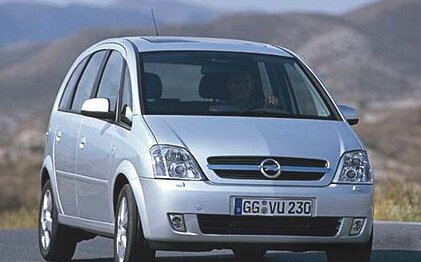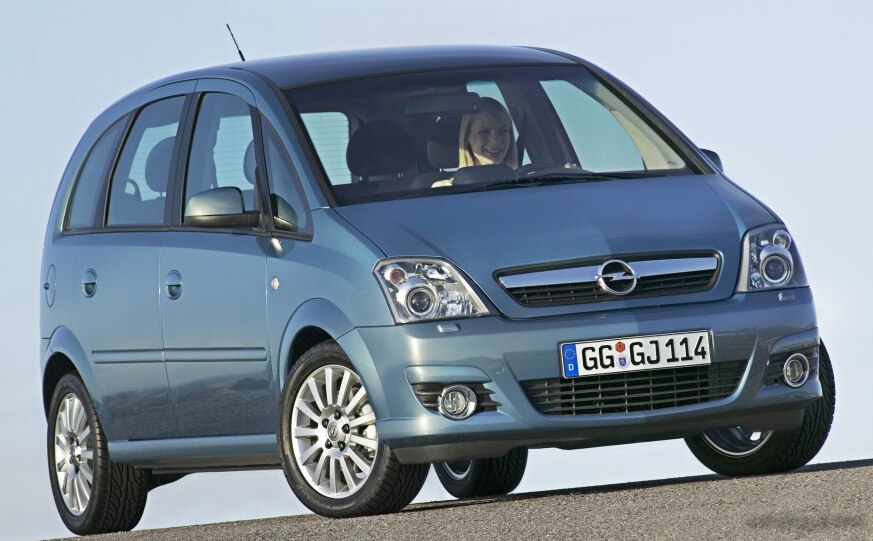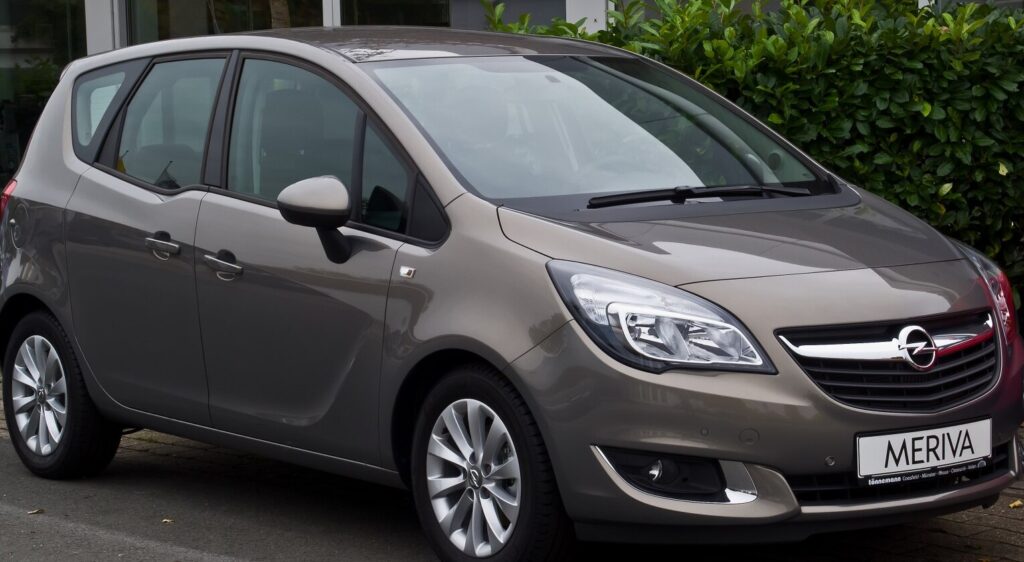
The Opel Meriva B, particularly the facelifted version introduced in 2014, represented a significant evolution of Opel’s compact MPV offering. The 1.4-liter (100 horsepower) Ecotec Start/Stop variant, produced from January 2014 to January 2017, occupied a key position in the Meriva B lineup as an entry-level to mid-range option, appealing to buyers prioritizing fuel efficiency and practicality over outright performance. This model was primarily aimed at the European market, where compact MPVs remained popular for their versatility and family-friendly features. It was built on the General Motors Gamma platform, shared with other Opel/Vauxhall and Chevrolet models.
Technical Specifications
| Brand | Opel |
| Model | Meriva |
| Generation | Meriva B (facelift 2014) |
| Type (Engine) | 1.4 (100 Hp) Ecotec start/stop |
| Start of production | January, 2014 |
| End of production | January, 2017 |
| Powertrain Architecture | Internal Combustion engine |
| Body type | MPV |
| Seats | 5 |
| Doors | 5 |
| Fuel consumption (urban) | 6.9 l/100 km (34.1 US mpg, 40.9 UK mpg, 14.5 km/l) |
| Fuel consumption (extra urban) | 4.9 l/100 km (48 US mpg, 57.6 UK mpg, 20.4 km/l) |
| Fuel consumption (combined) | 5.6 l/100 km (42 US mpg, 50.4 UK mpg, 17.9 km/l) |
| CO2 emissions | 132 g/km |
| Fuel Type | Petrol (Gasoline) |
| Acceleration 0 – 100 km/h | 13.9 sec |
| Acceleration 0 – 62 mph | 13.9 sec |
| Acceleration 0 – 60 mph | 13.2 sec |
| Maximum speed | 177 km/h (109.98 mph) |
| Emission standard | Euro 6 |
| Power | 100 Hp @ 6000 rpm |
| Power per litre | 71.5 Hp/l |
| Torque | 130 Nm @ 4000 rpm (95.88 lb.-ft. @ 4000 rpm) |
| Engine layout | Front, Transverse |
| Engine Model/Code | B14XER |
| Engine displacement | 1398 cm3 (85.31 cu. in.) |
| Number of cylinders | 4 |
| Engine configuration | Inline |
| Cylinder Bore | 73.4 mm (2.89 in.) |
| Piston Stroke | 82.6 mm (3.25 in.) |
| Fuel injection system | Multi-port manifold injection |
| Engine aspiration | Naturally aspirated engine |
| Valvetrain | DOHC |
| Engine oil capacity | 4 l (4.23 US qt | 3.52 UK qt) |
| Coolant | 6 l (6.34 US qt | 5.28 UK qt) |
| Trunk (boot) space – minimum | 400 l (14.13 cu. ft.) |
| Trunk (boot) space – maximum | 1500 l (52.97 cu. ft.) |
| Fuel tank capacity | 54 l (14.27 US gal | 11.88 UK gal) |
| Length | 4300 mm (169.29 in.) |
| Width | 1912 mm (75.28 in.) |
| Height | 1615 mm (63.58 in.) |
| Wheelbase | 2644 mm (104.09 in.) |
| Front track | 1488 mm (58.58 in.) |
| Rear (Back) track | 1509 mm (59.41 in.) |
| Minimum turning circle | 11.06 m (36.29 ft.) |
| Drivetrain Architecture | The Internal combustion engine (ICE) drives the front wheels of the vehicle. |
| Drive wheel | Front wheel drive |
| Number of gears and type of gearbox | 5 gears, manual transmission |
| Front suspension | Independent type McPherson |
| Rear suspension | Elastic beam |
| Front brakes | Ventilated discs |
| Rear brakes | Disc |
| Assisting systems | ABS (Anti-lock braking system) |
| Steering type | Steering rack and pinion |
| Power steering | Electric Steering |
Powertrain & Engine Architecture
The heart of this Meriva variant is the B14XER engine, a 1.4-liter inline-four cylinder gasoline engine. This engine belongs to Opel’s Ecotec family, known for its focus on efficiency and refinement. It utilizes multi-point fuel injection and a double overhead camshaft (DOHC) valvetrain, contributing to improved combustion efficiency and power delivery. The Start/Stop system, a key feature, automatically shuts off the engine when the vehicle is stationary (at traffic lights, for example) to reduce fuel consumption and emissions. The engine produces 100 horsepower at 6000 rpm and 130 Nm (95.88 lb-ft) of torque at 4000 rpm. This power is delivered to the front wheels through a five-speed manual transmission. While an automatic transmission was offered on other Meriva B models, the 1.4L 100hp version was exclusively paired with the manual gearbox.
Driving Characteristics
The 1.4-liter engine, coupled with the five-speed manual transmission, provides adequate, though not exhilarating, performance. Acceleration from 0-100 km/h takes approximately 13.9 seconds, making it suitable for urban and suburban driving. The gear ratios are tuned for fuel economy, meaning the engine needs to be revved to access its full potential. Compared to the more powerful 1.6-liter or turbocharged variants, this engine feels less responsive, particularly during overtaking maneuvers. However, the lighter engine weight contributes to a more nimble feel in corners. The manual transmission offers precise shifts, and the clutch is relatively light, making it easy to drive in stop-and-go traffic.
Equipment & Trim Levels
The 1.4-liter Ecotec Start/Stop Meriva B typically came equipped with a reasonable level of standard features. These included air conditioning, power windows, central locking, and an audio system with USB connectivity. Safety features such as ABS, electronic stability control, and multiple airbags were also standard. Higher trim levels, available as options, added features like alloy wheels, a touchscreen infotainment system, parking sensors, and cruise control. Interior upholstery was typically cloth, with options for upgraded materials. The FlexSpace rear seating system, allowing for versatile cargo configurations, was a standard feature across most Meriva B models.
Chassis & Braking
The Meriva B utilizes a McPherson strut suspension setup at the front and an elastic beam rear suspension. This configuration provides a comfortable ride quality, absorbing bumps and imperfections in the road effectively. The front brakes are ventilated discs, offering good stopping power, while the rear brakes are solid discs. The electric power steering provides light and precise steering feel, making it easy to maneuver in tight spaces. Stabilizer bars are fitted to both the front and rear axles to reduce body roll during cornering.
Market Reception & Comparison
The 1.4-liter Meriva B was generally well-received by critics as a practical and economical family car. Its fuel efficiency was a major selling point, particularly in Europe where fuel prices are high. However, some reviewers noted that the engine lacked the punch of its more powerful counterparts. Compared to the 1.6-liter version, the 1.4 offered better fuel economy but slower acceleration. The 1.7-liter diesel variants provided even better fuel economy but came with a higher purchase price. The Meriva B competed with other compact MPVs such as the Renault Scenic, Citroën C4 Picasso, and Ford C-Max.
Legacy
The B14XER engine, while not known for being particularly groundbreaking, proved to be a relatively reliable unit. Common issues are typically related to the Start/Stop system, which can sometimes experience failures. Regular maintenance, including oil changes and timing belt replacements, is crucial for ensuring long-term reliability. On the used car market, the 1.4-liter Meriva B represents a good value proposition for buyers seeking an affordable and practical MPV. Its fuel efficiency and spacious interior make it a suitable choice for small families or individuals who require a versatile vehicle.