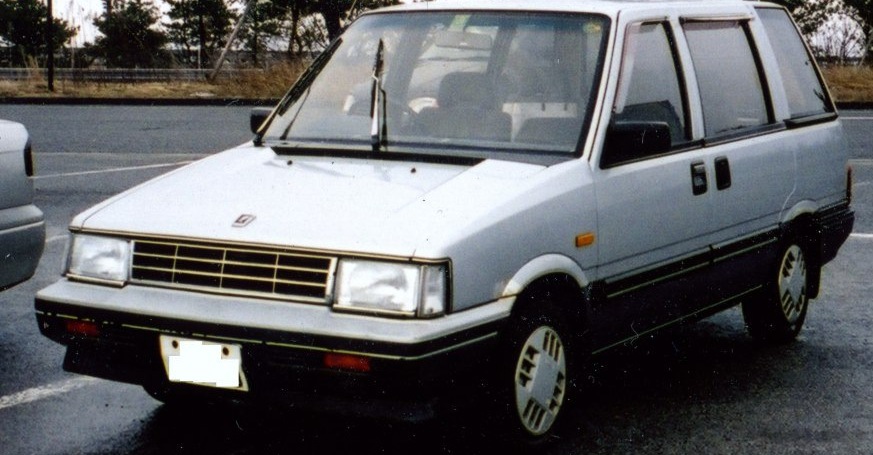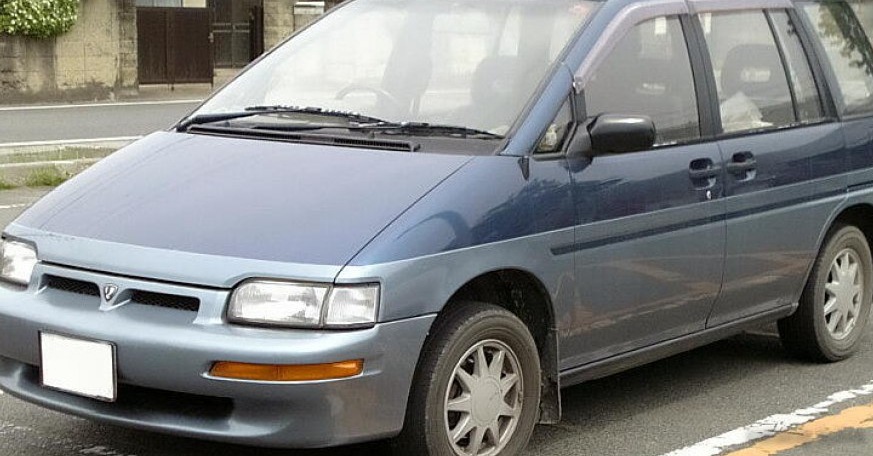
The Nissan Prairie (M11), specifically the 2.4i variant with a 133 horsepower engine and automatic transmission, was a compact minivan produced by Nissan from 1992 to 1998. Positioned as a family-oriented vehicle, the M11 Prairie primarily served the Japanese domestic market (JDM) and select export markets, including Australia and parts of Europe. It represented Nissan’s entry into the increasingly popular minivan segment, offering a blend of practicality, affordability, and a relatively spacious interior for its size. This particular 2.4i Automatic trim occupied a mid-range position within the Prairie lineup, offering a step up in performance from the smaller-engined models while remaining more accessible than potential future, higher-specification trims.
Technical Specifications
| Brand | Nissan |
| Model | Prairie |
| Generation | Prairie (M11) |
| Type (Engine) | 2.4 i (133 Hp) Automatic |
| Start of production | 1992 |
| End of production | 1998 |
| Powertrain Architecture | Internal Combustion engine |
| Body type | Minivan |
| Seats | 5 |
| Doors | 4 |
| Fuel consumption (combined) | 9.9 l/100 km |
| Fuel consumption (US mpg) | 23.8 US mpg |
| Fuel consumption (UK mpg) | 28.5 UK mpg |
| Fuel consumption (km/l) | 10.1 km/l |
| Fuel Type | Petrol (Gasoline) |
| Acceleration 0 – 100 km/h | 10.9 sec |
| Acceleration 0 – 62 mph | 10.9 sec |
| Acceleration 0 – 60 mph | 10.4 sec |
| Maximum speed | 185 km/h (114.95 mph) |
| Weight-to-power ratio | 9.8 kg/Hp |
| Weight-to-torque ratio | 6.8 kg/Nm |
| Power | 133 Hp @ 5600 rpm |
| Power per litre | 55.7 Hp/l |
| Torque | 192 Nm @ 2800 rpm (141.61 lb.-ft. @ 2800 rpm) |
| Engine layout | Front, Transverse |
| Engine displacement | 2389 cm3 (145.79 cu. in.) |
| Number of cylinders | 4 |
| Engine configuration | Inline |
| Cylinder Bore | 89 mm (3.5 in.) |
| Piston Stroke | 96 mm (3.78 in.) |
| Compression ratio | 8.6:1 |
| Number of valves per cylinder | 3 |
| Fuel injection system | Multi-port manifold injection |
| Engine aspiration | Naturally aspirated engine |
| Valvetrain | OHC |
| Kerb Weight | 1310 kg (2888.06 lbs.) |
| Max. weight | 1870 kg (4122.64 lbs.) |
| Max load | 560 kg (1234.59 lbs.) |
| Trunk (boot) space – minimum | 370 l (13.07 cu. ft.) |
| Trunk (boot) space – maximum | 1500 l (52.97 cu. ft.) |
| Fuel tank capacity | 65 l (17.17 US gal | 14.3 UK gal) |
| Length | 4360 mm (171.65 in.) |
| Width | 1690 mm (66.54 in.) |
| Height | 1630 mm (64.17 in.) |
| Wheelbase | 2610 mm (102.76 in.) |
| Front track | 1460 mm (57.48 in.) |
| Rear (Back) track | 1430 mm (56.3 in.) |
| Drivetrain Architecture | Front wheel drive |
| Number of gears | 4 |
| Gearbox type | Automatic transmission |
| Front suspension | Wishbone |
| Rear suspension | Spring Strut |
| Front brakes | Ventilated discs |
| Rear brakes | Drum |
| Assisting systems | ABS (Anti-lock braking system) |
| Steering type | Steering rack and pinion |
| Power steering | Hydraulic Steering |
| Tires size | 195/65 R14 |
| Wheel rims size | 14 |
Powertrain & Engine Architecture
The heart of the Prairie 2.4i Automatic is Nissan’s KA24E engine, a 2.4-liter inline-four cylinder powerplant. This engine, a staple in many Nissan vehicles of the era, utilizes a single overhead camshaft (SOHC) valvetrain with three valves per cylinder (two intake, one exhaust). The KA24E employs multi-port fuel injection, contributing to improved fuel efficiency and smoother operation compared to earlier carbureted engines. The engine’s 8.6:1 compression ratio was a compromise between performance and the fuel quality available in various markets. Paired with this engine is a four-speed automatic transmission, designed for ease of use and comfortable cruising. This transmission, while not known for its sportiness, provided smooth shifts and adequate performance for everyday driving. The transmission’s gear ratios were tuned for fuel economy and relaxed acceleration, prioritizing comfort over outright speed.
Driving Characteristics
The 2.4i Automatic Prairie offered a comfortable and predictable driving experience. With 133 horsepower and 192 Nm (141.61 lb-ft) of torque, acceleration was adequate for merging onto highways and navigating city streets, though it wasn’t particularly brisk. The automatic transmission, while smooth, did contribute to a slight loss of responsiveness compared to the available manual transmission options. The four-speed automatic’s gear ratios were spaced to prioritize fuel economy, meaning the engine often operated at higher RPMs during acceleration. Compared to other Prairie trims, such as those with smaller engines, the 2.4i offered noticeably more power and a more relaxed driving experience, especially when fully loaded with passengers and cargo. However, it didn’t possess the sporty feel of some competitors with more advanced transmissions or higher-output engines.
Equipment & Trim Levels
The 2.4i Automatic trim typically included features such as power windows, power door locks, and a basic audio system. Interior upholstery was generally cloth, with options for upgraded materials available. Dashboard configuration was functional and straightforward, prioritizing usability over aesthetics. Optional extras could include air conditioning, a sunroof, and upgraded audio systems. The Prairie was designed to be a practical family vehicle, and as such, the focus was on providing essential features at an affordable price point. Higher trim levels, if offered in specific markets, might have included features like alloy wheels, woodgrain interior trim, and more advanced audio systems.
Chassis & Braking
The Prairie M11 utilized a front-engine, front-wheel-drive layout. Suspension consisted of a wishbone setup at the front and a spring strut arrangement at the rear. This configuration provided a comfortable ride, though handling was not particularly sporty. Braking duties were handled by ventilated discs at the front and drum brakes at the rear. An Anti-lock Braking System (ABS) was included as a standard safety feature, enhancing braking performance and stability, particularly on slippery surfaces. The chassis was designed to maximize interior space while maintaining a reasonable level of structural rigidity.
Market Reception & Comparison
The Nissan Prairie M11, and specifically the 2.4i Automatic variant, was generally well-received as a practical and affordable family vehicle. Critics praised its spacious interior, comfortable ride, and relatively fuel-efficient engine. However, some reviewers noted that the automatic transmission could feel sluggish and that the overall driving experience lacked excitement. Compared to other minivans of the era, such as the Toyota Estima (Previa) or Honda Odyssey, the Prairie offered a more budget-friendly option, but it lacked some of the advanced features and refined driving dynamics of its competitors. Fuel economy was competitive for its class, and reliability was generally considered good, though maintenance costs could vary depending on the market.
Legacy
The Nissan Prairie M11, while not a groundbreaking vehicle, played a significant role in establishing Nissan as a competitor in the minivan segment. The KA24E engine proved to be a durable and reliable powerplant, and many examples are still on the road today. The 2.4i Automatic variant, while not the most sought-after trim, remains a popular choice for those seeking a practical and affordable family vehicle. In the used car market, the Prairie M11 is often valued for its simplicity, reliability, and spacious interior. Parts availability can be a concern in some markets, but the KA24E engine is relatively well-supported by aftermarket suppliers. The Prairie M11 represents a snapshot of 1990s Japanese automotive engineering, prioritizing practicality and affordability over outright performance and luxury.