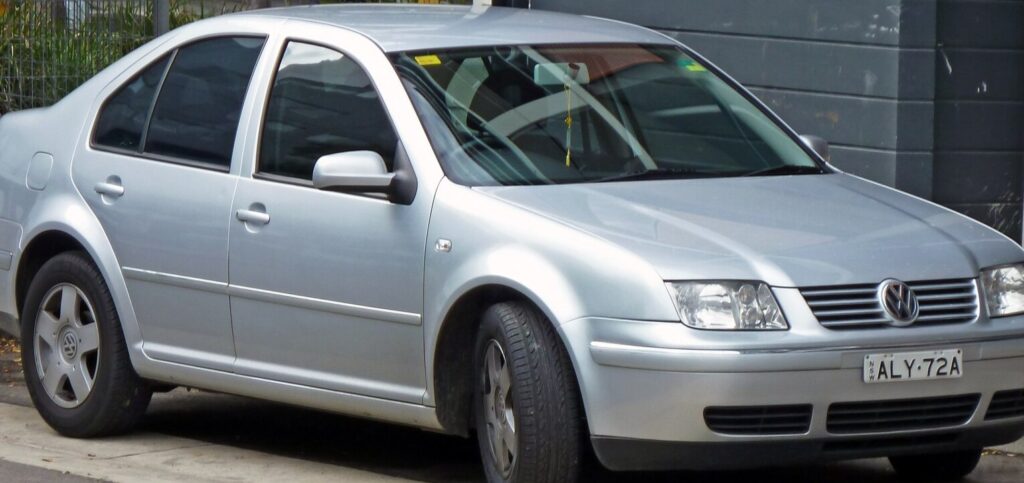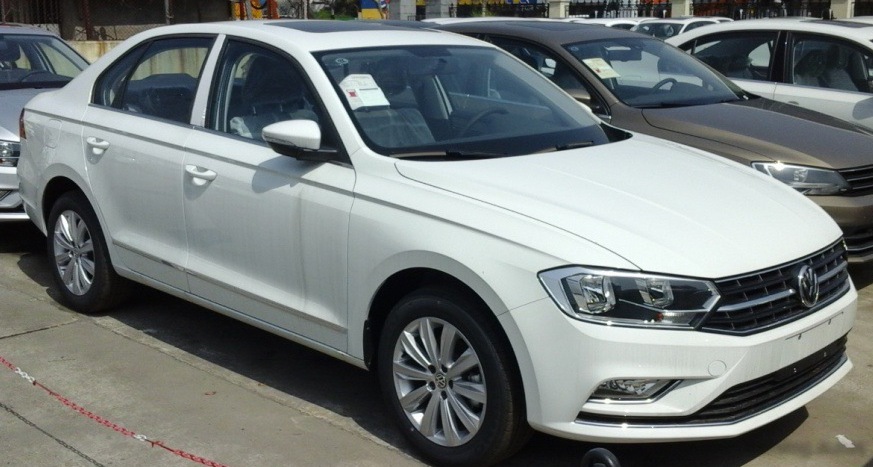
The Volkswagen Bora III (China) 1.4 230TSI, produced from 2015 to 2018, represents a specific iteration of the Bora sedan tailored for the Chinese automotive market. Positioned as a mid-range offering within the broader Bora III lineup, this variant combined a turbocharged 1.4-liter engine with a seven-speed dual-clutch transmission (DSG). It served as a popular choice for buyers seeking a balance between fuel efficiency, modern technology, and reasonable performance in the compact sedan segment. The Bora itself was a significant model for Volkswagen in China, offering a domestically produced alternative to imported models and catering to the growing demand for modern passenger vehicles.
Technical Specifications
| Brand | Volkswagen |
| Model | Bora |
| Generation | Bora III (China) |
| Type (Engine) | 1.4 230TSI (131 Hp) DSG |
| Start of production | 2015 |
| End of production | 2018 |
| Powertrain Architecture | Internal Combustion engine |
| Body type | Sedan |
| Seats | 5 |
| Doors | 4 |
| Fuel consumption (economy) – extra urban | 4.7 l/100 km (50 US mpg, 60.1 UK mpg, 21.3 km/l) |
| Fuel consumption (economy) – combined | 5.3 l/100 km (44.4 US mpg, 53.3 UK mpg, 18.9 km/l) |
| Fuel Type | Petrol (Gasoline) |
| Acceleration 0 – 100 km/h | 9.6 sec |
| Acceleration 0 – 62 mph | 9.6 sec |
| Acceleration 0 – 60 mph | 9.1 sec |
| Maximum speed | 200 km/h (124.27 mph) |
| Weight-to-power ratio | 10 kg/Hp, 100 Hp/tonne |
| Weight-to-torque ratio | 5.8 kg/Nm, 171.8 Nm/tonne |
| Power | 131 Hp @ 5000 rpm |
| Power per litre | 93.9 Hp/l |
| Torque | 225 Nm @ 1400-3500 rpm (165.95 lb.-ft. @ 1400-3500 rpm) |
| Engine layout | Front, Transverse |
| Engine Model/Code | EA211 |
| Engine displacement | 1395 cm3 (85.13 cu. in.) |
| Number of cylinders | 4 |
| Engine configuration | Inline |
| Number of valves per cylinder | 4 |
| Fuel injection system | Direct injection |
| Engine aspiration | Turbocharger, Intercooler |
| Kerb Weight | 1310 kg (2888.06 lbs) |
| Trunk (boot) space – minimum | 490 l (17.3 cu. ft.) |
| Fuel tank capacity | 55 l (14.53 US gal | 12.1 UK gal) |
| Length | 4562 mm (179.61 in) |
| Width | 1793 mm (70.59 in) |
| Height | 1468 mm (57.8 in) |
| Wheelbase | 2614 mm (102.91 in) |
| Ride height (ground clearance) | 122 mm (4.8 in) |
| Minimum turning circle (turning diameter) | 10.6 m (34.78 ft) |
| Drivetrain Architecture | The Internal combustion engine (ICE) drives the front wheels of the vehicle. |
| Drive wheel | Front wheel drive |
| Number of gears and type of gearbox | 7 gears, automatic transmission DSG |
| Front suspension | Independent type McPherson |
| Rear suspension | Semi-independent, coil spring |
| Front brakes | Ventilated discs |
| Rear brakes | Ventilated discs |
| Assisting systems | ABS (Anti-lock braking system) |
| Steering type | Steering rack and pinion |
| Power steering | Electric Steering |
| Wheel rims size | 16 |
Powertrain & Engine Architecture
At the heart of the Bora III 1.4 230TSI lies the EA211 engine family, a modular engine platform developed by Volkswagen Group. This specific engine is a 1.4-liter inline-four cylinder unit, employing direct fuel injection and a turbocharger with an intercooler. The engine code designates it as a 230TSI, indicating its power output and turbocharging. Direct injection allows for precise fuel delivery, enhancing both power and fuel efficiency. The turbocharger boosts power output by forcing more air into the cylinders. The EA211 engine is known for its relatively lightweight construction, contributing to the vehicle’s overall efficiency. Paired with this engine is a seven-speed dual-clutch gearbox (DSG). The DSG provides quick and smooth gear changes, enhancing both performance and driving comfort. It operates by utilizing two separate clutches for odd and even gears, allowing for pre-selection of the next gear and minimizing interruption in power delivery.
Driving Characteristics
The 131 horsepower and 225 Nm (166 lb-ft) of torque delivered by the 1.4 TSI engine and DSG transmission provided adequate performance for everyday driving in urban and highway conditions. Acceleration from 0 to 60 mph took approximately 9.1 seconds, which was competitive within its class. The DSG transmission played a crucial role in optimizing power delivery, offering responsive shifts and contributing to a more engaging driving experience compared to a traditional automatic. However, compared to higher-output Bora variants, such as those equipped with larger engines, the 1.4 TSI felt less powerful during overtaking maneuvers or when carrying a full load. The DSG’s programming prioritized fuel efficiency, resulting in slightly taller gear ratios, which could sometimes feel a bit sluggish at lower speeds. The overall driving experience was comfortable and refined, with the suspension tuned for a balance between ride quality and handling.
Equipment & Trim Levels
The 1.4 230TSI trim typically included standard features such as air conditioning, power windows, power mirrors, a basic audio system with USB connectivity, and ABS brakes. Interior upholstery was generally cloth, with options for leather upgrades available. Higher trim levels within the 1.4 TSI range might have included features like alloy wheels, a multi-function steering wheel, and a more advanced infotainment system. Optional extras often included a sunroof, rear parking sensors, and upgraded audio systems. The dashboard layout was functional and straightforward, reflecting the Bora’s focus on practicality and value.
Chassis & Braking
The Bora III utilized a front-wheel-drive layout with an independent McPherson strut suspension at the front and a semi-independent coil spring suspension at the rear. This suspension setup provided a comfortable ride and predictable handling characteristics. Braking duties were handled by ventilated disc brakes on all four wheels, offering adequate stopping power for the vehicle’s weight and performance. ABS (Anti-lock Braking System) was standard, enhancing safety during emergency braking situations. The steering system employed an electric power steering rack and pinion, providing light and precise steering feel.
Market Reception & Comparison
The Volkswagen Bora III 1.4 230TSI was generally well-received in the Chinese market as a practical and fuel-efficient sedan. Critics praised its modern design, comfortable interior, and responsive DSG transmission. However, some reviewers noted that the 1.4-liter engine could feel underpowered at times, particularly when compared to larger-engined competitors. In terms of fuel economy, the 1.4 TSI offered a significant advantage over larger displacement engines, achieving combined fuel consumption figures of around 5.3 l/100 km (44.4 US mpg). Compared to other trims in the Bora lineup, such as the 1.6-liter naturally aspirated version, the 1.4 TSI offered more power and torque, but at a slightly higher price point. Compared to the more expensive 1.8 TSI models, the 1.4 TSI provided a more affordable entry point into the Bora range.
Legacy
The Volkswagen Bora III 1.4 230TSI, while not a high-performance variant, has proven to be a relatively reliable and durable vehicle. The EA211 engine, when properly maintained, is known for its longevity. The DSG transmission, however, can be prone to issues if not serviced regularly. In the used car market, these Boras represent a good value proposition for buyers seeking a comfortable, fuel-efficient, and well-equipped sedan. Their relatively low running costs and readily available spare parts contribute to their continued popularity. The 1.4 TSI engine and DSG combination remains a common sight on Chinese roads, demonstrating the model’s enduring appeal.