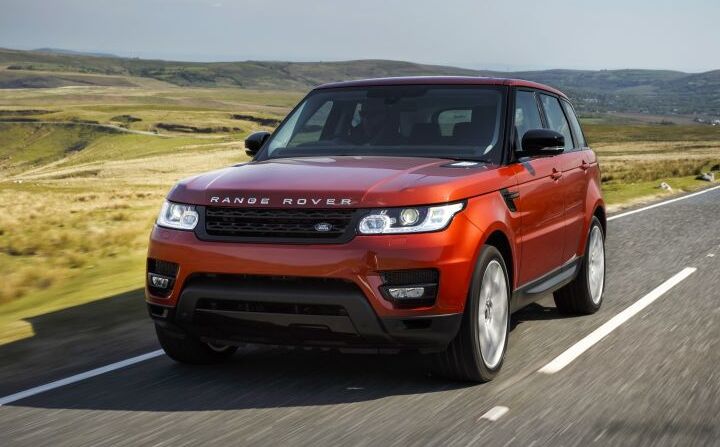
The Land Rover Range Rover Sport II 5.0 V8, produced from 2013 to 2017, represented a significant evolution in the Range Rover Sport lineage. Positioned as the performance flagship within the second-generation (LW550) Range Rover Sport series, this variant offered a compelling blend of luxury, off-road capability, and substantial power. It built upon the foundation of the L494 platform, shared with the full-size Range Rover, but with a more sporting focus in terms of handling and aesthetics. This model year saw a refinement of the already successful formula, solidifying the Range Rover Sport’s position as a desirable high-end SUV in the global market, particularly in North America, Europe, and the Middle East.
Technical Specifications
| Brand | Land Rover |
| Model | Range Rover Sport |
| Generation | Range Rover Sport II |
| Type (Engine) | 5.0 V8 (510 Hp) AWD Automatic |
| Start of production | 2013 |
| End of production | 2017 |
| Powertrain Architecture | Internal Combustion engine |
| Body type | SUV |
| Seats | 5 |
| Doors | 5 |
| Fuel consumption (combined) | 12.5 l/100 km (18.8 US mpg, 22.6 UK mpg, 8 km/l) |
| CO2 emissions | 298 g/km |
| Fuel Type | Petrol (Gasoline) |
| Acceleration 0 – 100 km/h | 5.3 sec |
| Acceleration 0 – 62 mph | 5.3 sec |
| Acceleration 0 – 60 mph | 5 sec |
| Maximum speed | 225 km/h (139.81 mph) |
| Emission standard | Euro 5 |
| Weight-to-power ratio | 4.5 kg/Hp, 220.8 Hp/tonne |
| Weight-to-torque ratio | 3.7 kg/Nm, 270.6 Nm/tonne |
| Power | 510 Hp |
| Power per litre | 102 Hp/l |
| Torque | 625 Nm @ 2500-5500 rpm (460.98 lb.-ft. @ 2500-5500 rpm) |
| Engine layout | Front, Longitudinal |
| Engine Model/Code | 508PS |
| Engine displacement | 5000 cm3 (305.12 cu. in.) |
| Number of cylinders | 8 |
| Engine configuration | V-engine |
| Cylinder Bore | 92.5 mm (3.64 in.) |
| Piston Stroke | 93 mm (3.66 in.) |
| Compression ratio | 9.5:1 |
| Number of valves per cylinder | 4 |
| Fuel injection system | Direct injection |
| Engine aspiration | Supercharger, Intercooler |
| Engine oil capacity | 8 l (8.45 US qt | 7.04 UK qt) |
| Coolant | 8.83 l (9.33 US qt | 7.77 UK qt) |
| Kerb Weight | 2310 kg (5092.68 lbs.) |
| Fuel tank capacity | 105 l (27.74 US gal | 23.1 UK gal) |
| Length | 4850 mm (190.94 in.) |
| Width | 1983 mm (78.07 in.) |
| Width with mirrors folded | 2073 mm (81.61 in.) |
| Height | 1780 mm (70.08 in.) |
| Wheelbase | 2923 mm (115.08 in.) |
| Drag coefficient (Cd) | 0.37 |
| Minimum turning circle | 12.6 m (41.34 ft.) |
| Approach angle | 33.0° |
| Departure angle | 31.0° |
| Drive wheel | All wheel drive (4×4) |
| Number of gears | 8 |
| Gearbox type | automatic transmission |
| Front suspension | Air suspension |
| Rear suspension | Air suspension |
| Front brakes | Ventilated discs |
| Rear brakes | Ventilated discs |
| Assisting systems | ABS (Anti-lock braking system) |
| Steering type | Steering rack and pinion |
| Power steering | Electric Steering |
Powertrain & Engine Architecture
At the heart of the Range Rover Sport II 5.0 V8 lies Jaguar Land Rover’s 5.0-liter supercharged V8 engine, internally designated as the 508PS unit. This engine is a significant departure from earlier Rover V8 designs, utilizing aluminum block construction and direct fuel injection. The supercharger, a Roots-type unit, provides forced induction, boosting power output to 510 horsepower and 625 Nm (460.98 lb-ft) of torque. The engine’s torque curve is remarkably flat, delivering strong acceleration across a wide RPM range, from 2500 to 5500 rpm. The engine features variable valve timing on both intake and exhaust sides, optimizing performance and efficiency. Paired with this engine is a ZF 8HP70 eight-speed automatic transmission, known for its smooth shifts and responsiveness. This transmission is electronically controlled and features a wide gear ratio spread, contributing to both performance and fuel economy. The transmission also offers a Sport mode for more aggressive shifting.
Driving Characteristics
The 5.0 V8 automatic combination delivers exhilarating performance. Acceleration from 0 to 60 mph is achieved in around 5 seconds, making it one of the quickest SUVs of its time. The supercharger provides instant throttle response, and the eight-speed transmission ensures the engine is always in the optimal power band. Compared to the 3.0-liter V6 models, the V8 offers a significantly more powerful and refined driving experience. While the V6 prioritized fuel economy, the V8 focused on delivering a truly sporting feel. Compared to the diesel variants (like the SDV6 or SDV8), the V8 offers a different character – less low-end torque but a more thrilling top-end rush. The air suspension provides a comfortable ride, while also allowing for adjustable ride height for off-road situations. The all-wheel-drive system provides excellent traction in all conditions.
Equipment & Trim Levels
The Range Rover Sport II 5.0 V8 typically came with a high level of standard equipment. This included leather upholstery, heated and ventilated front seats, a premium sound system (often Meridian), a touchscreen infotainment system with navigation, and a panoramic sunroof. Optional extras included adaptive cruise control, a rear-seat entertainment system, and various exterior styling packages. Trim levels varied by market, but generally, the 5.0 V8 was offered in higher-spec trims like HSE Dynamic, which added sportier styling cues and enhanced performance features. Interior color options were extensive, allowing buyers to personalize their vehicle.
Chassis & Braking
The Range Rover Sport II utilizes a robust chassis construction, combining high-strength steel with aluminum components to minimize weight while maximizing rigidity. The air suspension system provides adjustable ride height and damping, allowing for both comfortable on-road driving and capable off-road performance. The braking system features ventilated discs on all four wheels, providing ample stopping power. The 5.0 V8 models often came equipped with larger brake rotors and calipers compared to the lower-spec models. Anti-lock braking system (ABS) and electronic stability control (ESC) are standard features, enhancing safety and control.
Market Reception & Comparison
The Range Rover Sport II 5.0 V8 was generally well-received by automotive critics. It was praised for its powerful engine, luxurious interior, and impressive off-road capabilities. However, fuel economy was a common criticism, as the supercharged V8 is inherently thirsty. Compared to rivals like the Porsche Cayenne Turbo and BMW X5 M, the Range Rover Sport offered a unique blend of luxury, off-road prowess, and performance. The Range Rover Sport often stood out for its more commanding driving position and its ability to tackle challenging terrain. Reliability was generally good, although some owners reported issues with the air suspension system.
Legacy
The 5.0 V8 engine in the Range Rover Sport II has proven to be a relatively durable powertrain, although regular maintenance is crucial. The ZF 8HP70 transmission is also known for its reliability. On the used car market, these models hold their value relatively well, particularly those in good condition with a full service history. The combination of performance, luxury, and off-road capability continues to make the Range Rover Sport II 5.0 V8 a desirable SUV for enthusiasts and buyers seeking a premium driving experience. While newer Range Rover Sport models offer more advanced technology and improved fuel efficiency, the second-generation 5.0 V8 remains a compelling option for those who appreciate a powerful and capable luxury SUV.