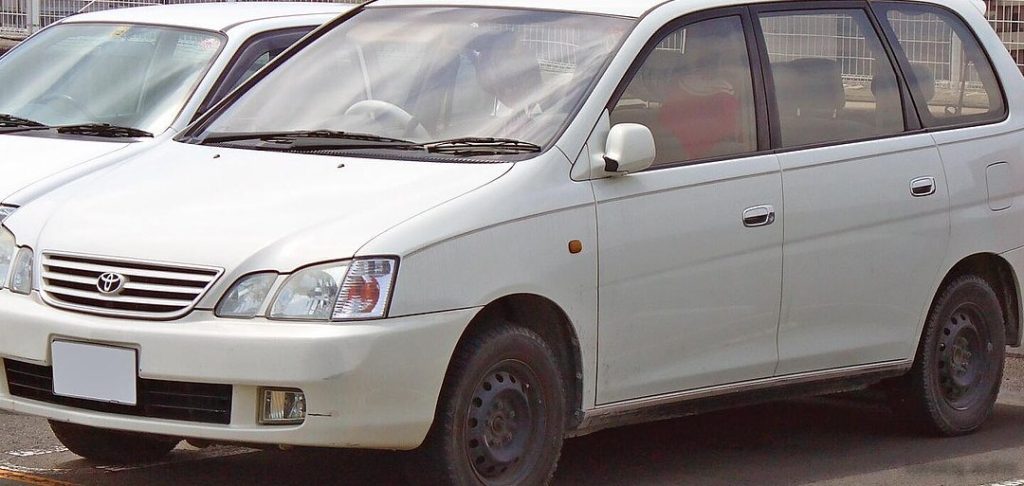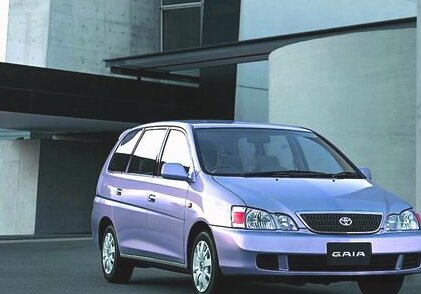
The Toyota Gaia, specifically the M10G generation produced between 1998 and 2004, was a seven-seat minivan primarily aimed at the Japanese domestic market (JDM). Positioned as a practical and spacious family vehicle, the Gaia shared its platform with the Toyota Picnic (also known as the Ipsum in some markets) and offered a compelling alternative to larger, more expensive MPVs. The 2.0 i 16V variant, equipped with the 1AZ-FE engine and a four-speed automatic transmission, represented a mid-range offering within the Gaia lineup, balancing performance with fuel efficiency and ease of use. This configuration was popular with families seeking a comfortable and reliable vehicle for both daily commutes and longer journeys.
Technical Specifications
| Brand | Toyota |
| Model | Gaia |
| Generation | Gaia (M10G) |
| Type (Engine) | 2.0 i 16V (145 Hp) 4WD |
| Start of production | May, 1998 |
| End of production | September, 2004 |
| Powertrain Architecture | Internal Combustion engine |
| Body type | Minivan |
| Seats | 7 |
| Doors | 5 |
| Fuel Type | Petrol (Gasoline) |
| Weight-to-power ratio | 10.3 kg/Hp, 96.7 Hp/tonne |
| Weight-to-torque ratio | 7.7 kg/Nm, 130.7 Nm/tonne |
| Power | 145 Hp @ 6000 rpm |
| Power per litre | 72.6 Hp/l |
| Torque | 196 Nm @ 4400 rpm (144.56 lb.-ft. @ 4400 rpm) |
| Engine layout | Front, Transverse |
| Engine Model/Code | 1AZ-FE |
| Engine displacement | 1998 cm3 (121.93 cu. in.) |
| Number of cylinders | 4 |
| Engine configuration | Inline |
| Cylinder Bore | 86 mm (3.39 in.) |
| Piston Stroke | 86 mm (3.39 in.) |
| Compression ratio | 10:1 |
| Number of valves per cylinder | 4 |
| Fuel injection system | Multi-port manifold injection |
| Engine aspiration | Naturally aspirated engine |
| Valvetrain | DOHC |
| Engine oil capacity | 4.4 l (4.65 US qt | 3.87 UK qt) |
| Kerb Weight | 1500 kg (3306.93 lbs) |
| Max. weight | 1830 kg (4034.46 lbs) |
| Max load | 330 kg (727.53 lbs) |
| Trunk (boot) space – minimum | 965 l (34.08 cu. ft.) |
| Fuel tank capacity | 60 l (15.85 US gal | 13.2 UK gal) |
| Length | 4620 mm (181.89 in.) |
| Width | 1695 mm (66.73 in.) |
| Height | 1665 mm (65.55 in.) |
| Wheelbase | 2735 mm (107.68 in.) |
| Front track | 1470 mm (57.87 in.) |
| Rear (Back) track | 1450 mm (57.09 in.) |
| Drive wheel | All wheel drive (4×4) |
| Number of gears and type of gearbox | 4 gears, automatic transmission |
| Front suspension | Independent type McPherson |
| Rear suspension | McPherson |
| Front brakes | Ventilated discs |
| Rear brakes | Drum |
| Assisting systems | ABS (Anti-lock braking system) |
| Steering type | Steering rack and pinion |
| Power steering | Hydraulic Steering |
| Tires size | 195/65 R14 |
Powertrain & Engine Architecture
The heart of the Gaia 2.0 i 16V is the 1AZ-FE engine, a 1.998-liter (2.0L) inline-four cylinder gasoline engine. This engine is part of Toyota’s AZ series, known for its reliability and relatively simple design. The “16V” designation indicates the engine features four valves per cylinder, contributing to improved breathing and power output. The 1AZ-FE utilizes a multi-port fuel injection system, delivering fuel directly to each intake port for precise fuel metering. The engine also incorporates a double overhead camshaft (DOHC) valvetrain, further enhancing its volumetric efficiency. The four-speed automatic transmission, a common choice for family vehicles in Japan, was selected for its ease of use and smooth shifting characteristics. While not offering the most advanced gear ratios, it provided adequate performance for everyday driving.
Driving Characteristics
The 145 horsepower and 196 Nm (144.56 lb-ft) of torque produced by the 2.0L engine and automatic transmission combination provided adequate, though not exhilarating, performance. Acceleration was reasonable for a minivan of its size, but it wasn’t designed for sporty driving. The automatic transmission, while smooth, did contribute to a slight loss of power compared to the available five-speed manual transmission. The 4WD system provided enhanced traction in inclement weather conditions, a significant benefit in many parts of Japan. The gear ratios were tuned for fuel efficiency and comfortable cruising, rather than rapid acceleration. Compared to the higher-output 2.2L engine option, the 2.0L felt less powerful, particularly when fully loaded with passengers and cargo. However, the 2.0L offered a better balance between performance and fuel economy.
Equipment & Trim Levels
The Gaia 2.0 i 16V 4WD typically came equipped with a reasonable level of standard features. These included power windows, power door locks, air conditioning, and an AM/FM radio. Higher trim levels offered upgrades such as alloy wheels, a more sophisticated audio system, and optional features like a sunroof and woodgrain interior trim. Interior upholstery was typically cloth, with options for upgraded materials on higher-spec models. The dashboard layout was functional and straightforward, prioritizing ease of use over stylistic flair. The seven-seat configuration featured a flexible seating arrangement, with the rear seats capable of folding flat to maximize cargo space.
Chassis & Braking
The Gaia’s chassis utilized an independent McPherson strut suspension in the front, providing a comfortable ride and decent handling. The rear suspension also employed a McPherson strut design, although it was simpler in construction. Braking duties were handled by ventilated discs on the front wheels and drum brakes on the rear. While adequate for normal driving conditions, the rear drum brakes were a cost-saving measure and didn’t offer the same stopping power as disc brakes. An anti-lock braking system (ABS) was standard, enhancing safety by preventing wheel lockup during hard braking. The steering system was a rack and pinion setup with hydraulic power assistance, providing light and responsive steering feel.
Market Reception & Comparison
The Toyota Gaia 2.0 i 16V 4WD was generally well-received in the Japanese market as a practical and reliable family vehicle. Critics praised its spacious interior, comfortable ride, and fuel efficiency. However, some reviewers noted that the 2.0L engine felt underpowered when fully loaded. Compared to the 2.2L variant, the 2.0L offered better fuel economy but sacrificed some performance. The Gaia competed with other minivans in the JDM market, such as the Honda Stepwgn and the Nissan Serena. The Gaia’s reputation for reliability and Toyota’s strong brand image gave it a competitive edge.
Legacy
The Toyota Gaia, and specifically the 2.0 i 16V 4WD variant, has proven to be a durable and long-lasting vehicle. The 1AZ-FE engine is known for its reliability, and with proper maintenance, can exceed 200,000 miles. In the used car market, Gaias are often sought after for their affordability and practicality. While not a particularly collectible vehicle, it remains a popular choice for those seeking a dependable and spacious family minivan. Parts availability is generally good, thanks to Toyota’s extensive parts network. The Gaia represents a solid example of Japanese engineering and a testament to Toyota’s commitment to building reliable vehicles.