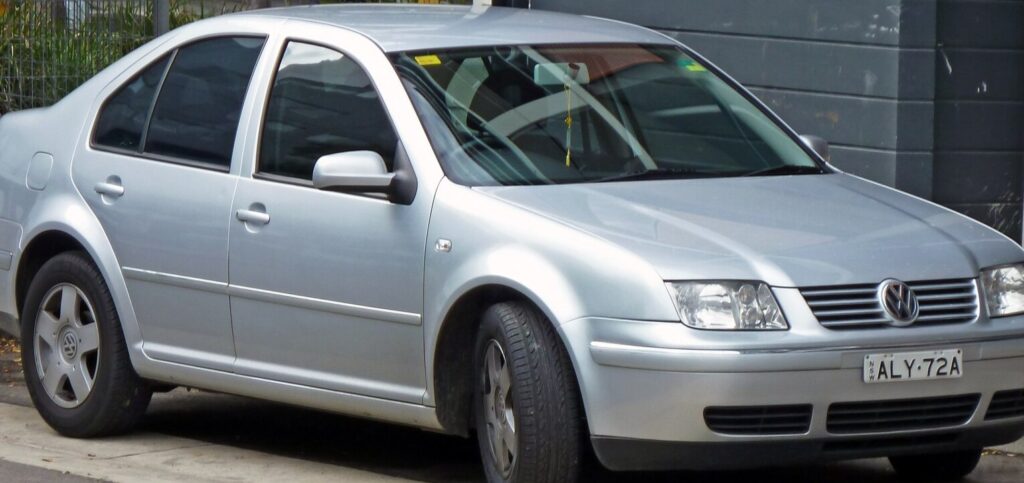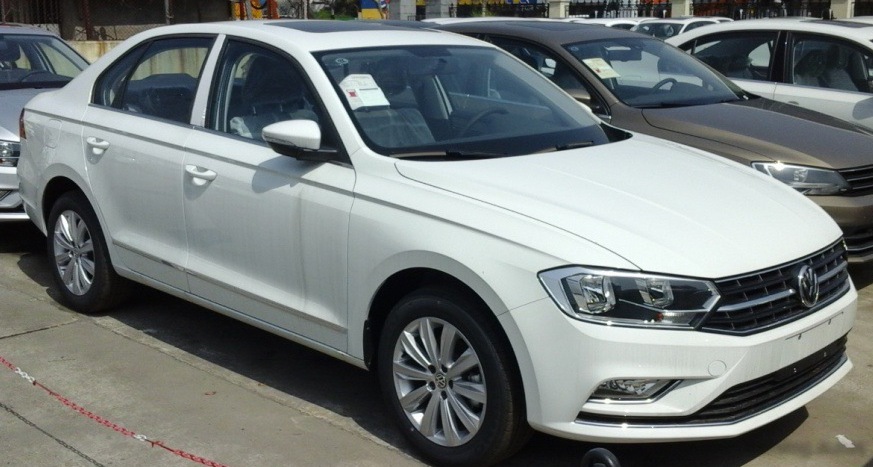
The Volkswagen Bora III 1.5, produced specifically for the Chinese market between 2017 and 2018, represents a continuation of the Bora lineage – a compact sedan based on the Volkswagen Golf’s A5 platform (internally designated as the 1HX0/A3). While the Bora nameplate had been discontinued in Europe by 2005, FAW-Volkswagen continued production and development for the Chinese market, adapting the model to meet local preferences and regulations. This 1.5-liter variant occupied an entry-level position within the Bora III range, offering a balance of affordability and practicality for Chinese consumers. It served as a stepping stone into the Volkswagen brand, competing with other locally produced compact sedans.
Technical Specifications
| Brand | Volkswagen |
| Model | Bora |
| Generation | Bora III (China) |
| Type (Engine) | 1.5 (110 Hp) |
| Start of production | 2017 |
| End of production | 2018 |
| Powertrain Architecture | Internal Combustion engine |
| Body type | Sedan |
| Seats | 5 |
| Doors | 4 |
| Fuel consumption (economy) – extra urban | 4.7 l/100 km (50 US mpg, 60.1 UK mpg, 21.3 km/l) |
| Fuel consumption (economy) – combined | 5.7 l/100 km (41.3 US mpg, 49.6 UK mpg, 17.5 km/l) |
| Fuel Type | Petrol (Gasoline) |
| Acceleration 0 – 100 km/h | 11.6 sec |
| Acceleration 0 – 62 mph | 11.6 sec |
| Acceleration 0 – 60 mph | 11 sec |
| Maximum speed | 185 km/h (114.95 mph) |
| Weight-to-power ratio | 11.2 kg/Hp, 89.4 Hp/tonne |
| Weight-to-torque ratio | 8.2 kg/Nm, 122 Nm/tonne |
| Power | 110 Hp @ 6000 rpm |
| Power per litre | 73.4 Hp/l |
| Torque | 150 Nm @ 3800 rpm (110.63 lb.-ft. @ 3800 rpm) |
| Engine layout | Front, Transverse |
| Engine Model/Code | EA211 |
| Engine displacement | 1498 cm3 (91.41 cu. in.) |
| Number of cylinders | 4 |
| Engine configuration | Inline |
| Number of valves per cylinder | 4 |
| Engine aspiration | Naturally aspirated engine |
| Kerb Weight | 1230 kg (2711.69 lbs) |
| Trunk (boot) space – minimum | 490 l (17.3 cu. ft.) |
| Fuel tank capacity | 55 l (14.53 US gal | 12.1 UK gal) |
| Length | 4562 mm (179.61 in) |
| Width | 1793 mm (70.59 in) |
| Height | 1468 mm (57.8 in) |
| Wheelbase | 2614 mm (102.91 in) |
| Ride height (ground clearance) | 122 mm (4.8 in) |
| Minimum turning circle (turning diameter) | 10.6 m (34.78 ft) |
| Drivetrain Architecture | The Internal combustion engine (ICE) drives the front wheels of the vehicle. |
| Drive wheel | Front wheel drive |
| Number of gears and type of gearbox | 5 gears, manual transmission |
| Front suspension | Independent type McPherson |
| Rear suspension | Semi-independent, coil spring |
| Front brakes | Ventilated discs |
| Rear brakes | Ventilated discs |
| Assisting systems | ABS (Anti-lock braking system) |
| Steering type | Steering rack and pinion |
| Power steering | Electric Steering |
| Wheel rims size | 15 |
Powertrain & Engine Architecture
The heart of the Bora III 1.5 is the EA211 engine family, a 1.5-liter naturally aspirated inline-four cylinder gasoline engine. This engine, a common sight in Volkswagen’s entry-level offerings in China, is known for its relatively simple design and focus on fuel efficiency. The EA211 features a cast iron block with an aluminum cylinder head, incorporating four valves per cylinder (DOHC). Fuel delivery is managed by multi-point fuel injection, a system that provides adequate atomization for efficient combustion. The engine produces 110 horsepower at 6000 rpm and 150 Nm (110.63 lb-ft) of torque at 3800 rpm. The engine is paired with a five-speed manual transmission, which was the standard offering for this trim level. While an automatic transmission was available on higher-spec Bora models, it wasn’t offered with the 1.5-liter engine.
Driving Characteristics
The 1.5-liter Bora III, with its 110 hp output and manual transmission, delivers a driving experience geared towards practicality and economy rather than outright performance. Acceleration from 0 to 100 km/h (0-62 mph) takes approximately 11.6 seconds, and top speed is limited to 185 km/h (114.95 mph). The five-speed manual transmission provides a reasonable level of control, but the engine’s limited torque output means frequent downshifts are necessary for overtaking or climbing hills. Compared to higher-trim Bora models equipped with larger engines (such as the 1.6L), the 1.5 feels noticeably less responsive. However, the lighter engine weight contributes to slightly improved handling and fuel economy. The gear ratios are tuned for efficiency, prioritizing fuel savings over spirited driving.
Equipment & Trim Levels
The 1.5-liter Bora III typically came with a fairly basic level of equipment, reflecting its position as the entry-level model. Standard features generally included power windows, central locking, air conditioning, and an audio system with MP3 compatibility. Safety features included ABS (Anti-lock Braking System) and dual front airbags. Interior upholstery was typically cloth, and the dashboard featured a simple, functional design. Optional extras, such as alloy wheels, a sunroof, and upgraded audio systems, were available at an additional cost. The trim level was often referred to as the “Base” or “Standard” model, and it was primarily targeted at first-time car buyers and those seeking a reliable and affordable sedan.
Chassis & Braking
The Bora III 1.5 utilizes a front-wheel-drive chassis with an independent McPherson strut suspension at the front and a semi-independent coil spring suspension at the rear. This suspension setup provides a comfortable ride quality, suitable for the often-challenging road conditions found in China. The braking system consists of ventilated discs on all four wheels, providing adequate stopping power for the vehicle’s weight and performance. The steering is rack and pinion with electric power assistance, offering a light and responsive feel. The 15-inch steel wheels were standard, although alloy wheels were available as an optional upgrade.
Market Reception & Comparison
The Bora III 1.5 was generally well-received in the Chinese market as a practical and affordable option. Critics praised its fuel efficiency and reliability, but noted its lack of performance compared to higher-trim models. Compared to the 1.6-liter Bora, the 1.5 offered a lower purchase price but sacrificed some power and refinement. It competed directly with other locally produced compact sedans, such as the Hyundai Elantra and the Toyota Corolla, offering a similar level of value and practicality. Fuel economy figures of around 5.7 l/100 km (41.3 US mpg) were considered competitive for its class.
Legacy
The Volkswagen Bora III 1.5, while not a particularly groundbreaking vehicle, played an important role in Volkswagen’s success in the Chinese market. The EA211 engine proved to be a reliable and durable powerplant, and many examples are still on the road today. In the used car market, the 1.5-liter Bora III is often sought after by budget-conscious buyers looking for a dependable and fuel-efficient sedan. While it may not offer the performance or features of higher-trim models, its simplicity and affordability have ensured its continued relevance in the Chinese automotive landscape. Maintenance costs are generally low, and spare parts are readily available, contributing to its long-term appeal.