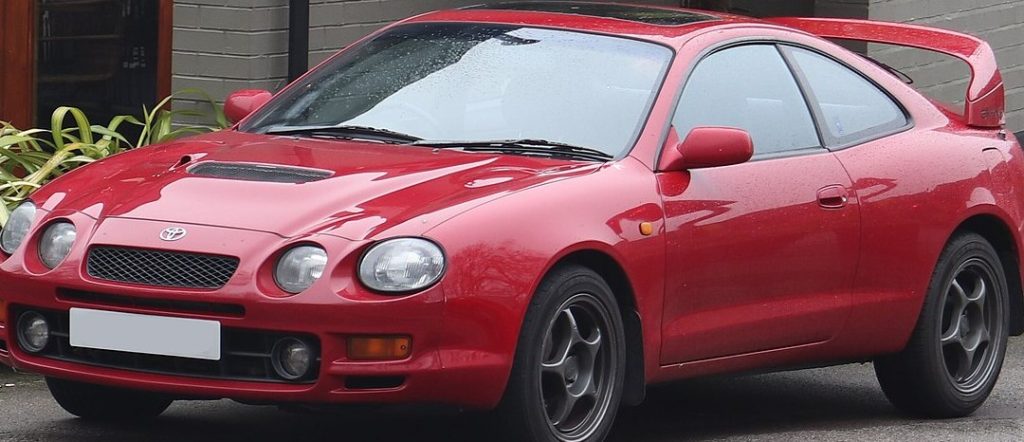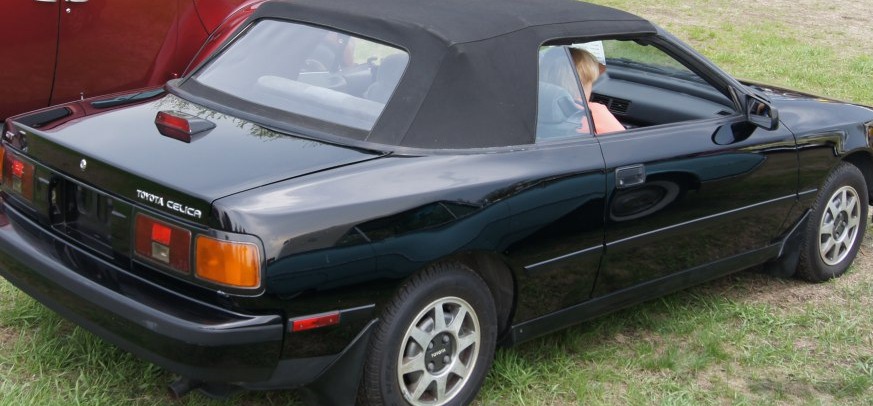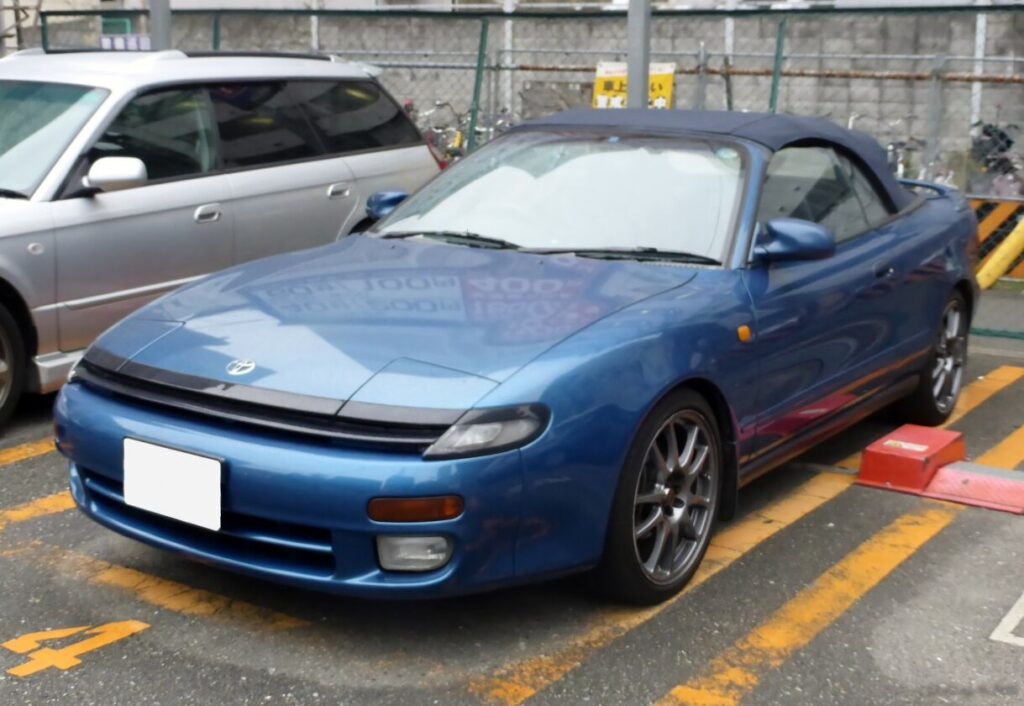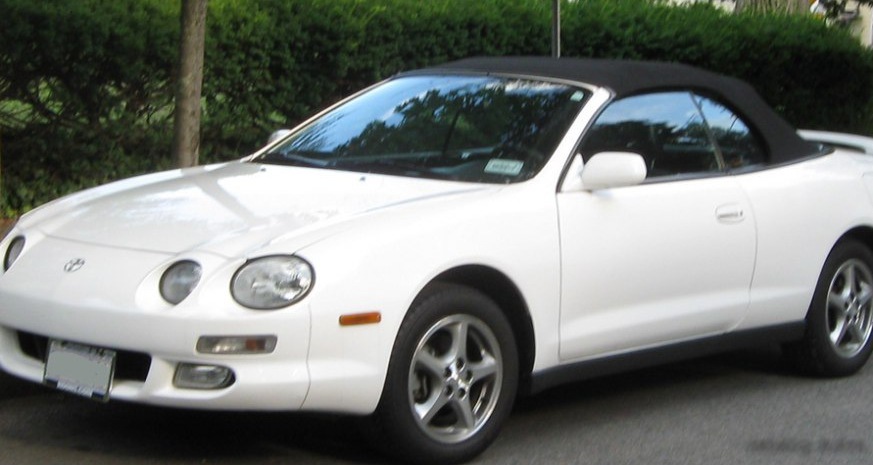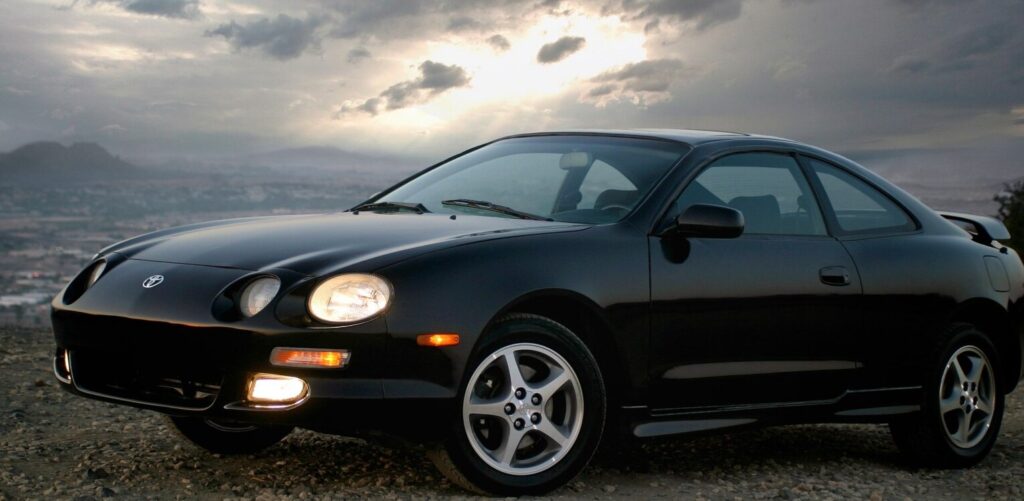
The Toyota Celica T20, produced between 1993 and 1999, represented the sixth generation of Toyota’s iconic sports coupe. This generation, known internally as the T20 series, marked a significant departure from its predecessors with a more rounded, aerodynamic design and a focus on a more youthful market. The 1.8 i 16V variant, producing 116 horsepower, served as a key entry point into the Celica lineup, offering a balance of performance and affordability. It was positioned as a more accessible alternative to the higher-performance GT-Four models and the more luxurious GT trims. The T20 platform was a front-engine, front-wheel-drive configuration, and the Celica continued to be sold primarily as a 3-door liftback.
Technical Specifications
| Brand | Toyota |
| Model | Celica |
| Generation | Celica (T20) |
| Type (Engine) | 1.8 i 16V (116 Hp) |
| Start of production | 1993 |
| End of production | 1999 |
| Powertrain Architecture | Internal Combustion engine |
| Body type | Liftback |
| Seats | 4 |
| Doors | 3 |
| Fuel consumption (combined) | 7.4 l/100 km |
| Fuel consumption (US mpg) | 31.8 US mpg |
| Fuel consumption (UK mpg) | 38.2 UK mpg |
| Fuel consumption (km/l) | 13.5 km/l |
| Fuel Type | Petrol (Gasoline) |
| Acceleration 0 – 100 km/h | 9.5 sec |
| Acceleration 0 – 62 mph | 9.5 sec |
| Acceleration 0 – 60 mph | 9 sec |
| Maximum speed | 200 km/h (124.27 mph) |
| Weight-to-power ratio | 10.1 kg/Hp |
| Weight-to-torque ratio | 7.6 kg/Nm |
| Power | 116 Hp @ 5800 rpm |
| Power per litre | 65.8 Hp/l |
| Torque | 154 Nm @ 4400 rpm (113.58 lb.-ft. @ 4400 rpm) |
| Engine layout | Front, Transverse |
| Engine Model/Code | 7A-FE |
| Engine displacement | 1762 cm3 (107.52 cu. in.) |
| Number of cylinders | 4 |
| Engine configuration | Inline |
| Cylinder Bore | 81 mm (3.19 in.) |
| Piston Stroke | 85.5 mm (3.37 in.) |
| Compression ratio | 9.5:1 |
| Number of valves per cylinder | 4 |
| Fuel injection system | Multi-port manifold injection |
| Engine aspiration | Naturally aspirated engine |
| Valvetrain | DOHC |
| Engine oil capacity | 3.7 l (3.91 US qt | 3.26 UK qt) |
| Coolant capacity | 6.1 l (6.45 US qt | 5.37 UK qt) |
| Kerb Weight | 1170 kg (2579.41 lbs.) |
| Max. weight | 1510 kg (3328.98 lbs.) |
| Max load | 340 kg (749.57 lbs.) |
| Trunk (boot) space – minimum | 283 l (9.99 cu. ft.) |
| Fuel tank capacity | 60 l (15.85 US gal | 13.2 UK gal) |
| Length | 4425 mm (174.21 in.) |
| Width | 1750 mm (68.9 in.) |
| Height | 1305 mm (51.38 in.) |
| Wheelbase | 2450 mm (96.46 in.) |
| Front track | 1510 mm (59.45 in.) |
| Rear (Back) track | 1490 mm (58.66 in.) |
| Drivetrain Architecture | Front wheel drive |
| Number of gears | 5 gears, manual transmission |
| Front suspension | Spring Strut |
| Rear suspension | Coil spring |
| Front brakes | Ventilated discs |
| Rear brakes | Disc |
| Assisting systems | ABS (Anti-lock braking system) |
| Steering type | Steering rack and pinion |
| Power steering | Hydraulic Steering |
| Tires size | 195/65 R14 H |
INTRODUCTION
The Toyota Celica T20 1.8 i 16V, produced from 1993 to 1999, was a pivotal model in the Celica lineage. It represented a shift towards a more modern and accessible sports coupe, appealing to a broader audience than previous generations. Built on the T20 platform, it shared its underpinnings with other Toyota models of the era, including the Corolla and the Lexus CT200h. The 1.8L engine, designated the 7A-FE, was a key component of this model, offering a balance between fuel efficiency and adequate performance for everyday driving. This variant was particularly popular in European and Asian markets, where smaller displacement engines were favored due to tax regulations and fuel costs.
Powertrain & Engine Architecture
The heart of the Celica 1.8 i 16V is the 7A-FE engine, a 1.8-liter (1762 cc) inline-four cylinder powerplant. This engine features a double overhead camshaft (DOHC) valvetrain with four valves per cylinder, contributing to its relatively high output for its displacement. The 7A-FE utilizes a multi-port fuel injection system, delivering fuel directly to each intake port for improved combustion efficiency. The engine’s 9.5:1 compression ratio further enhances performance. The 116 horsepower and 113.58 lb-ft of torque were delivered at 5800 and 4400 rpm respectively. The engine is transversely mounted in the front of the vehicle, driving the front wheels. The standard transmission for this variant was a 5-speed manual, although a 4-speed automatic transmission was also available, albeit less common. The automatic transmission, while offering convenience, did impact acceleration and fuel economy compared to the manual version.
Driving Characteristics
The Celica 1.8 i 16V with the manual transmission offered a reasonably engaging driving experience. While not a high-performance machine, the engine provided sufficient power for spirited driving on winding roads. The 0-60 mph time of around 9 seconds was respectable for its class in the mid-1990s. The automatic transmission, however, noticeably dulled the driving experience. The gear ratios were optimized for fuel economy rather than acceleration, resulting in slower response times and a less direct connection between the engine and the wheels. The suspension, tuned for comfort, provided a compliant ride, but body roll was more pronounced during cornering compared to the sportier GT models. Steering was precise, thanks to the rack-and-pinion system with hydraulic power assistance.
Equipment & Trim Levels
The 1.8 i 16V trim typically came with a reasonable level of standard equipment. Interior features included cloth upholstery, power windows, power door locks, and a basic audio system. Air conditioning was often standard, but could be optional depending on the market. The dashboard layout was functional and driver-focused, with clearly marked gauges. Optional extras included alloy wheels, a sunroof, and upgraded audio systems. The interior materials were generally durable but not luxurious, reflecting the car’s positioning as an affordable sports coupe. Safety features included ABS (Anti-lock Braking System) as standard equipment, a significant advancement for the time.
Chassis & Braking
The Celica T20 utilized a MacPherson strut front suspension and a coil spring rear suspension. This setup provided a good balance between ride comfort and handling. The front brakes were ventilated discs, offering good stopping power, while the rear brakes were solid discs. The standard tire size was 195/65 R14, providing adequate grip for everyday driving. The chassis was relatively lightweight, contributing to the car’s nimble handling characteristics. A stabilizer bar was included at the front to reduce body roll during cornering.
Market Reception & Comparison
The Celica 1.8 i 16V was generally well-received by automotive critics as an affordable and stylish sports coupe. It was praised for its fuel efficiency, reliability, and comfortable ride. However, it was often criticized for its lack of outright performance compared to the higher-spec GT and GT-Four models. Compared to the 2.2-liter GT, the 1.8L offered significantly less power and acceleration, but it also consumed less fuel and was more affordable to insure. The 1.9 TDI versions of the Volkswagen Golf and other European competitors offered comparable fuel economy and torque, but lacked the Celica’s sporty styling and front-wheel-drive handling characteristics.
Legacy
The Toyota Celica T20 1.8 i 16V has proven to be a relatively reliable and durable vehicle. The 7A-FE engine is known for its longevity, and with proper maintenance, can easily exceed 200,000 miles. Today, the Celica T20 is gaining popularity among enthusiasts as a classic Japanese sports coupe. While not as sought-after as the GT-Four models, the 1.8 i 16V offers an affordable entry point into Celica ownership. Parts availability is generally good, and the car’s relatively simple mechanical design makes it a good candidate for DIY maintenance and repairs. The 1.8L automatic variant, while less desirable to driving enthusiasts, remains a practical and economical option for those seeking a stylish and reliable coupe.