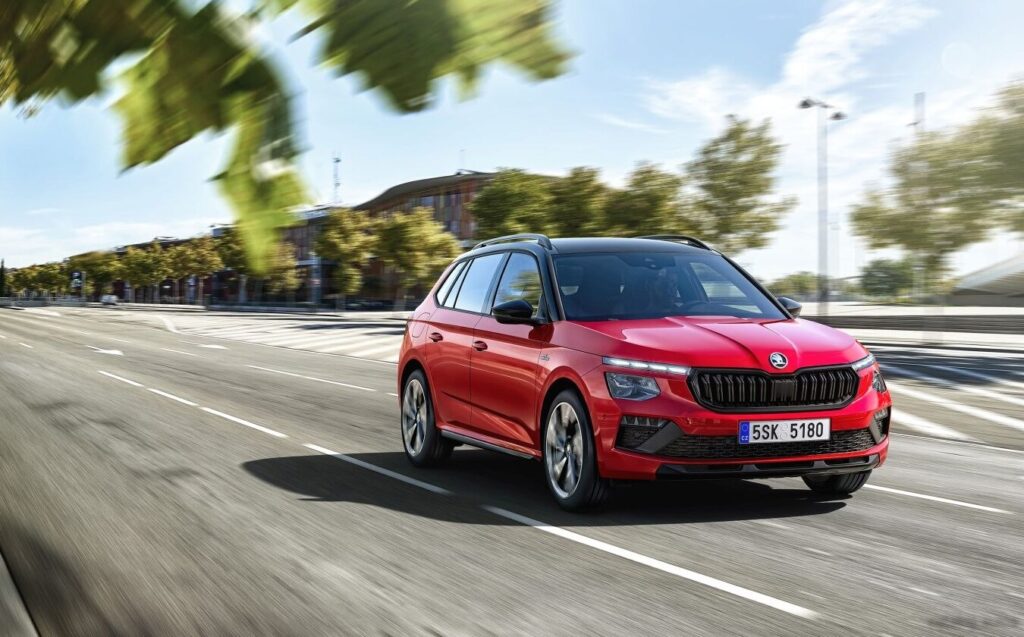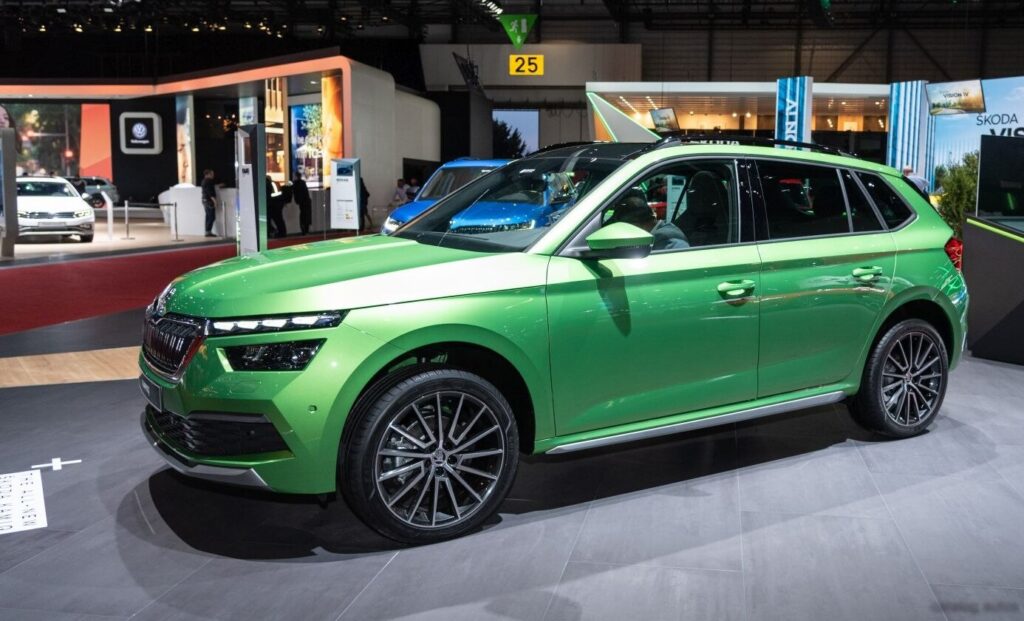
The Skoda Kamiq 1.5 TSI (150 hp) represents a significant offering within the compact SUV segment, produced from October 2019 through December 2023. Positioned as a mid-range option within the Kamiq lineup, it aimed to balance fuel efficiency with a respectable level of performance. The Kamiq itself, built on the Volkswagen Group’s MQB A0 platform (internally designated A17), was Skoda’s entry into the rapidly growing subcompact crossover market, primarily targeted at European consumers seeking a practical and affordable family vehicle. This 1.5 TSI variant offered a step up in power compared to the base 1.0 TSI engine, while remaining more accessible than the higher-output options available in some markets.
Technical Specifications
| Brand | Skoda |
| Model | Kamiq |
| Generation | Kamiq |
| Type (Engine) | 1.5 TSI (150 Hp) |
| Start of production | October, 2019 |
| End of production | December, 2023 |
| Powertrain Architecture | Internal Combustion engine |
| Body type | SUV |
| Seats | 5 |
| Doors | 5 |
| Fuel consumption (economy) – combined | 4.9 l/100 km (48 US mpg, 57.6 UK mpg, 20.4 km/l) |
| CO2 emissions | 113 g/km |
| Fuel Type | Petrol (Gasoline) |
| Emission standard | Euro 6d – TEMP |
| Power | 150 Hp |
| Torque | 250 Nm (184.39 lb.-ft.) |
| Engine layout | Front, Transverse |
| Engine Model/Code | EA211 evo / DADA |
| Number of cylinders | 4 |
| Engine configuration | Inline |
| Number of valves per cylinder | 4 |
| Fuel injection system | Direct injection |
| Engine aspiration | Turbocharger, Intercooler |
| Engine oil capacity | 4.3 l (4.54 US qt | 3.78 UK qt) |
| Trunk (boot) space – minimum | 400 l (14.13 cu. ft.) |
| Trunk (boot) space – maximum | 1395 l (49.26 cu. ft.) |
| Length | 4241 mm (166.97 in.) |
| Width | 1793 mm (70.59 in.) |
| Width including mirrors | 1988 mm (78.27 in.) |
| Height | 1553 mm (61.14 in.) |
| Wheelbase | 2651 mm (104.37 in.) |
| Front track | 1531 mm (60.28 in.) |
| Rear (Back) track | 1516 mm (59.69 in.) |
| Front overhang | 837 mm (32.95 in.) |
| Rear overhang | 753 mm (29.65 in.) |
| Ride height (ground clearance) | 182 mm (7.17 in.) |
| Minimum turning circle (turning diameter) | 10.8 m (35.43 ft.) |
| Drivetrain Architecture | The Internal combustion engine (ICE) drives the front wheels of the vehicle. |
| Drive wheel | Front wheel drive |
| Number of gears and type of gearbox | 6 gears, manual transmission |
| Front brakes | Ventilated discs |
| Rear brakes | Disc |
| Assisting systems | ABS (Anti-lock braking system) |
| Steering type | Steering rack and pinion |
| Power steering | Electric Steering |
Powertrain & Engine Architecture
At the heart of the Kamiq 1.5 TSI lies the EA211 evo series engine, specifically the DADA code variant. This 1.5-liter inline-four cylinder engine utilizes direct fuel injection and a single turbocharger with intercooling to deliver its 150 horsepower. The engine incorporates variable valve timing on both the intake and exhaust sides, optimizing performance and efficiency across the rev range. The EA211 evo represents a significant evolution of the EA211 family, featuring a coated cylinder bore for reduced friction and improved durability. The 6-speed manual transmission was the standard offering, providing a direct connection between the engine and the front wheels. This transmission was chosen for its balance of efficiency and driver engagement, although a 7-speed DSG dual-clutch transmission was available as an option in some markets.
Driving Characteristics
The 1.5 TSI engine in the Kamiq provided a noticeable improvement in performance over the base 1.0 TSI. While not a sports car, the 150 hp output and 250 Nm (184 lb-ft) of torque offered sufficient power for everyday driving and overtaking maneuvers. The manual transmission allowed for precise control, and the gear ratios were well-suited to the engine’s characteristics. Compared to the 1.0 TSI, the 1.5 TSI felt more relaxed at highway speeds and required less frequent downshifting. However, it didn’t offer the same level of responsiveness as some of the higher-performance Kamiq variants, such as those equipped with the more powerful 2.0 TSI engine. The front-wheel-drive configuration provided predictable handling, but lacked the all-weather capability of an all-wheel-drive system.
Equipment & Trim Levels
The Kamiq 1.5 TSI was typically offered in mid-range trim levels, bridging the gap between the entry-level models and the more luxurious specifications. Standard equipment generally included air conditioning, a touchscreen infotainment system with Apple CarPlay and Android Auto compatibility, alloy wheels, and a suite of safety features such as ABS, ESC (Electronic Stability Control), and multiple airbags. Higher trim levels added features like automatic climate control, a larger touchscreen display, parking sensors, a rearview camera, and advanced driver-assistance systems (ADAS) such as adaptive cruise control and lane-keeping assist. Interior upholstery typically consisted of fabric seats, with optional leather upholstery available on higher trims. Dashboard materials were generally of good quality, reflecting Skoda’s reputation for value for money.
Chassis & Braking
The Kamiq’s chassis featured a MacPherson strut front suspension and a torsion beam rear suspension. This setup provided a comfortable ride quality while maintaining reasonable handling characteristics. The torsion beam rear suspension was a cost-effective solution that minimized complexity and weight. Braking duties were handled by ventilated discs at the front and solid discs at the rear. ABS (Anti-lock Braking System) was standard, ensuring safe and controlled braking in emergency situations. The steering system utilized an electric power steering (EPS) system, providing light and precise steering feel.
Market Reception & Comparison
The Skoda Kamiq 1.5 TSI was generally well-received by automotive critics. It was praised for its spacious interior, comfortable ride, and fuel-efficient engine. The 1.5 TSI engine was considered a good compromise between performance and economy, offering a noticeable improvement over the base 1.0 TSI without significantly impacting fuel consumption. Compared to rivals like the Volkswagen T-Cross and the Renault Captur, the Kamiq offered a more practical interior and a more refined driving experience. However, some critics noted that the interior design was somewhat conservative and lacked the visual flair of some competitors. Fuel economy figures consistently hovered around 4.9 l/100km (48 US mpg), making it a competitive option in its class.
Legacy
The Skoda Kamiq 1.5 TSI has proven to be a reliable and durable vehicle in the used car market. The EA211 evo engine is known for its robustness and relatively low maintenance costs. Common issues are generally limited to routine maintenance items such as oil changes, spark plug replacements, and air filter replacements. The manual transmission is also known for its reliability. As a result, the Kamiq 1.5 TSI continues to be a popular choice among buyers seeking a practical and affordable compact SUV. Its blend of space, efficiency, and reliability ensures its continued presence on European roads for years to come.