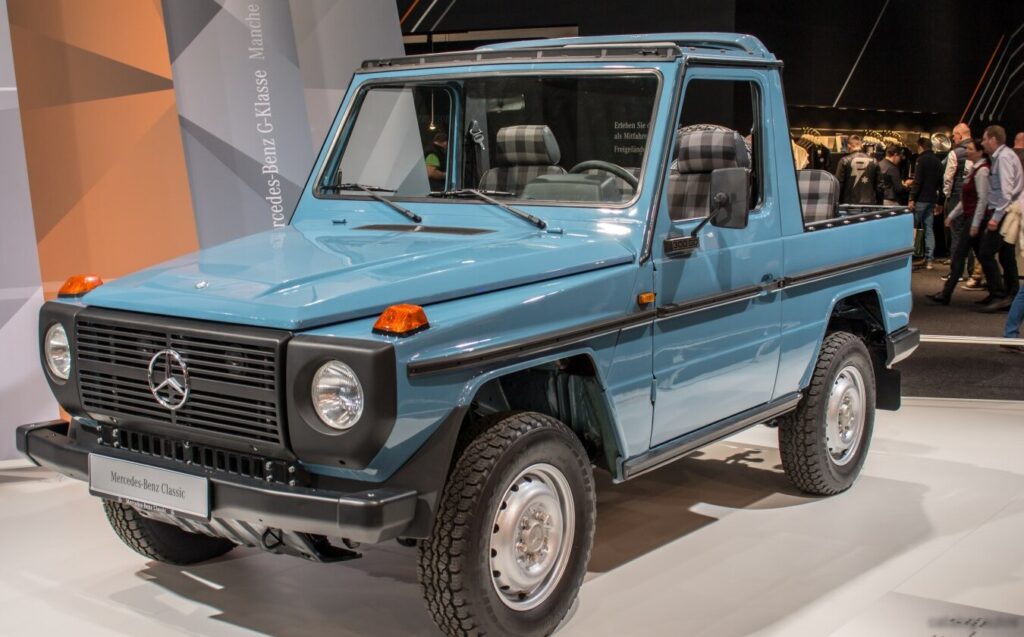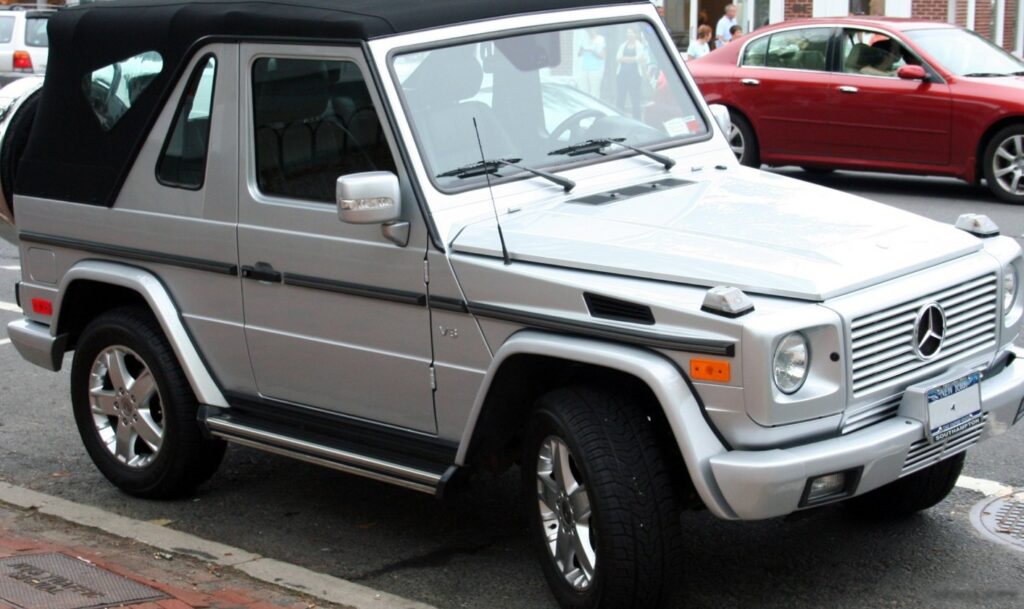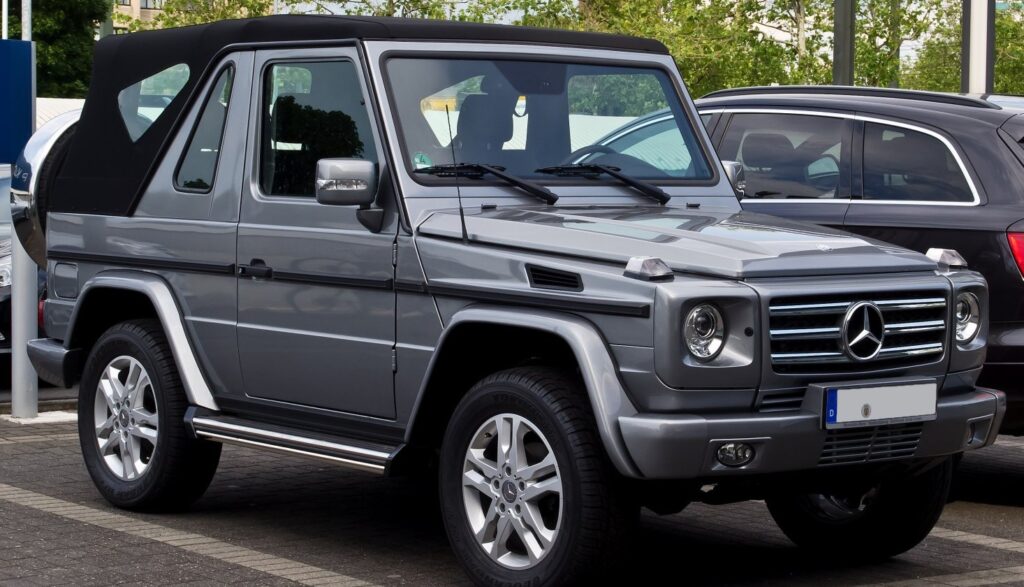
The Mercedes-Benz G-Class Long (W463) 230 GE 4MATIC Automatic, produced from April 1990 to September 1993, represents a unique iteration of the iconic “Geländewagen.” Positioned as an entry-level offering within the extended-wheelbase W463 series, it provided a more accessible price point for buyers seeking the G-Class’s legendary off-road capability. This variant aimed to broaden the G-Class’s appeal beyond its traditional, more affluent customer base, offering a blend of practicality and the robust engineering synonymous with the model. The 230 GE utilized a naturally aspirated 2.3-liter inline-four engine paired with a four-speed automatic transmission, making it a relatively uncommon configuration compared to the more powerful six-cylinder and diesel options available.
Technical Specifications
| Brand | Mercedes-Benz |
| Model | G-class |
| Generation | G-class Long (W463) |
| Type | 230 GE (126 Hp) 4MATIC Automatic |
| Start of production | April, 1990 |
| End of production | September, 1993 |
| Powertrain Architecture | Internal Combustion engine |
| Body type | Off-road vehicle |
| Seats | 5 |
| Doors | 5 |
| Fuel consumption (urban) | 16.9 l/100 km (13.9 US mpg, 16.7 UK mpg, 5.9 km/l) |
| Fuel consumption (extra urban) | 12.7 l/100 km (18.5 US mpg, 22.2 UK mpg, 7.9 km/l) |
| Fuel Type | Petrol (Gasoline) |
| Acceleration 0 – 100 km/h | 18.7 sec |
| Acceleration 0 – 62 mph | 18.7 sec |
| Acceleration 0 – 60 mph | 17.8 sec |
| Maximum speed | 145 km/h (90.1 mph) |
| Weight-to-power ratio | 17.4 kg/Hp, 57.4 Hp/tonne |
| Weight-to-torque ratio | 11.6 kg/Nm, 86.6 Nm/tonne |
| Power | 126 Hp @ 5000 rpm |
| Power per litre | 54.8 Hp/l |
| Torque | 190 Nm @ 4000 rpm (140.14 lb.-ft. @ 4000 rpm) |
| Engine layout | Front, Longitudinal |
| Engine Model/Code | M 102.989 |
| Engine displacement | 2298 cm3 (140.23 cu. in.) |
| Number of cylinders | 4 |
| Engine configuration | Inline |
| Cylinder Bore | 95.5 mm (3.76 in.) |
| Piston Stroke | 80.2 mm (3.16 in.) |
| Compression ratio | 9:1 |
| Number of valves per cylinder | 2 |
| Fuel injection system | Multi-port manifold injection |
| Engine aspiration | Naturally aspirated engine |
| Valvetrain | SOHC |
| Engine oil capacity | 6 l (6.34 US qt | 5.28 UK qt) |
| Coolant capacity | 5 l (5.28 US qt | 4.4 UK qt) |
| Kerb Weight | 2195 kg (4839.15 lbs.) |
| Max. weight | 2950 kg (6503.64 lbs.) |
| Max load | 755 kg (1664.49 lbs.) |
| Fuel tank capacity | 96 l (25.36 US gal | 21.12 UK gal) |
| Length | 4635 mm (182.48 in.) |
| Width | 1690 mm (66.54 in.) |
| Height | 1936 mm (76.22 in.) |
| Wheelbase | 2850 mm (112.2 in.) |
| Front track | 1425 mm (56.1 in.) |
| Rear track | 1425 mm (56.1 in.) |
| Drivetrain Architecture | The Internal combustion engine (ICE) drives permanently the four wheels of the vehicle. |
| Drive wheel | All wheel drive (4×4) |
| Number of gears | 4 |
| Gearbox type | automatic transmission |
| Front suspension | Coil spring, Rigid axle suspension, Trailing arm |
| Rear suspension | Rigid axle suspension, Trailing arm, Coil spring |
| Front brakes | Disc |
| Rear brakes | Drum |
| Steering type | Cone worm with recirculation balls |
| Power steering | Hydraulic Steering |
| Tires size | 205/80 R 16 |
| Wheel rims size | 6 J x 16 |
Powertrain & Engine Architecture
The 230 GE’s engine, the M 102.989, is a 2.3-liter inline-four cylinder gasoline engine. This engine, a descendant of the earlier M102 series, featured a single overhead camshaft (SOHC) valvetrain operating two valves per cylinder. Fuel delivery was handled by a Bosch K-Jetronic multi-port fuel injection system, a mechanical system known for its reliability but less precise than later electronic fuel injection systems. The engine produced 126 horsepower at 5000 rpm and 190 Nm (140 lb-ft) of torque at 4000 rpm. The four-speed automatic transmission, a common unit for Mercedes-Benz at the time, was designed for smooth operation and durability rather than outright performance. It featured a torque converter and a relatively conservative gear ratio spread, prioritizing comfort and ease of use over rapid acceleration.
Driving Characteristics
The 230 GE Automatic’s driving experience was defined by its relaxed nature. Acceleration was leisurely, with a 0-60 mph time of around 17.8 seconds. The automatic transmission, while smooth, contributed to a noticeable delay in response, especially when attempting quicker overtaking maneuvers. The gear ratios were optimized for cruising and off-road traction, rather than maximizing on-road speed. However, the G-Class’s inherent off-road prowess remained undiminished. The permanent four-wheel drive system, coupled with a low-range transfer case, provided exceptional capability on challenging terrain. Compared to the more powerful 280 GE or the diesel-powered 300 GD, the 230 GE felt noticeably slower and less refined, but it offered a more economical option for those prioritizing off-road utility over outright performance.
Equipment & Trim Levels
The 230 GE Automatic, while positioned as an entry-level G-Class, still offered a reasonable level of standard equipment. Typically, it included features such as power steering, front disc brakes, and a basic audio system. Interior appointments were relatively spartan, with cloth upholstery and a functional dashboard layout. Optional extras included air conditioning, upgraded audio systems, and a sunroof. The long-wheelbase configuration provided increased rear passenger space compared to the standard G-Class, making it a more practical choice for families or those frequently carrying passengers. The trim level was generally consistent, with limited customization options available.
Chassis & Braking
The W463 G-Class chassis was a body-on-frame construction, renowned for its exceptional strength and durability. The 230 GE utilized a coil spring suspension with rigid axles front and rear, providing a comfortable ride on and off-road. Front brakes were discs, while the rear brakes were drums – a cost-saving measure for this entry-level variant. The steering system was a recirculating ball setup, offering precise control but requiring a relatively large steering wheel. Stabilizer bars were fitted to both axles to reduce body roll during cornering. The robust chassis and suspension components were designed to withstand the rigors of off-road use, ensuring long-term reliability.
Market Reception & Comparison
The 230 GE Automatic received mixed reviews. Critics acknowledged its off-road capability and robust construction but often criticized its lack of performance and relatively high price compared to other entry-level SUVs. Fuel economy was also a concern, with the 2.3-liter engine consuming a significant amount of gasoline, especially in urban driving. Compared to the 280 GE, the 230 GE offered a more affordable entry point into the G-Class range, but at the cost of significant performance. The 300 GD diesel offered superior fuel economy and torque, making it a popular choice for those prioritizing practicality and off-road capability. The 230 GE appealed to a niche market of buyers who valued the G-Class’s image and off-road prowess but were willing to compromise on performance and refinement.
Legacy
The 230 GE Automatic, while not the most popular G-Class variant, has gained a following among enthusiasts seeking a unique and relatively affordable entry point into the G-Class world. The M 102 engine is known for its durability and relative simplicity, making it a relatively easy engine to maintain. However, parts availability can be a challenge, as the 230 GE was produced in limited numbers. Today, well-maintained examples command a premium in the used car market, particularly those with low mileage and a complete service history. The 230 GE represents a fascinating chapter in the G-Class’s history, showcasing the model’s adaptability and enduring appeal.