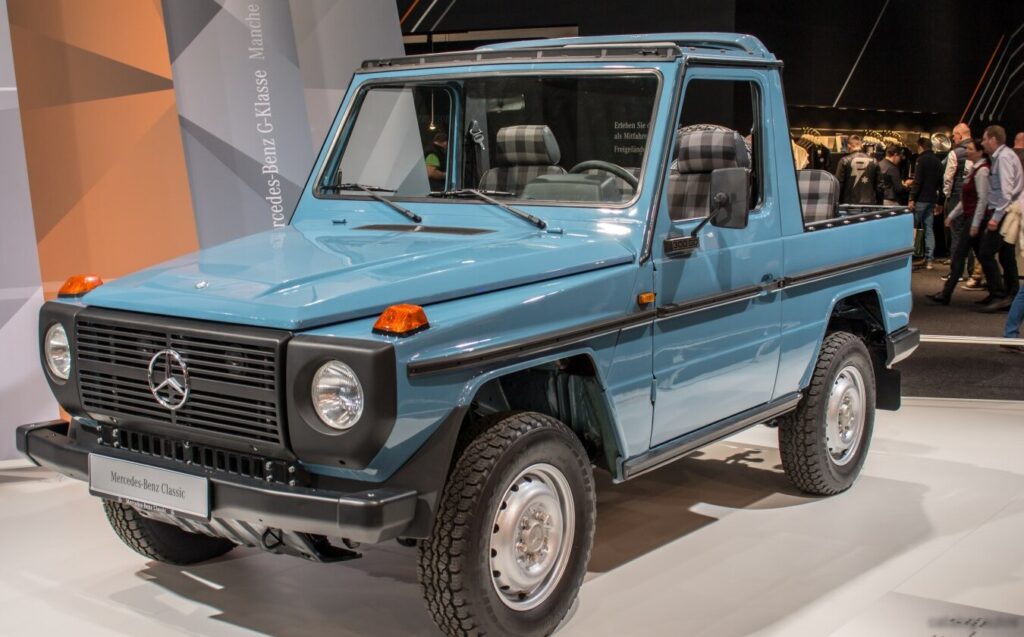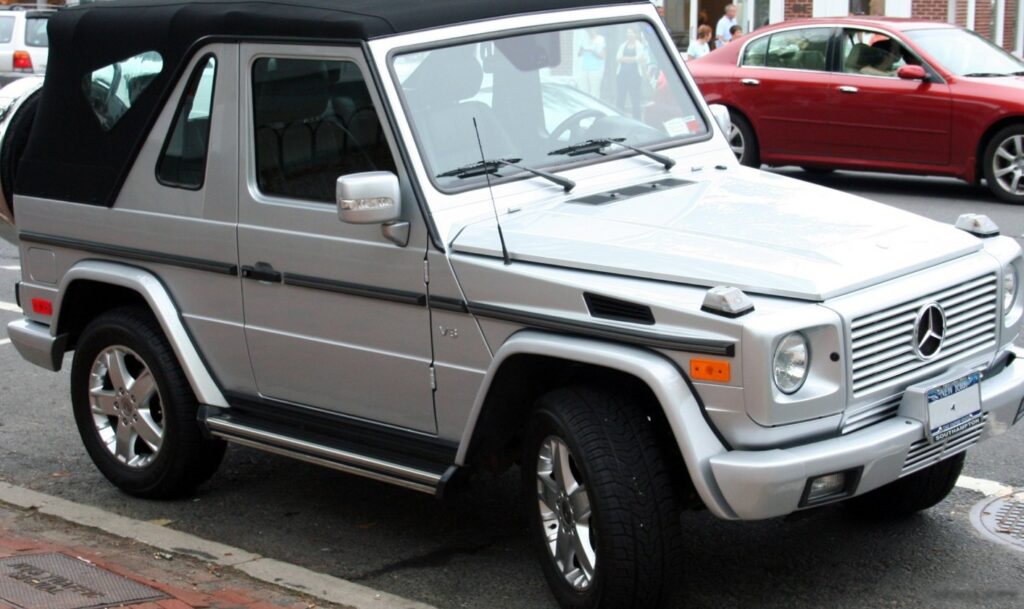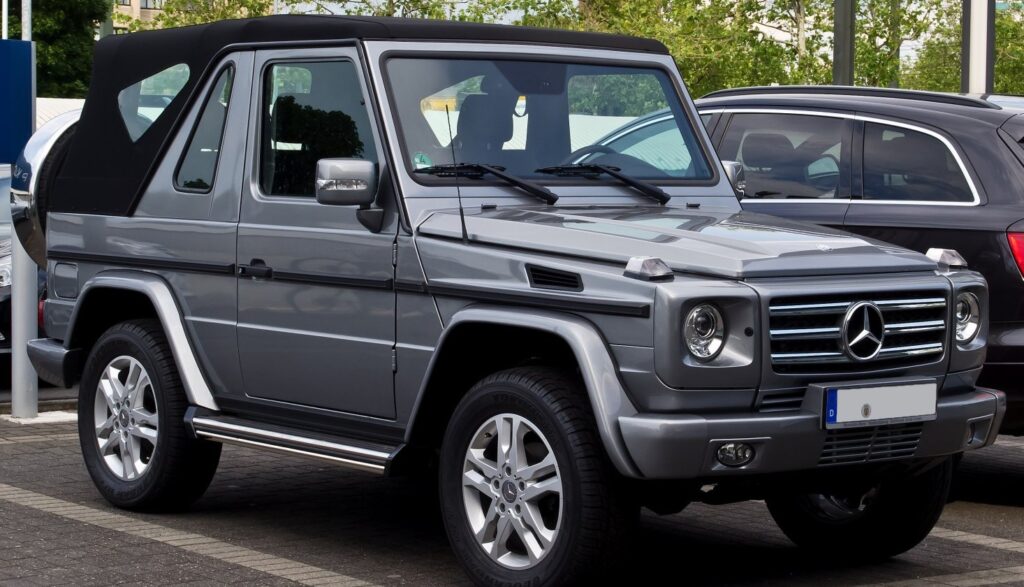
The Mercedes-Benz G-class Long (W463) 250 GD 4MATIC, produced from May 1990 to December 1991, represents a specific iteration within the iconic G-Wagen lineage. This variant, powered by a 2.5-liter five-cylinder diesel engine producing 94 horsepower, occupied a unique position in the G-class range, primarily aimed at buyers prioritizing durability and off-road capability over outright performance. The “Long” designation indicates an extended wheelbase compared to the standard G-Wagen, offering increased interior space and stability. It was built during the early years of the W463 generation, which marked a significant shift towards more civilian-focused production while retaining the vehicle’s legendary off-road prowess.
Technical Specifications
| Brand | Mercedes-Benz |
| Model | G-class |
| Generation | G-class Long (W463) |
| Type (Engine) | 250 GD (94 Hp) 4MATIC |
| Start of production | May, 1990 |
| End of production | December, 1991 |
| Powertrain Architecture | Internal Combustion engine |
| Body type | Off-road vehicle |
| Seats | 5 |
| Doors | 5 |
| Fuel consumption (urban) | 13.8 l/100 km (17 US mpg, 20.5 UK mpg, 7.2 km/l) |
| Fuel consumption (extra urban) | 10.5 l/100 km (22.4 US mpg, 26.9 UK mpg, 9.5 km/l) |
| Fuel Type | Diesel |
| Maximum speed | 130 km/h (80.78 mph) |
| Weight-to-power ratio | 23.5 kg/Hp, 42.6 Hp/tonne |
| Weight-to-torque ratio | 14 kg/Nm, 71.7 Nm/tonne |
| Power | 94 Hp @ 4600 rpm |
| Power per litre | 37.6 Hp/l |
| Torque | 158 Nm @ 2600-3100 rpm (116.53 lb.-ft. @ 2600-3100 rpm) |
| Engine layout | Front, Longitudinal |
| Engine Model/Code | OM 602.931 |
| Engine displacement | 2497 cm3 (152.38 cu. in.) |
| Number of cylinders | 5 |
| Engine configuration | Inline |
| Cylinder Bore | 87 mm (3.43 in.) |
| Piston Stroke | 84 mm (3.31 in.) |
| Compression ratio | 22:1 |
| Number of valves per cylinder | 2 |
| Fuel injection system | Precombustion chamber injection |
| Engine aspiration | Naturally aspirated engine |
| Valvetrain | SOHC |
| Engine oil capacity | 7.5 l (7.93 US qt | 6.6 UK qt) |
| Coolant | 7.3 l (7.71 US qt | 6.42 UK qt) |
| Kerb Weight | 2205 kg (4861.19 lbs.) |
| Max. weight | 2950 kg (6503.64 lbs.) |
| Max load | 745 kg (1642.44 lbs.) |
| Trunk (boot) space – minimum | 480 l (16.95 cu. ft.) |
| Trunk (boot) space – maximum | 2250 l (79.46 cu. ft.) |
| Fuel tank capacity | 96 l (25.36 US gal | 21.12 UK gal) |
| Max. roof load | 200 kg (440.92 lbs.) |
| Permitted trailer load with brakes (12%) | 2950 kg (6503.64 lbs.) |
| Permitted trailer load without brakes | 750 kg (1653.47 lbs.) |
| Length | 4635 mm (182.48 in.) |
| Width | 1690 mm (66.54 in.) |
| Height | 1936 mm (76.22 in.) |
| Wheelbase | 2850 mm (112.2 in.) |
| Front track | 1425 mm (56.1 in.) |
| Rear (Back) track | 1425 mm (56.1 in.) |
| Ride height (ground clearance) | 210 mm (8.27 in.) |
| Minimum turning circle (turning diameter) | 13.2 m (43.31 ft.) |
| Approach angle | 36° |
| Departure angle | 27° |
| Climb angle | 38.7° |
| Drivetrain Architecture | The Internal combustion engine (ICE) drives permanently the four wheels of the vehicle. |
| Drive wheel | All wheel drive (4×4) |
| Number of gears and type of gearbox | 5 gears, manual transmission |
| Front suspension | Coil spring, Rigid axle suspension, Trailing arm |
| Rear suspension | Rigid axle suspension, Trailing arm, Coil spring |
| Front brakes | Disc |
| Rear brakes | Drum |
| Steering type | Cone worm with recirculation balls |
| Power steering | Hydraulic Steering |
| Tires size | 205/80 R16 |
| Wheel rims size | 6J x 16 |
Powertrain & Engine Architecture
The heart of the 250 GD is the OM 602.931, a 2.5-liter inline five-cylinder diesel engine. This engine is characterized by its robust construction and precombustion chamber injection system. Unlike direct injection diesels, precombustion chambers improve combustion efficiency, particularly at lower engine speeds, resulting in quieter operation and reduced emissions for the time. The SOHC valvetrain, with two valves per cylinder, contributes to the engine’s simplicity and reliability. The engine’s 94 horsepower and 158 Nm (116.53 lb-ft) of torque were delivered between 2600 and 3100 rpm. The engine is longitudinally mounted in the chassis. The 250 GD was equipped with a five-speed manual transmission, chosen for its durability and suitability for off-road driving. The transmission’s gear ratios were optimized for low-speed torque and climbing ability, rather than rapid acceleration.
Driving Characteristics
The 250 GD 4MATIC, with its relatively low horsepower and focus on torque, offered a distinctly different driving experience compared to higher-powered G-Wagen variants. Acceleration was modest, but the engine provided ample low-end grunt for tackling challenging terrain. The manual transmission required deliberate shifting, and the gear ratios were spaced to maximize traction and control in off-road situations. On paved roads, the 250 GD felt somewhat agricultural, with noticeable engine noise and a firm ride. However, its robust suspension and all-wheel-drive system provided a stable and confident driving experience, even on uneven surfaces. Compared to the later, more powerful G-Wagens, the 250 GD prioritized functionality and durability over outright speed and refinement.
Equipment & Trim Levels
The 250 GD 4MATIC, being a workhorse-oriented variant, featured a relatively spartan interior. Standard equipment typically included basic cloth upholstery, a simple dashboard layout, and manual windows and door locks. Air conditioning and power windows were often optional extras. The extended wheelbase of the “Long” version provided increased rear passenger legroom and a larger cargo area. The interior trim was functional and durable, designed to withstand the rigors of off-road use. Optional extras could include a sunroof, upgraded sound system, and auxiliary lighting.
Chassis & Braking
The G-class chassis is renowned for its exceptional strength and off-road capability. The 250 GD utilized a ladder-frame chassis, providing a solid foundation for the vehicle’s robust suspension system. Front suspension consisted of coil springs and a rigid axle with trailing arms, while the rear suspension mirrored this setup. The front brakes were discs, providing adequate stopping power, while the rear brakes were drums, a cost-saving measure common for the time. The hydraulic steering system offered reasonable precision, although it required a significant amount of effort, especially at low speeds. The 205/80 R16 tires were chosen for their durability and off-road traction.
Market Reception & Comparison
The 250 GD 4MATIC was well-received by buyers who prioritized off-road capability and reliability over luxury and performance. Critics praised its robust construction, all-wheel-drive system, and fuel efficiency (for a vehicle of its size and type). Compared to the more expensive and powerful G-Wagen variants, the 250 GD offered a more affordable entry point into the G-class family. Its fuel economy, while not exceptional by modern standards, was significantly better than that of the gasoline-powered models. However, some critics noted its lack of refinement and modest performance on paved roads.
Legacy
The Mercedes-Benz G-class Long (W463) 250 GD 4MATIC has earned a reputation for exceptional durability and longevity. The OM 602 engine is known for its ability to withstand high mileage with proper maintenance. Today, these vehicles are sought after by collectors and off-road enthusiasts who appreciate their ruggedness and simplicity. While finding well-maintained examples can be challenging, the 250 GD remains a testament to Mercedes-Benz’s engineering prowess and the enduring appeal of the G-Wagen. Parts availability can be an issue, but a dedicated community of G-Wagen owners and specialists ensures that these vehicles can be kept running for years to come.