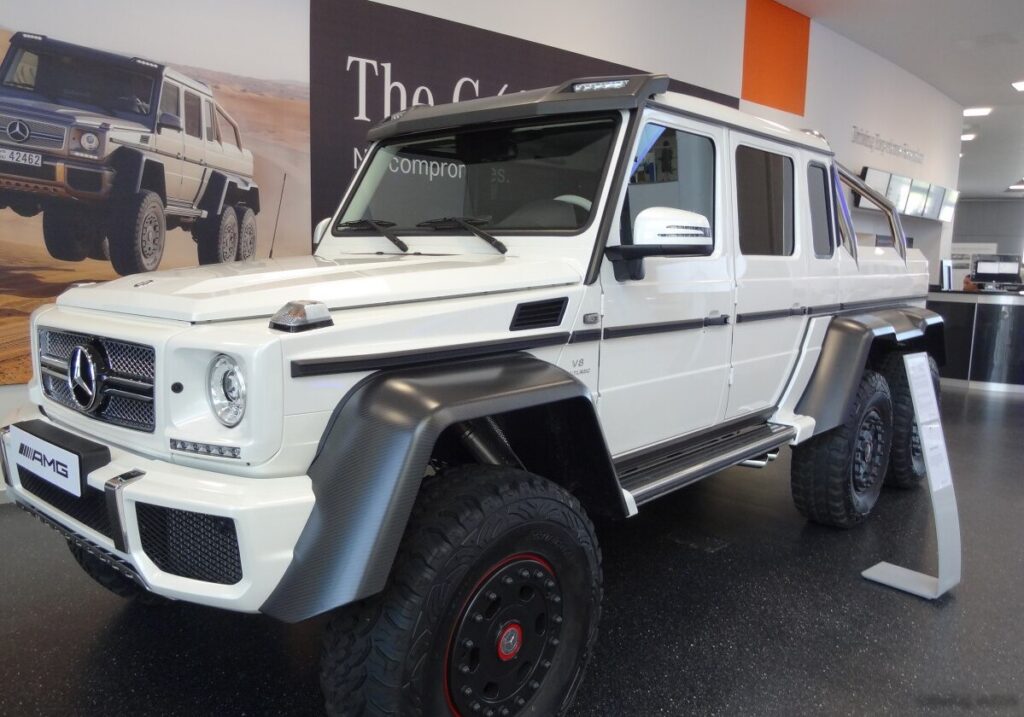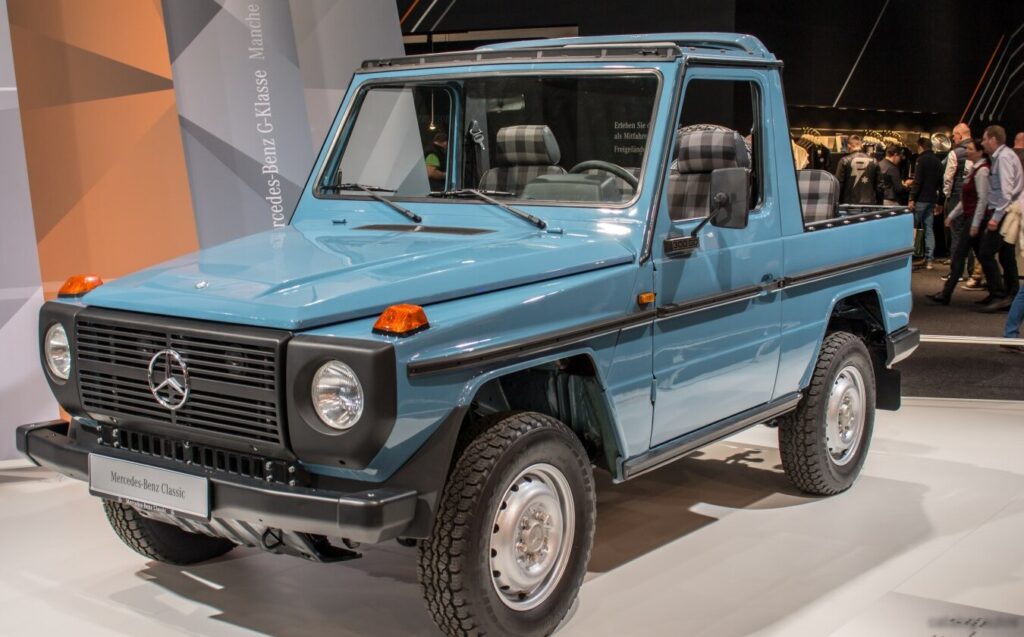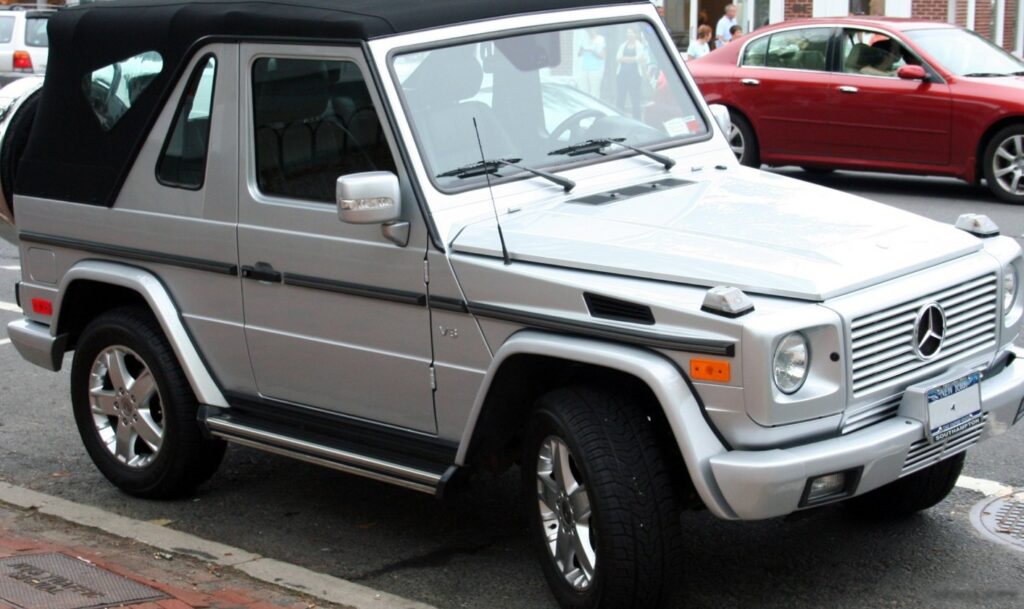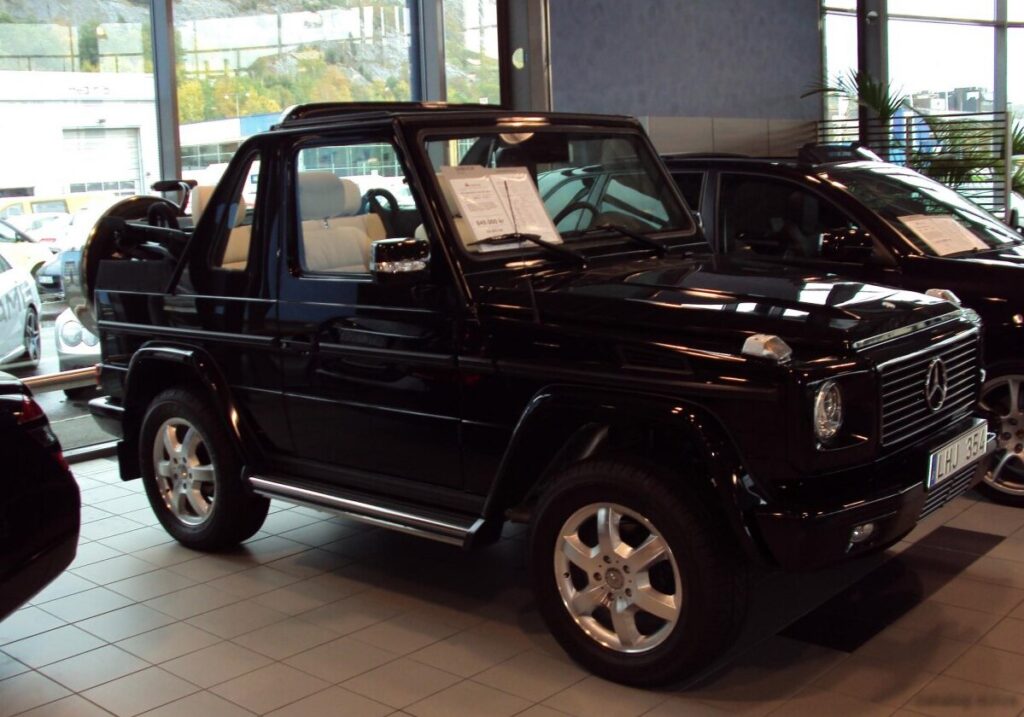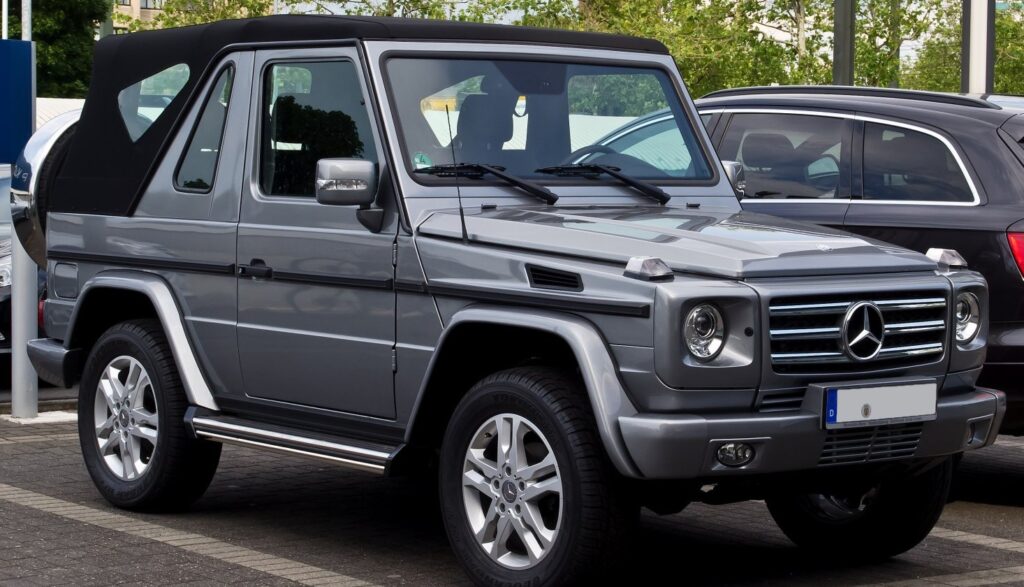
The Mercedes-Benz G-class Long (W463) 300 GD 4MATIC, produced from April 1990 to September 1993, represents a significant iteration of the iconic G-Wagen. This variant, powered by the OM 603.931 3.0-liter inline-six diesel engine, was positioned as a robust and capable workhorse within the G-class lineup, offering a blend of off-road prowess and practicality. The “Long” designation refers to the extended wheelbase, providing increased interior space compared to the standard G-Wagen. It was primarily marketed in Europe and other international markets, appealing to customers needing a durable and versatile vehicle for both professional and recreational use. This model is a key example of the early W463 series, bridging the gap between the original, more utilitarian G-Wagens and the later, more luxurious versions.
Technical Specifications
| Brand | Mercedes-Benz |
| Model | G-class |
| Generation | G-class Long (W463) |
| Type (Engine) | 300 GD (113 Hp) 4MATIC |
| Start of production | April, 1990 |
| End of production | September, 1993 |
| Powertrain Architecture | Internal Combustion engine |
| Body type | Off-road vehicle |
| Seats | 5 |
| Doors | 5 |
| Fuel consumption (urban) | 15 l/100 km (15.7 US mpg, 18.8 UK mpg, 6.7 km/l) |
| Fuel consumption (extra urban) | 10.9 l/100 km (21.6 US mpg, 25.9 UK mpg, 9.2 km/l) |
| Fuel Type | Diesel |
| Maximum speed | 141 km/h (87.61 mph) |
| Weight-to-power ratio | 19.7 kg/Hp, 50.8 Hp/tonne |
| Weight-to-torque ratio | 11.6 kg/Nm, 85.8 Nm/tonne |
| Power | 113 Hp @ 4600 rpm |
| Power per litre | 37.7 Hp/l |
| Torque | 191 Nm @ 2700-2900 rpm (140.87 lb.-ft. @ 2700-2900 rpm) |
| Engine layout | Front, Longitudinal |
| Engine Model/Code | OM 603.931 |
| Engine displacement | 2996 cm3 (182.83 cu. in.) |
| Number of cylinders | 6 |
| Engine configuration | Inline |
| Cylinder Bore | 87 mm (3.43 in.) |
| Piston Stroke | 84 mm (3.31 in.) |
| Compression ratio | 22:1 |
| Number of valves per cylinder | 2 |
| Fuel injection system | Precombustion chamber injection |
| Engine aspiration | Naturally aspirated engine |
| Valvetrain | SOHC |
| Engine oil capacity | 8 l (8.45 US qt | 7.04 UK qt) |
| Coolant | 7.5 l (7.93 US qt | 6.6 UK qt) |
| Kerb Weight | 2225 kg (4905.29 lbs.) |
| Max. weight | 2950 kg (6503.64 lbs.) |
| Max load | 725 kg (1598.35 lbs.) |
| Fuel tank capacity | 96 l (25.36 US gal | 21.12 UK gal) |
| Length | 4635 mm (182.48 in.) |
| Width | 1690 mm (66.54 in.) |
| Height | 1936 mm (76.22 in.) |
| Wheelbase | 2850 mm (112.2 in.) |
| Front track | 1425 mm (56.1 in.) |
| Rear track | 1425 mm (56.1 in.) |
| Drivetrain Architecture | The Internal combustion engine (ICE) drives permanently the four wheels of the vehicle. |
| Drive wheel | All wheel drive (4×4) |
| Number of gears | 5 gears, manual transmission |
| Front suspension | Coil spring, Rigid axle suspension, Trailing arm |
| Rear suspension | Rigid axle suspension, Trailing arm, Coil spring |
| Front brakes | Disc |
| Rear brakes | Drum |
| Steering type | Cone worm with recirculation balls |
| Power steering | Hydraulic Steering |
| Tires size | 205/80 R 16 |
| Wheel rims size | 6 J x 16 |
Powertrain & Engine Architecture
The heart of the 300 GD is the OM 603.931, a 3.0-liter inline-six diesel engine. This engine is a naturally aspirated, precombustion chamber diesel, a design common in Mercedes-Benz diesels of the era. Precombustion chambers improve cold-starting and combustion efficiency. The OM603 featured a single overhead camshaft (SOHC) valvetrain operating two valves per cylinder. The engine produced 113 horsepower at 4600 rpm and 191 Nm (140.87 lb-ft) of torque between 2700 and 2900 rpm. This torque output, while modest by modern standards, was sufficient for the G-Wagen’s intended purpose. The engine is longitudinally mounted in the chassis. The 300 GD was exclusively offered with a 5-speed manual transmission, chosen for its durability and suitability for off-road driving. The transmission was directly connected to the transfer case, enabling permanent all-wheel drive.
Driving Characteristics
The 300 GD 4MATIC, with its 113 hp and manual transmission, offered a deliberate and robust driving experience. Acceleration was not its strong suit; the focus was on low-end torque and durability. The 5-speed manual transmission allowed the driver to effectively utilize the engine’s torque band, providing good control in challenging terrain. Compared to later, more powerful G-Wagen variants (like those with the inline-six gasoline engines), the 300 GD felt slower and less refined on paved roads. However, its simplicity and robust construction made it exceptionally capable off-road. The gear ratios were optimized for crawling over obstacles and maintaining traction in slippery conditions. The manual transmission also provided a more direct connection to the engine, enhancing the feeling of control during off-road maneuvers.
Equipment & Trim Levels
The 300 GD 4MATIC was not a luxury vehicle, but it did offer a reasonable level of equipment for its time. Standard features typically included basic cloth upholstery, a simple dashboard layout, and manually adjustable seats. Power steering was standard, a welcome addition given the vehicle’s weight and large tires. Optional extras included a sunroof, upgraded sound system, and auxiliary lighting. The interior was functional and durable, designed to withstand the rigors of off-road use. Trim levels were relatively limited; the focus was on providing a capable and reliable vehicle rather than offering a wide range of customization options.
Chassis & Braking
The G-Wagen’s chassis was a body-on-frame construction, providing exceptional strength and durability. The 300 GD featured a coil spring suspension with rigid axles front and rear, offering substantial wheel articulation for off-road driving. The front suspension utilized trailing arms, while the rear suspension also employed a trailing arm design. Braking was accomplished via disc brakes on the front wheels and drum brakes on the rear. While adequate for the vehicle’s weight and intended use, the braking system was not particularly powerful by modern standards. The steering system was a recirculating ball type, providing a robust and reliable, though somewhat indirect, steering feel.
Market Reception & Comparison
The 300 GD 4MATIC was well-regarded for its off-road capability and durability. Critics praised its robust construction and reliable diesel engine. However, its relatively low power output and somewhat crude driving characteristics were noted. Compared to other G-Wagen variants, such as the more powerful gasoline-powered models, the 300 GD was seen as a more utilitarian option. Its fuel economy was reasonable for a vehicle of its size and type, but it was not a primary selling point. The 300 GD appealed to buyers who prioritized functionality and reliability over luxury and performance.
Legacy
The Mercedes-Benz G-class Long (W463) 300 GD 4MATIC has become a sought-after vehicle among enthusiasts and collectors. The OM 603 diesel engine is known for its longevity and relatively simple maintenance requirements. Well-maintained examples are still in use today, demonstrating the G-Wagen’s inherent durability. In the used car market, these vehicles command a premium due to their rarity and iconic status. The 300 GD represents a pivotal point in the G-Wagen’s evolution, embodying the original spirit of the vehicle while incorporating improvements in comfort and refinement. Its robust powertrain and timeless design ensure its continued appeal for years to come.