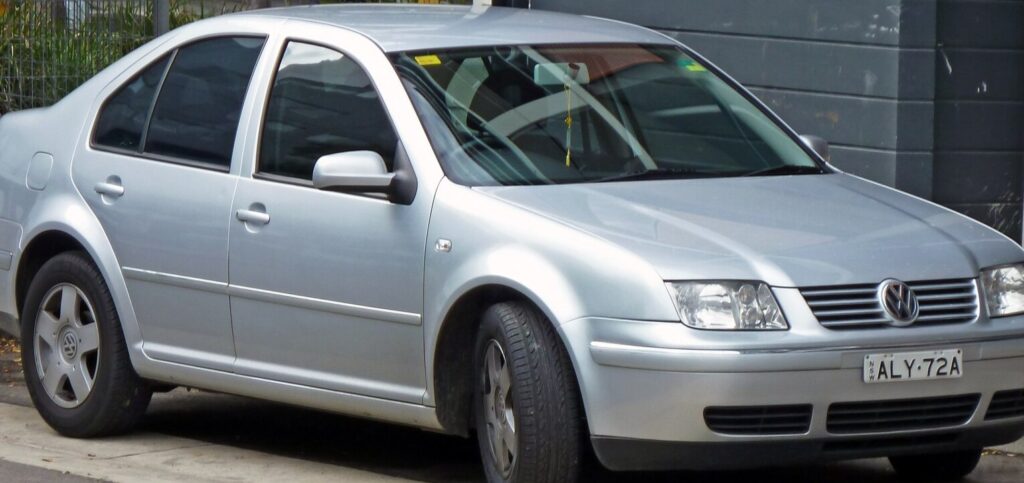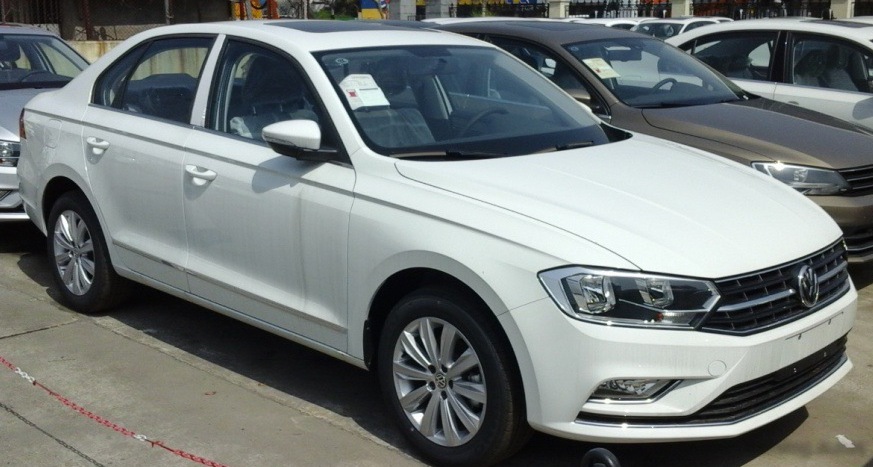
The Volkswagen Bora III 1.6 (110 hp) Automatic, produced specifically for the Chinese market between 2015 and 2017, represents a localized iteration of Volkswagen’s compact sedan. Positioned as an entry-level to mid-range offering within the Bora III lineup, it catered to buyers seeking a comfortable and fuel-efficient vehicle with the convenience of an automatic transmission. This variant was built on the A3 platform, also known as the PQ35 platform, which underpinned several Volkswagen Group vehicles of the era. The Bora, known as the Jetta in North America, served as a crucial model for Volkswagen in China, offering a familiar and respected brand name in a rapidly growing automotive market.
Technical Specifications
| Brand | Volkswagen |
| Model | Bora |
| Generation | Bora III (China) |
| Type (Engine) | 1.6 (110 Hp) Automatic |
| Start of production | 2015 year |
| End of production | 2017 year |
| Powertrain Architecture | Internal Combustion engine |
| Body type | Sedan |
| Seats | 5 |
| Doors | 4 |
| Fuel consumption (economy) – extra urban | 5.3 l/100 km (44.4 US mpg, 53.3 UK mpg, 18.9 km/l) |
| Fuel consumption (economy) – combined | 6.2 l/100 km (37.9 US mpg, 45.6 UK mpg, 16.1 km/l) |
| Fuel Type | Petrol (Gasoline) |
| Acceleration 0 – 100 km/h | 12.7 sec |
| Acceleration 0 – 62 mph | 12.7 sec |
| Acceleration 0 – 60 mph | 12.1 sec |
| Maximum speed | 180 km/h (111.85 mph) |
| Weight-to-power ratio | 11.5 kg/Hp, 87.3 Hp/tonne |
| Weight-to-torque ratio | 8.1 kg/Nm, 123 Nm/tonne |
| Power | 110 Hp @ 5800 rpm |
| Power per litre | 68.8 Hp/l |
| Torque | 155 Nm @ 3800 rpm (114.32 lb.-ft. @ 3800 rpm) |
| Engine layout | Front, Transverse |
| Engine Model/Code | EA211 |
| Engine displacement | 1598 cm3 (97.52 cu. in.) |
| Number of cylinders | 4 |
| Engine configuration | Inline |
| Number of valves per cylinder | 4 |
| Engine aspiration | Naturally aspirated engine |
| Kerb Weight | 1260 kg (2777.82 lbs) |
| Trunk (boot) space – minimum | 490 l (17.3 cu. ft.) |
| Fuel tank capacity | 55 l (14.53 US gal | 12.1 UK gal) |
| Length | 4562 mm (179.61 in) |
| Width | 1793 mm (70.59 in) |
| Height | 1468 mm (57.8 in) |
| Wheelbase | 2614 mm (102.91 in) |
| Ride height (ground clearance) | 122 mm (4.8 in) |
| Minimum turning circle (turning diameter) | 10.6 m (34.78 ft) |
| Drivetrain Architecture | The Internal combustion engine (ICE) drives the front wheels of the vehicle. |
| Drive wheel | Front wheel drive |
| Number of gears and type of gearbox | 6 gears, automatic transmission |
| Front suspension | Independent type McPherson |
| Rear suspension | Semi-independent, coil spring |
| Front brakes | Ventilated discs |
| Rear brakes | Ventilated discs |
| Assisting systems | ABS (Anti-lock braking system) |
| Steering type | Steering rack and pinion |
| Power steering | Electric Steering |
| Wheel rims size | 15; 16 |
Powertrain & Engine Architecture
The heart of the Bora III 1.6 Automatic is the EA211 engine, a 1.6-liter naturally aspirated inline-four cylinder gasoline engine. This engine, a mainstay of Volkswagen’s modular engine family, is known for its relatively simple design and focus on fuel efficiency. The EA211 utilizes a multi-point fuel injection system, delivering fuel directly into the intake ports. The engine features a dual overhead camshaft (DOHC) valvetrain with four valves per cylinder, contributing to improved breathing and power delivery. The 110 horsepower output at 5800 rpm and 155 Nm (114 lb-ft) of torque at 3800 rpm are typical figures for this engine configuration. Paired with the engine is a six-speed automatic transmission, providing smooth and convenient gear changes. This transmission was chosen to appeal to a broader customer base prioritizing ease of use over outright performance.
Driving Characteristics
The 1.6-liter engine and six-speed automatic combination in the Bora III delivers a comfortable, if not particularly exhilarating, driving experience. Acceleration from 0-100 km/h takes approximately 12.7 seconds, placing it behind the more powerful 1.4 TSI turbocharged variants. The automatic transmission is tuned for fuel economy, with gear changes often prioritizing efficiency over aggressive acceleration. The gear ratios are spaced to provide adequate performance in typical urban and highway driving conditions. Compared to a manual transmission equipped Bora 1.6, the automatic version sacrifices some responsiveness and driver engagement, but gains in convenience. The relatively low power output means the car feels most comfortable at moderate speeds, and overtaking maneuvers require careful planning.
Equipment & Trim Levels
The 1.6 Automatic trim level of the Bora III typically included standard features such as air conditioning, power windows, power door locks, and a basic audio system. Interior upholstery was generally cloth, with a functional and durable design. Dashboard configuration was straightforward, with a focus on usability. Optional extras available for this trim could include alloy wheels, a more advanced audio system with Bluetooth connectivity, and rear parking sensors. Safety features typically included ABS (Anti-lock Braking System) and airbags for the driver and front passenger. The overall equipment level was designed to provide a good value proposition for budget-conscious buyers.
Chassis & Braking
The Bora III 1.6 Automatic utilizes a McPherson strut independent suspension at the front, providing a comfortable ride and decent handling characteristics. The rear suspension is a semi-independent coil spring setup, which is a cost-effective solution for compact sedans. Braking duties are handled by ventilated discs on all four wheels, offering adequate stopping power for the vehicle’s weight and performance. The steering system is a rack and pinion setup with electric power steering, providing light and easy steering feel. Stabilizer bars are included at both the front and rear to reduce body roll during cornering.
Market Reception & Comparison
The Bora III 1.6 Automatic was generally well-received in the Chinese market as a practical and affordable family sedan. Critics noted its fuel efficiency and comfortable ride, but also pointed out its relatively modest performance. Compared to the higher-trim Bora models equipped with turbocharged engines, the 1.6 Automatic offered a more economical option, but at the expense of power and driving excitement. Its fuel economy of 6.2 l/100 km (37.9 US mpg) was a key selling point, particularly in a market increasingly focused on fuel efficiency. Reliability was generally good, with the EA211 engine proving to be a durable and dependable unit.
Legacy
The Volkswagen Bora III 1.6 Automatic, while not a performance standout, represents a significant offering in Volkswagen’s Chinese market strategy. The EA211 engine has proven to be a reliable and long-lasting powertrain, and examples of this Bora variant continue to be found on the used car market today. Its affordability and fuel efficiency make it an attractive option for buyers seeking a practical and economical compact sedan. The Bora’s success in China helped solidify Volkswagen’s position as a leading automotive brand in the country, and the 1.6 Automatic variant played a role in reaching a wider range of customers.