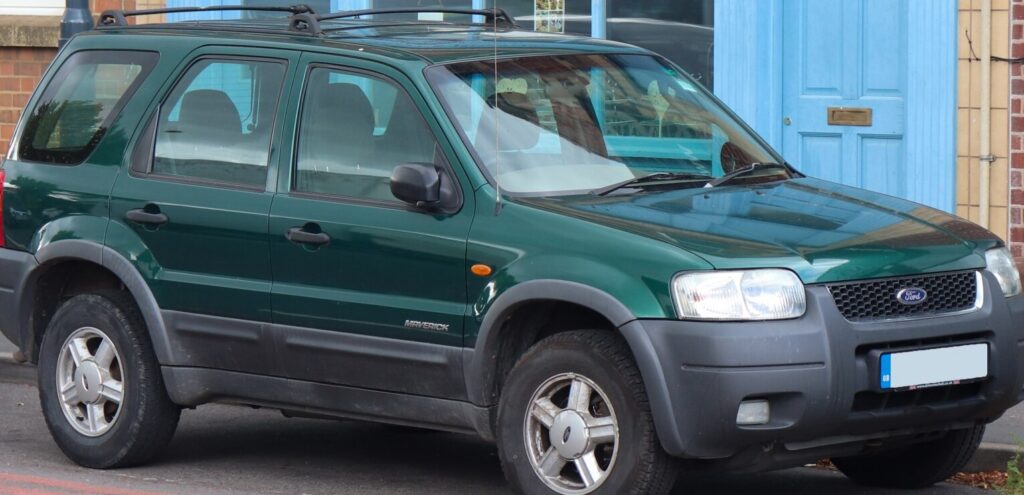
The Ford Maverick II 2.0 i 16V, produced between 2000 and 2004, represented a significant step for Ford of Europe into the compact SUV segment. Positioned as a more affordable and practical alternative to larger, more expensive SUVs, the Maverick II aimed to blend the versatility of a sport utility vehicle with the driving characteristics of a passenger car. This particular 2.0-liter, 16-valve variant, producing 124 horsepower, served as a core model within the Maverick II lineup, offering a balance between fuel economy and acceptable performance for everyday driving. It was built on the Ford Focus platform, sharing many components with the popular C-segment hatchback and sedan.
Technical Specifications
| Brand | Ford |
| Model | Maverick |
| Generation | Maverick II |
| Type (Engine) | 2.0 i 16V (124 Hp) |
| Start of production | 2000 year |
| End of production | 2004 year |
| Powertrain Architecture | Internal Combustion engine |
| Body type | SUV |
| Seats | 5 |
| Doors | 5 |
| Fuel consumption (economy) – urban | 13.1 l/100 km (18 US mpg, 21.6 UK mpg, 7.6 km/l) |
| Fuel consumption (economy) – extra urban | 7.9 l/100 km (29.8 US mpg, 35.8 UK mpg, 12.7 km/l) |
| Fuel consumption (economy) – combined | 9.8 l/100 km (24 US mpg, 28.8 UK mpg, 10.2 km/l) |
| Fuel Type | Petrol (Gasoline) |
| Acceleration 0 – 100 km/h | 13.5 sec |
| Acceleration 0 – 62 mph | 13.5 sec |
| Acceleration 0 – 60 mph | 12.8 sec |
| Maximum speed | 166 km/h (103.15 mph) |
| Weight-to-power ratio | 11.9 kg/Hp, 84.4 Hp/tonne |
| Weight-to-torque ratio | 8.4 kg/Nm, 119 Nm/tonne |
| Power | 124 Hp @ 5300 rpm |
| Power per litre | 62.3 Hp/l |
| Torque | 175 Nm @ 4500 rpm (129.07 lb.-ft. @ 4500 rpm) |
| Engine layout | Front, Transverse |
| Engine Model/Code | YF |
| Engine displacement | 1989 cm3 (121.38 cu. in.) |
| Number of cylinders | 4 |
| Engine configuration | Inline |
| Cylinder Bore | 84.8 mm (3.34 in.) |
| Piston Stroke | 88 mm (3.46 in.) |
| Compression ratio | 9.6:1 |
| Number of valves per cylinder | 4 |
| Fuel injection system | Multi-port manifold injection |
| Engine aspiration | Naturally aspirated engine |
| Valvetrain | DOHC |
| Engine oil capacity | 4.25 l (4.49 US qt | 3.74 UK qt) |
| Coolant | 6.6 l (6.97 US qt | 5.81 UK qt) |
| Kerb Weight | 1470 kg (3240.8 lbs.) |
| Max. weight | 1940 kg (4276.97 lbs.) |
| Max load | 470 kg (1036.17 lbs.) |
| Trunk (boot) space – minimum | 985 l (34.78 cu. ft.) |
| Trunk (boot) space – maximum | 1940 l (68.51 cu. ft.) |
| Fuel tank capacity | 58 l (15.32 US gal | 12.76 UK gal) |
| Length | 4394 mm (172.99 in.) |
| Width | 1781 mm (70.12 in.) |
| Height | 1722 mm (67.8 in.) |
| Wheelbase | 2619 mm (103.11 in.) |
| Front track | 1554 mm (61.18 in.) |
| Rear (Back) track | 1550 mm (61.02 in.) |
| Drivetrain Architecture | The Internal combustion engine (ICE) drives the front wheels of the vehicle. |
| Drive wheel | Front wheel drive |
| Number of gears and type of gearbox | 5 gears, manual transmission |
| Front suspension | Wishbone |
| Rear suspension | Double wishbone |
| Front brakes | Ventilated discs |
| Rear brakes | Drum |
| Assisting systems | ABS (Anti-lock braking system) |
| Steering type | Steering rack and pinion |
| Power steering | Hydraulic Steering |
| Tires size | 225/70 R15S |
Powertrain & Engine Architecture
The heart of the Maverick II 2.0 i 16V is the Ford YF engine, a 1.989-liter inline-four cylinder gasoline engine. This engine, part of the Zetec family, featured a double overhead camshaft (DOHC) valvetrain with four valves per cylinder, contributing to its relatively efficient breathing. Fuel delivery was handled by a multi-port fuel injection system, providing precise fuel metering for improved combustion. The engine produced 124 horsepower at 5300 rpm and 175 Nm (129 lb-ft) of torque at 4500 rpm. The engine’s design prioritized reliability and affordability over outright performance. The transmission paired with this engine was typically a five-speed manual gearbox, although a four-speed automatic transmission was also offered. The automatic transmission, while providing convenience, did impact acceleration and fuel economy compared to the manual version.
Driving Characteristics
The 2.0-liter engine in the Maverick II, when coupled with the five-speed manual transmission, provided adequate performance for everyday driving. Acceleration from 0-60 mph took around 12.8 seconds, and top speed was approximately 103 mph. However, the automatic transmission version saw a slight decrease in performance, with 0-60 mph times closer to 13.5 seconds. The gear ratios in the manual transmission were well-spaced, allowing the engine to remain within its optimal power band during normal driving conditions. The automatic transmission, while smooth, could feel somewhat sluggish, particularly during overtaking maneuvers. The Maverick II’s suspension, tuned for comfort, provided a relatively smooth ride, but handling was not particularly sporty. The front-wheel-drive configuration offered predictable handling characteristics, but lacked the all-weather capability of an all-wheel-drive system.
Equipment & Trim Levels
The 2.0 i 16V trim typically included features such as power steering, central locking, electric front windows, and an AM/FM radio. Higher trim levels, such as the Ghia, added features like alloy wheels, air conditioning, a sunroof, and upgraded interior trim. Interior upholstery was typically cloth, with options for leather available on higher-spec models. The dashboard layout was functional and straightforward, with easy-to-read gauges and controls. Optional extras included a CD player, rear parking sensors, and metallic paint finishes.
Chassis & Braking
The Maverick II utilized a front-wheel-drive chassis with independent wishbone suspension at the front and a double wishbone suspension at the rear. This suspension setup provided a comfortable ride and reasonable handling. Braking duties were handled by ventilated discs at the front and drum brakes at the rear. Anti-lock Braking System (ABS) was standard equipment, enhancing safety by preventing wheel lockup during hard braking. The steering system was a rack and pinion type with hydraulic power assistance, providing light and precise steering feel.
Market Reception & Comparison
The Ford Maverick II 2.0 i 16V was generally well-received by automotive critics as a practical and affordable SUV. However, some reviewers noted that the engine lacked outright power, particularly when paired with the automatic transmission. Compared to other SUVs in its class, such as the Nissan X-Trail and the Honda CR-V, the Maverick II offered a more affordable price point but lacked some of the refinement and features of its competitors. Fuel economy was considered average for its class, with combined fuel consumption around 24 US mpg. Reliability was generally good, although some owners reported minor issues with the electrical system.
Legacy
The Ford Maverick II, including the 2.0 i 16V variant, remains a relatively affordable and practical used car option today. The YF engine is known for its durability and relatively low maintenance costs. However, potential buyers should be aware of the possibility of age-related issues, such as corrosion and wear and tear on suspension components. The automatic transmission, while convenient, may require more frequent servicing than the manual version. Overall, the Maverick II 2.0 i 16V represents a solid and dependable choice for those seeking an affordable and versatile compact SUV.