
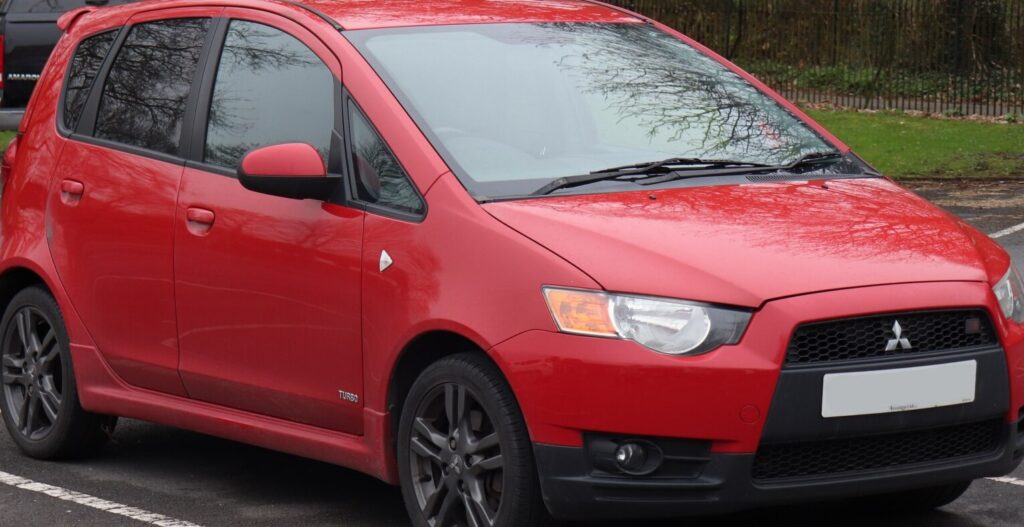
The Mitsubishi Colt VI (Z30) facelift, introduced in 2008, represented a significant refresh of the popular supermini. Produced through November 2012, this iteration of the Colt aimed to maintain its position in the competitive European small car market. The 1.3 MPI variant, producing 95 horsepower, was a key part of the lineup, positioned as an affordable and economical option for urban drivers. It sat within the broader Z30 platform, which also included various engine and trim levels, and was designed to appeal to buyers prioritizing fuel efficiency and practicality over outright performance. This model year saw styling updates and minor mechanical revisions compared to the earlier Z30 releases.
Technical Specifications
| Brand | Mitsubishi |
| Model | Colt |
| Generation | Colt VI (Z30, facelift 2008) |
| Type (Engine) | 1.3 MPI (95 Hp) |
| Start of production | 2008 |
| End of production | November, 2012 |
| Powertrain Architecture | Internal Combustion engine |
| Body type | Hatchback |
| Seats | 5 |
| Doors | 5 |
| Fuel consumption (urban) | 7.7 l/100 km (30.5 US mpg, 36.7 UK mpg, 13 km/l) |
| Fuel consumption (extra urban) | 5 l/100 km (47 US mpg, 56.5 UK mpg, 20 km/l) |
| Fuel consumption (combined) | 6 l/100 km (39.2 US mpg, 47.1 UK mpg, 16.7 km/l) |
| Fuel Type | Petrol (Gasoline) |
| Acceleration 0 – 100 km/h | 11.1 sec |
| Acceleration 0 – 62 mph | 11.1 sec |
| Acceleration 0 – 60 mph | 10.5 sec |
| Maximum speed | 180 km/h (111.85 mph) |
| Emission standard | Euro 4 |
| Weight-to-power ratio | 11 kg/Hp, 90.9 Hp/tonne |
| Weight-to-torque ratio | 8.4 kg/Nm, 119.6 Nm/tonne |
| Power | 95 Hp @ 6000 rpm |
| Power per litre | 71.3 Hp/l |
| Torque | 125 Nm @ 4000 rpm (92.2 lb.-ft. @ 4000 rpm) |
| Engine layout | Front, Transverse |
| Engine Model/Code | M 135.930 |
| Engine displacement | 1332 cm3 (81.28 cu. in.) |
| Number of cylinders | 4 |
| Engine configuration | Inline |
| Cylinder Bore | 75 mm (2.95 in.) |
| Piston Stroke | 75.4 mm (2.97 in.) |
| Compression ratio | 10.5:1 |
| Number of valves per cylinder | 4 |
| Fuel injection system | Multi-port manifold injection |
| Engine aspiration | Naturally aspirated engine |
| Valvetrain | DOHC |
| Engine oil capacity | 4.2 l (4.44 US qt | 3.7 UK qt) |
| Coolant | 4.6 l (4.86 US qt | 4.05 UK qt) |
| Kerb Weight | 1045 kg (2303.83 lbs.) |
| Max. weight | 1460 kg (3218.75 lbs.) |
| Max load | 415 kg (914.92 lbs.) |
| Trunk (boot) space – minimum | 500 l (17.66 cu. ft.) |
| Trunk (boot) space – maximum | 1032 l (36.44 cu. ft.) |
| Fuel tank capacity | 47 l (12.42 US gal | 10.34 UK gal) |
| Max. roof load | 50 kg (110.23 lbs.) |
| Permitted trailer load with brakes (12%) | 1000 kg (2204.62 lbs.) |
| Permitted towbar download | 50 kg (110.23 lbs.) |
| Length | 3940 mm (155.12 in.) |
| Width including mirrors | 1695 mm (66.73 in.) |
| Height | 1550 mm (61.02 in.) |
| Wheelbase | 2500 mm (98.43 in.) |
| Front track | 1460 mm (57.48 in.) |
| Rear (Back) track | 1445 mm (56.89 in.) |
| Front overhang | 845 mm (33.27 in.) |
| Rear overhang | 595 mm (23.43 in.) |
| Ride height (ground clearance) | 154 mm (6.06 in.) |
| Minimum turning circle (turning diameter) | 10.8 m (35.43 ft.) |
| Drivetrain Architecture | The Internal combustion engine (ICE) drives the front wheels of the vehicle. |
| Drive wheel | Front wheel drive |
| Number of gears and type of gearbox | 5 gears, manual transmission |
| Front suspension | Independent type McPherson |
| Rear suspension | Torsion |
| Front brakes | Ventilated discs, 355.6 mm |
| Rear brakes | Drum |
| Assisting systems | ABS (Anti-lock braking system) |
| Steering type | Steering rack and pinion |
| Power steering | Electric Steering |
| Tires size | 195/50 R15; 205/45 R16 |
| Wheel rims size | 6J x 15; 6.5J x 16 |
Powertrain & Engine Architecture
The heart of this Colt variant is the Mitsubishi 4A91 1.3-liter inline-four engine, internally designated as M 135.930. This engine utilizes a multi-point fuel injection system, delivering fuel directly to the intake ports. The engine features a double overhead camshaft (DOHC) valvetrain, optimizing airflow for improved efficiency and power output. The 1.3 MPI engine is naturally aspirated, meaning it doesn’t rely on a turbocharger or supercharger for forced induction. This contributes to its predictable power delivery and relatively simple maintenance requirements. The engine is transversely mounted in the front of the vehicle, driving the front wheels. Paired with this engine was typically a five-speed manual transmission, although an automatic option was also available, albeit less common. The automatic transmission was a conventional four-speed unit, prioritizing smooth operation and ease of use over outright performance.
Driving Characteristics
The 1.3 MPI engine, producing 95 horsepower, provided adequate, but not exhilarating, performance. Acceleration from 0 to 60 mph took around 10.5 seconds, making it suitable for city driving and commuting. The automatic transmission, while offering convenience, did slightly diminish acceleration compared to the manual version due to inherent transmission losses. Gear ratios were tuned for fuel economy, resulting in a relatively relaxed driving experience. The engine felt most comfortable in the mid-range, providing sufficient torque for everyday driving situations. While not designed for spirited driving, the 1.3 MPI Colt was known for its predictable handling and comfortable ride quality.
Equipment & Trim Levels
The 1.3 MPI variant of the Colt VI typically came with a reasonable level of standard equipment. This included power steering, central locking, electric front windows, and an audio system. Higher trim levels offered additional features such as air conditioning, alloy wheels, and a more comprehensive audio system. Interior upholstery was typically cloth, with a functional and durable design. Optional extras included a sunroof, upgraded audio systems, and metallic paint finishes. The interior design was focused on practicality and ease of use, with a straightforward dashboard layout and comfortable seating.
Chassis & Braking
The Colt VI utilized a McPherson strut independent suspension system at the front, providing a comfortable and controlled ride. The rear suspension employed a torsion beam setup, which was cost-effective and space-efficient. Braking duties were handled by ventilated discs at the front and drum brakes at the rear. Anti-lock Braking System (ABS) was standard, enhancing safety by preventing wheel lockup during hard braking. The chassis was designed to provide a balance between comfort and handling, making it well-suited for urban environments.
Market Reception & Comparison
The 1.3 MPI Colt was generally well-received as an affordable and economical city car. Critics praised its fuel efficiency and practicality, but noted its lack of outright performance. Compared to other engine options in the Colt lineup, such as the 1.5-liter engine, the 1.3 MPI offered lower running costs but less power. Against competitors like the Ford Fiesta and Volkswagen Polo, the Colt offered a competitive price point and a spacious interior. Reliability was generally good, although some owners reported minor issues with the automatic transmission over time.
Legacy
The Mitsubishi Colt VI 1.3 MPI (95 Hp) remains a relatively common sight on used car markets. Its simple engine design and robust construction contribute to its long-term reliability. While not a performance icon, it continues to be valued as an affordable and practical transportation option. Parts availability is generally good, and maintenance costs are relatively low. The automatic transmission variants, while less common, are sought after by drivers prioritizing convenience and ease of use. The Colt VI, in its various forms, helped solidify Mitsubishi’s reputation for building reliable and economical small cars.