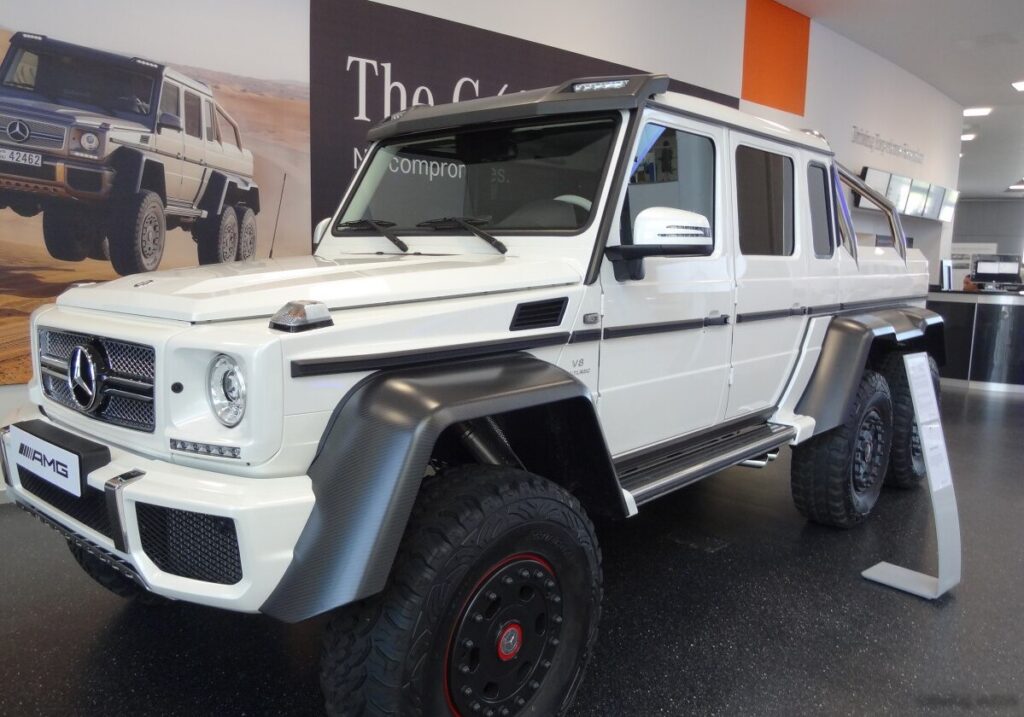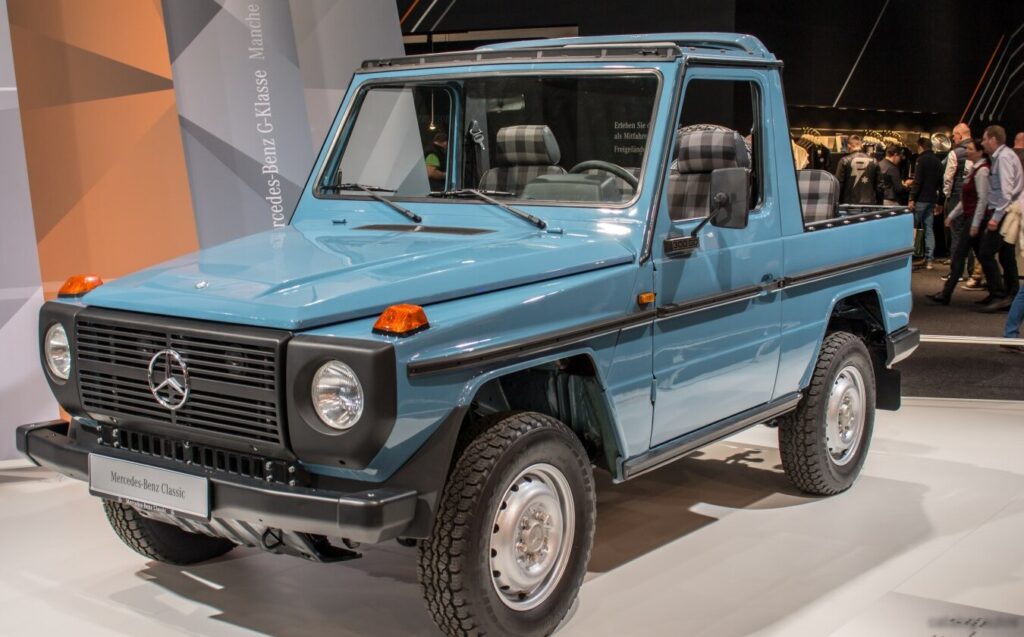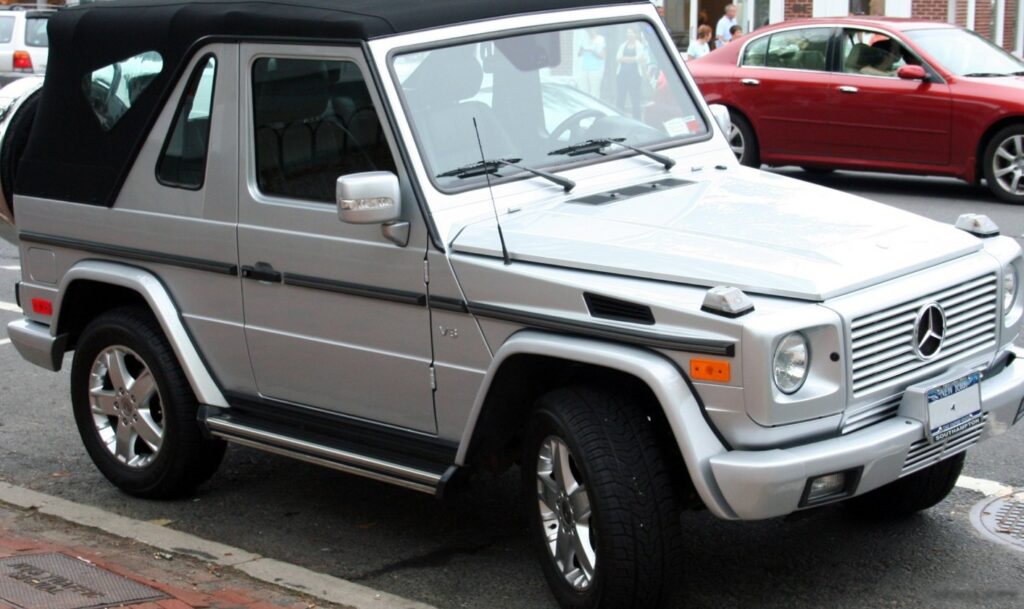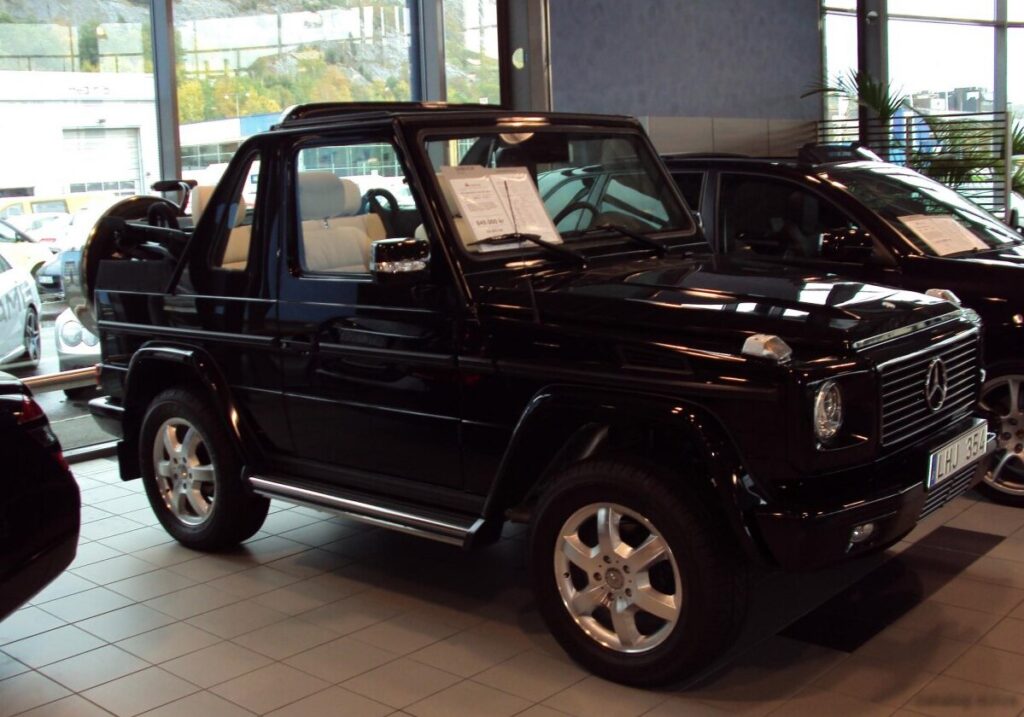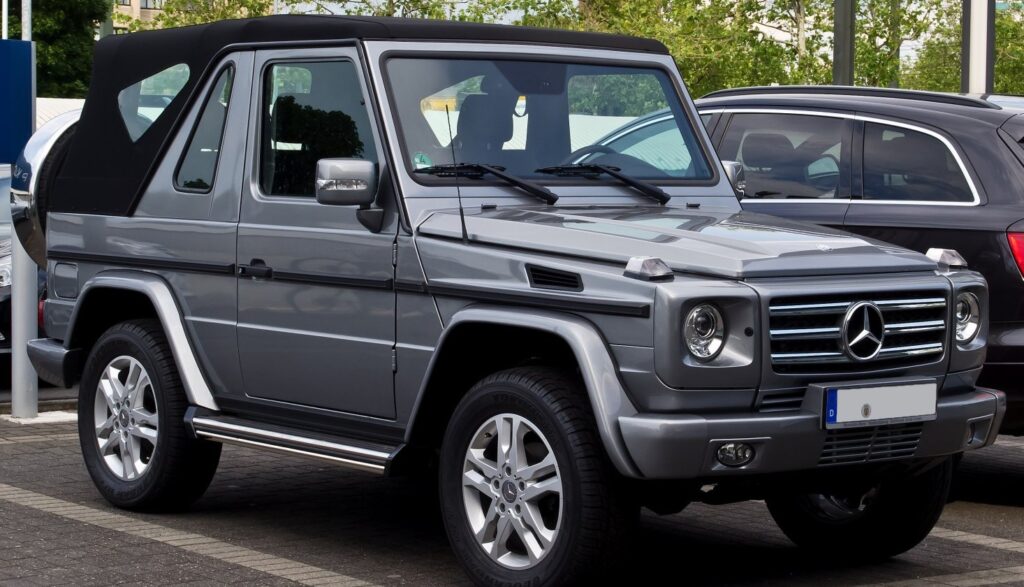
The Mercedes-Benz G-class Long (W463) 300 GD 4MATIC Automatic, produced between April 1990 and September 1993, represents a significant iteration of the iconic G-Wagen. This variant, powered by the OM 603.931 3.0-liter inline-six diesel engine, was positioned as a robust and capable off-road vehicle, offering a blend of practicality and luxury within the G-class lineup. The “Long” designation refers to the extended wheelbase, providing increased interior space compared to the standard G-Wagen. It served primarily as a premium, all-terrain vehicle for customers seeking durability and a commanding presence, particularly in European markets where diesel engines were favored for their fuel efficiency and torque.
Technical Specifications
| Brand | Mercedes-Benz |
| Model | G-class |
| Generation | G-class Long (W463) |
| Type | 300 GD (113 Hp) 4MATIC Automatic |
| Start of production | April, 1990 |
| End of production | September, 1993 |
| Powertrain Architecture | Internal Combustion engine |
| Body type | Off-road vehicle |
| Seats | 5 |
| Doors | 5 |
| Fuel consumption (urban) | 12.5 l/100 km (18.8 US mpg, 22.6 UK mpg, 8 km/l) |
| Fuel consumption (extra urban) | 10.8 l/100 km (21.8 US mpg, 26.2 UK mpg, 9.3 km/l) |
| Fuel Type | Diesel |
| Maximum speed | 141 km/h (87.61 mph) |
| Weight-to-power ratio | 19.7 kg/Hp, 50.8 Hp/tonne |
| Weight-to-torque ratio | 11.6 kg/Nm, 85.8 Nm/tonne |
| Power | 113 Hp @ 4600 rpm |
| Power per litre | 37.7 Hp/l |
| Torque | 191 Nm @ 2700-2900 rpm (140.87 lb.-ft. @ 2700-2900 rpm) |
| Engine layout | Front, Longitudinal |
| Engine Model/Code | OM 603.931 |
| Engine displacement | 2996 cm3 (182.83 cu. in.) |
| Number of cylinders | 6 |
| Engine configuration | Inline |
| Cylinder Bore | 87 mm (3.43 in.) |
| Piston Stroke | 84 mm (3.31 in.) |
| Compression ratio | 22:1 |
| Number of valves per cylinder | 2 |
| Fuel injection system | Precombustion chamber injection |
| Engine aspiration | Naturally aspirated engine |
| Valvetrain | SOHC |
| Engine oil capacity | 8 l (8.45 US qt | 7.04 UK qt) |
| Coolant capacity | 7.5 l (7.93 US qt | 6.6 UK qt) |
| Kerb Weight | 2225 kg (4905.29 lbs.) |
| Max. weight | 2950 kg (6503.64 lbs.) |
| Max load | 725 kg (1598.35 lbs.) |
| Fuel tank capacity | 96 l (25.36 US gal | 21.12 UK gal) |
| Length | 4635 mm (182.48 in.) |
| Width | 1690 mm (66.54 in.) |
| Height | 1936 mm (76.22 in.) |
| Wheelbase | 2850 mm (112.2 in.) |
| Front track | 1425 mm (56.1 in.) |
| Rear track | 1425 mm (56.1 in.) |
| Drivetrain Architecture | All wheel drive (4×4). ICE drives all four wheels permanently. |
| Number of gears | 4 |
| Gearbox type | Automatic transmission |
| Front suspension | Coil spring, Rigid axle, Trailing arm |
| Rear suspension | Rigid axle, Trailing arm, Coil spring |
| Front brakes | Disc |
| Rear brakes | Drum |
| Steering type | Cone worm with recirculation balls |
| Power steering | Hydraulic |
| Tires size | 205/80 R 16 |
| Wheel rims size | 6 J x 16 |
Powertrain & Engine Architecture
The heart of the 300 GD is the OM 603.931, a 3.0-liter inline-six diesel engine. This engine utilizes precombustion chamber injection, a system common in Mercedes-Benz diesels of the era, known for its relatively quiet operation and good combustion efficiency. The engine produces 113 horsepower at 4600 rpm and 191 Nm (140.87 lb-ft) of torque between 2700 and 2900 rpm. The engine’s robust construction and relatively low compression ratio (22:1) contribute to its longevity. The four-speed automatic transmission, a common unit for Mercedes-Benz at the time, was chosen to provide ease of use, particularly appealing to customers who prioritized comfort over outright performance. This transmission, while not known for its sportiness, was durable and well-suited to the engine’s torque characteristics.
Driving Characteristics
The 300 GD Automatic offered a distinctly different driving experience compared to its more powerful or manually-equipped siblings. The 113 hp output and automatic transmission resulted in a relaxed and unhurried pace. Acceleration was modest, but the engine’s ample torque provided sufficient power for comfortable cruising and tackling challenging off-road terrain. The automatic transmission’s gear ratios were optimized for fuel efficiency and smooth operation, rather than rapid acceleration. Compared to the 300 GE (gasoline engine) or later 320 GE models, the 300 GD felt considerably slower, but it excelled in situations requiring low-speed torque and consistent power delivery. The 4MATIC all-wheel-drive system provided excellent traction in various conditions, making it a capable off-roader.
Equipment & Trim Levels
The 300 GD Long typically came equipped with a reasonable level of standard features for a luxury off-road vehicle of its time. This included power windows, central locking, and a basic audio system. Interior upholstery was typically cloth, although leather was available as an option. The dashboard layout was functional and straightforward, prioritizing durability and ease of use. Optional extras included air conditioning, a sunroof, and upgraded audio systems. The “Long” wheelbase version offered increased rear passenger legroom, enhancing comfort for occupants. The trim level was generally considered mid-range within the G-class lineup, offering a balance between luxury and practicality.
Chassis & Braking
The G-class chassis is renowned for its exceptional strength and off-road capability. The 300 GD Long featured a robust ladder frame chassis and solid axles front and rear, providing excellent articulation and durability. Suspension consisted of coil springs and trailing arms, offering a comfortable ride on and off-road. Braking was accomplished via disc brakes on the front axle and drum brakes on the rear. While adequate for the vehicle’s weight and performance, the rear drum brakes were a point of criticism compared to the all-disc setups found on some higher-end G-Wagen models. Hydraulic power steering was standard, making maneuvering the large vehicle relatively easy.
Market Reception & Comparison
The 300 GD Automatic was generally well-received by critics and customers who valued its durability, off-road capability, and fuel efficiency. It was often praised for its robust construction and ability to handle challenging terrain. However, its relatively slow acceleration and somewhat dated automatic transmission were points of criticism. Compared to the gasoline-powered G-Wagens, the 300 GD offered superior fuel economy and lower running costs, making it a popular choice for those who prioritized practicality. Against other diesel-powered SUVs of the era, the G-class stood out for its superior build quality and off-road prowess.
Legacy
The OM 603 engine family, including the 603.931 found in the 300 GD, is known for its exceptional longevity and reliability. Properly maintained examples can accumulate very high mileage with minimal issues. Today, the 300 GD Long is a sought-after classic among G-Wagen enthusiasts. Its relative affordability compared to later, more powerful models makes it an attractive entry point into G-class ownership. While not the fastest or most luxurious G-Wagen, the 300 GD represents a unique blend of ruggedness, practicality, and timeless design, ensuring its continued appeal for years to come. The simplicity of the diesel engine and automatic transmission also makes it relatively easy to maintain and repair, further contributing to its enduring popularity in the used car market.