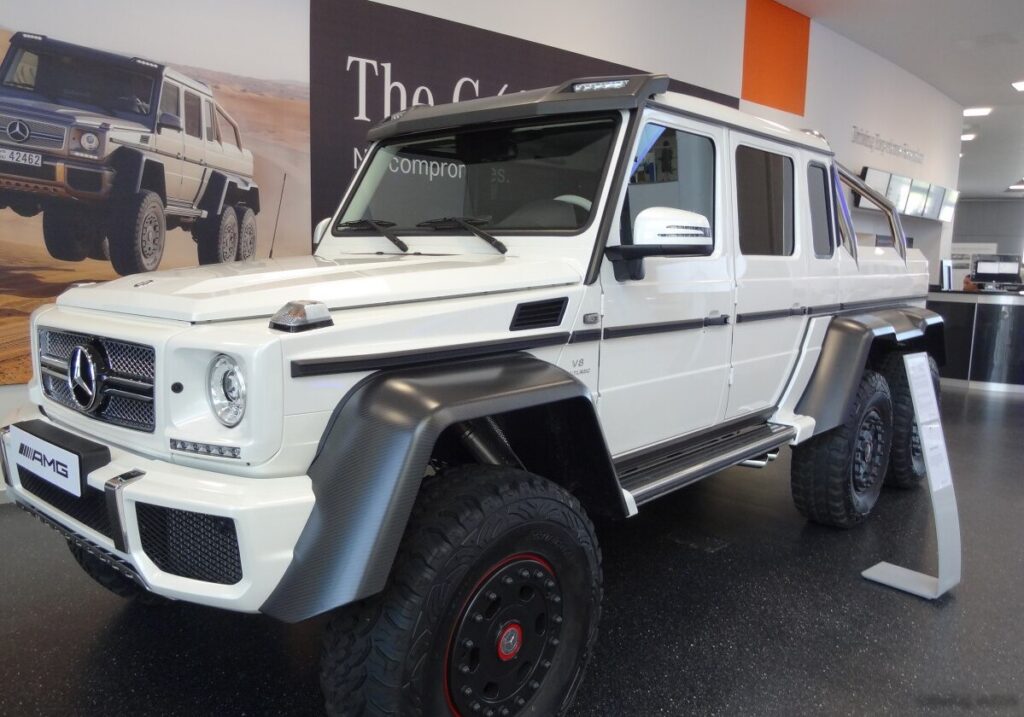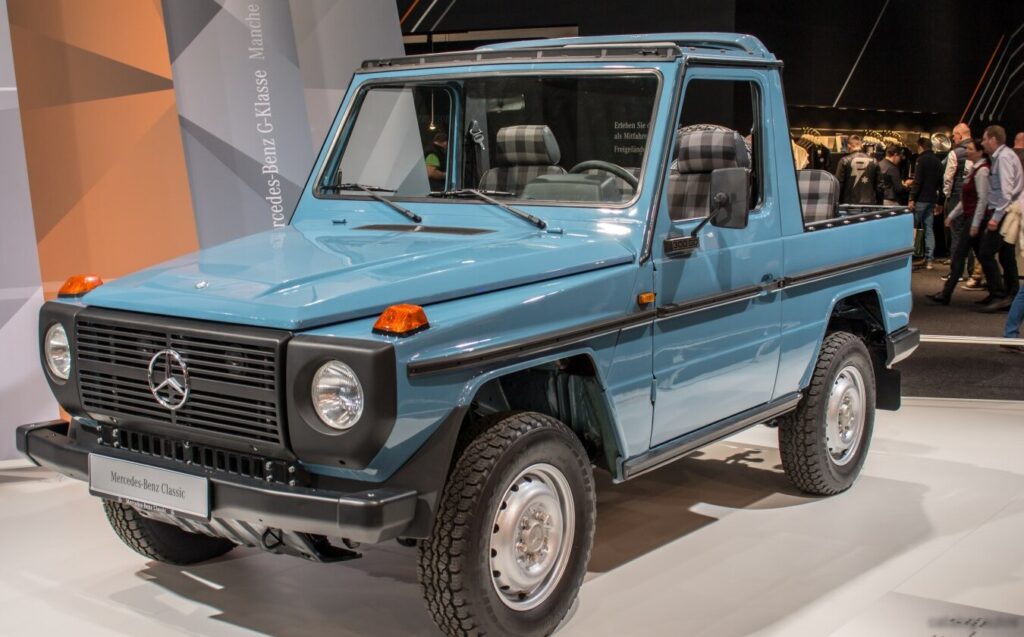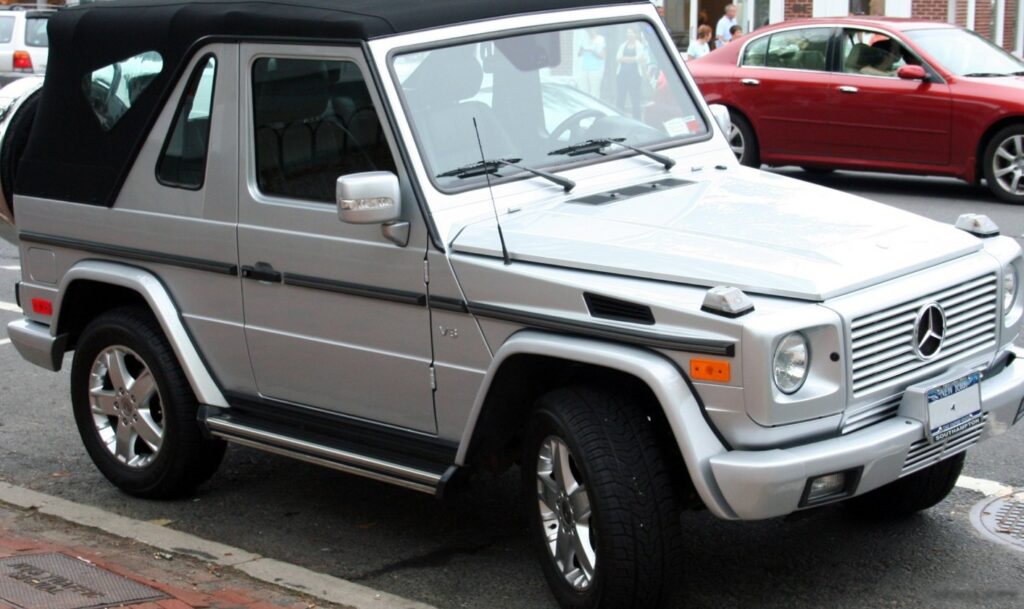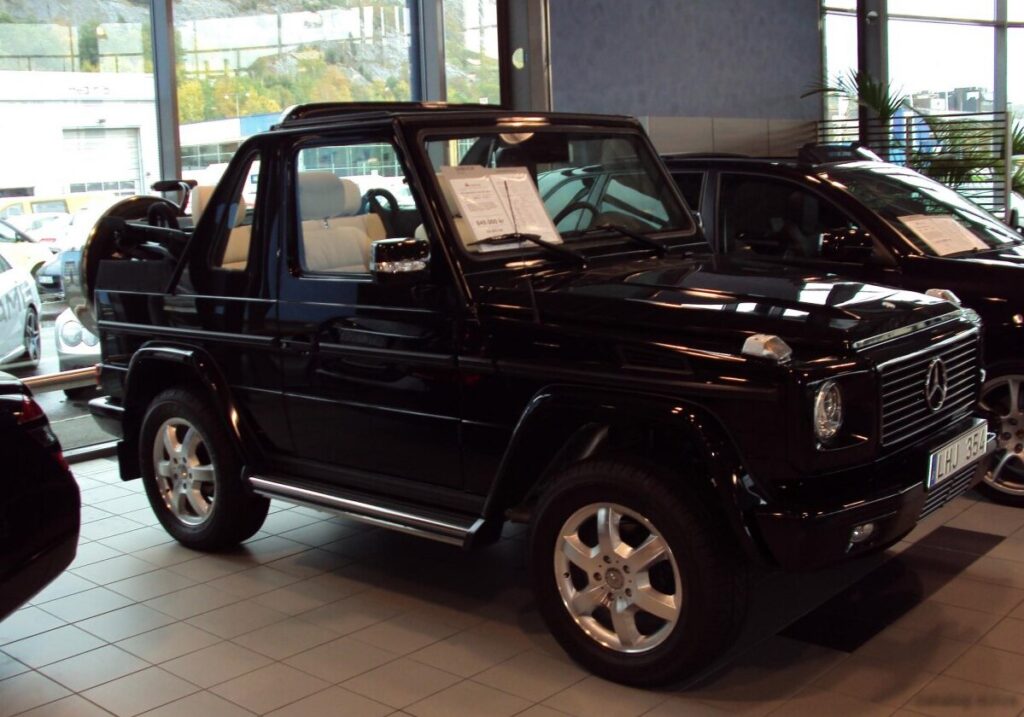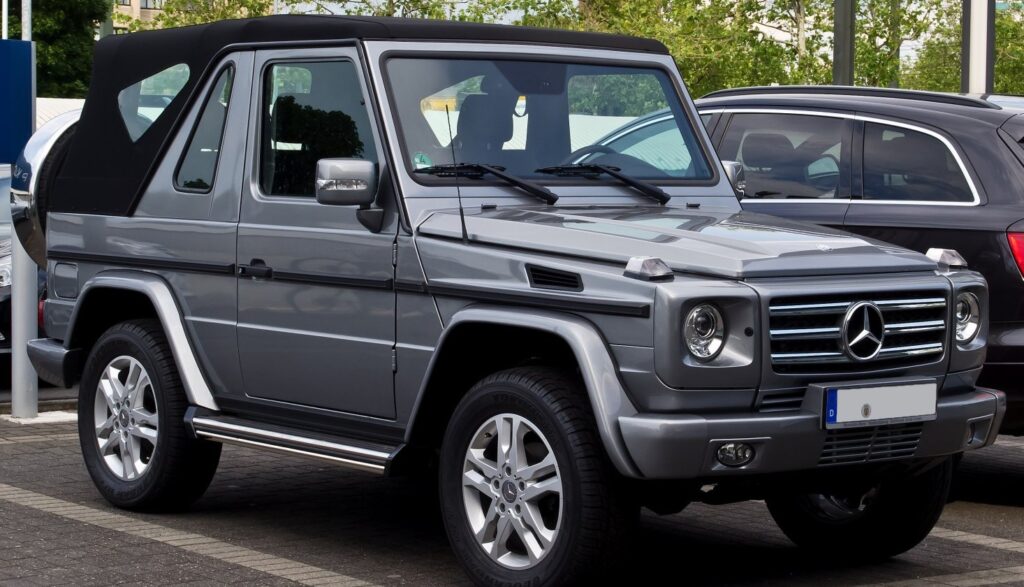
The Mercedes-Benz G-class Long (W463) 300 GE 4MATIC, produced from April 1990 to September 1993, represents a significant iteration of the iconic G-Wagen. Positioned as a mid-range offering within the W463 series – which introduced the longer wheelbase variant – the 300 GE aimed to balance off-road capability with a degree of on-road refinement. This model was primarily marketed in Europe and other international markets, solidifying the G-class’s reputation as a robust and versatile luxury off-roader. The “GE” designation signified “Geländewagen mit Einspritzung” (off-road vehicle with fuel injection), highlighting a key technological advancement over earlier carbureted models.
Technical Specifications
| Brand | Mercedes-Benz |
| Model | G-class |
| Generation | G-class Long (W463) |
| Type | 300 GE (170 Hp) 4MATIC |
| Start of production | April, 1990 |
| End of production | September, 1993 |
| Powertrain Architecture | Internal Combustion engine |
| Body type | Off-road vehicle |
| Seats | 5 |
| Doors | 5 |
| Fuel consumption (urban) | 19 l/100 km (12.4 US mpg) |
| Fuel consumption (extra urban) | 13.4 l/100 km (17.6 US mpg) |
| Fuel Type | Petrol (Gasoline) |
| Acceleration 0 – 100 km/h | 14.2 sec |
| Acceleration 0 – 62 mph | 14.2 sec |
| Acceleration 0 – 60 mph | 13.5 sec |
| Maximum speed | 165 km/h (102.53 mph) |
| Weight-to-power ratio | 13.1 kg/Hp |
| Weight-to-torque ratio | 9.4 kg/Nm |
| Power | 170 Hp @ 5500 rpm |
| Torque | 235 Nm @ 4500 rpm (173.33 lb.-ft. @ 4500 rpm) |
| Engine layout | Front, Longitudinal |
| Engine Model/Code | M 103.987 |
| Engine displacement | 2960 cm3 (180.63 cu. in.) |
| Number of cylinders | 6 |
| Engine configuration | Inline |
| Cylinder Bore | 88.5 mm (3.48 in.) |
| Piston Stroke | 80.2 mm (3.16 in.) |
| Compression ratio | 9.2:1 |
| Number of valves per cylinder | 2 |
| Fuel injection system | Multi-port manifold injection |
| Engine aspiration | Naturally aspirated engine |
| Valvetrain | SOHC |
| Engine oil capacity | 6.5 l (6.87 US qt | 5.72 UK qt) |
| Coolant capacity | 7.8 l (8.24 US qt | 6.86 UK qt) |
| Kerb Weight | 2220 kg (4894.26 lbs.) |
| Max. weight | 2950 kg (6503.64 lbs.) |
| Max load | 730 kg (1609.37 lbs.) |
| Fuel tank capacity | 96 l (25.36 US gal | 21.12 UK gal) |
| Length | 4635 mm (182.48 in.) |
| Width | 1690 mm (66.54 in.) |
| Height | 1936 mm (76.22 in.) |
| Wheelbase | 2850 mm (112.2 in.) |
| Front track | 1425 mm (56.1 in.) |
| Rear track | 1425 mm (56.1 in.) |
| Drivetrain Architecture | All wheel drive (4×4) |
| Number of gears | 5 |
| Gearbox type | Manual transmission |
| Front suspension | Coil spring, Rigid axle suspension, Trailing arm |
| Rear suspension | Rigid axle suspension, Trailing arm, Coil spring |
| Front brakes | Disc |
| Rear brakes | Drum |
| Steering type | Cone worm with recirculation balls |
| Power steering | Hydraulic Steering |
| Tires size | 205/80 R 16 |
| Wheel rims size | 6 J x 16 |
Powertrain & Engine Architecture
The 300 GE 4MATIC was powered by the M103.987, a 3.0-liter inline-six cylinder gasoline engine. This engine, a mainstay of Mercedes-Benz’s mid-range offerings during the period, featured a single overhead camshaft (SOHC) valvetrain and Bosch multi-port fuel injection. The M103 was known for its smoothness and relative durability, though it wasn’t a particularly high-revving unit. Its 170 horsepower at 5500 rpm and 235 Nm (173 lb-ft) of torque at 4500 rpm were adequate for the G-Wagen’s substantial weight, but didn’t deliver particularly brisk acceleration. The engine’s longitudinal mounting and the robust four-wheel-drive system contributed to the vehicle’s inherent mechanical complexity. The 300 GE utilized a five-speed manual transmission as standard, providing a reasonable spread of gears for both on-road cruising and off-road crawling.
Driving Characteristics
The 300 GE 4MATIC’s driving experience was defined by its blend of ruggedness and relative comfort. The manual transmission, while requiring more driver involvement than later automatic options, offered precise control, especially when navigating challenging terrain. Acceleration was modest, taking around 14.2 seconds to reach 62 mph (100 km/h). However, the engine’s torque delivery provided sufficient pulling power for off-road excursions and towing. The long wheelbase of the W463 improved ride comfort compared to the shorter original G-Wagen, but the vehicle still exhibited a noticeable degree of body roll in corners. The 4MATIC system provided excellent traction in a variety of conditions, making it a capable performer both on and off the pavement. Compared to the later 300 GD diesel variants, the 300 GE offered significantly more power and a more refined driving experience, but at the cost of fuel economy.
Equipment & Trim Levels
The 300 GE 4MATIC, while a luxury vehicle, wasn’t lavishly equipped by modern standards. Standard features typically included cloth upholstery, basic instrumentation, and manual windows and door locks. Air conditioning was a common option, as were power windows and a more sophisticated audio system. Interior trim was generally functional and durable, reflecting the G-Wagen’s utilitarian origins. Optional extras could significantly increase the price, with features like leather upholstery, sunroofs, and upgraded sound systems available. The level of trim was relatively consistent across the 300 GE models, with variations primarily stemming from individual customer choices.
Chassis & Braking
The G-Wagen’s chassis was a body-on-frame construction, providing exceptional strength and durability. The front suspension utilized coil springs and a rigid axle with trailing arms, while the rear suspension mirrored this setup. This configuration prioritized off-road articulation and robustness over on-road handling precision. Braking was accomplished via disc brakes at the front and drum brakes at the rear. Hydraulic power steering was standard, making the vehicle easier to maneuver, particularly at low speeds. The tires, typically 205/80 R16, were chosen for their off-road capability and durability.
Market Reception & Comparison
The 300 GE 4MATIC was generally well-received by automotive critics, who praised its off-road capability, build quality, and unique character. However, its relatively high price and modest performance were often noted. Compared to the diesel-powered 300 GD, the 300 GE offered more power and refinement but consumed significantly more fuel. Against competitors like the Land Rover Defender, the G-Wagen offered a more luxurious interior and a more sophisticated engineering approach, but at a higher cost. Fuel economy was a significant drawback, averaging around 19 l/100 km (12.4 US mpg) in urban driving.
Legacy
The 300 GE 4MATIC holds a respected position among G-Wagen enthusiasts. The M103 engine, while not without its maintenance requirements, is generally considered reliable when properly maintained. Today, well-preserved examples are sought after by collectors and off-road enthusiasts alike. The W463 generation, and the 300 GE in particular, represents a pivotal moment in the G-Wagen’s evolution, bridging the gap between its utilitarian origins and its later status as a luxury icon. Finding parts can sometimes be challenging, but a dedicated aftermarket and a strong community of G-Wagen owners help to ensure the continued viability of these classic vehicles. The 300 GE’s enduring appeal lies in its unique combination of ruggedness, refinement, and timeless design.