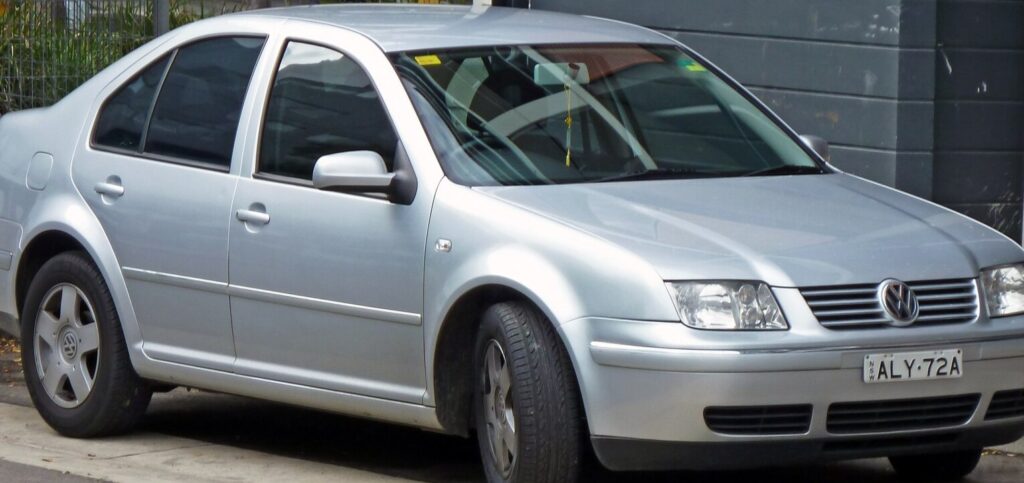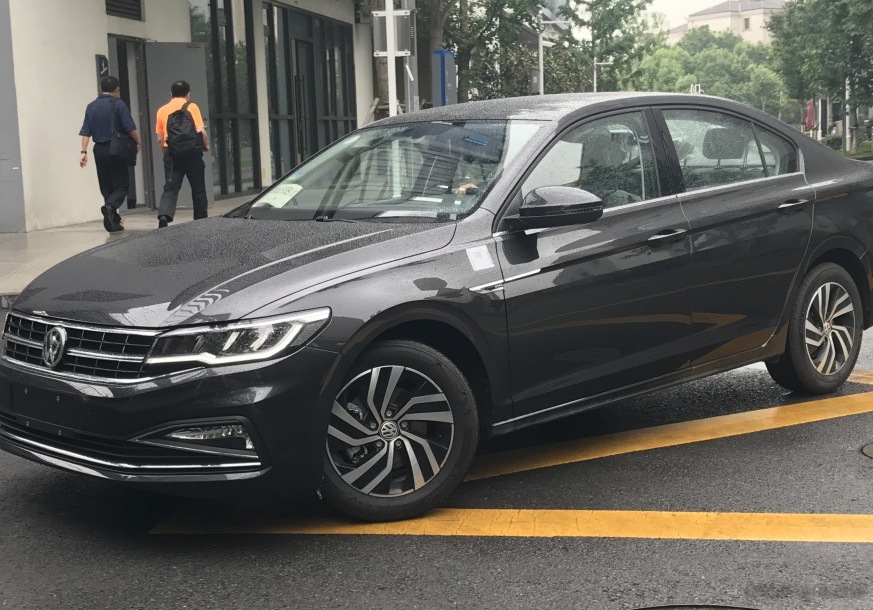
The Volkswagen Bora IV 1.5, produced specifically for the Chinese market starting in 2018, represents a continuation of the Bora nameplate – a compact sedan closely related to the Jetta sold in other regions. This fourth-generation Bora (internally designated as the 1HX0/A3 platform derivative) aimed to provide a practical and affordable option within Volkswagen’s Chinese lineup. The 1.5-liter engine variant occupied a key position as an entry-level offering, balancing fuel efficiency with acceptable performance for everyday driving. It was positioned below the more powerful 1.4 TSI turbocharged engine option, catering to buyers prioritizing value and economy.
Technical Specifications
| Brand | Volkswagen |
| Model | Bora |
| Generation | Bora IV (China) |
| Type (Engine) | 1.5 (116 Hp) |
| Start of production | 2018 |
| Powertrain Architecture | Internal Combustion engine |
| Body type | Sedan |
| Seats | 5 |
| Doors | 4 |
| Fuel consumption (combined) | 5.5 l/100 km (42.8 US mpg, 51.4 UK mpg, 18.2 km/l) |
| Fuel Type | Petrol (Gasoline) |
| Acceleration 0 – 100 km/h | 11.6 sec |
| Acceleration 0 – 62 mph | 11.6 sec |
| Acceleration 0 – 60 mph | 11 sec |
| Maximum speed | 185 km/h (114.95 mph) |
| Weight-to-power ratio | 10.6 kg/Hp, 93.9 Hp/tonne |
| Weight-to-torque ratio | 8.2 kg/Nm, 121.5 Nm/tonne |
| Power | 116 Hp @ 6000 rpm |
| Power per litre | 77.4 Hp/l |
| Torque | 150 Nm @ 4000 rpm (110.63 lb.-ft. @ 4000 rpm) |
| Engine layout | Front, Transverse |
| Engine Model/Code | DJM |
| Engine displacement | 1498 cm3 (91.41 cu. in.) |
| Number of cylinders | 4 |
| Engine configuration | Inline |
| Number of valves per cylinder | 4 |
| Engine aspiration | Naturally aspirated engine |
| Engine systems | Particulate filter |
| Kerb Weight | 1235 kg (2722.71 lbs.) |
| Trunk (boot) space – minimum | 506 l (17.87 cu. ft.) |
| Fuel tank capacity | 50 l (13.21 US gal | 11 UK gal) |
| Length | 4663 mm (183.58 in.) |
| Width | 1815 mm (71.46 in.) |
| Height | 1462 mm (57.56 in.) |
| Wheelbase | 2688 mm (105.83 in.) |
| Ride height (ground clearance) | 126 mm (4.96 in.) |
| Minimum turning circle | 10.6 m (34.78 ft.) |
| Drivetrain Architecture | The Internal combustion engine (ICE) drives the front wheels of the vehicle. |
| Drive wheel | Front wheel drive |
| Number of gears and type of gearbox | 5 gears, manual transmission |
| Front suspension | Independent type McPherson |
| Rear suspension | Semi-independent, coil spring |
| Front brakes | Ventilated discs |
| Rear brakes | Disc |
| Assisting systems | ABS (Anti-lock braking system) |
| Steering type | Steering rack and pinion |
| Power steering | Electric Steering |
| Wheel rims size | 15; 16 |
Powertrain & Engine Architecture
The heart of the Bora IV 1.5 is the DJM engine code, a 1.5-liter inline-four cylinder naturally aspirated gasoline engine. This engine is part of Volkswagen’s EA211 family, known for its compact design and focus on fuel efficiency. It utilizes a multi-point fuel injection system and a dual overhead camshaft (DOHC) valvetrain with four valves per cylinder. The engine’s 116 horsepower peak is achieved at 6000 rpm, while its 150 Nm (110.63 lb-ft) of torque is delivered at 4000 rpm. The engine also incorporates a particulate filter to reduce emissions, a growing requirement in many markets, including China. The engine is paired with a standard five-speed manual transmission, providing a relatively direct connection to the drivetrain. While an automatic transmission was offered on other Bora IV variants, it wasn’t typically paired with the base 1.5-liter engine.
Driving Characteristics
The 1.5-liter Bora IV offers a driving experience geared towards practicality and economy rather than outright performance. Acceleration from 0 to 100 km/h takes approximately 11.6 seconds, and the top speed is rated at 185 km/h (114.95 mph). The five-speed manual transmission provides adequate control, but the engine’s limited torque output means frequent downshifts are necessary for overtaking or climbing hills. Compared to the more powerful 1.4 TSI turbocharged engine available in the Bora IV lineup, the 1.5-liter feels noticeably less responsive. However, the naturally aspirated engine delivers a more linear power delivery, making it predictable and easy to modulate for everyday driving. The gear ratios are tuned for fuel efficiency, prioritizing lower engine speeds at highway cruising.
Equipment & Trim Levels
The 1.5-liter Bora IV typically came with a fairly basic level of standard equipment. This included power windows, central locking, air conditioning, and an audio system with USB connectivity. Safety features generally included ABS (Anti-lock Braking System) and dual front airbags. Interior upholstery was typically cloth, and the dashboard featured a straightforward design with minimal embellishments. Optional extras, depending on the specific package selected, could include alloy wheels, a more advanced audio system, rear parking sensors, and a sunroof. The trim level was generally considered the entry-level offering, aimed at budget-conscious buyers.
Chassis & Braking
The Bora IV 1.5 utilizes a front-wheel-drive configuration with an independent McPherson strut suspension at the front and a semi-independent coil spring suspension at the rear. This setup provides a reasonable balance between ride comfort and handling. The front brakes are ventilated discs, offering good stopping power, while the rear brakes are solid discs. The steering system is a rack and pinion type with electric power steering, providing light and easy steering feel. Wheel sizes typically ranged from 15 to 16 inches, depending on the trim level and optional packages.
Market Reception & Comparison
The Volkswagen Bora IV 1.5 was generally well-received in the Chinese market as an affordable and reliable compact sedan. Critics noted its fuel efficiency and practicality, but also pointed out its relatively modest performance compared to competitors and higher-trim Bora models. Compared to the 1.4 TSI variant, the 1.5-liter offered lower running costs but sacrificed some driving enjoyment. Fuel economy was a key selling point, with the 1.5-liter achieving around 5.5 liters per 100 kilometers (42.8 US mpg) in combined driving conditions. Reliability was generally considered good, typical of Volkswagen’s EA211 engine family.
Legacy
The Bora IV 1.5, while not a performance standout, represents a significant offering in Volkswagen’s Chinese market strategy. The DJM engine, while not known for groundbreaking innovation, proved to be a durable and reliable powerplant. In the used car market, these Boras are often sought after by buyers looking for an affordable and fuel-efficient sedan with the Volkswagen badge. Maintenance costs are generally reasonable, and parts availability is good within China. The 1.5-liter variant continues to represent a value-oriented option for those seeking a practical and dependable compact car.