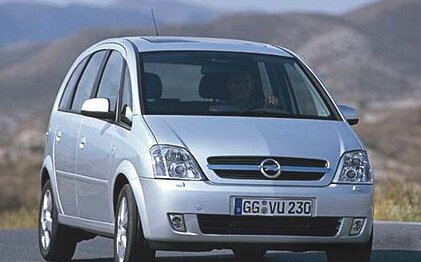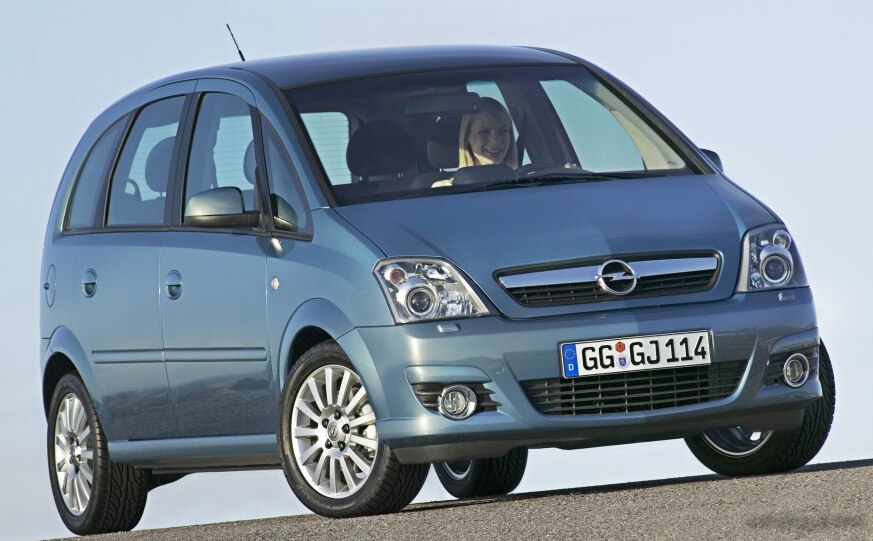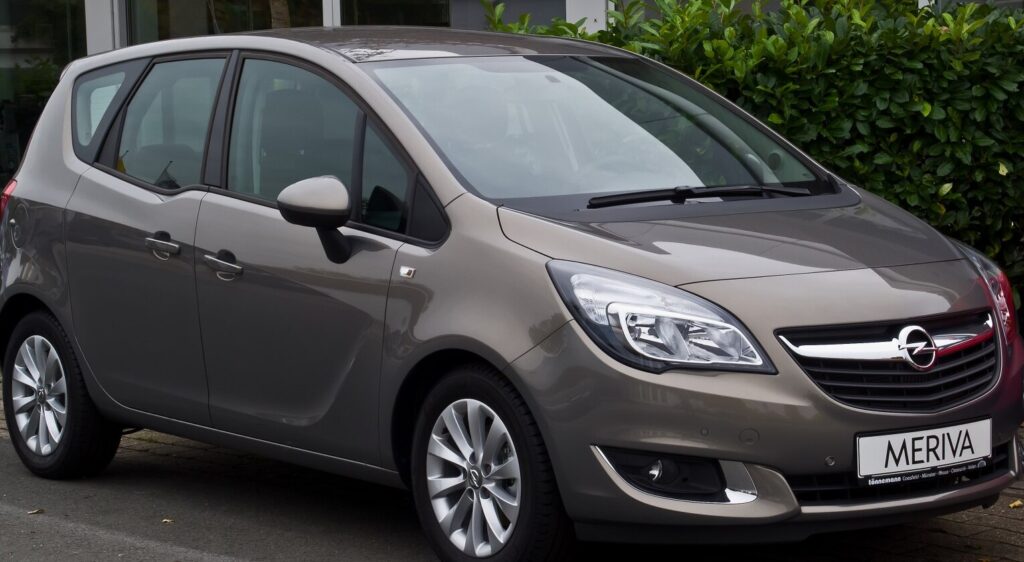
The Opel Meriva B, particularly the facelifted version introduced in 2014, represented a significant evolution of Opel’s compact MPV offering. The 1.4 LPG (120 hp) Turbo Ecotec variant, produced from January 2014 to January 2017, was a key part of this lineup, aimed at buyers seeking a fuel-efficient and versatile family vehicle. Positioned as a mid-range option, it bridged the gap between the base petrol engines and the more powerful, though less economical, alternatives. This model was primarily sold in European markets, where MPVs remained popular due to their practicality and space efficiency.
Technical Specifications
| Brand | Opel |
| Model | Meriva |
| Generation | Meriva B (facelift 2014) |
| Type (Engine) | 1.4 LPG (120 Hp) Turbo Ecotec |
| Start of production | January, 2014 |
| End of production | January, 2017 |
| Powertrain Architecture | Internal Combustion engine |
| Body type | MPV |
| Seats | 5 |
| Doors | 5 |
| Fuel consumption (economy) – urban | 7.8 l/100 km (30.2 US mpg, 36.2 UK mpg, 12.8 km/l) |
| Fuel consumption (economy) – urban (LPG) | 9.8 l/100 km |
| Fuel consumption (economy) – extra urban | 4.8 l/100 km (49 US mpg, 58.9 UK mpg, 20.8 km/l) |
| Fuel consumption (economy) – extra urban (LPG) | 6.1 l/100 km |
| Fuel consumption (economy) – combined | 5.9 l/100 km (39.9 US mpg, 47.9 UK mpg, 16.9 km/l) |
| Fuel consumption (economy) – combined (LPG) | 7.4 l/100 km |
| CO2 emissions | 139 g/km |
| CO2 emissions (LPG) | 121 g/km |
| Fuel Type | Petrol / LPG |
| Acceleration 0 – 100 km/h | 11.5 sec |
| Acceleration 0 – 62 mph | 11.5 sec |
| Acceleration 0 – 100 km/h (LPG) | 11.8 sec |
| Acceleration 0 – 60 mph (Calculated) | 10.9 sec |
| Maximum speed | 188 km/h (116.82 mph) |
| Emission standard | Euro 6 |
| Power | 120 Hp @ 4800-6000 rpm |
| Power per litre | 88 Hp/l |
| Torque | 175 Nm @ 1750-4800 rpm (129.07 lb.-ft. @ 1750-4800 rpm) |
| Engine layout | Front, Transverse |
| Engine Model/Code | B14NEL |
| Engine displacement | 1364 cm3 (83.24 cu. in.) |
| Number of cylinders | 4 |
| Engine configuration | Inline |
| Cylinder Bore | 72.5 mm (2.85 in.) |
| Piston Stroke | 82.6 mm (3.25 in.) |
| Fuel injection system | Multi-port manifold injection |
| Engine aspiration | Turbocharger |
| Valvetrain | DOHC |
| Engine oil capacity | 4 l (4.23 US qt, 3.52 UK qt) |
| Coolant capacity | 6.2 l (6.55 US qt, 5.46 UK qt) |
| Trunk (boot) space – minimum | 400 l (14.13 cu. ft.) |
| Trunk (boot) space – maximum | 1500 l (52.97 cu. ft.) |
| Fuel tank capacity | 54 l (14.27 US gal, 11.88 UK gal) |
| Length | 4300 mm (169.29 in.) |
| Width | 1912 mm (75.28 in.) |
| Height | 1615 mm (63.58 in.) |
| Wheelbase | 2644 mm (104.09 in.) |
| Front track | 1488 mm (58.58 in.) |
| Rear track | 1509 mm (59.41 in.) |
| Minimum turning circle | 11.06 m (36.29 ft.) |
| Drivetrain Architecture | Front wheel drive |
| Number of gears and type of gearbox | 5 gears, manual transmission |
| Front suspension | Independent type McPherson |
| Rear suspension | Elastic beam |
| Front brakes | Ventilated discs |
| Rear brakes | Disc |
| Assisting systems | ABS (Anti-lock braking system) |
| Steering type | Steering rack and pinion |
| Power steering | Electric |
INTRODUCTION
The Opel Meriva B, launched in 2010 and facelifted in 2014, was designed to appeal to families needing a practical and flexible vehicle. The facelift brought updated styling, improved interior materials, and a revised engine lineup. The 1.4 LPG Turbo Ecotec variant, introduced with the facelift, offered a compelling alternative to traditional petrol and diesel engines, capitalizing on the relatively low cost of LPG fuel in many European countries. It was built on the General Motors Gamma platform, shared with other models like the Opel/Vauxhall Corsa and the Fiat Punto. The Meriva B aimed to provide a spacious interior, innovative seating arrangements (FlexSpace), and a comfortable driving experience.
Powertrain & Engine Architecture
At the heart of the Meriva B 1.4 LPG Turbo Ecotec lies the B14NEL engine code. This 1.4-liter, inline-four cylinder engine utilizes a turbocharger to boost power and efficiency. The engine features multi-point fuel injection, delivering fuel directly into the intake ports. The dual overhead camshaft (DOHC) valvetrain optimizes airflow for improved performance. Crucially, this engine is a dedicated LPG unit, meaning it’s designed to run primarily on liquefied petroleum gas, with a petrol backup system for starting and switching when LPG isn’t available. The LPG system itself is a vapor-phase injection system, ensuring efficient combustion. The engine is paired with a five-speed manual transmission, which was the standard offering for this variant. The transmission’s gear ratios are tuned for a balance of fuel economy and everyday drivability.
Driving Characteristics
The 120 hp output of the 1.4 LPG Turbo Ecotec provides adequate performance for typical family motoring. Acceleration from 0-60 mph takes around 10.9 seconds, and top speed is approximately 117 mph. While not particularly sporty, the turbocharger provides a noticeable boost in power during acceleration, making overtaking maneuvers manageable. Compared to the naturally aspirated 1.4-liter petrol engine, the turbo version offers significantly more torque, resulting in a more relaxed driving experience, especially when fully loaded. Compared to the diesel options, the LPG variant offers a smoother, quieter ride, but with slightly less overall torque. The five-speed manual transmission is generally well-matched to the engine, although some drivers might find the gear ratios a little widely spaced.
Equipment & Trim Levels
The 1.4 LPG Turbo Ecotec variant of the Meriva B typically came equipped with a reasonable level of standard features. These included air conditioning, electric front windows, a CD/radio system with USB connectivity, and ABS brakes. Higher trim levels, such as ‘Enjoy’ and ‘Cosmo’, added features like alloy wheels, cruise control, parking sensors, and a more sophisticated infotainment system. Interior upholstery was typically cloth, with options for upgraded materials on higher trims. The FlexSpace rear seating system, allowing for individual seat adjustment and folding, was a standard feature across the range, enhancing the Meriva’s practicality.
Chassis & Braking
The Meriva B utilizes a McPherson strut front suspension and an elastic beam rear suspension. This setup provides a comfortable ride quality, well-suited for everyday driving. The front brakes are ventilated discs, offering good stopping power, while the rear brakes are solid discs. ABS (Anti-lock Braking System) is standard, enhancing safety. The steering is electrically assisted, providing light and precise control. The suspension tuning is geared towards comfort rather than sporty handling, prioritizing a smooth ride over sharp cornering.
Market Reception & Comparison
The Opel Meriva B 1.4 LPG Turbo Ecotec was generally well-received by automotive critics, particularly for its fuel efficiency and practicality. The LPG conversion offered a significant cost saving for drivers in countries with favorable LPG pricing. Compared to the petrol-only versions, the LPG model offered similar performance with lower running costs. However, the availability of LPG refueling stations was a concern for some potential buyers. Compared to diesel models, the LPG variant was often seen as a quieter and smoother alternative, although it didn’t quite match the diesel’s fuel economy on long journeys. Reliability reports suggest that the B14NEL engine is generally robust, although regular servicing is essential to maintain the LPG system.
Legacy
The Opel Meriva B 1.4 LPG Turbo Ecotec remains a viable option in the used car market, particularly for buyers seeking a fuel-efficient and practical family vehicle. The B14NEL engine has proven to be relatively reliable, provided it has been properly maintained. The LPG system requires periodic inspection and servicing to ensure optimal performance and safety. While the Meriva B has been superseded by newer models, its combination of space, versatility, and low running costs continues to appeal to a niche segment of the market. The model represents a period where Opel actively explored alternative fuel options to meet evolving environmental regulations and consumer demands.