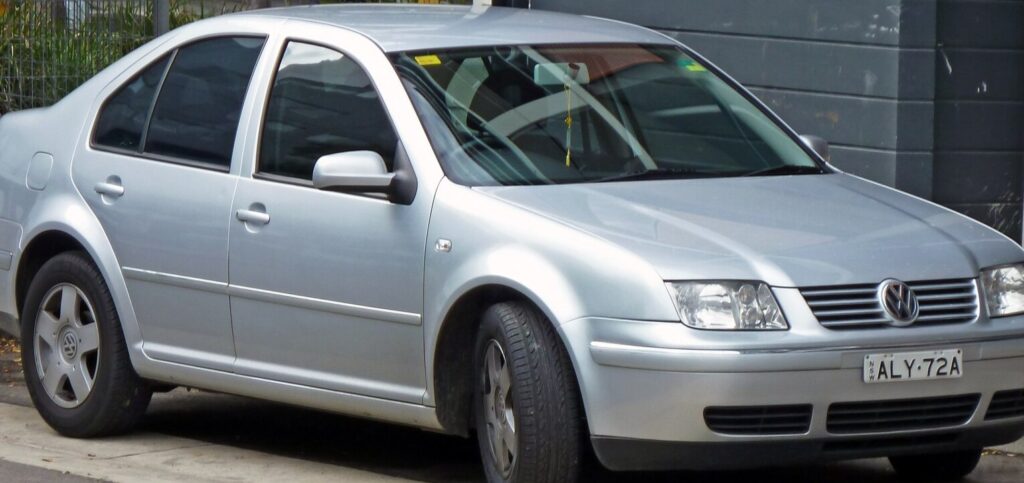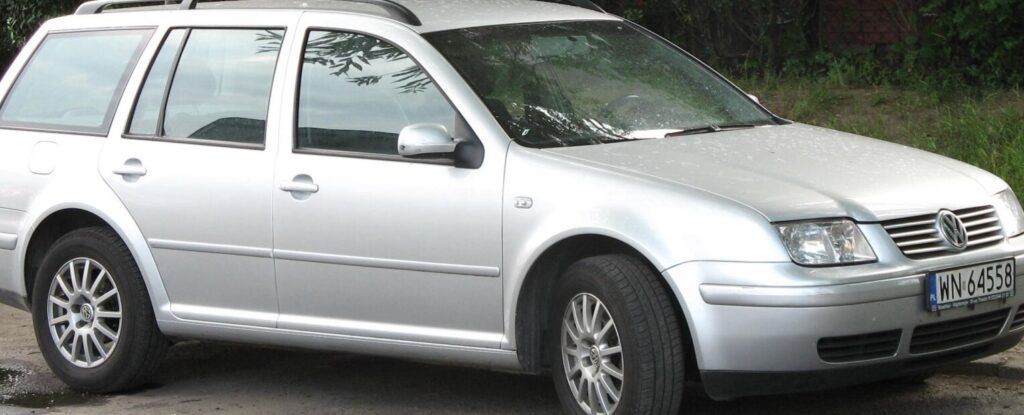
The Volkswagen Bora Variant 1.6 (100 hp) Automatic, produced between 1999 and 2000, represents a practical and accessible entry point into the Bora (Jetta in North America) range. Part of the 1J6 series, this variant was a station wagon (estate) body style built on the Volkswagen Group’s A4 platform – also known as the 1HX0 platform – shared with models like the Golf, Audi A3, and SEAT Leon. Positioned as a family-oriented vehicle, it offered increased cargo capacity compared to the sedan version, appealing to buyers needing versatility without sacrificing the core Volkswagen driving experience. This specific engine and transmission combination aimed for fuel efficiency and ease of use, rather than outright performance.
Technical Specifications
| Brand | Volkswagen |
| Model | Bora |
| Generation | Bora Variant (1J6) |
| Type (Engine) | 1.6 (100 Hp) Automatic |
| Start of production | 1999 |
| End of production | 2000 |
| Powertrain Architecture | Internal Combustion engine |
| Body type | Station wagon (estate) |
| Seats | 5 |
| Doors | 5 |
| Fuel consumption (urban) | 11.9 l/100 km (19.8 US mpg, 23.7 UK mpg, 8.4 km/l) |
| Fuel consumption (extra urban) | 6.5 l/100 km (36.2 US mpg, 43.5 UK mpg, 15.4 km/l) |
| Fuel consumption (combined) | 8.5 l/100 km (27.7 US mpg, 33.2 UK mpg, 11.8 km/l) |
| Fuel Type | Petrol (Gasoline) |
| Acceleration 0 – 100 km/h | 13.7 sec |
| Acceleration 0 – 62 mph | 13.7 sec |
| Acceleration 0 – 60 mph | 13 sec |
| Maximum speed | 185 km/h (114.95 mph) |
| Weight-to-power ratio | 12.3 kg/Hp, 81.3 Hp/tonne |
| Weight-to-torque ratio | 8.5 kg/Nm, 117.9 Nm/tonne |
| Power | 100 Hp @ 5600 rpm |
| Power per litre | 62.7 Hp/l |
| Torque | 145 Nm @ 3800 rpm (106.95 lb.-ft. @ 3800 rpm) |
| Engine layout | Front, Transverse |
| Engine Model/Code | AEH, AKL |
| Engine displacement | 1595 cm3 (97.33 cu. in.) |
| Number of cylinders | 4 |
| Engine configuration | Inline |
| Cylinder Bore | 81 mm (3.19 in.) |
| Piston Stroke | 77.4 mm (3.05 in.) |
| Compression ratio | 10:1 |
| Number of valves per cylinder | 2 |
| Fuel injection system | Multi-port manifold injection |
| Engine aspiration | Naturally aspirated engine |
| Valvetrain | OHC |
| Engine oil capacity | 4.5 l (4.76 US qt | 3.96 UK qt) |
| Coolant | 5 l (5.28 US qt | 4.4 UK qt) |
| Kerb Weight | 1230 kg (2711.69 lbs.) |
| Max. weight | 1740 kg (3836.04 lbs.) |
| Max load | 510 kg (1124.36 lbs.) |
| Trunk (boot) space – minimum | 460 l (16.24 cu. ft.) |
| Trunk (boot) space – maximum | 1470 l (51.91 cu. ft.) |
| Fuel tank capacity | 55 l (14.53 US gal | 12.1 UK gal) |
| Length | 4409 mm (173.58 in.) |
| Width | 1735 mm (68.31 in.) |
| Height | 1485 mm (58.46 in.) |
| Wheelbase | 2515 mm (99.02 in.) |
| Front track | 1513 mm (59.57 in.) |
| Rear (Back) track | 1494 mm (58.82 in.) |
| Drivetrain Architecture | The Internal combustion engine (ICE) drives the front wheels of the vehicle. |
| Drive wheel | Front wheel drive |
| Number of gears and type of gearbox | 4 gears, automatic transmission |
| Front suspension | Independent, type McPherson with coil spring and anti-roll bar |
| Rear suspension | Semi-independent, coil spring |
| Front brakes | Ventilated discs |
| Rear brakes | Disc |
| Assisting systems | ABS (Anti-lock braking system) |
| Steering type | Steering rack and pinion |
| Power steering | Hydraulic Steering |
| Tires size | 195/65 R15 |
| Wheel rims size | 6J x 15 |
Powertrain & Engine Architecture
The Bora Variant 1.6 Automatic utilized either the AEH or AKL engine code, both 1.6-liter inline-four cylinder gasoline engines. These engines were known for their simplicity and reliability. The AEH and AKL engines featured a single overhead camshaft (SOHC) valvetrain with two valves per cylinder. Fuel delivery was managed by a multi-port fuel injection system, providing adequate, though not exceptional, performance. The 1595cc displacement produced 100 horsepower at 5600 rpm and 145 Nm (107 lb-ft) of torque at 3800 rpm. The engine’s relatively low compression ratio of 10:1 allowed it to run on regular unleaded gasoline. Paired with this engine was a four-speed automatic transmission, designed for smooth and comfortable shifting. This transmission wasn’t known for its sportiness, prioritizing fuel economy and ease of driving over rapid acceleration.
Driving Characteristics
The 1.6-liter engine and four-speed automatic combination in the Bora Variant delivered modest performance. Acceleration from 0-60 mph took around 13 seconds, and top speed was approximately 115 mph. The automatic transmission’s gear ratios were geared towards economy, resulting in a somewhat sluggish response during overtaking maneuvers. Compared to the more powerful 1.8-liter turbocharged or VR6 versions of the Bora, this variant felt significantly less responsive. However, the automatic transmission made it a more accessible option for drivers prioritizing convenience over performance. The suspension provided a comfortable ride, absorbing bumps and imperfections in the road well, making it suitable for long journeys.
Equipment & Trim Levels
The 1.6 Automatic Bora Variant typically came with a reasonable level of standard equipment. This included power windows, central locking, power steering, and an ABS anti-lock braking system. Interior upholstery was usually cloth, with a relatively simple dashboard layout. Optional extras included air conditioning, alloy wheels, a radio/cassette player (or CD player), and upgraded interior trim. The trim level was generally considered entry-level to mid-range within the Bora lineup, focusing on providing essential features at an affordable price point.
Chassis & Braking
The Bora Variant 1.6 utilized a McPherson strut front suspension with coil springs and an anti-roll bar, providing decent handling characteristics. The rear suspension was a semi-independent torsion beam setup, which was cost-effective and provided adequate ride comfort. Braking consisted of ventilated discs on the front wheels and solid discs on the rear. The ABS system helped to maintain steering control during emergency braking situations. The relatively lightweight nature of the 1.6-liter engine contributed to a balanced chassis, although it didn’t offer the same level of dynamic performance as the more powerful Bora models.
Market Reception & Comparison
The Bora Variant 1.6 Automatic was generally well-received as a practical and affordable family car. Critics praised its spacious interior, comfortable ride, and fuel efficiency. However, the engine’s lack of power was a common criticism, particularly when compared to the more potent engine options available. In terms of fuel economy, the 1.6-liter engine offered a noticeable improvement over the larger displacement engines, achieving around 28-33 mpg on a combined cycle. Reliability was generally good, although regular maintenance was essential to ensure long-term durability.
Legacy
The Volkswagen Bora Variant 1.6 Automatic, while not the most exciting version of the Bora, remains a reasonably reliable and affordable used car option today. The AEH and AKL engines are known for their durability, provided they have been properly maintained. Parts availability is generally good, and the relatively simple mechanical design makes it accessible for DIY repairs. However, potential buyers should be aware of common issues such as oil leaks and corrosion. The Bora Variant 1.6 Automatic represents a sensible choice for those seeking a practical and economical station wagon with the Volkswagen badge.