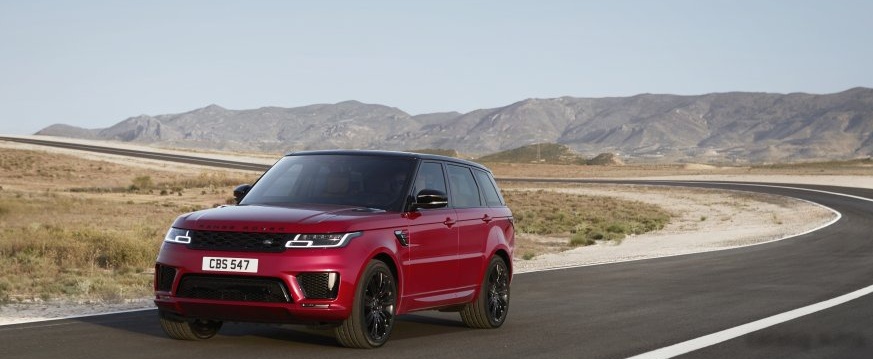
The Land Rover Range Rover Sport II (facelift 2017) 3.0 D300, a mild hybrid diesel variant, represents a significant evolution in the Range Rover Sport lineage. Introduced in July 2020 and continuing through May 2022, this model occupied a sweet spot in the lineup, offering a blend of performance, efficiency, and luxury. It falls within the L494 series, the second generation of the Range Rover Sport, benefitting from the mid-life facelift that brought styling updates and technological enhancements. This particular configuration – the 3.0-liter Ingenium diesel with 301 horsepower and an eight-speed automatic transmission coupled with all-wheel drive – aimed to appeal to buyers seeking a refined and capable SUV without the outright performance focus of the higher-spec models.
Technical Specifications
| Brand | Land Rover |
| Model | Range Rover Sport |
| Generation | Range Rover Sport II (facelift 2017) |
| Type (Engine) | 3.0 D300 (301 Hp) Mild Hybrid AWD Automatic |
| Start of production | July, 2020 |
| End of production | May, 2022 |
| Powertrain Architecture | MHEV (Mild Hybrid Electric Vehicle) |
| Body type | SUV |
| Seats | 5 |
| Doors | 5 |
| Fuel consumption at Low speed (WLTP) | 13.2-13.9 l/100 km (17.8 – 16.9 US mpg, 21.4 – 20.3 UK mpg, 7.6 – 7.2 km/l) |
| Fuel consumption at Medium speed (WLTP) | 7.7-8.4 l/100 km (30.5 – 28 US mpg, 36.7 – 33.6 UK mpg, 13 – 11.9 km/l) |
| Fuel consumption at high speed (WLTP) | 6.7-7.6 l/100 km (35.1 – 30.9 US mpg, 42.2 – 37.2 UK mpg, 14.9 – 13.2 km/l) |
| Fuel consumption at very high speed (WLTP) | 8.3-9.2 l/100 km (28.3 – 25.6 US mpg, 34 – 30.7 UK mpg, 12 – 10.9 km/l) |
| Combined fuel consumption (WLTP) | 8.3-9.2 l/100 km (28.3 – 25.6 US mpg, 34 – 30.7 UK mpg, 12 – 10.9 km/l) |
| CO2 emissions (WLTP) | 218-242 g/km |
| Fuel consumption (economy) – urban (NEDC, WLTP equivalent) | 10.4-11.5 l/100 km (22.6 – 20.5 US mpg, 27.2 – 24.6 UK mpg, 9.6 – 8.7 km/l) |
| Fuel consumption (economy) – extra urban (NEDC, WLTP equivalent) | 5.9-6.5 l/100 km (39.9 – 36.2 US mpg, 47.9 – 43.5 UK mpg, 16.9 – 15.4 km/l) |
| Fuel consumption (economy) – combined (NEDC, WLTP equivalent) | 7.6-8.3 l/100 km (30.9 – 28.3 US mpg, 37.2 – 34 UK mpg, 13.2 – 12 km/l) |
| CO2 emissions (NEDC, WLTP equivalent) | 200-220 g/km |
| Fuel Type | Diesel |
| Acceleration 0 – 100 km/h | 7.3 sec |
| Acceleration 0 – 62 mph | 7.3 sec |
| Acceleration 0 – 60 mph | 6.9 sec |
| Maximum speed | 209 km/h (129.87 mph) |
| Emission standard | Euro 6d-TEMP-EVAP-ISC |
| Weight-to-power ratio | 7.3 kg/Hp, 136.6 Hp/tonne |
| Weight-to-torque ratio | 3.4 kg/Nm, 295.1 Nm/tonne |
| Power | 301 Hp @ 4000 rpm |
| Torque | 650 Nm @ 1500-2500 rpm (479.42 lb.-ft. @ 1500-2500 rpm) |
| Engine layout | Front, Longitudinal |
| Engine Model/Code | Ingenium / DT306 |
| Engine displacement | 2997 cm3 (182.89 cu. in.) |
| Number of cylinders | 6 |
| Engine configuration | Inline |
| Cylinder Bore | 83.01 mm (3.27 in.) |
| Piston Stroke | 92.33 mm (3.64 in.) |
| Compression ratio | 15.5:1 |
| Number of valves per cylinder | 4 |
| Fuel injection system | Diesel Commonrail |
| Engine oil capacity | 8.8 l (9.3 US qt | 7.74 UK qt) |
| Coolant | 14.5 l (15.32 US qt | 12.76 UK qt) |
| Kerb Weight | 2203 kg (4856.78 lbs.) |
| Max. weight | 3100 kg (6834.33 lbs.) |
| Max load | 897 kg (1977.55 lbs.) |
| Trunk (boot) space – minimum | 780 l (27.55 cu. ft.) |
| Trunk (boot) space – maximum | 1686 l (59.54 cu. ft.) |
| Fuel tank capacity | 86 l (22.72 US gal | 18.92 UK gal) |
| Max. roof load | 100 kg (220.46 lbs.) |
| Permitted trailer load with brakes (12%) | 3500 kg (7716.18 lbs.) |
| Permitted trailer load without brakes | 750 kg (1653.47 lbs.) |
| Permitted towbar download | 150 kg (330.69 lbs.) |
| Length | 4879 mm (192.09 in.) |
| Width with mirrors folded | 2073 mm (81.61 in.) |
| Width including mirrors | 2220 mm (87.4 in.) |
| Height | 1803 mm (70.98 in.) |
| Wheelbase | 2923 mm (115.08 in.) |
| Front track | 1692 mm (66.61 in.) |
| Rear (Back) track | 1686 mm (66.38 in.) |
| Ride height (ground clearance) | 213-278 mm (8.39 – 10.94 in.) |
| Minimum turning circle (turning diameter) | 12.5 m (41.01 ft.) |
| Approach angle | 26.0-33.0° |
| Departure angle | 26.2-30.0° |
| Ramp-over (brakeover) angle | 21.2-25.7° |
| Wading depth | 850 mm (33.46 in.) |
| Drivetrain Architecture | ICE and electric motor permanently drive four wheels |
| Drive wheel | All wheel drive (4×4) |
| Number of gears and type of gearbox | 8 gears, automatic transmission |
| Front brakes | Ventilated discs, 363 mm |
| Rear brakes | Ventilated discs, 350 mm |
Powertrain & Engine Architecture
At the heart of the D300 lies Land Rover’s Ingenium engine family, specifically the 2.9-liter inline-six cylinder diesel (DT306 code). This engine utilizes a sophisticated diesel commonrail fuel injection system, delivering precise fuel metering for optimal combustion. The engine boasts a high compression ratio of 15.5:1, contributing to its efficiency and power output. The mild hybrid system incorporates a 48-volt electrical architecture and a belt-integrated starter generator (BiSG). This system allows for smoother start-stop operation, regenerative braking, and a small boost in power during acceleration. The eight-speed automatic transmission, sourced from ZF, is known for its smooth shifts and wide gear ratio spread. It’s calibrated to provide a balance between performance and fuel economy, prioritizing comfort and drivability over outright sportiness in this particular configuration.
Driving Characteristics
The 3.0 D300 Automatic delivers a composed and refined driving experience. While not as overtly quick as the higher-powered Range Rover Sport variants, the 301 horsepower and 479 lb-ft of torque provide ample performance for everyday driving and even confident overtaking maneuvers. The eight-speed transmission is well-matched to the engine’s torque curve, providing smooth and seamless gear changes. The mild hybrid system contributes to a responsive feel from a standstill. Compared to the six-cylinder petrol models, the D300 offers significantly better fuel economy. Against other diesel variants, like the SDV6, it provides a good balance of power and efficiency, making it a practical choice for those covering long distances. The automatic transmission, while convenient, doesn’t offer the same level of driver engagement as the available manual options.
Equipment & Trim Levels
The Range Rover Sport II (facelift 2017) 3.0 D300 typically came well-equipped as standard. Features included leather upholstery, a touchscreen infotainment system with navigation, climate control, parking sensors, and a suite of safety systems. Optional extras could include a panoramic sunroof, upgraded sound system, adaptive cruise control, and various cosmetic enhancements. Trim levels varied by market, but generally, this engine configuration was positioned as a mid-range offering, bridging the gap between the entry-level models and the high-performance variants.
Chassis & Braking
The Range Rover Sport’s chassis is built around a lightweight aluminum monocoque construction. The D300 variant utilizes air suspension as standard, providing a comfortable ride and the ability to adjust ride height for off-road capability. The braking system consists of ventilated discs all around, providing ample stopping power. The front brakes measure 363mm, while the rear brakes are 350mm. Anti-lock braking system (ABS) and electronic stability control are standard features.
Market Reception & Comparison
The Range Rover Sport II (facelift 2017) 3.0 D300 was generally well-received by automotive critics. It was praised for its comfortable ride, refined engine, and practical fuel economy. Compared to the petrol-powered models, the D300 offered a significant advantage in fuel efficiency, making it a more sensible choice for long-distance drivers. Against other diesel variants, it struck a good balance between performance and running costs. Some critics noted that the automatic transmission lacked the engagement of a manual gearbox, and the interior, while luxurious, could feel a bit dated compared to some competitors.
Legacy
The Ingenium engine family has proven to be relatively reliable, although, like any modern diesel, it’s susceptible to issues with the diesel particulate filter (DPF) if not driven on longer journeys regularly. The eight-speed ZF automatic transmission is also known for its durability. In the used car market, the Range Rover Sport II (facelift 2017) 3.0 D300 represents a good value proposition, offering a luxurious and capable SUV at a more accessible price point than the higher-spec models. Its blend of performance, efficiency, and comfort continues to make it a desirable choice for buyers seeking a premium SUV experience.