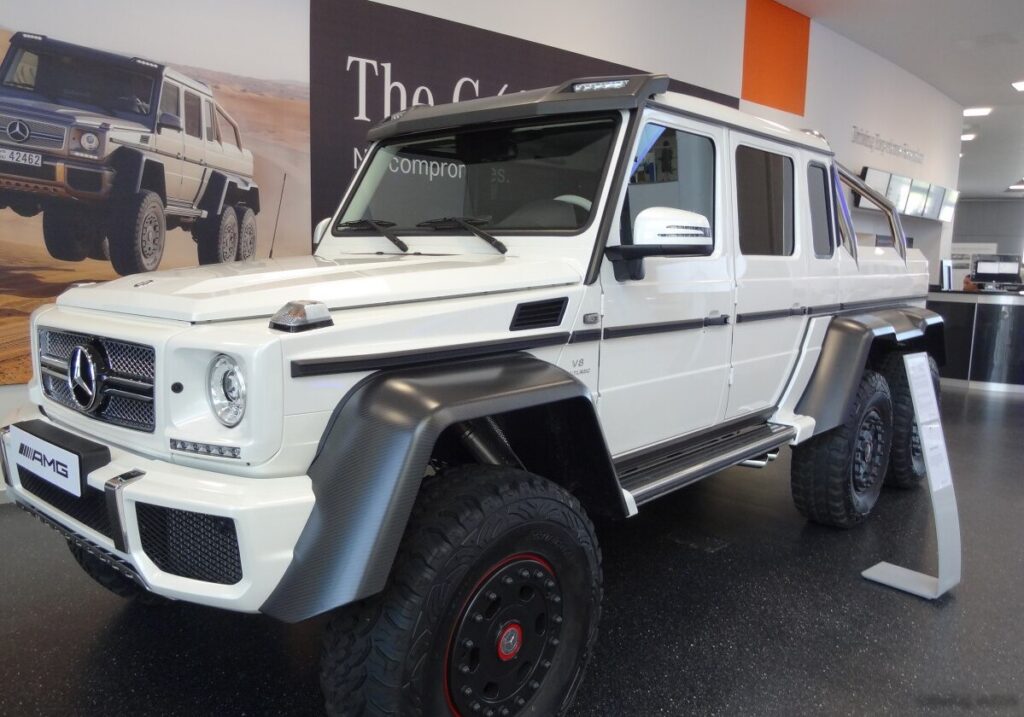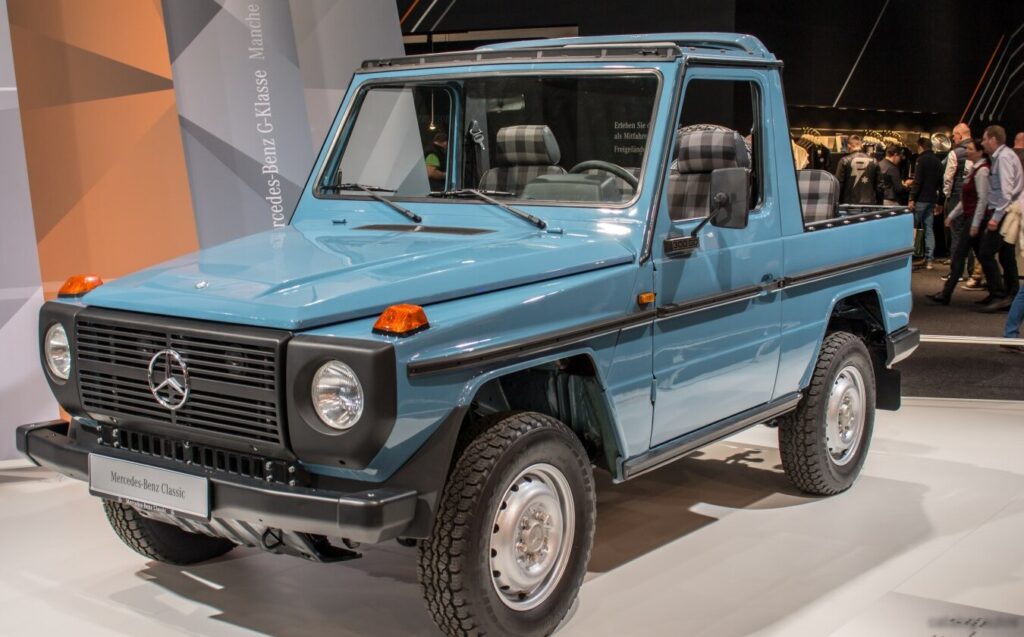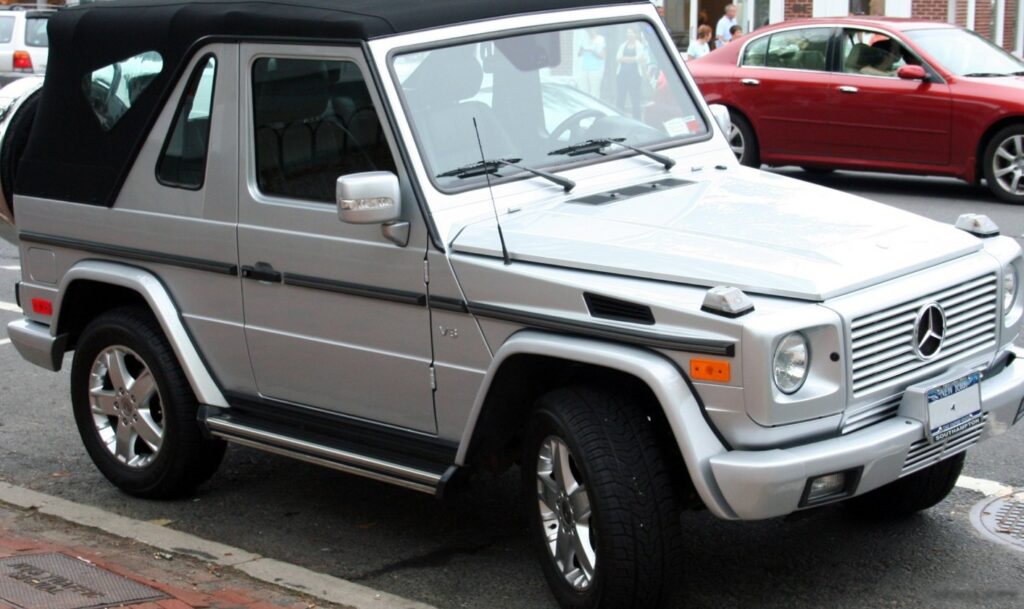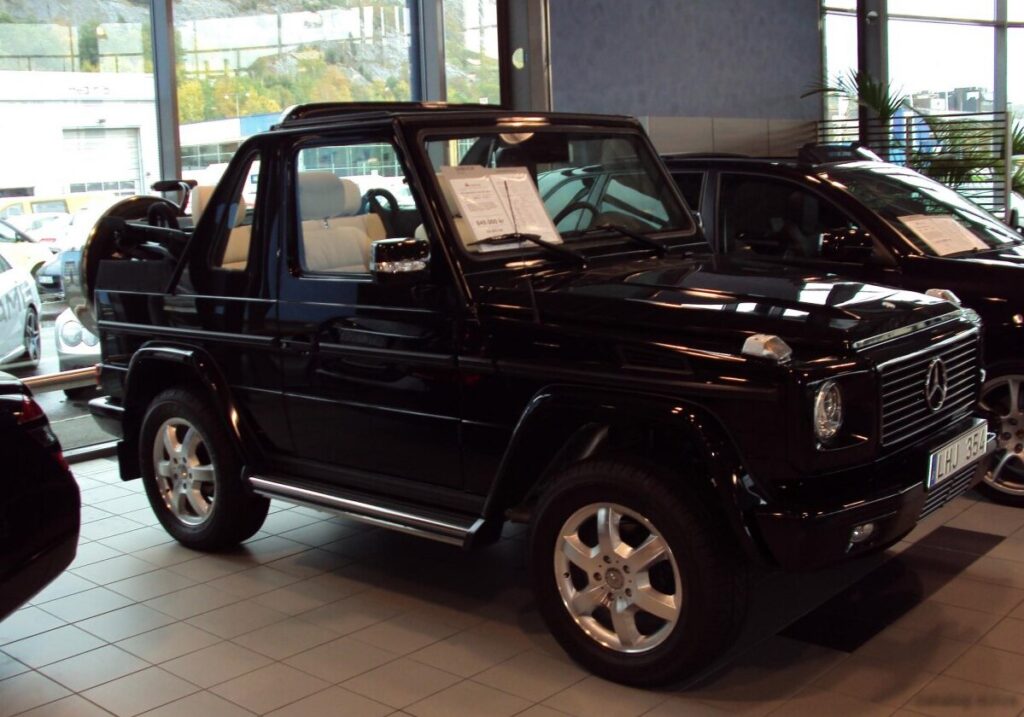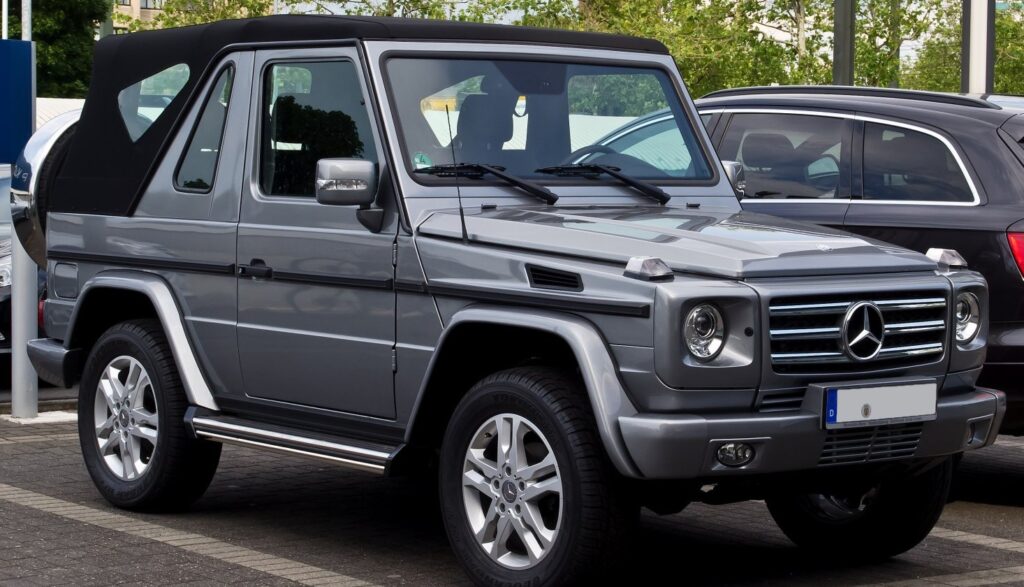
The Mercedes-Benz G-Class Long (W463) AMG G 55 V8 4MATIC Automatic, produced from July 1999 to March 2001, represents a potent iteration of the iconic G-Wagen. Positioned as a high-performance variant within the W463 long-wheelbase series, it combined the G-Class’s legendary off-road capability with the power of Mercedes-AMG’s naturally aspirated V8 engine. This model catered to buyers seeking a luxurious and capable SUV with substantial performance, bridging the gap between utilitarian robustness and high-end appointments. The “Long” designation refers to the extended wheelbase, providing increased rear passenger space compared to the standard G-Class.
Technical Specifications
| Brand | Mercedes-Benz |
| Model | G-class |
| Generation | G-class Long (W463) |
| Type | AMG G 55 V8 (354 Hp) 4MATIC Automatic |
| Start of production | July, 1999 |
| End of production | March, 2001 |
| Powertrain Architecture | Internal Combustion engine |
| Body type | Off-road vehicle |
| Seats | 5 |
| Doors | 5 |
| Fuel consumption (urban) | 21.6 l/100 km (10.9 US mpg, 13.1 UK mpg, 4.6 km/l) |
| Fuel consumption (extra urban) | 13.1 l/100 km (18 US mpg, 21.6 UK mpg, 7.6 km/l) |
| Fuel consumption (combined) | 16.2 l/100 km (14.5 US mpg, 17.4 UK mpg, 6.2 km/l) |
| Fuel Type | Petrol (Gasoline) |
| Acceleration 0 – 100 km/h | 7.4 sec |
| Acceleration 0 – 62 mph | 7.4 sec |
| Acceleration 0 – 60 mph | 7 sec |
| Maximum speed | 209 km/h (129.87 mph) |
| Emission standard | Euro 4 |
| Weight-to-power ratio | 6.9 kg/Hp, 143.9 Hp/tonne |
| Weight-to-torque ratio | 4.7 kg/Nm, 213.4 Nm/tonne |
| Power | 354 Hp @ 5500 rpm |
| Power per litre | 65.1 Hp/l |
| Torque | 525 Nm @ 3000 rpm (387.22 lb.-ft. @ 3000 rpm) |
| Engine layout | Front, Longitudinal |
| Engine Model/Code | M 113.982 |
| Engine displacement | 5439 cm3 (331.91 cu. in.) |
| Number of cylinders | 8 |
| Engine configuration | V-engine |
| Cylinder Bore | 97 mm (3.82 in.) |
| Piston Stroke | 92 mm (3.62 in.) |
| Compression ratio | 10.5:1 |
| Number of valves per cylinder | 3 |
| Fuel injection system | Multi-port manifold injection |
| Engine aspiration | Naturally aspirated engine |
| Valvetrain | SOHC |
| Engine oil capacity | 8 l (8.45 US qt | 7.04 UK qt) |
| Coolant capacity | 12 l (12.68 US qt | 10.56 UK qt) |
| Kerb Weight | 2460 kg (5423.37 lbs.) |
| Max. weight | 3100 kg (6834.33 lbs.) |
| Max load | 640 kg (1410.96 lbs.) |
| Trunk (boot) space – minimum | 480 l (16.95 cu. ft.) |
| Trunk (boot) space – maximum | 2250 l (79.46 cu. ft.) |
| Fuel tank capacity | 96 l (25.36 US gal | 21.12 UK gal) |
| Max. roof load | 200 kg (440.92 lbs.) |
| Permitted trailer load with brakes (12%) | 3640 kg (8024.83 lbs.) |
| Permitted trailer load without brakes | 750 kg (1653.47 lbs.) |
| Length | 4680 mm (184.25 in.) |
| Width | 1760 mm (69.29 in.) |
| Width including mirrors | 2007 mm (79.02 in.) |
| Height | 1936 mm (76.22 in.) |
| Wheelbase | 2850 mm (112.2 in.) |
| Front track | 1475 mm (58.07 in.) |
| Rear track | 1475 mm (58.07 in.) |
| Minimum turning circle | 13.3 m (43.64 ft.) |
| Drivetrain Architecture | All wheel drive (4×4) |
| Number of gears | 5 |
| Gearbox type | automatic transmission |
| Front suspension | Coil spring, Rigid axle suspension, Trailing arm |
| Rear suspension | Rigid axle suspension, Trailing arm, Coil spring |
| Front brakes | Ventilated discs |
| Rear brakes | Disc |
| Assisting systems | ABS (Anti-lock braking system) |
| Steering type | Cone worm with recirculation balls |
| Power steering | Hydraulic Steering |
| Tires size | 265/60 R 18 |
| Wheel rims size | 7.5 J x 18 |
Powertrain & Engine Architecture
The heart of the G 55 was the M113.982 5.4-liter naturally aspirated V8 engine. This engine, a staple of Mercedes-AMG performance models of the era, featured all-aluminum construction, three valves per cylinder, and a multi-port fuel injection system. The engine produced 354 horsepower at 5500 rpm and 525 Nm (387 lb-ft) of torque at 3000 rpm. The engine’s longitudinal mounting and the permanent all-wheel-drive system (4MATIC) contributed to its balanced handling and off-road prowess. The engine was paired with a five-speed automatic transmission, specifically tuned for both performance and smooth operation. This transmission, while not as advanced as some contemporary offerings, provided adequate gear ratios for both on-road cruising and off-road crawling.
Driving Characteristics
The G 55’s driving experience was unique. Despite its considerable weight (2460 kg or 5423 lbs), the V8 engine delivered strong acceleration, achieving 0-60 mph in around 7 seconds and a top speed of 129.87 mph. The automatic transmission, while smooth, wasn’t particularly quick to shift, and lacked the responsiveness of a manual gearbox. However, the 4MATIC system provided excellent traction in various conditions. The G-Class’s body-on-frame construction and solid axles resulted in a ride that was firm, even by SUV standards. Steering was precise but required significant effort, reflecting the hydraulic power steering system. Compared to other G-Class variants, such as the diesel models, the G 55 offered a significantly more engaging and powerful driving experience, albeit at the cost of fuel economy.
Equipment & Trim Levels
The AMG G 55 came standard with a generous array of features, reflecting its premium positioning. Interior appointments included leather upholstery, wood trim, and power-adjustable front seats. Standard equipment also included automatic climate control, a premium sound system, and power windows and locks. Optional extras included a sunroof, upgraded audio systems, and various exterior enhancements. The long wheelbase version offered increased legroom for rear passengers, enhancing comfort on longer journeys. The interior, while luxurious for its time, retained a functional and robust character, befitting the G-Class’s origins.
Chassis & Braking
The G 55 retained the G-Class’s traditional body-on-frame construction, providing exceptional durability and off-road capability. The suspension consisted of coil springs and rigid axles with trailing arms, offering substantial wheel articulation. Braking duties were handled by ventilated discs at the front and solid discs at the rear, assisted by an Anti-lock Braking System (ABS). The chassis was designed to withstand extreme conditions, making the G 55 equally at home on paved roads and challenging terrain.
Market Reception & Comparison
The AMG G 55 was well-received by automotive critics, who praised its combination of luxury, performance, and off-road capability. However, its high price and relatively poor fuel economy were noted drawbacks. Compared to other G-Class variants, the G 55 offered a significant performance advantage, but at a substantial cost premium. The diesel models, while less powerful, provided superior fuel efficiency and were often preferred for long-distance driving or towing. The G 55 appealed to buyers who prioritized performance and exclusivity over practicality.
Legacy
The W463 AMG G 55 V8 remains a sought-after vehicle among collectors and enthusiasts. The M113 engine is known for its reliability, although regular maintenance is essential. The G-Class’s robust construction ensures that many examples are still in active use today. The combination of its iconic design, powerful engine, and legendary off-road capability has cemented its status as a classic SUV. In the used car market, well-maintained examples command premium prices, reflecting their rarity and desirability.