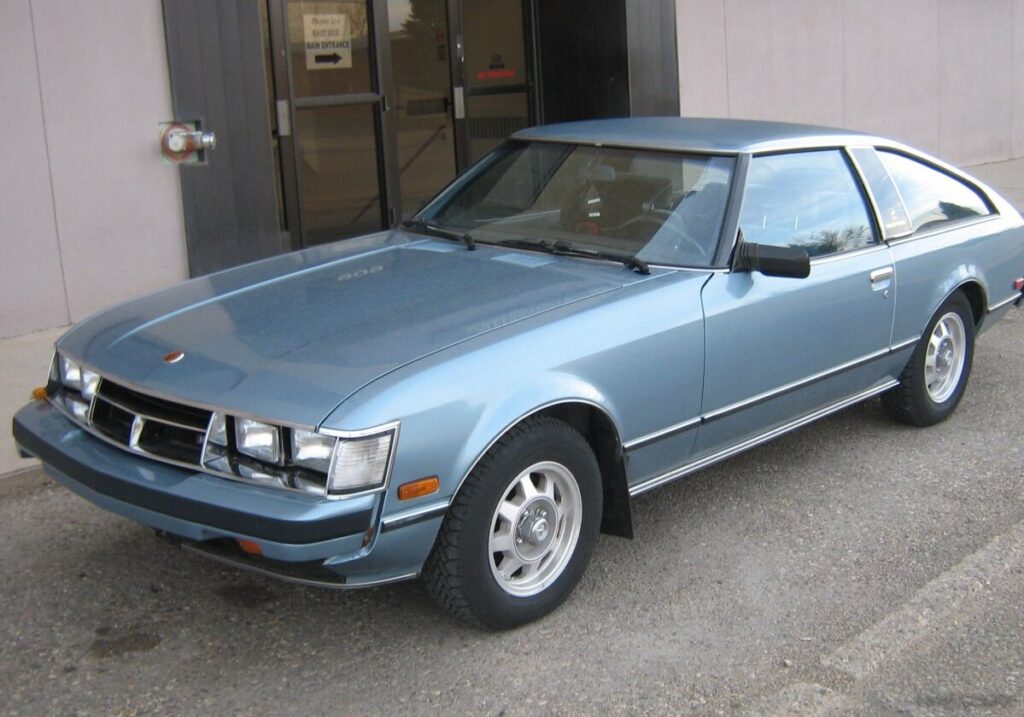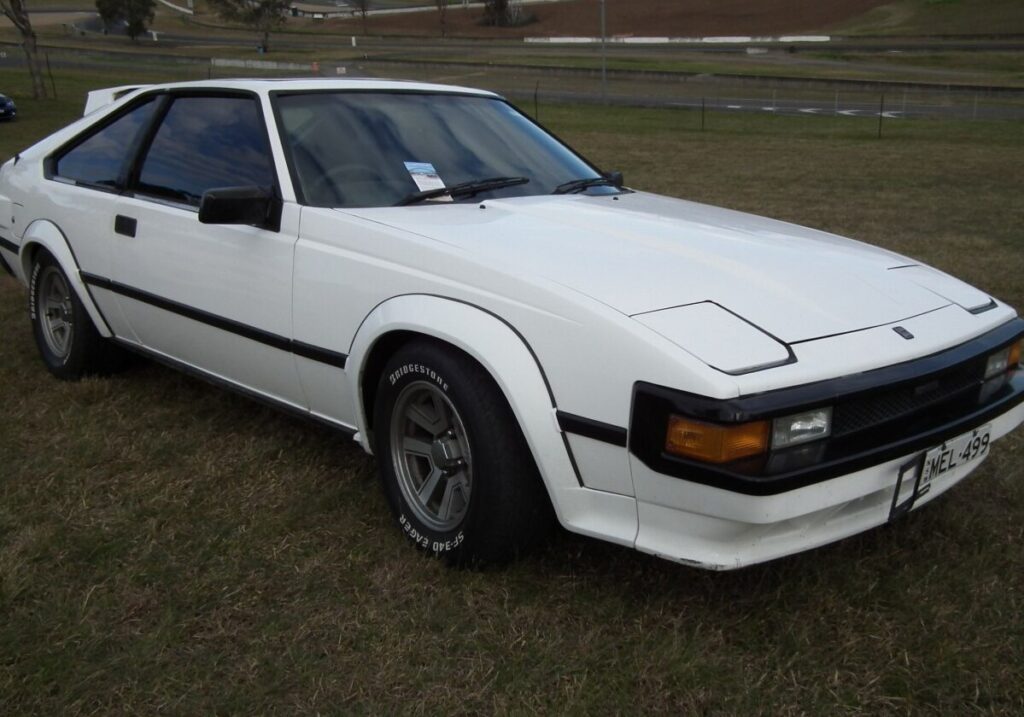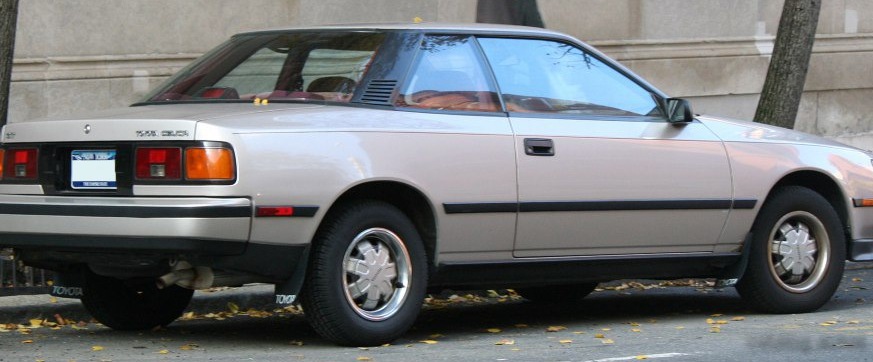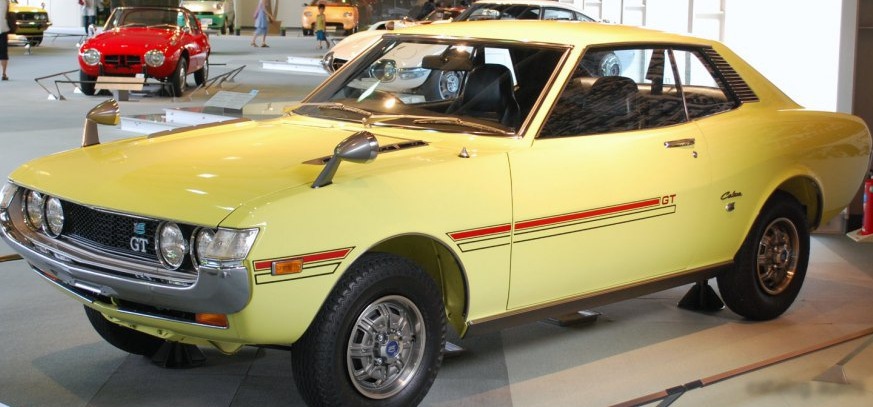
The Toyota Celica TA2, produced between 1976 and 1978, represented the second generation of Toyota’s iconic sports coupe. Positioned as an affordable and stylish alternative to more established sports cars, the TA2 Celica aimed to capture a younger demographic. The 1.6 LT variant, equipped with the 2T-B engine producing 75 horsepower, served as the entry point into the Celica range, offering a balance of performance and economy. It was a key model in establishing the Celica’s reputation for reliability and sporty handling within the burgeoning Japanese automotive export market, particularly in North America and Europe.
Technical Specifications
| Brand | Toyota |
| Model | Celica |
| Generation | Celica (TA2) |
| Type (Engine) | 1.6 LT (TA2) (75 Hp) |
| Start of production | 1976 |
| End of production | 1978 |
| Powertrain Architecture | Internal Combustion engine |
| Body type | Coupe |
| Seats | 4 |
| Doors | 2 |
| Fuel consumption (combined) | 8.4 l/100 km (28 US mpg, 33.6 UK mpg, 11.9 km/l) |
| Fuel Type | Petrol (Gasoline) |
| Maximum speed | 160 km/h (99.42 mph) |
| Weight-to-power ratio | 13.5 kg/Hp, 74.3 Hp/tonne |
| Weight-to-torque ratio | 8.6 kg/Nm, 116.8 Nm/tonne |
| Power | 75 Hp @ 5400 rpm |
| Power per litre | 47.2 Hp/l |
| Torque | 118 Nm @ 3800 rpm (87.03 lb.-ft. @ 3800 rpm) |
| Engine layout | Front, Longitudinal |
| Engine Model/Code | 2T-B |
| Engine displacement | 1588 cm3 (96.91 cu. in.) |
| Number of cylinders | 4 |
| Engine configuration | Inline |
| Cylinder Bore | 85 mm (3.35 in.) |
| Piston Stroke | 70 mm (2.76 in.) |
| Compression ratio | 9:1 |
| Number of valves per cylinder | 2 |
| Fuel injection system | Carburettor |
| Engine aspiration | Naturally aspirated engine |
| Valvetrain | SOHC |
| Engine oil capacity | 3.7 l (3.91 US qt | 3.26 UK qt) |
| Coolant | 6.5 l (6.87 US qt | 5.72 UK qt) |
| Kerb Weight | 1010 kg (2226.67 lbs.) |
| Max. weight | 1415 kg (3119.54 lbs.) |
| Max load | 405 kg (892.87 lbs.) |
| Trunk (boot) space – minimum | 273 l (9.64 cu. ft.) |
| Fuel tank capacity | 58 l (15.32 US gal | 12.76 UK gal) |
| Max. roof load | 50 kg (110.23 lbs.) |
| Permitted trailer load with brakes (12%) | 1000 kg (2204.62 lbs.) |
| Permitted trailer load without brakes | 400 kg (881.85 lbs.) |
| Length | 4240 mm (166.93 in.) |
| Width | 1620 mm (63.78 in.) |
| Height | 1310 mm (51.57 in.) |
| Wheelbase | 2495 mm (98.23 in.) |
| Front track | 1335 mm (52.56 in.) |
| Rear (Back) track | 1295 mm (50.98 in.) |
| Minimum turning circle (turning diameter) | 10.3 m (33.79 ft.) |
| Drivetrain Architecture | Rear wheel drive |
| Number of gears and type of gearbox | 5 gears, manual transmission |
| Front suspension | Independent, type McPherson with coil spring and anti-roll bar |
| Rear suspension | Independent multi-link suspension |
| Front brakes | Disc |
| Rear brakes | Drum |
| Steering type | Cone worm with recirculation balls |
| Power steering | Hydraulic Steering |
| Wheel rims size | 4.5J x 13 |
INTRODUCTION
The Toyota Celica TA2, launched in 1976, marked a significant evolution for the model line. Building upon the success of the first-generation Celica (TA20), the TA2 adopted a more refined and aerodynamic design, moving away from the overtly Mustang-inspired styling of its predecessor. The 1.6 LT trim, powered by the 2T-B engine, was positioned as the base model, offering a more economical option for buyers who prioritized fuel efficiency and affordability over outright performance. It was a popular choice for first-time sports car buyers and those seeking a reliable and stylish daily driver.
Powertrain & Engine Architecture
The heart of the Celica 1.6 LT was the 2T-B engine, a 1.6-liter inline-four cylinder powerplant. This engine featured a single overhead camshaft (SOHC) valvetrain operating two valves per cylinder. Fuel delivery was managed by a single carburetor, a common setup for the era. The 2T-B engine, while not particularly powerful, was known for its durability and relatively simple maintenance requirements. The engine was mounted longitudinally in the front of the vehicle, driving the rear wheels. The 5-speed manual transmission was standard, providing a reasonable balance between acceleration and fuel economy. The transmission’s gear ratios were tuned for everyday driving, prioritizing smooth operation over aggressive performance.
Driving Characteristics
The Celica 1.6 LT, with its 75 horsepower and relatively lightweight chassis, offered a pleasant driving experience. Acceleration was adequate for merging onto highways and navigating city streets, but it wasn’t a particularly quick car. Compared to higher-spec Celicas equipped with larger engines (like the 2.0-liter 18R), the 1.6 LT felt noticeably slower. The manual transmission provided a direct connection to the engine, allowing drivers to make the most of the available power. Handling was generally good, thanks to the independent suspension on all four wheels. The rear-wheel-drive layout contributed to a balanced feel, although it also required careful throttle control in slippery conditions. The 5-speed transmission helped keep the engine in its optimal power band, but frequent downshifting was often necessary for overtaking maneuvers.
Equipment & Trim Levels
The 1.6 LT trim was the entry-level Celica, and as such, it came with a relatively basic set of standard features. Interior upholstery was typically vinyl or a durable cloth material. The dashboard featured a simple layout with basic instrumentation, including a speedometer, tachometer, and fuel gauge. Optional extras included a radio, upgraded upholstery, and a sunroof. The exterior trim was relatively understated, with minimal chrome accents. The focus was on providing a functional and affordable sports coupe, rather than a luxurious one.
Chassis & Braking
The Celica TA2 utilized a McPherson strut front suspension and an independent multi-link rear suspension, providing a comfortable ride and decent handling characteristics. The front brakes were disc brakes, offering superior stopping power compared to the drum brakes used on the rear wheels. The steering system was a cone worm and recirculating ball setup, which provided a reasonable level of precision but lacked the feel of more modern steering systems. The chassis was relatively lightweight, contributing to the car’s nimble handling. A stabilizer bar was included at the front to reduce body roll during cornering.
Market Reception & Comparison
The Celica 1.6 LT was generally well-received by automotive critics as an affordable and reliable sports coupe. However, its relatively modest performance was often criticized, particularly when compared to more powerful rivals. Fuel economy was a strong point, making it an attractive option for buyers concerned about rising gasoline prices. Compared to other trims in the Celica lineup, the 1.6 LT offered the best value for money, but it lacked the performance and features of the higher-spec models. It competed with other entry-level sports coupes, such as the Ford Mustang II and the Chevrolet Camaro, but the Celica’s reputation for reliability and build quality gave it a competitive edge.
Legacy
The Toyota Celica TA2 1.6 LT remains a popular choice among classic car enthusiasts today. The 2T-B engine is known for its durability, and many examples are still on the road after decades of use. Parts availability is generally good, although some components can be difficult to find. The Celica TA2 1.6 LT is often seen as a gateway into the world of classic Japanese sports cars, offering an affordable and enjoyable driving experience. Its simple mechanical design makes it relatively easy to maintain and repair, appealing to DIY mechanics. While not the fastest or most luxurious Celica variant, the 1.6 LT holds a special place in the model’s history as the entry point for a generation of sports car enthusiasts.