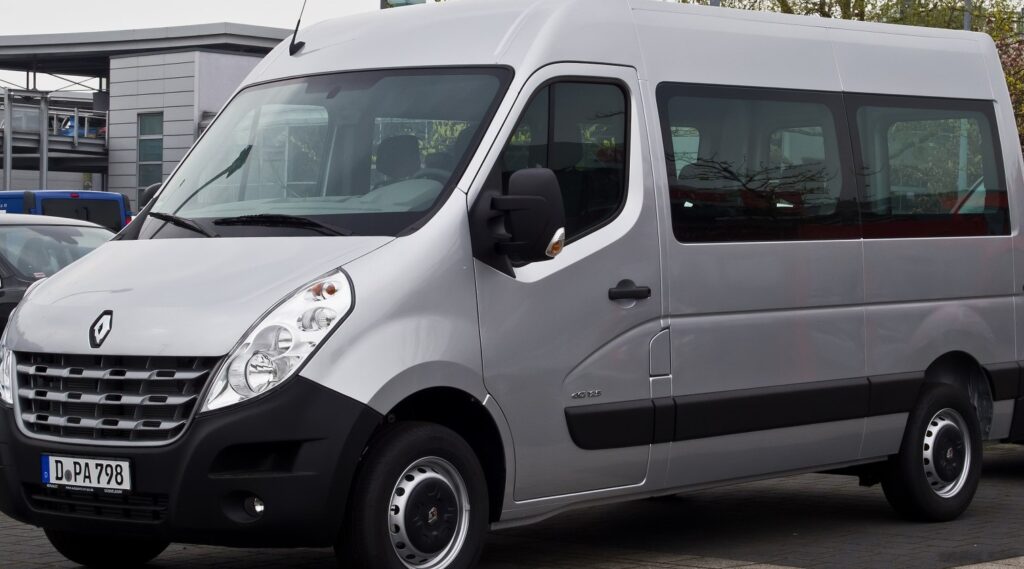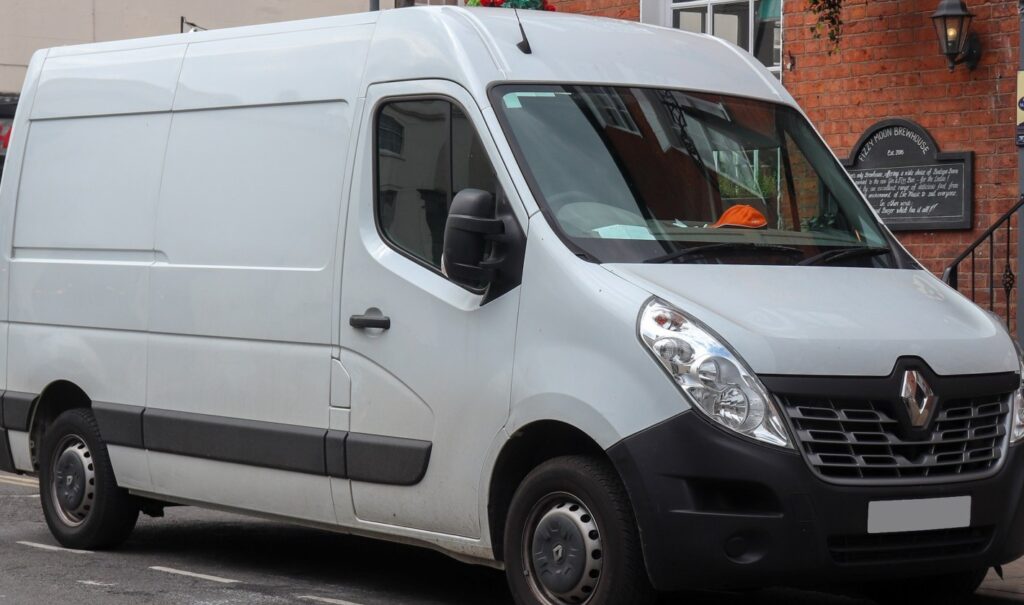
The Renault Master III (Phase II), specifically the 2.3 dCi 130 horsepower panel van in L2H2 MM35 configuration, represents a significant iteration of Renault’s large van offering. Introduced in 2017 and continuing through 2018, this variant was aimed squarely at commercial operators needing a balance of payload capacity, fuel efficiency, and reasonable running costs. The Phase II update brought refinements to the engine and interior, aligning the Master with increasingly stringent Euro 6 emissions standards. This particular model occupied a mid-range position within the Master lineup, offering a step up in power and torque compared to lower-spec engines, while remaining more affordable than the higher-output options.
Technical Specifications
| Brand | Renault |
| Model | Master |
| Generation | Master III (Phase II, 2014) Panel Van |
| Type (Engine) | 2.3 dCi (130 Hp) L2H2 MM35 |
| Start of production | 2017 year |
| End of production | 2018 year |
| Powertrain Architecture | Internal Combustion engine |
| Body type | Minivan, MPV |
| Seats | 3 |
| Doors | 4 |
| Fuel consumption (urban) | 8.8-9.3 l/100 km (26.7 – 25.3 US mpg, 32.1 – 30.4 UK mpg, 11.4 – 10.8 km/l) |
| Fuel consumption (extra urban) | 7.0-7.5 l/100 km (33.6 – 31.4 US mpg, 40.4 – 37.7 UK mpg, 14.3 – 13.3 km/l) |
| Fuel consumption (combined) | 7.7-8.2 l/100 km (30.5 – 28.7 US mpg, 36.7 – 34.4 UK mpg, 13 – 12.2 km/l) |
| CO2 emissions | 201 – 212 g/km |
| Fuel Type | Diesel |
| Emission standard | Euro 6 |
| Weight-to-power ratio | 14.9 kg/Hp, 66.9 Hp/tonne |
| Weight-to-torque ratio | 6.1 kg/Nm, 164.7 Nm/tonne |
| Power | 130 Hp @ 3500 rpm |
| Power per litre | 56.6 Hp/l |
| Torque | 320 Nm @ 1500 rpm (236.02 lb.-ft. @ 1500 rpm) |
| Engine Model/Code | M9T |
| Engine displacement | 2298 cm3 (140.23 cu. in.) |
| Number of cylinders | 4 |
| Engine configuration | Inline |
| Cylinder Bore | 85 mm (3.35 in.) |
| Piston Stroke | 101.5 mm (4 in.) |
| Number of valves per cylinder | 4 |
| Fuel injection system | Diesel Commonrail |
| Engine aspiration | Turbocharger, Intercooler |
| Engine oil capacity | 8 l (8.45 US qt | 7.04 UK qt) |
| Coolant | 11 l (11.62 US qt | 9.68 UK qt) |
| Kerb Weight | 1943 kg (4283.58 lbs.) |
| Max. weight | 3500 kg (7716.18 lbs.) |
| Max load | 1557 kg (3432.6 lbs.) |
| Trunk (boot) space – maximum | 10800 l (381.4 cu. ft.) |
| Fuel tank capacity | 105 l (27.74 US gal | 23.1 UK gal) |
| Permitted trailer load with brakes (12%) | 2500 kg (5511.56 lbs.) |
| Permitted trailer load without brakes | 750 kg (1653.47 lbs.) |
| Length | 5548 mm (218.43 in.) |
| Width | 2070 mm (81.5 in.) |
| Width including mirrors | 2470 mm (97.24 in.) |
| Height | 2499 mm (98.39 in.) |
| Wheelbase | 3682 mm (144.96 in.) |
| Front track | 1750 mm (68.9 in.) |
| Rear (Back) track | 1730 mm (68.11 in.) |
| Front overhang | 842 mm (33.15 in.) |
| Rear overhang | 1024 mm (40.31 in.) |
| Ride height (ground clearance) | 174 mm (6.85 in.) |
| Minimum turning circle (turning diameter) | 14.1 m (46.26 ft.) |
| Drivetrain Architecture | The Internal combustion engine (ICE) drives the front wheels of the vehicle. |
| Drive wheel | Front wheel drive |
| Number of gears and type of gearbox | 6 gears, manual transmission |
| Front suspension | Independent, type McPherson with coil spring and anti-roll bar |
| Rear suspension | Leaf spring |
| Front brakes | Ventilated discs, 302×28 mm |
| Rear brakes | Disc, 305×12 mm |
| Tires size | 225/65 R16 |
| Wheel rims size | 16 |
INTRODUCTION
The Renault Master III Phase II 2.3 dCi 130 hp represents a workhorse solution for businesses requiring a versatile and reliable large van. Production spanned from 2017 to 2018, building upon the established Master III platform (launched in 2010). The L2H2 designation indicates a medium wheelbase and medium roof height, offering a good compromise between cargo volume and maneuverability. The MM35 signifies a gross vehicle weight (GVW) of 3.5 tonnes, a common weight class for commercial vehicles in Europe. This variant was primarily sold in European markets, where the Master competed with vehicles like the Fiat Ducato, Mercedes-Benz Sprinter, and Volkswagen Crafter.
Powertrain & Engine Architecture
At the heart of this Master variant lies the Renault M9T 2.3-liter four-cylinder diesel engine. This engine is a turbocharged common-rail direct injection unit, designed for both efficiency and durability. The M9T engine benefits from a turbocharger with an intercooler, boosting power output and improving torque delivery. The common-rail fuel injection system, operating at high pressure, ensures precise fuel metering and optimized combustion. The 130 horsepower output is achieved at 3500 rpm, while the peak torque of 320 Nm (236 lb-ft) is available from just 1500 rpm, providing strong pulling power at lower engine speeds. The engine features four valves per cylinder, enhancing breathing and contributing to its overall performance. The transmission is a six-speed manual gearbox, chosen for its robustness and fuel efficiency. While an automated manual transmission (AMT) was available on some Master models, the 130 hp version was predominantly offered with the standard manual.
Driving Characteristics
The 2.3 dCi 130 hp Master, paired with the six-speed manual transmission, delivers a practical and capable driving experience. While not designed for outright speed, the engine provides sufficient power for everyday commercial tasks, including city driving and highway cruising, even when fully loaded. The relatively high torque figure at low rpm means that the van feels responsive in most situations, minimizing the need for frequent gear changes. The six-speed gearbox allows for comfortable cruising at highway speeds, while also providing adequate ratios for navigating urban environments. Compared to the higher-output 150 hp and 170 hp versions of the 2.3 dCi engine, this variant offers a slightly less energetic driving experience, but it compensates with improved fuel economy and potentially lower maintenance costs. The manual transmission provides greater driver control compared to the optional AMT.
Equipment & Trim Levels
The Renault Master III Phase II 2.3 dCi 130 hp L2H2 MM35 typically came equipped with a functional, rather than luxurious, interior. Standard features included a driver’s airbag, ABS brakes, power steering, and a basic audio system. The cabin was designed with practicality in mind, featuring durable materials and a layout optimized for ease of use. Trim levels varied depending on the market, but generally included options for upgrades such as air conditioning, electric windows, a passenger airbag, and a more advanced infotainment system with navigation. Interior upholstery was typically hard-wearing fabric. Optional extras could include parking sensors, a rearview camera, and cruise control.
Chassis & Braking
The Master III utilizes a front-wheel-drive layout, contributing to a lower load floor and improved space utilization. The front suspension employs an independent McPherson strut setup with coil springs and an anti-roll bar, providing a reasonable level of ride comfort and handling. The rear suspension utilizes a leaf spring arrangement, chosen for its robustness and ability to handle heavy loads. Braking is handled by ventilated discs at the front and solid discs at the rear. ABS (Anti-lock Braking System) is standard, enhancing safety during emergency braking situations. The steering is hydraulic power-assisted, providing a light and responsive feel.
Market Reception & Comparison
The Renault Master III Phase II 2.3 dCi 130 hp was generally well-received by commercial vehicle operators. Critics praised its fuel efficiency, payload capacity, and robust construction. Compared to the higher-powered versions of the Master, this variant offered a more affordable entry point, making it attractive to businesses on a tighter budget. Fuel economy figures of 7.7-8.2 l/100 km (30.5-28.7 US mpg) were competitive within its class. Reliability was generally considered good, although some owners reported issues with the diesel particulate filter (DPF) system, a common concern with modern diesel engines. Compared to rivals like the Fiat Ducato and Mercedes-Benz Sprinter, the Master offered a compelling combination of value and practicality.
Legacy
The Renault Master III 2.3 dCi 130 hp continues to be a common sight on European roads today. The M9T engine, while not without its quirks, has proven to be relatively durable when properly maintained. The availability of spare parts remains good, and the van’s relatively simple mechanical design makes it accessible for independent mechanics. On the used car market, these vans represent a cost-effective option for businesses needing a reliable and spacious work vehicle. However, potential buyers should be aware of the potential for DPF issues and ensure that the van has been regularly serviced. The Master III, and this variant in particular, solidified Renault’s position as a major player in the European large van segment.