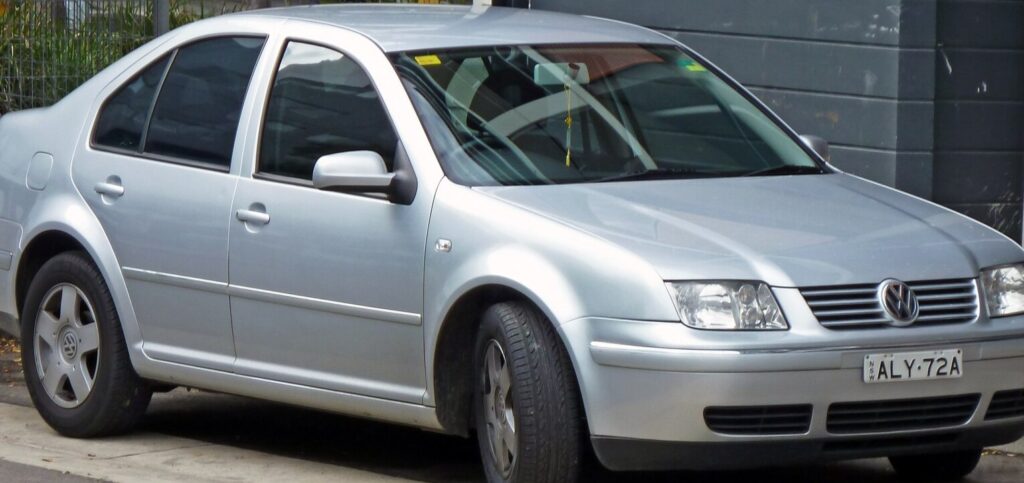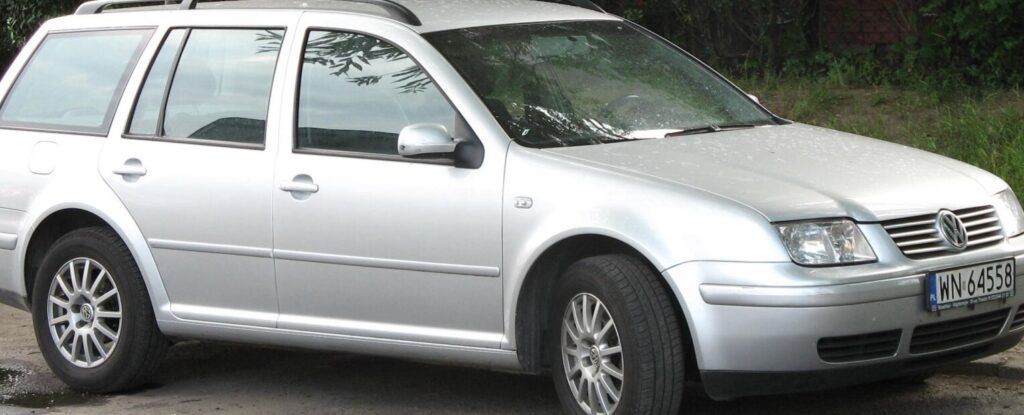
The Volkswagen Bora Variant 1.8 Turbo 20V, produced between 2001 and 2005, represented a practical and relatively sporty offering within the Bora (Jetta in North America) lineup. Based on the Golf Mk4’s 1J platform, the Bora Variant – Volkswagen’s designation for the station wagon body style – aimed to provide the functionality of an estate car with the refined driving experience associated with the Volkswagen brand. This particular variant, powered by the 180 horsepower turbocharged 1.8-liter engine, occupied a mid-range position in the Bora lineup, offering a balance between performance and affordability. It was primarily sold in the European market, where station wagons maintained significant popularity.
Technical Specifications
| Brand | Volkswagen |
| Model | Bora |
| Generation | Bora Variant (1J6) |
| Type (Engine) | 1.8 Turbo 20V (180 Hp) |
| Start of production | 2001 |
| End of production | 2005 |
| Powertrain Architecture | Internal Combustion engine |
| Body type | Station wagon (estate) |
| Seats | 5 |
| Doors | 5 |
| Fuel consumption (urban) | 11.8 l/100 km (19.9 US mpg, 23.9 UK mpg, 8.5 km/l) |
| Fuel consumption (extra urban) | 6.6 l/100 km (35.6 US mpg, 42.8 UK mpg, 15.2 km/l) |
| Fuel consumption (combined) | 8.4 l/100 km (28 US mpg, 33.6 UK mpg, 11.9 km/l) |
| Fuel Type | Petrol (Gasoline) |
| Acceleration 0 – 100 km/h | 8.3 sec |
| Acceleration 0 – 62 mph | 8.3 sec |
| Acceleration 0 – 60 mph | 7.9 sec |
| Maximum speed | 228 km/h (141.67 mph) |
| Weight-to-power ratio | 8.3 kg/Hp, 120.4 Hp/tonne |
| Weight-to-torque ratio | 6.4 kg/Nm, 157.2 Nm/tonne |
| Power | 180 Hp @ 5500 rpm |
| Power per litre | 101.1 Hp/l |
| Torque | 235 Nm @ 1950 rpm (173.33 lb.-ft. @ 1950 rpm) |
| Engine layout | Front, Transverse |
| Engine Model/Code | AUQ |
| Engine displacement | 1781 cm3 (108.68 cu. in.) |
| Number of cylinders | 4 |
| Engine configuration | Inline |
| Cylinder Bore | 81 mm (3.19 in.) |
| Piston Stroke | 86.4 mm (3.4 in.) |
| Compression ratio | 9.5:1 |
| Number of valves per cylinder | 5 |
| Fuel injection system | Multi-port manifold injection |
| Engine aspiration | Turbocharger, Intercooler |
| Engine oil capacity | 4.5 l (4.76 US qt | 3.96 UK qt) |
| Coolant capacity | 5 l (5.28 US qt | 4.4 UK qt) |
| Kerb Weight | 1495 kg (3295.91 lbs.) |
| Max. weight | 1910 kg (4210.83 lbs.) |
| Max load | 415 kg (914.92 lbs.) |
| Trunk (boot) space – minimum | 460 l (16.24 cu. ft.) |
| Trunk (boot) space – maximum | 1470 l (51.91 cu. ft.) |
| Fuel tank capacity | 55 l (14.53 US gal | 12.1 UK gal) |
| Length | 4409 mm (173.58 in.) |
| Width | 1735 mm (68.31 in.) |
| Height | 1485 mm (58.46 in.) |
| Wheelbase | 2515 mm (99.02 in.) |
| Front track | 1513 mm (59.57 in.) |
| Rear track | 1494 mm (58.82 in.) |
| Drivetrain Architecture | Front wheel drive |
| Number of gears | 6 |
| Gearbox type | Manual transmission |
| Front suspension | Independent, McPherson with coil spring and anti-roll bar |
| Rear suspension | Semi-independent, coil spring |
| Front brakes | Ventilated discs |
| Rear brakes | Disc |
| Assisting systems | ABS (Anti-lock braking system) |
| Steering type | Steering rack and pinion |
| Power steering | Hydraulic |
| Tires size | 205/55 R16 |
| Wheel rims size | 16 |
Powertrain & Engine Architecture
The heart of the Bora Variant 1.8 Turbo 20V was the AUQ engine code, a 1781cc inline-four cylinder powerplant. This engine was a member of Volkswagen’s EA827 family, known for its robust construction and tuning potential. The “20V” designation refers to the five valves per cylinder (three intake, two exhaust) configuration, contributing to improved breathing and higher-RPM performance. A single turbocharger, typically a Garrett GT28, provided forced induction, boosting power output significantly compared to naturally aspirated versions of the 1.8-liter engine. Fuel delivery was managed by a Bosch Motronic electronic fuel injection system, utilizing multi-point injection. The engine featured an intercooler to reduce intake air temperatures, further enhancing performance and preventing detonation. The six-speed manual transmission, a common pairing with this engine, offered precise shifts and helped to maximize the engine’s powerband.
Driving Characteristics
The 180 hp 1.8 Turbo engine provided a noticeable step up in performance compared to the base engine options available in the Bora Variant. Acceleration from 0-60 mph took approximately 7.9 seconds, making it a reasonably quick vehicle for its time. The turbocharger did introduce a degree of turbo lag, meaning there was a slight delay between pressing the accelerator and feeling the full boost of power. However, once the turbo spooled up, the engine delivered strong and linear acceleration. The six-speed manual transmission allowed drivers to keep the engine in its optimal power range, while the front-wheel-drive configuration provided good traction in most conditions. Compared to the higher-performance VR6 models, the 1.8 Turbo offered a more fuel-efficient and accessible driving experience, while still providing a satisfying level of performance.
Equipment & Trim Levels
The Bora Variant 1.8 Turbo 20V typically came equipped with a reasonable level of standard features. These included power windows, power door locks, air conditioning, and an integrated stereo system. Interior upholstery was usually cloth, although leather options were available. Higher trim levels, such as the “Sport” or “Highline” variants, added features like alloy wheels, sport seats, and upgraded audio systems. Optional extras included a sunroof, automatic climate control, and parking sensors. The dashboard layout was typical of the Mk4 Golf/Bora generation, characterized by a functional and ergonomic design.
Chassis & Braking
The Bora Variant’s chassis utilized an independent McPherson strut suspension at the front and a semi-independent torsion beam suspension at the rear. This setup provided a good balance between ride comfort and handling. The front suspension featured a stabilizer bar to reduce body roll during cornering. Braking duties were handled by ventilated disc brakes at the front and solid disc brakes at the rear. Anti-lock Braking System (ABS) was standard, enhancing safety and control during emergency braking situations. The steering system was a hydraulic power-assisted rack and pinion setup, providing precise and responsive steering feel.
Market Reception & Comparison
The Bora Variant 1.8 Turbo 20V was generally well-received by automotive critics. It was praised for its blend of practicality, performance, and fuel efficiency. Compared to the more expensive VR6 models, the 1.8 Turbo offered a more affordable entry point into the Bora range without sacrificing too much in terms of driving enjoyment. Fuel economy was respectable for a turbocharged engine, averaging around 28 US mpg in combined driving. Reliability was generally good, although like all turbocharged engines, it required regular maintenance and careful driving habits to prevent potential issues.
Legacy
The Volkswagen Bora Variant 1.8 Turbo 20V has become a popular choice among enthusiasts and used car buyers. The AUQ engine is known for its durability and potential for modification. While age and mileage can affect reliability, well-maintained examples continue to provide a rewarding driving experience. The Bora Variant’s spacious interior and practical wagon body style make it a versatile vehicle for families and those who require ample cargo space. Today, it represents a relatively affordable and enjoyable way to experience a classic Volkswagen estate car.