
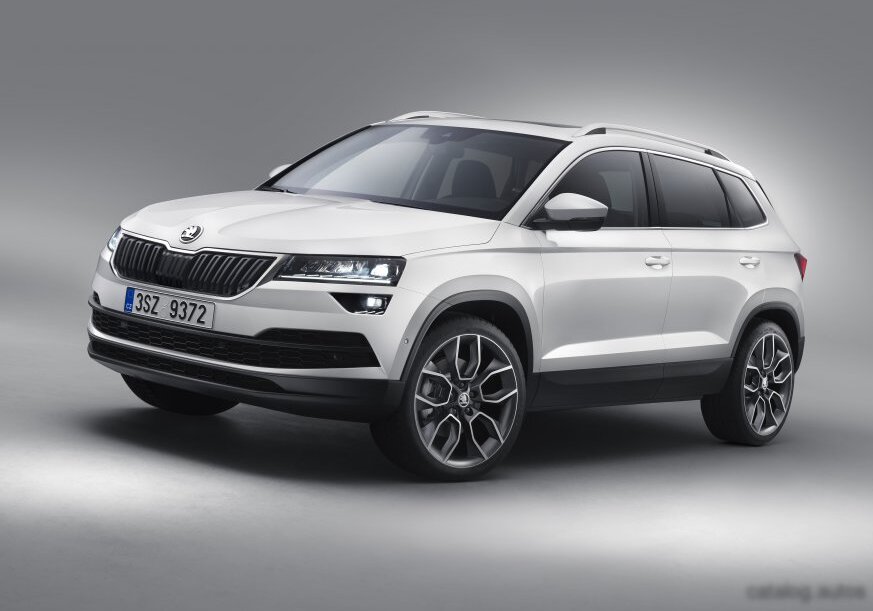
The Skoda Karoq 1.5 TSI (150 hp) was a popular configuration of Skoda’s compact SUV, produced from July 2017 to November 2021. Positioned as a mid-range offering within the broader Karoq lineup, it aimed to balance fuel efficiency with respectable performance. The Karoq, launched as a successor to the Yeti, represented Skoda’s entry into the increasingly competitive compact SUV segment, and the 1.5 TSI variant quickly became a mainstay for European buyers seeking a practical and economical family vehicle. This model is built on the Volkswagen Group’s MQB platform (A1), shared with models like the Volkswagen Tiguan and SEAT Ateca.
Technical Specifications
| Brand | Skoda |
| Model | Karoq |
| Generation | Karoq |
| Type (Engine) | 1.5 TSI (150 Hp) |
| Start of production | July, 2017 |
| End of production | November, 2021 |
| Powertrain Architecture | Internal Combustion engine |
| Body type | SUV |
| Seats | 5 |
| Doors | 5 |
| Fuel consumption (urban) | 6.6 l/100 km (35.6 US mpg, 42.8 UK mpg, 15.2 km/l) |
| Fuel consumption (extra urban) | 4.7 l/100 km (50 US mpg, 60.1 UK mpg, 21.3 km/l) |
| Fuel consumption (combined) | 5.4 l/100 km (43.6 US mpg, 52.3 UK mpg, 18.5 km/l) |
| CO2 emissions | 123 g/km |
| Fuel Type | Petrol (Gasoline) |
| Acceleration 0 – 100 km/h | 8.4 sec |
| Acceleration 0 – 62 mph | 8.4 sec |
| Acceleration 0 – 60 mph | 8 sec |
| Maximum speed | 204 km/h (126.76 mph) |
| Emission standard | Euro 6 |
| Weight-to-power ratio | 8.7 kg/Hp, 115.1 Hp/tonne |
| Weight-to-torque ratio | 5.2 kg/Nm, 191.9 Nm/tonne |
| Power | 150 Hp @ 5000-6000 rpm |
| Power per litre | 100.1 Hp/l |
| Torque | 250 Nm @ 1500-3500 rpm (184.39 lb.-ft. @ 1500-3500 rpm) |
| Engine layout | Front, Transverse |
| Engine Model/Code | EA211 evo / DADA |
| Engine displacement | 1498 cm3 (91.41 cu. in.) |
| Number of cylinders | 4 |
| Engine configuration | Inline |
| Cylinder Bore | 74.5 mm (2.93 in.) |
| Piston Stroke | 85.9 mm (3.38 in.) |
| Compression ratio | 10.5:1 |
| Number of valves per cylinder | 4 |
| Fuel injection system | Direct injection |
| Engine aspiration | Turbocharger, Intercooler |
| Engine oil capacity | 4.3 l (4.54 US qt | 3.78 UK qt) |
| Kerb Weight | 1303 kg (2872.62 lbs.) |
| Max. weight | 1915 kg (4221.85 lbs.) |
| Max load | 612 kg (1349.23 lbs.) |
| Trunk (boot) space – minimum | 521 l (18.4 cu. ft.) |
| Trunk (boot) space – maximum | 1630 l (57.56 cu. ft.) |
| Fuel tank capacity | 50 l (13.21 US gal | 11 UK gal) |
| Max. roof load | 75 kg (165.35 lbs.) |
| Permitted trailer load with brakes (12%) | 1500 kg (3306.93 lbs.) |
| Permitted trailer load without brakes | 680 kg (1499.14 lbs.) |
| Length | 4382 mm (172.52 in.) |
| Width | 1841 mm (72.48 in.) |
| Height | 1603 mm (63.11 in.) |
| Wheelbase | 2638 mm (103.86 in.) |
| Front track | 1576 mm (62.05 in.) |
| Rear (Back) track | 1541 mm (60.67 in.) |
| Minimum turning circle | 10.9 m (35.76 ft.) |
| Drivetrain Architecture | ICE to Front Wheels |
| Drive wheel | Front wheel drive |
| Number of gears | 6 gears, manual transmission |
| Front brakes | Ventilated discs |
| Rear brakes | Disc |
Powertrain & Engine Architecture
The Karoq 1.5 TSI utilizes the EA211 evo series engine, specifically the DADA engine code. This is a turbocharged, direct-injection four-cylinder petrol engine. The 1.5 TSI engine is known for its combination of efficiency and performance, employing technologies like variable valve timing and a Miller cycle combustion process to optimize fuel economy. The direct injection system delivers fuel directly into the combustion chamber, improving combustion efficiency and reducing emissions. The turbocharger, coupled with an intercooler, provides increased power output. The engine produces 150 horsepower at 5000-6000 rpm and 250 Nm (184 lb-ft) of torque between 1500-3500 rpm. This engine was typically paired with a 6-speed manual transmission, although a 7-speed DSG (Dual-Clutch Gearbox) was also available as an option. The 6-speed manual transmission provides a good balance between fuel efficiency and driver engagement.
Driving Characteristics
The Karoq 1.5 TSI offers a comfortable and composed driving experience. While not a performance-oriented vehicle, the 150 hp engine provides adequate power for everyday driving and highway cruising. Acceleration from 0-60 mph takes around 8.4 seconds. The engine’s torque delivery is relatively flat, providing good responsiveness in most driving situations. Compared to the more powerful 2.0 TSI variants, the 1.5 TSI feels less urgent in acceleration, but it offers significantly better fuel economy. The manual transmission allows for greater driver control, while the optional DSG provides smoother and faster gear changes. The suspension is tuned for comfort, absorbing bumps and imperfections in the road well.
Equipment & Trim Levels
The Karoq 1.5 TSI was available in various trim levels, including SE, SEL, and Style. The base SE trim typically included features such as air conditioning, a touchscreen infotainment system with Apple CarPlay and Android Auto compatibility, alloy wheels, and a suite of safety features like automatic emergency braking and lane departure warning. Higher trims, like the SEL and Style, added features such as adaptive cruise control, a larger touchscreen display, leather upholstery, and a panoramic sunroof. Optional extras included a premium sound system, parking sensors, and a rear-view camera.
Chassis & Braking
The Karoq features a MacPherson strut front suspension and a multi-link rear suspension, providing a comfortable ride and good handling characteristics. The front brakes are ventilated discs, while the rear brakes are solid discs. The steering is electric power-assisted, offering a light and precise feel. The Karoq’s chassis is designed to provide a stable and secure driving experience, even when fully loaded. The standard anti-lock braking system (ABS) and electronic stability control (ESC) enhance safety and control.
Market Reception & Comparison
The Skoda Karoq 1.5 TSI was well-received by automotive critics for its practicality, fuel efficiency, and comfortable ride. It was often praised for its spacious interior and generous boot space. Compared to rivals like the Nissan Qashqai and Kia Sportage, the Karoq offered a more refined driving experience and a higher-quality interior. The 1.5 TSI engine provided a good balance between performance and economy, making it a popular choice for families and commuters. However, some critics noted that the Karoq’s styling was somewhat conservative compared to some of its more flamboyant competitors.
Legacy
The EA211 evo engine family, including the 1.5 TSI, has proven to be relatively reliable, although some owners have reported issues with the turbocharger and direct injection system. Regular maintenance, including oil changes and spark plug replacements, is crucial for ensuring the longevity of the engine. The Karoq 1.5 TSI remains a popular choice in the used car market, offering a compelling combination of practicality, fuel efficiency, and value for money. Its reputation for reliability and affordability continues to make it an attractive option for buyers seeking a compact SUV.
