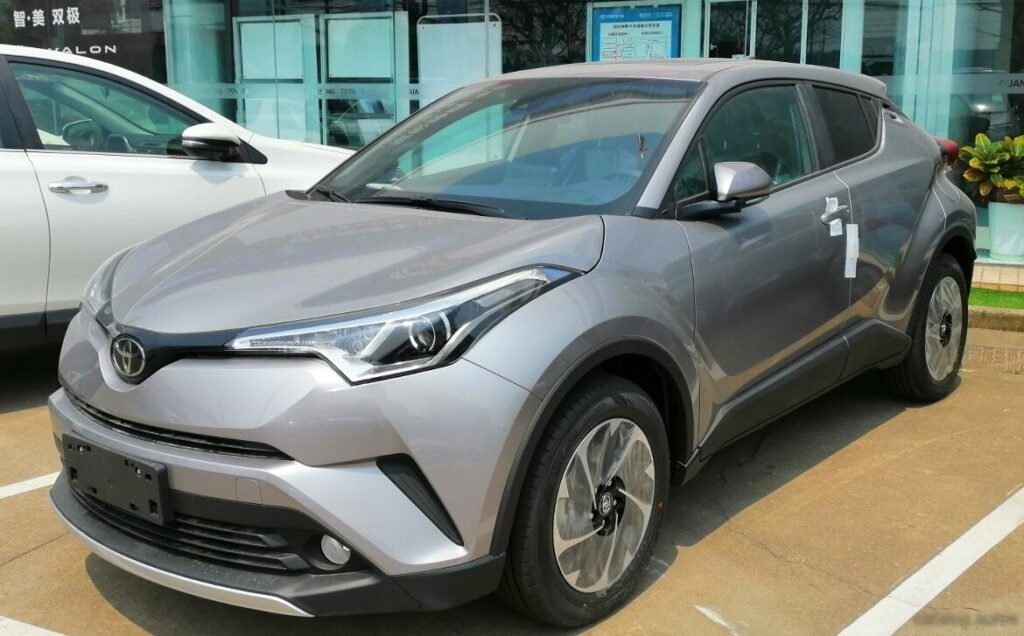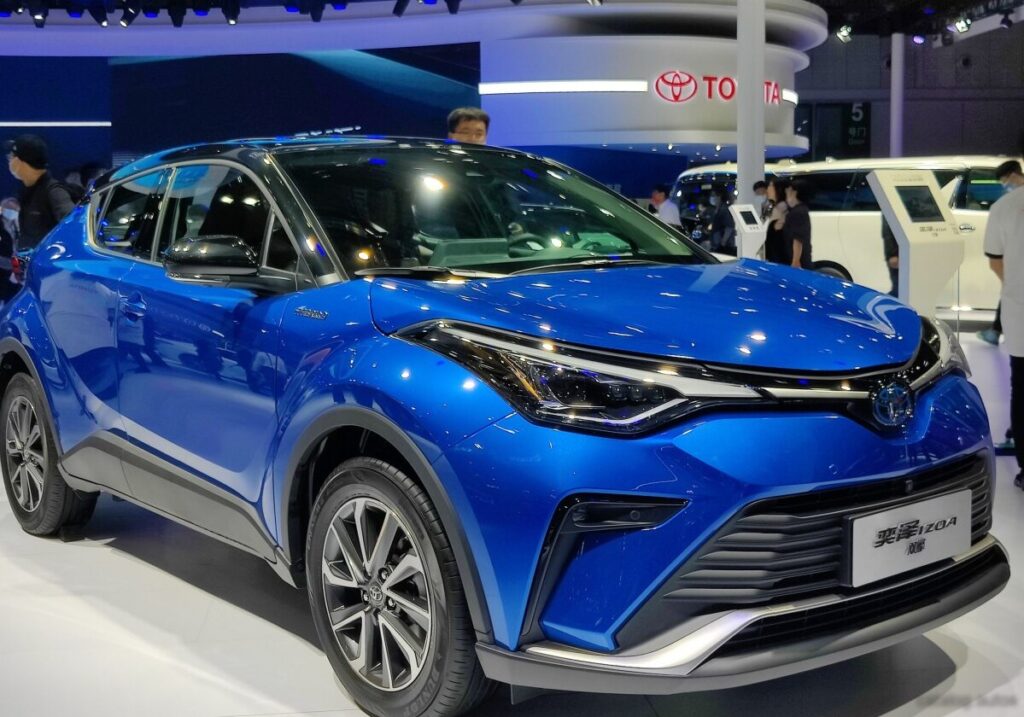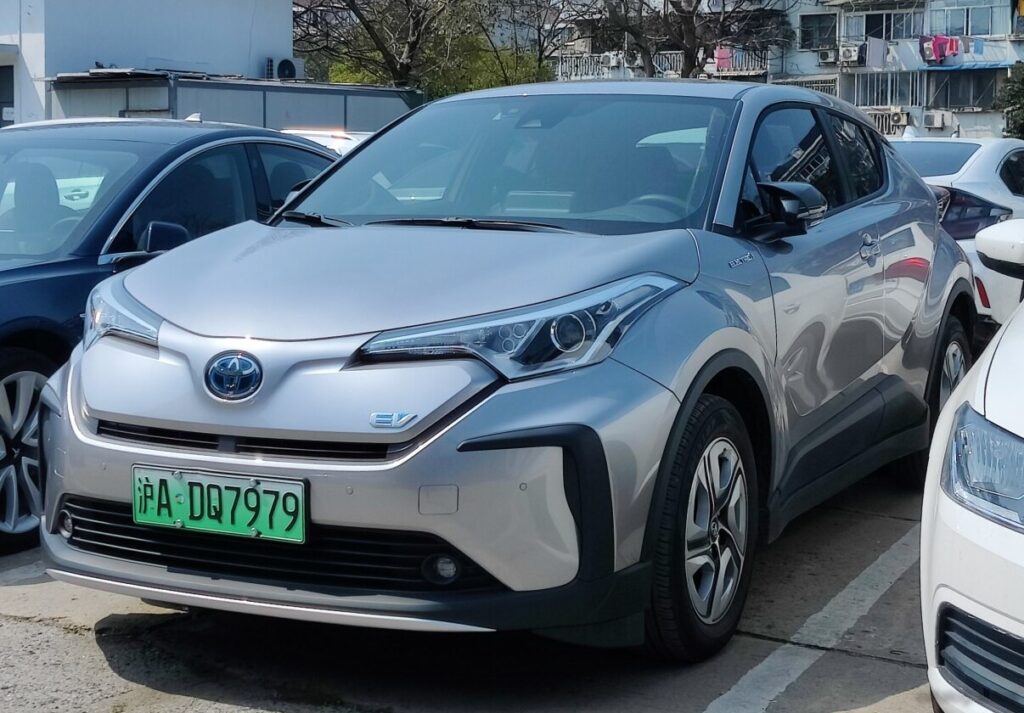
The Toyota Izoa, specifically the facelifted model introduced in 2020 with a 54.3 kWh battery pack delivering 204 horsepower, represents Toyota’s entry into the burgeoning all-electric SUV market. Launched primarily for the Chinese market through the joint venture with BYD, the Izoa leverages BYD’s electric vehicle technology while benefiting from Toyota’s established brand reputation and dealer network. This variant, positioned as a mainstream electric SUV, aimed to provide a balance of range, performance, and practicality for urban and suburban drivers. Production began in 2020 and continued with incremental updates, solidifying its place as a key model in Toyota’s expanding EV lineup. The Izoa is built on a platform co-developed with BYD, representing a significant step in Toyota’s electrification strategy.
Technical Specifications
| Brand | Toyota |
| Model | Izoa |
| Generation | Izoa (facelift 2020) |
| Type (Engine) | 54.3 kWh (204 Hp) BEV |
| Start of production | 2020 |
| Powertrain Architecture | BEV (Electric Vehicle) |
| Body type | SUV |
| Seats | 5 |
| Doors | 5 |
| Fuel Type | Electricity |
| Weight-to-power ratio | 8.7 kg/Hp, 114.6 Hp/tonne |
| Weight-to-torque ratio | 5.9 kg/Nm, 168.5 Nm/tonne |
| Gross battery capacity | 54.3 kWh |
| Battery technology | Lithium-ion (Li-Ion) |
| Battery location | Below the floor |
| All-electric range | 400 km (248.55 mi) |
| Electric motor power | 204 Hp |
| Electric motor Torque | 300 Nm (221.27 lb.-ft.) |
| Electric motor model/code | 4KM |
| Electric motor location | Front axle, Transverse |
| System power | 204 Hp |
| System torque | 300 Nm (221.27 lb.-ft.) |
| Kerb Weight | 1780 kg (3924.23 lbs.) |
| Length | 4405 mm (173.43 in.) |
| Width | 1795 mm (70.67 in.) |
| Height | 1575 mm (62.01 in.) |
| Wheelbase | 2640 mm (103.94 in.) |
| Drivetrain Architecture | One electric motor drives the front wheels. |
| Drive wheel | Front wheel drive |
| Number of gears and type of gearbox | 1 gears, automatic transmission |
| Front suspension | Independent type McPherson |
| Rear suspension | Independent multi-link suspension |
| Front brakes | Ventilated discs |
| Rear brakes | Disc |
| Assisting systems | ABS (Anti-lock braking system) |
| Steering type | Steering rack and pinion |
| Power steering | Electric Steering |
| Tires size | 215/60 R17 |
| Wheel rims size | 17 |
Powertrain & Engine Architecture
The Toyota Izoa (2020 facelift) utilizes a fully electric powertrain, foregoing a traditional internal combustion engine. At the heart of the system is a 54.3 kWh lithium-ion battery pack positioned under the vehicle floor, contributing to a lower center of gravity and improved stability. This battery powers a single electric motor, designated as the 4KM model, which delivers a peak output of 204 horsepower and 300 Nm (221.27 lb.-ft.) of torque. The motor is transversely mounted on the front axle, driving the front wheels. The Izoa employs a single-speed, automatic transmission, typical of most battery electric vehicles, simplifying the driving experience and maximizing efficiency. The battery management system (BMS) is crucial for optimizing battery life, performance, and safety, monitoring cell voltages, temperatures, and overall health. The charging system supports both AC and DC fast charging, allowing for convenient replenishment of the battery at home or at public charging stations.
Driving Characteristics
The 204 hp electric motor provides brisk acceleration, particularly from a standstill. The instant torque delivery characteristic of electric motors results in a responsive driving experience. While not a performance-oriented vehicle, the Izoa offers sufficient power for everyday driving situations, including highway merging and overtaking. The single-speed automatic transmission ensures smooth and seamless acceleration. Compared to potential future higher-performance variants, this configuration prioritizes efficiency and range over outright speed. The front-wheel-drive layout provides predictable handling, although it may exhibit some torque steer under hard acceleration. The low center of gravity, thanks to the underfloor battery pack, contributes to stable cornering. The regenerative braking system allows for deceleration and energy recovery, extending the vehicle’s range and reducing brake wear.
Equipment & Trim Levels
The 2020 Toyota Izoa facelift typically came standard with features such as automatic climate control, a touchscreen infotainment system, Bluetooth connectivity, and a suite of safety features including ABS, electronic stability control, and multiple airbags. Interior upholstery was generally cloth, with higher trims offering optional leather seating. The dashboard layout was modern and functional, with a focus on ease of use. Available optional extras included a panoramic sunroof, upgraded audio system, and advanced driver-assistance systems (ADAS) such as adaptive cruise control and lane departure warning. The trim levels varied depending on the specific market, but generally offered a progression of features and amenities.
Chassis & Braking
The Izoa utilizes an independent McPherson strut suspension system at the front and an independent multi-link suspension at the rear, providing a comfortable and controlled ride. The suspension tuning is geared towards everyday usability rather than sporty handling. The braking system consists of ventilated discs at the front and solid discs at the rear, providing adequate stopping power. The electric power steering system offers light and precise steering feel. The vehicle rides on 17-inch alloy wheels with 215/60 R17 tires, balancing ride comfort and handling performance. The chassis is designed to accommodate the weight of the battery pack while maintaining structural rigidity and safety.
Market Reception & Comparison
The Toyota Izoa was generally well-received in the Chinese market, where it was primarily sold. Critics praised its competitive range, comfortable ride, and Toyota’s reputation for reliability. Compared to other electric SUVs in its class, the Izoa offered a good balance of features and price. Its range of 400 km (248.55 miles) was competitive with other EVs available at the time. The Izoa’s reliance on BYD’s battery technology was seen as a positive, given BYD’s expertise in this area. However, some reviewers noted that the interior materials were not as premium as those found in some competing models. Fuel economy, being an EV, is measured in kilowatt-hours per 100 kilometers, and the Izoa offered competitive energy consumption figures.
Legacy
The Toyota Izoa represents an important step in Toyota’s transition to electric mobility. While initially limited to the Chinese market, it demonstrated Toyota’s commitment to developing and offering electric vehicles. The Izoa’s powertrain and battery technology have informed the development of subsequent Toyota EVs. In the used car market, the Izoa is gaining popularity as a relatively affordable and reliable electric SUV. The long-term reliability of the battery pack is a key consideration for potential buyers, and early reports suggest that the battery is holding up well with proper care. The Izoa’s legacy lies in its role as a pioneering electric SUV from a major automaker, paving the way for a more sustainable future.