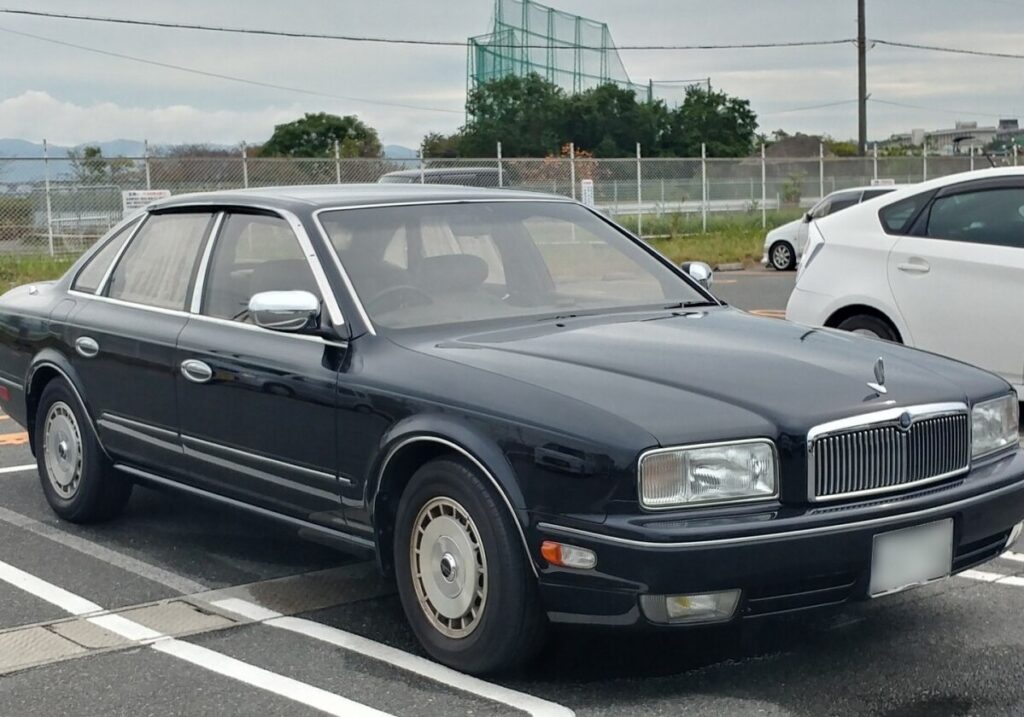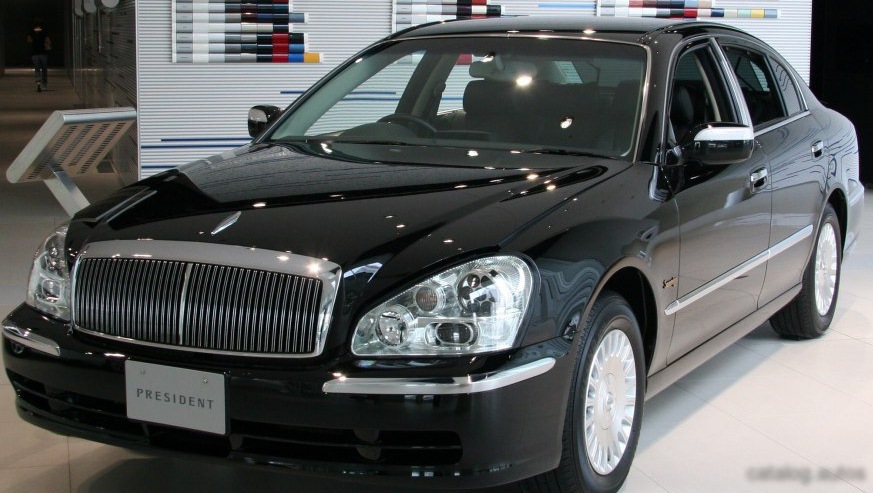
The Nissan President (PGF50) 4.5i V8 32V, produced from 2003 to 2010, represents the eighth generation of Nissan’s flagship luxury sedan. Positioned as the ultimate chauffeur-driven vehicle within Japan, the PGF50 continued the President’s long tradition of providing a supremely comfortable and prestigious ride. It was built on a dedicated rear-wheel-drive platform, emphasizing ride quality and spaciousness over sporty handling. The PGF50 was primarily marketed to corporate executives, government officials, and high-net-worth individuals within the Japanese domestic market (JDM), and export numbers were limited. This variant, equipped with the 4.5-liter V8 and a five-speed automatic transmission, sat at the top of the President lineup, offering the most powerful and refined experience.
Technical Specifications
| Brand | Nissan |
| Model | President |
| Generation | President (PGF50) |
| Type (Engine) | 4.5 i V8 32V (280 Hp) |
| Start of production | 2003 year |
| End of production | 2010 year |
| Powertrain Architecture | Internal Combustion engine |
| Body type | Sedan |
| Seats | 5 |
| Doors | 4 |
| Fuel consumption (combined) | 12.8 l/100 km (18.4 US mpg, 22.1 UK mpg, 7.8 km/l) |
| Fuel Type | Petrol (Gasoline) |
| Maximum speed | 230 km/h (142.92 mph) |
| Weight-to-power ratio | 6.8 kg/Hp, 148.1 Hp/tonne |
| Weight-to-torque ratio | 4.2 kg/Nm, 238.6 Nm/tonne |
| Power | 280 Hp @ 6000 rpm |
| Power per litre | 62.3 Hp/l |
| Torque | 451 Nm @ 3600 rpm (332.64 lb.-ft. @ 3600 rpm) |
| Engine layout | Front, Longitudinal |
| Engine displacement | 4494 cm3 (274.24 cu. in.) |
| Number of cylinders | 8 |
| Engine configuration | V-engine |
| Cylinder Bore | 93 mm (3.66 in.) |
| Piston Stroke | 82.7 mm (3.26 in.) |
| Compression ratio | 10.5:1 |
| Number of valves per cylinder | 4 |
| Fuel injection system | Multi-port manifold injection |
| Engine aspiration | Naturally aspirated engine |
| Valvetrain | DOHC |
| Kerb Weight | 1890 kg (4166.74 lbs.) |
| Trunk (boot) space – minimum | 355 l (12.54 cu. ft.) |
| Fuel tank capacity | 80 l (21.13 US gal | 17.6 UK gal) |
| Length | 5070 mm (199.61 in.) |
| Width | 1840 mm (72.44 in.) |
| Height | 1500 mm (59.06 in.) |
| Wheelbase | 2870 mm (112.99 in.) |
| Front track | 1580 mm (62.2 in.) |
| Rear (Back) track | 1560 mm (61.42 in.) |
| Drivetrain Architecture | The Internal combustion engine (ICE) drives the rear wheels of the vehicle. |
| Drive wheel | Rear wheel drive |
| Number of gears and type of gearbox | 5 gears, automatic transmission |
| Front suspension | Spring Strut |
| Rear suspension | Transverse stabilizer |
| Front brakes | Ventilated discs |
| Rear brakes | Disc |
| Assisting systems | ABS (Anti-lock braking system) |
| Steering type | Steering rack and pinion |
| Tires size | 225/60 R16 |
Powertrain & Engine Architecture
The heart of the PGF50 4.5i is the VK45DE V8 engine. This 4.5-liter (4494 cc) naturally aspirated engine features a 60-degree V-angle, four valves per cylinder, and dual overhead camshafts (DOHC). The engine utilizes a multi-port fuel injection system, delivering fuel directly into each intake port. The VK45DE produces 280 horsepower at 6000 rpm and 451 Nm (332.64 lb-ft) of torque at 3600 rpm. This engine is known for its smooth power delivery and refined character, prioritizing comfort over outright performance. Paired with the VK45DE is a five-speed automatic transmission, specifically tuned for seamless shifts and a relaxed driving experience. The transmission lacks a manual shift mode, further emphasizing the car’s focus on effortless cruising.
Driving Characteristics
The PGF50 4.5i delivers a driving experience geared towards comfort and isolation. The automatic transmission, while lacking the responsiveness of modern gearboxes, provides smooth and predictable shifts. The engine’s ample torque allows for effortless acceleration, even with the car’s substantial weight (1890 kg / 4166.74 lbs). Compared to potential lower-trim versions (which were not commonly offered), the V8 provides a significant performance advantage. The suspension is tuned for a plush ride, absorbing bumps and imperfections in the road with ease. However, this comes at the expense of handling agility; the President is not a car designed for spirited cornering. The rear-wheel-drive configuration contributes to a balanced feel, but the emphasis remains firmly on providing a comfortable and dignified ride for passengers.
Equipment & Trim Levels
The Nissan President 4.5i came exceptionally well-equipped, befitting its flagship status. Standard features included leather upholstery, power-adjustable front seats with heating and ventilation, a premium audio system, automatic climate control, and woodgrain interior trim. The interior was designed to evoke a sense of luxury and sophistication. Optional extras included a rear-seat entertainment system, power-adjustable rear seats, and a more advanced navigation system. The exterior featured chrome accents, elegant styling, and a commanding presence. The PGF50 was available in a limited range of conservative exterior colors, reflecting its target demographic’s preference for understated elegance.
Chassis & Braking
The PGF50 utilizes a body-on-frame construction, a traditional approach that contributes to its robust feel and ride comfort. The front suspension employs a MacPherson strut setup, while the rear features a multi-link suspension with a transverse stabilizer bar. Braking duties are handled by ventilated discs at the front and solid discs at the rear, assisted by an Anti-lock Braking System (ABS). The steering is rack-and-pinion, providing a reasonably direct feel, although it is weighted towards comfort rather than responsiveness. The car rides on 225/60 R16 tires, chosen for their balance of comfort and grip.
Market Reception & Comparison
The Nissan President PGF50 was not subject to extensive independent reviews in Western markets due to its limited export. Within Japan, it was highly regarded for its luxurious appointments, smooth ride, and prestigious image. Critics praised the V8 engine’s refinement and the car’s overall build quality. Compared to other Japanese luxury sedans of the era, such as the Toyota Century, the President offered a slightly more modern design and a more powerful engine. However, the Century was often favored for its even more conservative styling and its reputation for bulletproof reliability. Fuel economy, at 12.8 l/100 km (18.4 US mpg), was typical for a large V8-powered sedan of its time, but it was not a priority for the car’s target audience.
Legacy
The Nissan President PGF50 represents a high point in Japanese luxury car design and engineering. While production ended in 2010, the PGF50 remains a sought-after vehicle among collectors and enthusiasts in Japan. The VK45DE engine is generally considered to be a reliable powerplant, although maintenance costs can be significant due to the car’s age and complexity. The PGF50’s body-on-frame construction and luxurious features have ensured its continued appeal as a classic Japanese luxury car. On the used car market, well-maintained examples command premium prices, reflecting the car’s rarity and its enduring status as a symbol of Japanese success and prestige.