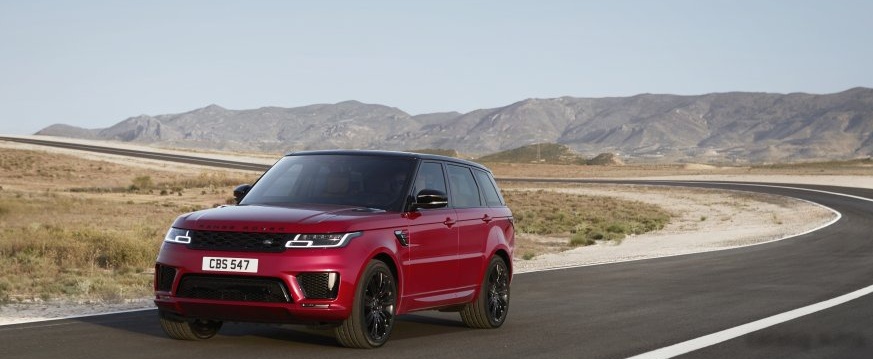
The Land Rover Range Rover Sport II, specifically the 3.0 SDV6 variant with 306 horsepower and an automatic transmission, represents a significant iteration in the Range Rover Sport lineage. Introduced with the 2017 facelift, this model year saw refinements to both the exterior styling and interior technology, building upon the already successful L494 platform launched in 2013. Positioned as a mid-range offering within the Sport lineup, it aimed to balance performance, luxury, and fuel efficiency for discerning buyers. Production of this specific configuration continued through 2018, solidifying its place as a popular choice in the premium SUV segment.
Technical Specifications
| Brand | Land Rover |
| Model | Range Rover Sport |
| Generation | Range Rover Sport II (facelift 2017) |
| Type (Engine) | 3.0 SDV6 (306 Hp) AWD Automatic |
| Start of production | 2017 |
| End of production | 2018 |
| Powertrain Architecture | Internal Combustion engine |
| Body type | SUV |
| Seats | 5 |
| Doors | 5 |
| Fuel consumption (urban) | 7.9 l/100 km (29.8 US mpg, 35.8 UK mpg, 12.7 km/l) |
| Fuel consumption (extra urban) | 6.4 l/100 km (36.8 US mpg, 44.1 UK mpg, 15.6 km/l) |
| Fuel consumption (combined) | 7 l/100 km (33.6 US mpg, 40.4 UK mpg, 14.3 km/l) |
| CO2 emissions | 185 g/km |
| Fuel Type | Diesel |
| Acceleration 0 – 100 km/h | 7.3 sec |
| Acceleration 0 – 62 mph | 7.3 sec |
| Acceleration 0 – 60 mph | 6.9 sec |
| Maximum speed | 209 km/h (129.87 mph) |
| Emission standard | Euro 6 |
| Weight-to-power ratio | 7.1 kg/Hp, 140.5 Hp/tonne |
| Weight-to-torque ratio | 3.1 kg/Nm, 321.4 Nm/tonne |
| Power | 306 Hp @ 4000 rpm |
| Power per litre | 102.2 Hp/l |
| Torque | 700 Nm @ 1500-1750 rpm (516.29 lb.-ft. @ 1500-1750 rpm) |
| Engine layout | Front, Longitudinal |
| Engine Model/Code | 306DT |
| Engine displacement | 2993 cm3 (182.64 cu. in.) |
| Number of cylinders | 6 |
| Engine configuration | V-engine |
| Cylinder Bore | 84 mm (3.31 in.) |
| Piston Stroke | 90 mm (3.54 in.) |
| Compression ratio | 16.1:1 |
| Number of valves per cylinder | 4 |
| Fuel injection system | Diesel Commonrail |
| Engine aspiration | BiTurbo, Intercooler |
| Engine oil capacity | 6 l (6.34 US qt | 5.28 UK qt) |
| Coolant | 8.93 l (9.44 US qt | 7.86 UK qt) |
| Kerb Weight | 2178 kg (4801.67 lbs.) |
| Max. weight | 3050 kg (6724.1 lbs.) |
| Max load | 872 kg (1922.43 lbs.) |
| Trunk (boot) space – minimum | 780 l (27.55 cu. ft.) |
| Trunk (boot) space – maximum | 1686 l (59.54 cu. ft.) |
| Fuel tank capacity | 86 l (22.72 US gal | 18.92 UK gal) |
| Max. roof load | 100 kg (220.46 lbs.) |
| Permitted trailer load with brakes (12%) | 3500 kg (7716.18 lbs.) |
| Permitted trailer load without brakes | 750 kg (1653.47 lbs.) |
| Permitted towbar download | 150 kg (330.69 lbs.) |
| Length | 4879 mm (192.09 in.) |
| Width with mirrors folded | 2073 mm (81.61 in.) |
| Width including mirrors | 2220 mm (87.4 in.) |
| Height | 1803 mm (70.98 in.) |
| Wheelbase | 2923 mm (115.08 in.) |
| Front track | 1693 mm (66.65 in.) |
| Rear (Back) track | 1686 mm (66.38 in.) |
| Ride height (ground clearance) | 213-278 mm (8.39 – 10.94 in.) |
| Drag coefficient (Cd) | 0.34 |
| Minimum turning circle (turning diameter) | 12.5 m (41.01 ft.) |
| Approach angle | 24.3-33.0° |
| Departure angle | 24.9-31.0° |
| Ramp-over (brakeover) angle | 19.4-27.2° |
| Wading depth | 800-850 mm (31.5 – 33.46 in.) |
| Drivetrain Architecture | The Internal combustion engine (ICE) drives permanently the four wheels of the vehicle. |
| Drive wheel | All wheel drive (4×4) |
| Number of gears and type of gearbox | 8 gears, automatic transmission |
| Front suspension | Air suspension |
| Rear suspension | Air suspension |
| Front brakes | Ventilated discs |
| Rear brakes | Ventilated discs |
| Assisting systems | ABS (Anti-lock braking system) |
| Steering type | Steering rack and pinion |
| Power steering | Electric Steering |
Powertrain & Engine Architecture
At the heart of the 3.0 SDV6 lies Land Rover’s AJD engine family. This 3.0-liter V6 diesel utilizes a sequential twin-turbocharger setup, delivering a robust 306 horsepower and a substantial 700 Nm (516 lb-ft) of torque. The engine employs a common-rail direct injection system, optimized for efficiency and reduced emissions. The 306DT engine code specifically denotes this output level. The valvetrain features four valves per cylinder, contributing to its breathing efficiency. Paired with this engine is an eight-speed automatic transmission (ZF 8HP70), known for its smooth shifts and wide gear ratio spread. This transmission is crucial for managing the engine’s torque and providing both responsive acceleration and relaxed highway cruising.
Driving Characteristics
The 3.0 SDV6 automatic Range Rover Sport offers a compelling blend of performance and refinement. While not as overtly sporty as the supercharged petrol variants, the diesel engine’s abundant torque provides strong acceleration from low RPMs. The eight-speed automatic transmission is well-tuned, offering seamless gear changes and contributing to a comfortable driving experience. The 0-60 mph time of around 6.9 seconds is respectable for a vehicle of this size and weight. Compared to the higher-output SDV8 models, the 3.0 SDV6 feels less urgent, but it offers significantly better fuel economy. The automatic transmission, while smooth, doesn’t offer the same level of driver engagement as the available manual options in other Range Rover Sport trims.
Equipment & Trim Levels
The 3.0 SDV6 typically came equipped with a generous level of standard features, including leather upholstery, a touchscreen infotainment system with navigation, automatic climate control, and a suite of safety technologies. Optional extras included features like a panoramic sunroof, upgraded audio systems (Meridian), adaptive cruise control, and various interior trim upgrades. The trim level often dictated the exterior styling details, such as the finish of the grille and side vents. This variant generally sat in the mid-range of the Range Rover Sport lineup, offering a balance between luxury and affordability.
Chassis & Braking
The Range Rover Sport II utilizes a robust all-aluminum monocoque chassis, contributing to its relatively low weight for a vehicle of its size. The suspension system features air suspension as standard, providing a comfortable ride and the ability to adjust ride height for off-road capability. Braking duties are handled by ventilated discs on all four wheels, providing ample stopping power. The 3.0 SDV6 models typically featured slightly smaller brake rotors compared to the higher-performance variants. Anti-lock braking system (ABS) and electronic stability control are standard safety features.
Market Reception & Comparison
The 3.0 SDV6 automatic Range Rover Sport was generally well-received by automotive critics. It was praised for its comfortable ride, refined interior, and strong fuel economy for a vehicle in its class. Compared to the petrol-powered models, the diesel offered a significant advantage in fuel efficiency, making it a popular choice for long-distance drivers. However, some critics noted that the diesel engine lacked the responsiveness and aural excitement of the supercharged petrol engines. Reliability reports suggest that the 3.0 SDV6 engine is generally robust, although preventative maintenance is crucial, particularly regarding the diesel particulate filter (DPF).
Legacy
The 2017-2018 Range Rover Sport 3.0 SDV6 automatic remains a desirable used car option. Its blend of luxury, performance, and fuel efficiency continues to appeal to buyers seeking a premium SUV. The ZF eight-speed automatic transmission has proven to be exceptionally durable, and the 3.0-liter diesel engine, when properly maintained, can provide many years of reliable service. However, potential buyers should be aware of the potential costs associated with maintaining a complex vehicle like the Range Rover Sport, including the possibility of DPF issues and air suspension component failures. The model represents a sweet spot in the Range Rover Sport lineage, offering a compelling package at a more accessible price point than the higher-performance variants.