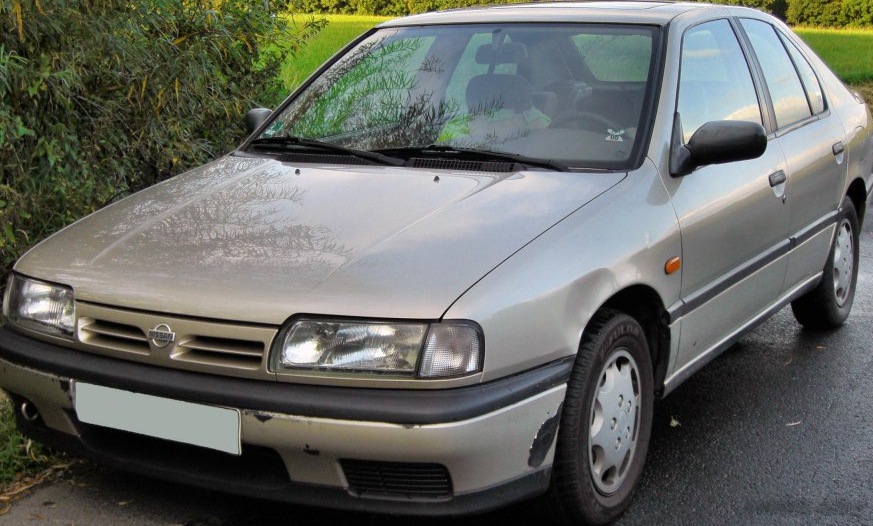
The Nissan Primera (P10) 1.6, producing 90 horsepower, was a key model in Nissan’s European lineup during the early to mid-1990s, manufactured from 1990 to 1996. Positioned as an entry-level offering within the Primera range, it aimed to provide affordable and practical family transportation. The P10 generation represented Nissan’s attempt to establish a stronger foothold in the competitive mid-size segment, challenging established European and Japanese rivals. This particular 1.6-liter variant, often paired with a four-speed automatic transmission, was designed for comfort and ease of use, prioritizing fuel efficiency over outright performance. It served as a stepping stone into the Primera family, offering a more accessible price point than the higher-specification models.
Technical Specifications
| Brand | Nissan |
| Model | Primera |
| Generation | Primera Hatch (P10) |
| Type (Engine) | 1.6 (90 Hp) |
| Start of production | 1990 |
| End of production | 1996 |
| Powertrain Architecture | Internal Combustion engine |
| Body type | Hatchback |
| Seats | 5 |
| Doors | 5 |
| Fuel consumption (combined) | 8.3 l/100 km |
| Fuel consumption (US mpg) | 28.3 US mpg |
| Fuel consumption (UK mpg) | 34 UK mpg |
| Fuel consumption (km/l) | 12 km/l |
| Fuel Type | Petrol (Gasoline) |
| Acceleration 0 – 100 km/h | 11.9 sec |
| Acceleration 0 – 62 mph | 11.9 sec |
| Acceleration 0 – 60 mph | 11.3 sec |
| Maximum speed | 180 km/h (111.85 mph) |
| Weight-to-power ratio | 13.1 kg/Hp |
| Weight-to-torque ratio | 8.7 kg/Nm |
| Power | 90 Hp @ 6000 rpm |
| Power per litre | 56.4 Hp/l |
| Torque | 136 Nm @ 4000 rpm (100.31 lb.-ft. @ 4000 rpm) |
| Engine layout | Front, Transverse |
| Engine Model/Code | GA16DS |
| Engine displacement | 1597 cm3 (97.45 cu. in.) |
| Number of cylinders | 4 |
| Engine configuration | Inline |
| Cylinder Bore | 76 mm (2.99 in.) |
| Piston Stroke | 88 mm (3.46 in.) |
| Compression ratio | 9.8:1 |
| Number of valves per cylinder | 4 |
| Fuel injection system | Multi-port manifold injection |
| Engine aspiration | Naturally aspirated engine |
| Valvetrain | DOHC |
| Engine oil capacity | 3.2 l (3.38 US qt | 2.82 UK qt) |
| Coolant capacity | 6.4 l (6.76 US qt | 5.63 UK qt) |
| Kerb Weight | 1181 kg (2603.66 lbs.) |
| Max. weight | 1630 kg (3593.53 lbs.) |
| Max load | 449 kg (989.88 lbs.) |
| Trunk (boot) space – minimum | 480 l (16.95 cu. ft.) |
| Trunk (boot) space – maximum | 1290 l (45.56 cu. ft.) |
| Fuel tank capacity | 60 l (15.85 US gal | 13.2 UK gal) |
| Length | 4400 mm (173.23 in.) |
| Width | 1700 mm (66.93 in.) |
| Height | 1390 mm (54.72 in.) |
| Wheelbase | 2550 mm (100.39 in.) |
| Front track | 1470 mm (57.87 in.) |
| Rear track | 1460 mm (57.48 in.) |
| Drivetrain Architecture | Front wheel drive |
| Number of gears | 5 |
| Gearbox type | Automatic transmission |
| Front suspension | Wishbone |
| Rear suspension | Double wishbone |
| Front brakes | Ventilated discs |
| Rear brakes | Disc |
| Assisting systems | ABS (Anti-lock braking system) |
| Steering type | Steering rack and pinion |
| Power steering | Hydraulic Steering |
| Tires size | 165/80 R13 |
INTRODUCTION
The Nissan Primera P10, launched in 1990, represented a significant step forward for Nissan in the European mid-size car market. The hatchback body style, a relatively modern choice at the time, offered practicality and a spacious interior. The 1.6-liter, 90 hp variant was specifically targeted at buyers seeking a comfortable, reliable, and economical vehicle for daily commuting and family use. It occupied the lower end of the Primera range, below the more powerful 2.0-liter models. The P10 Primera was built on Nissan’s ‘H’ platform, and the model ran until 1996, when it was replaced by the P11 series.
Powertrain & Engine Architecture
The heart of the Primera 1.6 was the GA16DS engine, a 1.6-liter inline-four cylinder gasoline engine. This engine featured a double overhead camshaft (DOHC) valvetrain and multi-point fuel injection, contributing to relatively smooth operation and decent fuel economy for its time. The GA16DS produced 90 horsepower at 6000 rpm and 136 Nm (100.31 lb-ft) of torque at 4000 rpm. The engine’s design prioritized reliability and low-end torque, making it well-suited to the automatic transmission it was often paired with. The four-speed automatic transmission was a conventional hydraulic unit, offering smooth, if not particularly sporty, gear changes. It was designed to complement the engine’s characteristics, providing comfortable cruising and effortless acceleration in typical driving conditions.
Driving Characteristics
The Primera 1.6 Automatic wasn’t designed for performance enthusiasts. Acceleration from 0-60 mph took around 11.3 seconds, and the top speed was approximately 112 mph. The automatic transmission, while convenient, did sap some of the engine’s power, resulting in a noticeable difference in acceleration compared to the five-speed manual version. Gear ratios were optimized for fuel efficiency and comfortable cruising, rather than rapid acceleration. In real-world driving, the 1.6-liter engine felt adequate for most situations, but overtaking maneuvers required careful planning. The suspension, tuned for comfort, provided a relatively smooth ride, absorbing bumps and imperfections in the road surface effectively. However, this came at the expense of sharp handling, with noticeable body roll in corners.
Equipment & Trim Levels
The Primera 1.6 typically came with a reasonable level of standard equipment, reflecting its position as a mainstream family car. Features included central locking, power steering, and an AM/FM radio. Interior upholstery was typically cloth, with a simple, functional dashboard layout. Optional extras included air conditioning, electric windows, and a sunroof. Higher trim levels, such as the ‘S’ or ‘SE’ variants, added features like alloy wheels, upgraded interior trim, and a more comprehensive stereo system. The overall interior design was practical and durable, prioritizing functionality over luxury.
Chassis & Braking
The Primera P10 featured an independent suspension system, with wishbone suspension at the front and a double wishbone setup at the rear. This configuration provided a good balance between ride comfort and handling. Braking was initially equipped with ventilated discs on the front wheels and drum brakes on the rear, although later models often featured disc brakes all around. Anti-lock braking system (ABS) was available as an option, enhancing safety by preventing wheel lockup during hard braking. The steering was a rack and pinion system with hydraulic power assistance, providing light and easy steering feel.
Market Reception & Comparison
The Nissan Primera 1.6 Automatic was generally well-received by critics as a practical and reliable family car. However, it wasn’t considered a particularly exciting or sporty vehicle. Compared to the higher-specification Primera models, such as the 2.0-liter versions, the 1.6 offered less performance but significantly better fuel economy. Against competitors like the Ford Mondeo, Vauxhall/Opel Vectra, and Volkswagen Passat, the Primera 1.6 offered a competitive package in terms of price, reliability, and practicality. Fuel economy was a strong point, averaging around 34 mpg in mixed driving conditions. Reliability was also a key strength, with the GA16DS engine proving to be durable and long-lasting.
Legacy
The Nissan Primera P10 1.6, while not a performance icon, established a reputation for reliability and practicality. The GA16DS engine, in particular, is known for its durability and relatively low maintenance costs. Today, well-maintained examples are becoming increasingly rare, but they are sought after by enthusiasts who appreciate their simplicity and dependability. The automatic transmission, while not the most modern, has also proven to be relatively robust. In the used car market, the Primera 1.6 represents an affordable and potentially long-lasting option for those seeking a classic 1990s family car.