
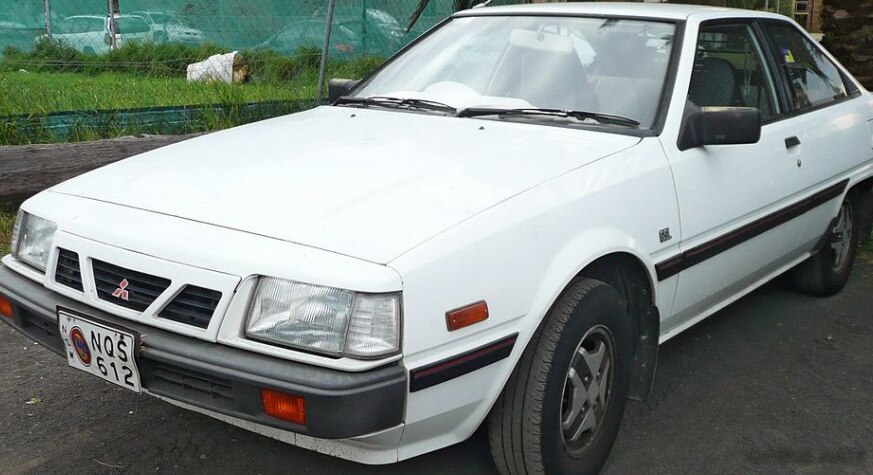
The Mitsubishi Cordia, specifically the 1.6 GSL (A212A) variant produced between 1982 and 1986, represented Mitsubishi’s foray into the affordable, sporty coupe market. Part of the A21_A generation, the Cordia aimed to provide a stylish and relatively economical alternative to established players, particularly in Japan and export markets like Australia and Europe. This model occupied a position as a mid-range offering within the Cordia lineup, slotting below the more powerful turbocharged versions and above the base models. It was designed to appeal to buyers seeking a blend of practicality, decent performance, and modern styling for the time.
Technical Specifications
| Brand | Mitsubishi |
| Model | Cordia |
| Generation | Cordia (A21_A) |
| Type | 1.6 GSL (A212A) (75 Hp) |
| Start of production | 1982 |
| End of production | 1986 |
| Powertrain Architecture | Internal Combustion engine |
| Body type | Coupe |
| Seats | 4 |
| Doors | 3 |
| Fuel consumption (urban) | 9.3 l/100 km (25.3 US mpg) |
| Fuel consumption (extra urban) | 6 l/100 km (39.2 US mpg) |
| Fuel Type | Petrol (Gasoline) |
| Maximum speed | 165 km/h (102.53 mph) |
| Weight-to-power ratio | 12.3 kg/Hp |
| Weight-to-torque ratio | 8 kg/Nm |
| Power | 75 Hp @ 5500 rpm |
| Power per litre | 47 Hp/l |
| Torque | 116 Nm @ 3500 rpm (85.56 lb.-ft. @ 3500 rpm) |
| Engine layout | Front, Transverse |
| Engine Model/Code | 4G32 |
| Engine displacement | 1597 cm3 (97.45 cu. in.) |
| Number of cylinders | 4 |
| Engine configuration | Inline |
| Cylinder Bore | 76.9 mm (3.03 in.) |
| Piston Stroke | 86 mm (3.39 in.) |
| Compression ratio | 8.5:1 |
| Number of valves per cylinder | 2 |
| Fuel injection system | Carburettor |
| Engine aspiration | Naturally aspirated |
| Engine oil capacity | 3.5 l (3.7 US qt | 3.08 UK qt) |
| Kerb Weight | 925 kg (2039.28 lbs.) |
| Max. weight | 1440 kg (3174.66 lbs.) |
| Max load | 515 kg (1135.38 lbs.) |
| Fuel tank capacity | 50 l (13.21 US gal | 11 UK gal) |
| Length | 4275 mm (168.31 in.) |
| Width | 1655 mm (65.16 in.) |
| Height | 1320 mm (51.97 in.) |
| Wheelbase | 2445 mm (96.26 in.) |
| Front track | 1410 mm (55.51 in.) |
| Rear track | 1375 mm (54.13 in.) |
| Ride height (ground clearance) | 165 mm (6.5 in.) |
| Minimum turning circle | 9.8 m (32.15 ft.) |
| Drivetrain Architecture | Front wheel drive |
| Number of gears | 4 |
| Gearbox type | Manual transmission |
| Front suspension | Independent, McPherson with coil spring and anti-roll bar |
| Rear suspension | Independent coil spring |
| Front brakes | Disc |
| Rear brakes | Disc |
| Steering type | Steering rack and pinion |
Powertrain & Engine Architecture
The heart of the Cordia 1.6 GSL is the 4G32 engine, a 1.6-liter inline-four cylinder powerplant. This engine utilized a single overhead camshaft (SOHC) valvetrain with two valves per cylinder. Crucially, this variant employed a carburetor for fuel delivery, a common practice for the time, but increasingly superseded by fuel injection in more advanced models. The carburetor system, while simpler and less expensive, offered less precise fuel metering compared to injection, impacting both performance and fuel efficiency. The 4G32 produced 75 horsepower at 5500 rpm and 116 Nm (85.56 lb-ft) of torque at 3500 rpm. The engine was transversely mounted in the front of the vehicle, driving the front wheels. The transmission was a four-speed manual, offering a relatively direct driving experience.
Driving Characteristics
The 1.6 GSL offered a reasonably engaging driving experience for its class, though it wasn’t a performance leader. The 75 horsepower output meant acceleration was adequate for everyday driving, but overtaking required planning. The four-speed manual transmission provided a decent level of control, but the gear ratios were spaced to prioritize fuel economy over outright performance. Compared to the turbocharged Cordia variants, the 1.6 GSL felt noticeably slower, lacking the punch and responsiveness of the forced-induction engines. However, it offered a smoother and more predictable power delivery, making it easier to drive in urban environments. The front-wheel-drive configuration provided reasonable handling, but could exhibit understeer when pushed hard.
Equipment & Trim Levels
The Cordia 1.6 GSL was positioned as a well-equipped mid-range model. Standard features typically included cloth upholstery, a basic stereo system, and power steering. The “GSL” designation indicated a higher level of trim than the base models, with features like upgraded interior trim and exterior detailing. Optional extras could include air conditioning, upgraded sound systems, and alloy wheels. The interior design was functional and relatively modern for the early 1980s, with a focus on ergonomics and ease of use. The dashboard layout was straightforward, with clearly labeled controls.
Chassis & Braking
The Cordia 1.6 GSL utilized an independent suspension system at all four wheels. The front suspension employed a McPherson strut design with coil springs and an anti-roll bar, while the rear suspension featured independent coil springs. This setup provided a comfortable ride and reasonable handling characteristics. Braking duties were handled by disc brakes on all four wheels, offering adequate stopping power for the vehicle’s weight and performance. The steering system was a rack-and-pinion setup, providing precise and responsive steering feel.
Market Reception & Comparison
The Cordia 1.6 GSL was generally well-received by automotive critics as a stylish and affordable coupe. It was praised for its modern design, comfortable ride, and decent fuel economy. However, some critics noted that the 75 horsepower engine was somewhat underpowered, particularly when compared to competitors. In terms of reliability, the 4G32 engine proved to be reasonably durable, but the carburetor system required periodic maintenance and tuning. Compared to the turbocharged Cordia variants, the 1.6 GSL offered a lower purchase price and simpler mechanicals, but at the expense of performance. It competed with other coupes in its class, such as the Honda Prelude and Toyota Celica, offering a unique blend of style and affordability.
Legacy
The Mitsubishi Cordia 1.6 GSL, while not a groundbreaking vehicle, holds a place in automotive history as a representative of the affordable, sporty coupes of the 1980s. The 4G32 engine, while not known for its high performance, proved to be a reliable and durable powerplant. Today, the Cordia 1.6 GSL is a relatively rare sight on the roads, but it has gained a following among classic car enthusiasts. Parts availability can be a challenge, but the relatively simple mechanicals make it a viable project for home mechanics. The car’s enduring appeal lies in its distinctive styling, comfortable ride, and nostalgic charm.
