
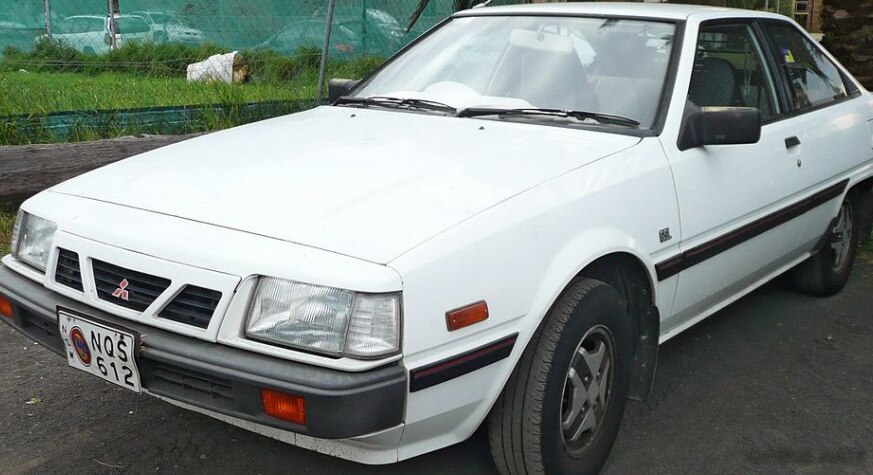
The Mitsubishi Cordia, specifically the A21_A generation produced between 1982 and 1985, represented Mitsubishi’s foray into the sporty coupe market. The 1.6 Turbo (A212A) variant, equipped with the 4G32T engine producing 114 horsepower, occupied a middle ground within the Cordia lineup, offering a balance between performance and affordability. Positioned above the naturally aspirated models, it aimed to attract buyers seeking a more engaging driving experience without the higher price tag of potential future, more powerful trims. The Cordia, as a whole, was primarily marketed in Japan and select export markets, including Australia and parts of Europe, and was intended to compete with vehicles like the Honda Prelude and Toyota Celica.
Technical Specifications
| Brand | Mitsubishi |
| Model | Cordia |
| Generation | Cordia (A21_A) |
| Type (Engine) | 1.6 Turbo (A212A) (114 Hp) |
| Start of production | 1982 |
| End of production | 1985 |
| Powertrain Architecture | Internal Combustion engine |
| Body type | Coupe |
| Seats | 4 |
| Doors | 3 |
| Fuel consumption (urban) | 9.3 l/100 km (25.3 US mpg) |
| Fuel consumption (extra urban) | 6.1 l/100 km (38.6 US mpg) |
| Fuel Type | Petrol (Gasoline) |
| Maximum speed | 190 km/h (118.06 mph) |
| Weight-to-power ratio | 8.5 kg/Hp |
| Weight-to-torque ratio | 5.7 kg/Nm |
| Power | 114 Hp @ 5500 rpm |
| Power per litre | 71.4 Hp/l |
| Torque | 170 Nm @ 3500 rpm (125.39 lb.-ft. @ 3500 rpm) |
| Engine layout | Front, Transverse |
| Engine Model/Code | 4G32T |
| Engine displacement | 1597 cm3 (97.45 cu. in.) |
| Number of cylinders | 4 |
| Engine configuration | Inline |
| Cylinder Bore | 76.9 mm (3.03 in.) |
| Piston Stroke | 86 mm (3.39 in.) |
| Compression ratio | 8.5:1 |
| Number of valves per cylinder | 2 |
| Fuel injection system | Carburettor |
| Engine aspiration | Turbocharger |
| Valvetrain | SOHC |
| Engine oil capacity | 3.5 l (3.7 US qt | 3.08 UK qt) |
| Kerb Weight | 970 kg (2138.48 lbs.) |
| Max. weight | 1460 kg (3218.75 lbs.) |
| Max load | 490 kg (1080.27 lbs.) |
| Fuel tank capacity | 50 l (13.21 US gal | 11 UK gal) |
| Max. roof load | 80 kg (176.37 lbs.) |
| Permitted trailer load with brakes (12%) | 1100 kg (2425.08 lbs.) |
| Permitted trailer load without brakes | 485 kg (1069.24 lbs.) |
| Length | 4275 mm (168.31 in.) |
| Width | 1660 mm (65.35 in.) |
| Height | 1320 mm (51.97 in.) |
| Wheelbase | 2445 mm (96.26 in.) |
| Front track | 1410 mm (55.51 in.) |
| Rear track | 1375 mm (54.13 in.) |
| Ride height (ground clearance) | 155 mm (6.1 in.) |
| Minimum turning circle | 9.8 m (32.15 ft.) |
| Drivetrain Architecture | Front wheel drive |
| Number of gears and type of gearbox | 4 gears, manual transmission |
| Front suspension | Independent, type McPherson with coil spring and anti-roll bar |
| Rear suspension | Independent coil spring |
| Front brakes | Ventilated discs |
| Rear brakes | Disc |
| Steering type | Steering rack and pinion |
| Tires size | 185/70 R13 |
Powertrain & Engine Architecture
The heart of the Cordia 1.6 Turbo was the 4G32T engine, a 1.6-liter (1597cc) inline-four cylinder powerplant. This engine utilized a single overhead camshaft (SOHC) valvetrain with two valves per cylinder. While the base Cordia models employed carburetion, the 1.6 Turbo featured a carburetor system optimized for forced induction. The addition of a turbocharger significantly boosted power output compared to the naturally aspirated versions. The turbocharger itself was a relatively small unit, designed to provide responsive boost across a broad RPM range. The engine’s 8.5:1 compression ratio was a compromise between performance and reliability, necessary for use with the available fuel grades of the time. The engine was transversely mounted in the front of the vehicle, driving the front wheels. The transmission was a four-speed manual, chosen for its simplicity and cost-effectiveness. An automatic transmission was not offered with the 1.6 Turbo engine.
Driving Characteristics
The 114 horsepower and 170 Nm (125 lb-ft) of torque provided by the 4G32T engine gave the Cordia 1.6 Turbo a noticeable performance advantage over its naturally aspirated siblings. Acceleration to 60 mph was estimated to be around 9-10 seconds, making it a reasonably quick vehicle for its time. The turbocharger did introduce a degree of turbo lag, meaning there was a slight delay between pressing the accelerator and feeling the full boost of power. However, once the turbo spooled up, the engine delivered a strong surge of acceleration. The four-speed manual transmission offered a direct and engaging driving experience. Gear ratios were relatively closely spaced, allowing the driver to keep the engine in its powerband. Compared to a potential future VR4 model, the 1.6 Turbo lacked the all-wheel drive system and significantly higher horsepower, resulting in a more front-wheel drive focused handling characteristic.
Equipment & Trim Levels
The Cordia 1.6 Turbo was generally well-equipped for a vehicle in its price range. Standard features typically included cloth upholstery, a basic AM/FM radio, and manual windows and locks. The interior design was functional and straightforward, with a focus on practicality. Optional extras included upgraded sound systems, power windows, and a sunroof. The dashboard layout was simple and easy to use, with clearly marked gauges. The 1.6 Turbo trim often featured unique badging and styling cues to differentiate it from the base models, such as a rear spoiler and upgraded wheel covers.
Chassis & Braking
The Cordia 1.6 Turbo utilized an independent suspension system at all four wheels. The front suspension employed McPherson struts with coil springs and an anti-roll bar, while the rear suspension featured independent coil springs. This setup provided a comfortable ride and reasonably good handling. Braking duties were handled by ventilated discs at the front and solid discs at the rear. The braking system was adequate for normal driving conditions, but lacked the stopping power of more modern vehicles. The steering was a rack-and-pinion system, providing precise and responsive steering feel.
Market Reception & Comparison
The Mitsubishi Cordia 1.6 Turbo was generally well-received by automotive critics. It was praised for its sporty styling, responsive engine, and relatively affordable price. However, some critics noted the presence of turbo lag and the somewhat basic interior. Compared to the naturally aspirated Cordia models, the 1.6 Turbo offered a significant performance upgrade. It also provided a more engaging driving experience. Fuel economy was reasonable for a turbocharged vehicle of its time, averaging around 25-39 mpg depending on driving conditions. Reliability was generally good, although the turbocharger did require more maintenance than a naturally aspirated engine.
Legacy
The Mitsubishi Cordia 1.6 Turbo, while not a groundbreaking vehicle, played an important role in establishing Mitsubishi’s reputation as a manufacturer of sporty and reliable automobiles. The 4G32T engine proved to be a durable and capable powerplant, and many examples are still on the road today. In the used car market, the Cordia 1.6 Turbo is considered a desirable classic, particularly among enthusiasts who appreciate its unique styling and turbocharged engine. Parts availability can be a challenge, but a dedicated community of Cordia owners exists to provide support and assistance. The Cordia paved the way for future Mitsubishi performance models, including the iconic Starion and the later Cordia-based VR4.
