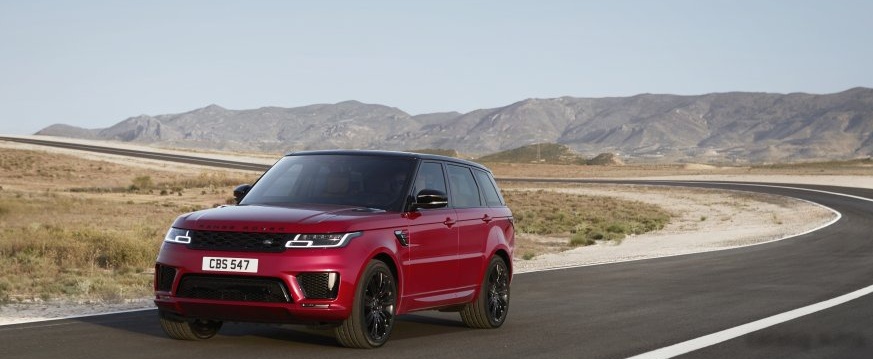
The Land Rover Range Rover Sport II, specifically the facelifted version introduced in 2017, represented a significant refinement of the popular luxury SUV. This variant, equipped with the 3.0-liter V6 supercharged engine producing 340 horsepower and paired with an eight-speed automatic transmission, along with all-wheel drive and optional seven-seat configuration, occupied a sweet spot in the Range Rover Sport lineup. Production of this specific configuration ran from 2017 to May 2018, bridging the gap between the initial launch of the second-generation Sport and the subsequent introduction of mild-hybrid powertrains.
Technical Specifications
| Brand | Land Rover |
| Model | Range Rover Sport |
| Generation | Range Rover Sport II (facelift 2017) |
| Type (Engine) | 3.0 V6 (340 Hp) AWD Automatic Supercharged 5+2 Seating |
| Start of production | 2017 |
| End of production | May, 2018 |
| Powertrain Architecture | Internal Combustion engine |
| Body type | SUV |
| Seats | 7 |
| Doors | 5 |
| Fuel consumption (urban) | 13.4 l/100 km (17.6 US mpg, 21.1 UK mpg, 7.5 km/l) |
| Fuel consumption (extra urban) | 8.4 l/100 km (28 US mpg, 33.6 UK mpg, 11.9 km/l) |
| Fuel consumption (combined) | 10.5 l/100 km (22.4 US mpg, 26.9 UK mpg, 9.5 km/l) |
| CO2 emissions | 243 g/km |
| Fuel Type | Petrol (Gasoline) |
| Acceleration 0 – 100 km/h | 7.2 sec |
| Acceleration 0 – 62 mph | 7.2 sec |
| Acceleration 0 – 60 mph | 6.8 sec |
| Maximum speed | 209 km/h (129.87 mph) |
| Emission standard | Euro 6 |
| Weight-to-power ratio | 6.5 kg/Hp, 154.9 Hp/tonne |
| Weight-to-torque ratio | 4.9 kg/Nm, 205 Nm/tonne |
| Power | 340 Hp @ 6500 rpm |
| Power per litre | 113.5 Hp/l |
| Torque | 450 Nm @ 3500-5000 rpm (331.9 lb.-ft. @ 3500-5000 rpm) |
| Engine layout | Front, Longitudinal |
| Engine Model/Code | 306PS |
| Engine displacement | 2995 cm3 (182.77 cu. in.) |
| Number of cylinders | 6 |
| Engine configuration | V-engine |
| Cylinder Bore | 84.5 mm (3.33 in.) |
| Piston Stroke | 89 mm (3.5 in.) |
| Compression ratio | 10.5:1 |
| Number of valves per cylinder | 4 |
| Fuel injection system | Direct injection |
| Engine aspiration | Supercharger, Intercooler |
| Engine oil capacity | 8 l (8.45 US qt | 7.04 UK qt) |
| Coolant | 8.05 l (8.51 US qt | 7.08 UK qt) |
| Kerb Weight | 2195 kg (4839.15 lbs.) |
| Max. weight | 3130 kg (6900.47 lbs.) |
| Max load | 935 kg (2061.32 lbs.) |
| Trunk (boot) space – minimum | 221 l (7.8 cu. ft.) |
| Trunk (boot) space – maximum | 1686 l (59.54 cu. ft.) |
| Fuel tank capacity | 104 l (27.47 US gal | 22.88 UK gal) |
| Max. roof load | 100 kg (220.46 lbs.) |
| Permitted trailer load with brakes (12%) | 3500 kg (7716.18 lbs.) |
| Permitted trailer load without brakes | 750 kg (1653.47 lbs.) |
| Permitted towbar download | 150 kg (330.69 lbs.) |
| Length | 4879 mm (192.09 in.) |
| Width with mirrors folded | 2073 mm (81.61 in.) |
| Width including mirrors | 2220 mm (87.4 in.) |
| Height | 1803 mm (70.98 in.) |
| Wheelbase | 2923 mm (115.08 in.) |
| Front track | 1693 mm (66.65 in.) |
| Rear (Back) track | 1686 mm (66.38 in.) |
| Ride height (ground clearance) | 213-278 mm (8.39 – 10.94 in.) |
| Drag coefficient (Cd) | 0.36 |
| Minimum turning circle (turning diameter) | 12.5 m (41.01 ft.) |
| Approach angle | 24.3-33.0° |
| Departure angle | 24.9-31.0° |
| Ramp-over (brakeover) angle | 19.4-27.2° |
| Wading depth | 800-850 mm (31.5 – 33.46 in.) |
| Drivetrain Architecture | The Internal combustion engine (ICE) drives permanently the four wheels of the vehicle. |
| Drive wheel | All wheel drive (4×4) |
| Number of gears and type of gearbox | 8 gears, automatic transmission |
| Front suspension | Air suspension |
| Rear suspension | Air suspension |
| Front brakes | Ventilated discs |
| Rear brakes | Ventilated discs |
| Assisting systems | ABS (Anti-lock braking system) |
| Steering type | Steering rack and pinion |
| Power steering | Electric Steering |
INTRODUCTION
The Range Rover Sport II, launched in 2013, aimed to deliver the luxury and capability of the full-size Range Rover in a more dynamically focused and slightly more affordable package. The 2017 facelift brought updated styling, improved technology, and refinements to the powertrain options. The 3.0-liter V6 supercharged engine, in its 340 horsepower guise, was a popular choice, offering a strong balance of performance and efficiency. This configuration was positioned as a mid-range offering, slotting between the entry-level diesel variants and the higher-performance supercharged V8 models. The availability of a 5+2 seating option further broadened its appeal to families.
Powertrain & Engine Architecture
At the heart of this Range Rover Sport variant lies the Jaguar Land Rover AJ306 engine, a 3.0-liter V6 utilizing a roots-type supercharger and direct fuel injection. This engine, known internally as the 306PS, produces 340 horsepower at 6500 rpm and 450 Nm (331.9 lb-ft) of torque between 3500 and 5000 rpm. The supercharger provides instant throttle response and a broad torque curve, contributing to effortless acceleration. The engine’s architecture is a 60-degree V configuration, promoting smoothness and balance. The eight-speed automatic transmission, sourced from ZF, is a crucial component of the powertrain. It features a wide gear ratio spread, optimizing both fuel economy and performance. The transmission is known for its smooth and quick shifts, enhancing the driving experience.
Driving Characteristics
The 340 hp V6 automatic Range Rover Sport delivers a refined and capable driving experience. While not as brutally quick as the supercharged V8 models, it provides ample power for everyday driving and confident overtaking. The supercharger eliminates turbo lag, providing immediate power delivery. The eight-speed automatic transmission is well-tuned, offering smooth gear changes and keeping the engine in its optimal power band. Compared to the manual transmission options available on some Range Rover Sport models, the automatic prioritizes convenience and ease of use. The all-wheel-drive system provides excellent traction in various conditions, making it a capable off-roader as well as a comfortable on-road cruiser. The air suspension contributes to a smooth and controlled ride, absorbing bumps and imperfections in the road surface.
Equipment & Trim Levels
The 2017 facelifted Range Rover Sport with the 3.0 V6 engine typically came well-equipped as standard. Features included leather upholstery, heated front seats, a touchscreen infotainment system with navigation, automatic climate control, and a suite of safety features such as ABS, traction control, and multiple airbags. The optional 5+2 seating configuration added a third row of seats, increasing passenger capacity to seven, although these seats were best suited for children or occasional use. Optional extras included a panoramic sunroof, upgraded audio systems (Meridian), adaptive cruise control, and various exterior styling enhancements. Trim levels varied depending on the market, but generally offered increasing levels of luxury and technology.
Chassis & Braking
The Range Rover Sport II utilizes a robust aluminum-intensive chassis, contributing to its strength and relatively low weight. The suspension system features air suspension on both the front and rear axles, providing adjustable ride height and damping. This allows the driver to tailor the ride to their preferences and driving conditions. The braking system consists of ventilated discs on all four wheels, providing ample stopping power. ABS (Anti-lock Braking System) is standard, enhancing safety and control during emergency braking situations. The steering is electrically assisted, providing a precise and responsive feel.
Market Reception & Comparison
The 3.0 V6 supercharged Range Rover Sport was generally well-received by automotive critics. It was praised for its strong performance, comfortable ride, and luxurious interior. Fuel economy, while not exceptional, was considered reasonable for a vehicle of its size and capability. Compared to the diesel variants, the V6 offered a more refined and responsive driving experience, albeit with slightly higher fuel consumption. Against the V8 models, it provided a more accessible price point without sacrificing too much performance. Reliability reports suggest that the 3.0 V6 engine is generally reliable, although regular maintenance is essential.
Legacy
The 2017 facelifted Range Rover Sport 3.0 V6 remains a desirable used car option. Its combination of luxury, performance, and capability continues to appeal to buyers. The 3.0 V6 engine has proven to be a durable and relatively trouble-free unit, provided it has been properly maintained. As newer Range Rover Sport models have emerged with more advanced technology and hybrid powertrains, the 2017 model represents a sweet spot in terms of value and reliability. It offers a compelling blend of traditional Range Rover qualities at a more affordable price point.