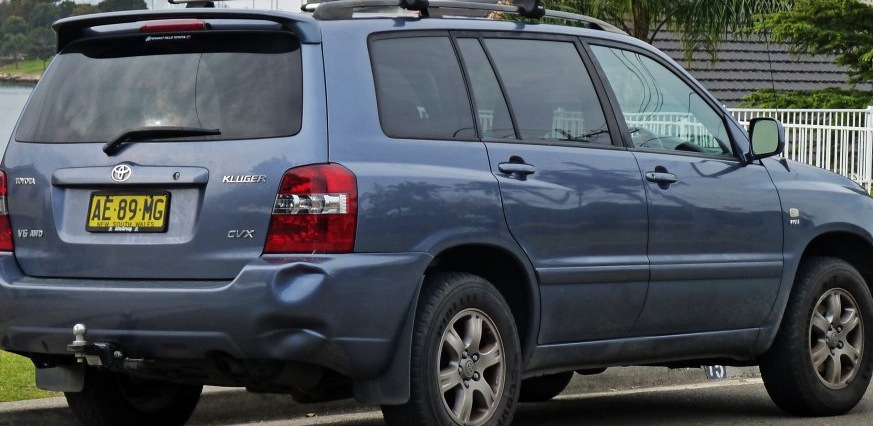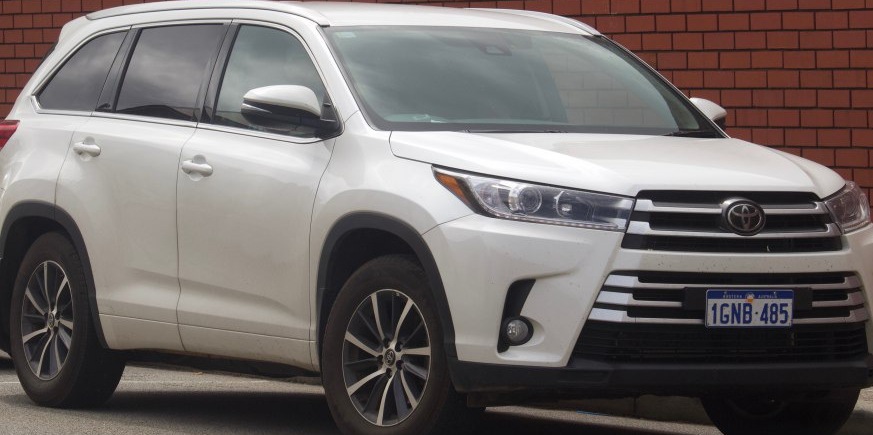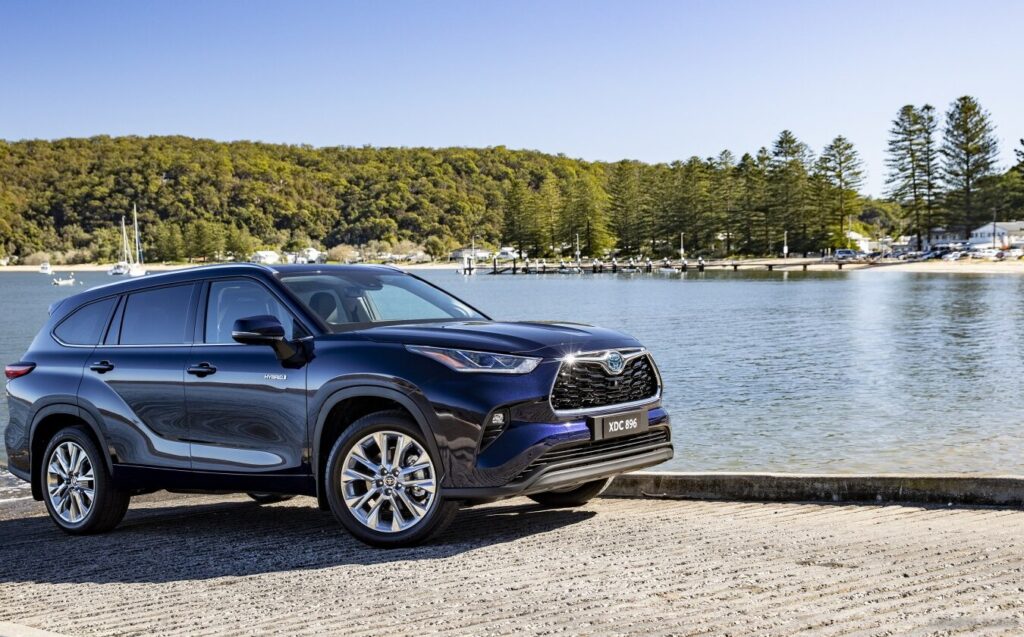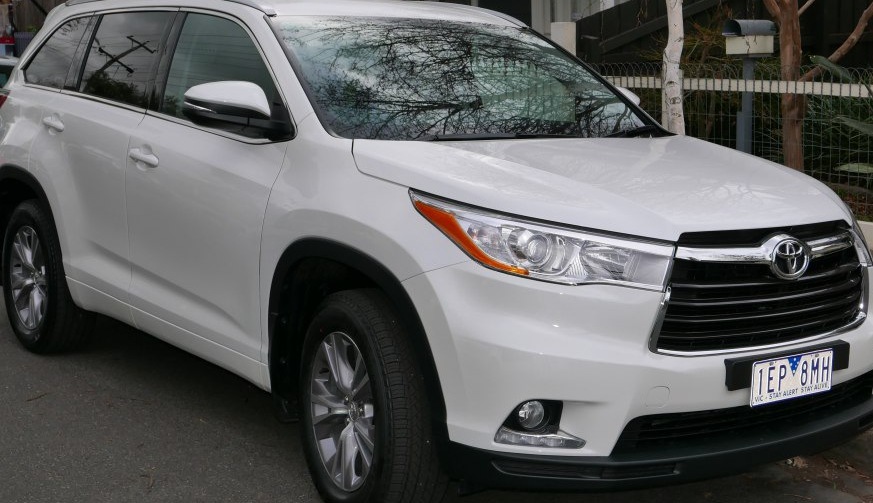
The Toyota Kluger, known as the Highlander in North America, is a mid-size crossover SUV produced by Toyota since 2000. The third generation, introduced in December 2013 and continuing through 2016 in some markets, represented a significant evolution of the model, offering increased space, improved fuel efficiency, and a more refined driving experience. Within the Kluger III lineup, the 3.5 V6 AWD Automatic variant occupied the premium position, offering a balance of power, capability, and comfort for families and those needing a versatile vehicle. This model was primarily sold in markets like Australia, New Zealand, and parts of Asia, where larger SUVs were gaining popularity.
Technical Specifications
| Brand | Toyota |
| Model | Kluger |
| Generation | Kluger III |
| Type | 3.5 V6 (273 Hp) AWD Automatic |
| Start of production | December, 2013 |
| End of production | 2016 |
| Powertrain Architecture | Internal Combustion engine |
| Body type | SUV |
| Seats | 7 |
| Doors | 5 |
| Fuel consumption (combined) | 10.6 l/100 km (22.2 US mpg, 26.6 UK mpg, 9.4 km/l) |
| Fuel Type | Petrol (Gasoline) |
| Weight-to-power ratio | 7.3 kg/Hp, 136.2 Hp/tonne |
| Weight-to-torque ratio | 5.9 kg/Nm, 168.1 Nm/tonne |
| Power | 273 Hp @ 6200 rpm |
| Power per litre | 79 Hp/l |
| Torque | 337 Nm @ 4700 rpm (248.56 lb.-ft. @ 4700 rpm) |
| Engine layout | Front, Transverse |
| Engine Model/Code | 2GR-FE |
| Engine displacement | 3456 cm3 (210.9 cu. in.) |
| Number of cylinders | 6 |
| Engine configuration | V-engine |
| Cylinder Bore | 94 mm (3.7 in.) |
| Piston Stroke | 83 mm (3.27 in.) |
| Compression ratio | 10.8:1 |
| Number of valves per cylinder | 4 |
| Fuel injection system | Multi-port manifold injection |
| Engine aspiration | Naturally aspirated engine |
| Valvetrain | DOHC, D-VVT-i |
| Engine oil capacity | 6.1 l (6.45 US qt | 5.37 UK qt) |
| Coolant | 11.2 l (11.83 US qt | 9.85 UK qt) |
| Kerb Weight | 2005-2065 kg (4420.27 – 4552.55 lbs.) |
| Max. weight | 2740 kg (6040.67 lbs.) |
| Max load | 675-735 kg (1488.12 – 1620.4 lbs.) |
| Trunk (boot) space – minimum | 529 l (18.68 cu. ft.) |
| Fuel tank capacity | 72 l (19.02 US gal | 15.84 UK gal) |
| Permitted trailer load with brakes (12%) | 2000 kg (4409.25 lbs.) |
| Length | 4685 mm (184.45 in.) |
| Width | 1925 mm (75.79 in.) |
| Height | 1730 mm (68.11 in.) |
| Wheelbase | 2790 mm (109.84 in.) |
| Ride height (ground clearance) | 200.3 mm (7.89 in.) |
| Minimum turning circle (turning diameter) | 11.8 m (38.71 ft.) |
| Approach angle | 18.0° |
| Departure angle | 23.1° |
| Drive wheel | All wheel drive (4×4) |
| Number of gears and type of gearbox | 6 gears, automatic transmission |
| Front suspension | Independent type McPherson |
| Rear suspension | Double wishbone |
| Front brakes | Ventilated discs |
| Rear brakes | Disc |
| Assisting systems | ABS (Anti-lock braking system) |
| Steering type | Steering rack and pinion |
| Power steering | Electric Steering |
| Wheel rims size | 18; 19 |
INTRODUCTION
The Toyota Kluger III 3.5 V6 AWD Automatic, produced from 2013 to 2016, represented the top-tier offering in the Kluger range for many markets. Built on the robust 1HX0 platform (shared with the Highlander), this variant aimed to provide a spacious, comfortable, and capable SUV experience. It catered to families and individuals who required all-wheel drive for enhanced traction and stability, particularly in inclement weather or on varied terrain. The Kluger III marked a shift towards a more modern design and improved interior quality compared to its predecessors, solidifying Toyota’s position in the competitive mid-size SUV segment.
Powertrain & Engine Architecture
At the heart of the Kluger 3.5 V6 AWD Automatic lies Toyota’s 2GR-FE 3.5-liter V6 engine. This engine is a naturally aspirated, 24-valve DOHC powerplant featuring Toyota’s D-VVT-i (Dual Variable Valve Timing-intelligent) technology. This system optimizes valve timing based on engine speed and load, improving both performance and fuel efficiency. The 2GR-FE utilizes multi-port fuel injection, delivering fuel directly to each cylinder. The engine’s robust construction and relatively simple design contribute to its reputation for reliability. Paired with the engine is a six-speed automatic transmission, designed to provide smooth and responsive shifts. This transmission was chosen for its ability to handle the engine’s torque output and provide a comfortable driving experience. The AWD system is typically a part-time system, engaging the rear wheels when traction is needed, enhancing stability and control.
Driving Characteristics
The 3.5 V6 engine delivers a respectable 273 horsepower and 248 lb-ft of torque, providing ample power for everyday driving and confident highway passing. While not a sports car, the Kluger 3.5 V6 offers brisk acceleration. The six-speed automatic transmission is well-tuned, providing smooth gear changes and a reasonable level of responsiveness. Compared to the base 2.4-liter four-cylinder Kluger, the V6 offers a significantly more refined and powerful driving experience. The AWD system provides enhanced traction, particularly noticeable in slippery conditions. However, the added weight of the AWD system and V6 engine does result in slightly lower fuel economy compared to the front-wheel-drive models. The gear ratios are optimized for a balance of acceleration and fuel efficiency, with a focus on providing usable power in the mid-range.
Equipment & Trim Levels
The 3.5 V6 AWD Automatic trim typically came well-equipped with standard features such as tri-zone automatic climate control, a touchscreen infotainment system with navigation, a rearview camera, and keyless entry. Interior upholstery was typically leather, with power-adjustable front seats. Higher trim levels offered optional extras like a panoramic sunroof, premium audio system, and advanced safety features such as blind-spot monitoring and rear cross-traffic alert. The Kluger III prioritized interior space and comfort, offering ample legroom and headroom for all three rows of passengers. The dashboard layout was functional and user-friendly, with a focus on ease of use.
Chassis & Braking
The Kluger III utilizes an independent McPherson strut suspension in the front and a double wishbone suspension in the rear. This setup provides a comfortable ride quality, absorbing bumps and irregularities in the road surface effectively. The AWD models typically featured a slightly stiffer suspension tuning to accommodate the added weight and improve handling. Braking duties are handled by ventilated discs in the front and solid discs in the rear. The braking system is assisted by ABS (Anti-lock Braking System) and electronic brake-force distribution (EBD), enhancing safety and control during emergency braking situations. Stabilizer bars are fitted to both the front and rear axles to reduce body roll during cornering.
Market Reception & Comparison
The Toyota Kluger III 3.5 V6 AWD Automatic was generally well-received by automotive critics. It was praised for its spacious interior, comfortable ride, and refined powertrain. However, some critics noted that the fuel economy was not class-leading. Compared to other trims in the Kluger lineup, the 3.5 V6 AWD offered a significant performance upgrade but came at a higher price point. The 2.4-liter four-cylinder models were more fuel-efficient and affordable, while the hybrid models offered even better fuel economy. The V6 AWD variant appealed to buyers who prioritized power, capability, and a premium driving experience.
Legacy
The Toyota Kluger III 3.5 V6 AWD Automatic has proven to be a reliable and durable vehicle. The 2GR-FE engine is known for its longevity and relatively low maintenance costs. In the used car market, these Klugers hold their value reasonably well, particularly those that have been well-maintained. Common issues are relatively minor, often related to routine maintenance items such as oil leaks or worn suspension components. The Kluger III continues to be a popular choice for families seeking a spacious, reliable, and capable SUV, and the 3.5 V6 AWD variant remains a desirable option for those who prioritize performance and all-weather capability.