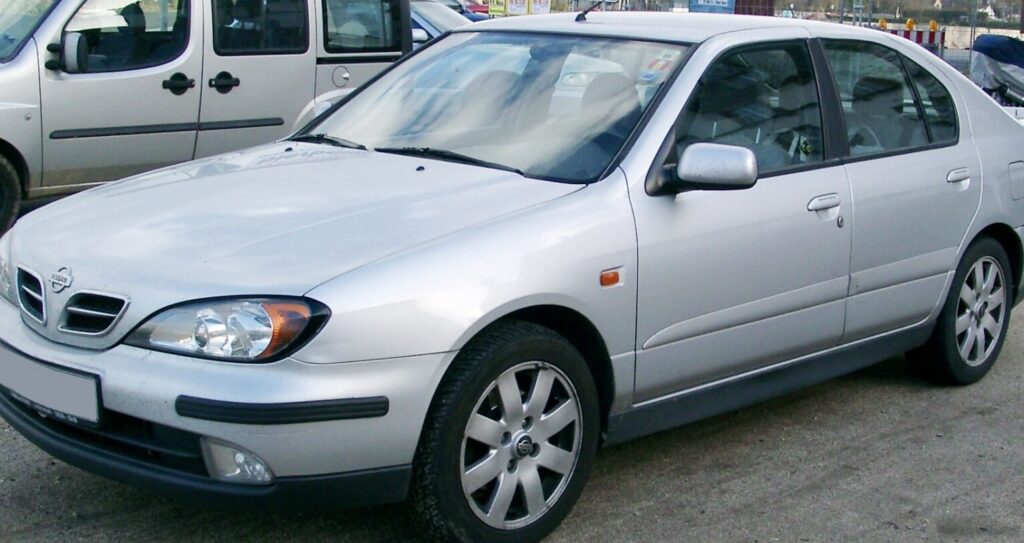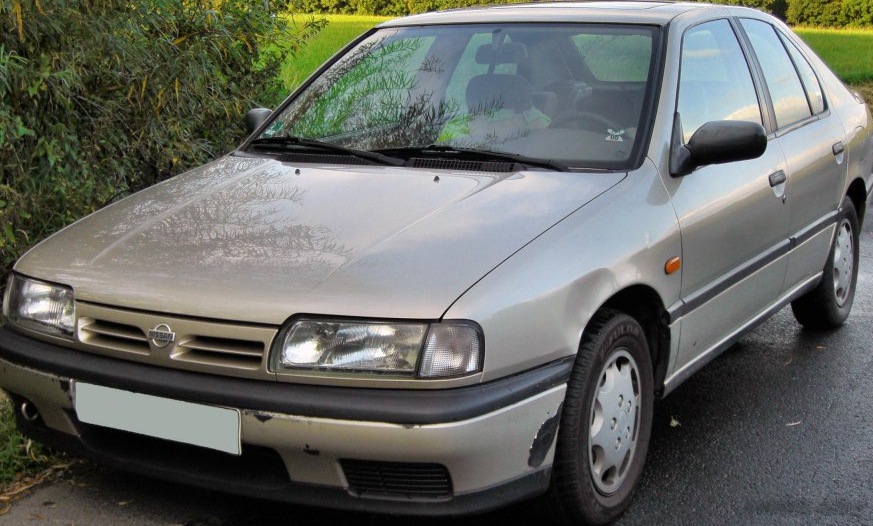
The Nissan Primera (P10) 2.0 16V Automatic, produced between 1990 and 1996, represented a significant step forward for Nissan’s presence in the European and, to a lesser extent, North American mid-size family car segments. Positioned as a more premium offering than the Sunny/Sentra, the P10 Primera aimed to compete with established rivals like the Ford Mondeo, Vauxhall/Opel Vectra, and Toyota Camry. The 2.0-liter 16-valve engine paired with an automatic transmission was a mid-range offering within the Primera lineup, providing a balance between performance and convenience, appealing to buyers prioritizing comfort over outright sportiness. It was built on the 1HX0 platform, shared with the Nissan Bluebird Sylphy in Japan.
Technical Specifications
| Brand | Nissan |
| Model | Primera |
| Generation | Primera Hatch (P10) |
| Type (Engine) | 2.0 16V (115 Hp) Automatic |
| Start of production | 1990 |
| End of production | 1996 |
| Powertrain Architecture | Internal Combustion engine |
| Body type | Hatchback |
| Seats | 5 |
| Doors | 5 |
| Fuel consumption (combined) | 8.3 l/100 km (28.3 US mpg, 34 UK mpg, 12 km/l) |
| Fuel Type | Petrol (Gasoline) |
| Acceleration 0 – 100 km/h | 9.9 sec |
| Acceleration 0 – 62 mph | 9.9 sec |
| Acceleration 0 – 60 mph | 9.4 sec |
| Maximum speed | 200 km/h (124.27 mph) |
| Weight-to-power ratio | 10.6 kg/Hp, 94.2 Hp/tonne |
| Weight-to-torque ratio | 7.4 kg/Nm, 136 Nm/tonne |
| Power | 115 Hp @ 6000 rpm |
| Power per litre | 57.6 Hp/l |
| Torque | 166 Nm @ 4800 rpm (122.44 lb.-ft. @ 4800 rpm) |
| Engine layout | Front, Transverse |
| Engine displacement | 1998 cm3 (121.93 cu. in.) |
| Number of cylinders | 4 |
| Engine configuration | Inline |
| Cylinder Bore | 86 mm (3.39 in.) |
| Piston Stroke | 86 mm (3.39 in.) |
| Compression ratio | 9.5:1 |
| Number of valves per cylinder | 4 |
| Fuel injection system | Multi-port manifold injection |
| Engine aspiration | Naturally aspirated engine |
| Valvetrain | DOHC |
| Engine oil capacity | 3.4 l (3.59 US qt | 2.99 UK qt) |
| Coolant | 6.4 l (6.76 US qt | 5.63 UK qt) |
| Kerb Weight | 1221 kg (2691.84 lbs.) |
| Max. weight | 1750 kg (3858.09 lbs.) |
| Max load | 529 kg (1166.25 lbs.) |
| Trunk (boot) space – minimum | 480 l (16.95 cu. ft.) |
| Trunk (boot) space – maximum | 1290 l (45.56 cu. ft.) |
| Fuel tank capacity | 60 l (15.85 US gal | 13.2 UK gal) |
| Length | 4400 mm (173.23 in.) |
| Width | 1700 mm (66.93 in.) |
| Height | 1390 mm (54.72 in.) |
| Wheelbase | 2550 mm (100.39 in.) |
| Front track | 1470 mm (57.87 in.) |
| Rear (Back) track | 1460 mm (57.48 in.) |
| Drivetrain Architecture | The Internal combustion engine (ICE) drives the front wheels of the vehicle. |
| Drive wheel | Front wheel drive |
| Number of gears and type of gearbox | 4 gears, automatic transmission |
| Front suspension | Double wishbone |
| Rear suspension | Double wishbone |
| Front brakes | Ventilated discs |
| Rear brakes | Disc |
| Assisting systems | ABS (Anti-lock braking system) |
| Steering type | Steering rack and pinion |
| Power steering | Hydraulic Steering |
| Tires size | 185/65 R14 |
| Wheel rims size | 14 |
Powertrain & Engine Architecture
The heart of the Primera 2.0 16V Automatic is the GA20DE engine, a 1998cc inline-four cylinder powerplant. This engine utilized a double overhead camshaft (DOHC) valvetrain with four valves per cylinder, contributing to its relatively high output for its displacement. Fuel delivery was managed by a multi-port fuel injection system, providing precise fuel metering for improved efficiency and performance. The engine’s 9.5:1 compression ratio was a typical value for naturally aspirated engines of the era. The automatic transmission was a four-speed unit, designed for smooth and comfortable shifting. While not known for its particularly quick acceleration, it provided a relaxed driving experience. The GA20DE engine code is crucial for identifying parts and service information.
Driving Characteristics
The Primera 2.0 Automatic offered a comfortable and refined driving experience, prioritizing ease of use over sporty handling. The automatic transmission, while smooth, did detract from the engine’s potential. Acceleration from 0-60 mph took around 9.4 seconds, which was adequate for the time but slower than the manual transmission versions or the more powerful 2.0 SRi model. The gear ratios were tuned for fuel economy and relaxed cruising, meaning the engine often felt strained during hard acceleration. Compared to the manual transmission Primera 2.0, the automatic version felt noticeably less responsive. The power delivery was linear, but the automatic transmission’s shift points could sometimes feel ill-timed, especially when attempting to overtake.
Equipment & Trim Levels
The 2.0 16V Automatic trim typically included features such as central locking, electric windows, power steering, and an AM/FM radio. Higher-spec models, or those with optional extras, could be equipped with features like air conditioning, alloy wheels, and a sunroof. Interior upholstery was generally cloth, with a relatively simple and functional dashboard layout. The trim level sat in the mid-range of the Primera lineup, offering a step up in comfort and convenience compared to the base models, but lacking the sporty styling and features of the SRi variant.
Chassis & Braking
The Primera P10 featured independent double wishbone suspension on both the front and rear axles, providing a comfortable ride and decent handling characteristics. The front brakes were ventilated discs, offering good stopping power, while the rear brakes were solid discs. Anti-lock Braking System (ABS) was standard, enhancing safety. The chassis was relatively lightweight for its class, contributing to its balanced handling. Stabilizer bars were fitted to both the front and rear suspension, helping to reduce body roll during cornering.
Market Reception & Comparison
The Nissan Primera P10 2.0 Automatic was generally well-received by automotive critics as a practical and comfortable family car. However, the automatic transmission was often criticized for detracting from the engine’s performance. Fuel economy was considered reasonable for the time, averaging around 28.3 US mpg. Compared to the manual transmission Primera 2.0, the automatic version offered less engaging driving experience but greater convenience. The Primera also faced stiff competition from rivals like the Ford Mondeo and Vauxhall/Opel Vectra, which offered similar levels of practicality and performance.
Legacy
The Nissan Primera P10, particularly the 2.0 16V Automatic variant, has proven to be a relatively reliable vehicle. The GA20DE engine is known for its durability, and the automatic transmission, while not the most sophisticated, is generally robust. Today, these cars are becoming increasingly rare, and well-maintained examples are sought after by enthusiasts. Common issues include age-related wear and tear on suspension components and potential corrosion. The Primera P10 represents a significant milestone in Nissan’s history, demonstrating the company’s commitment to building high-quality, reliable family cars.