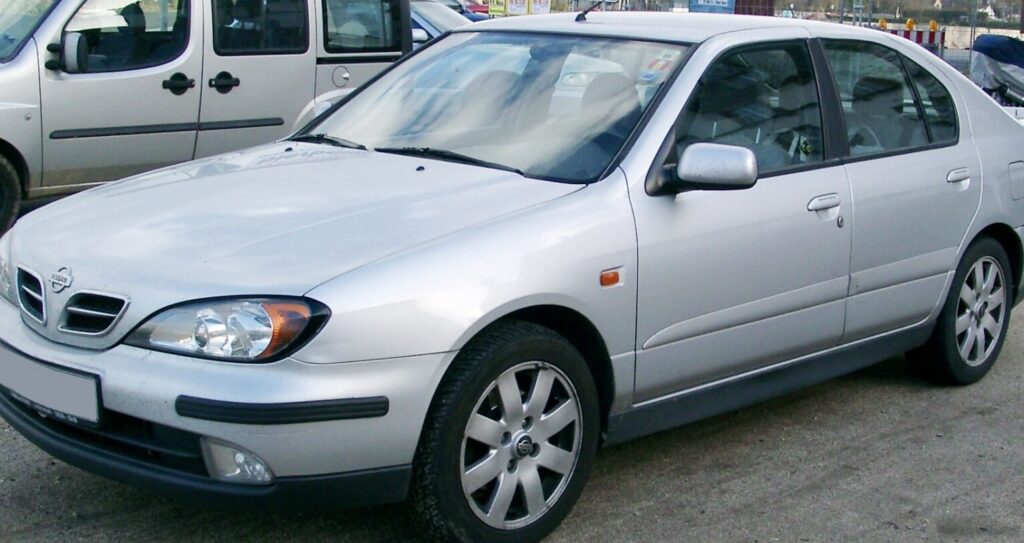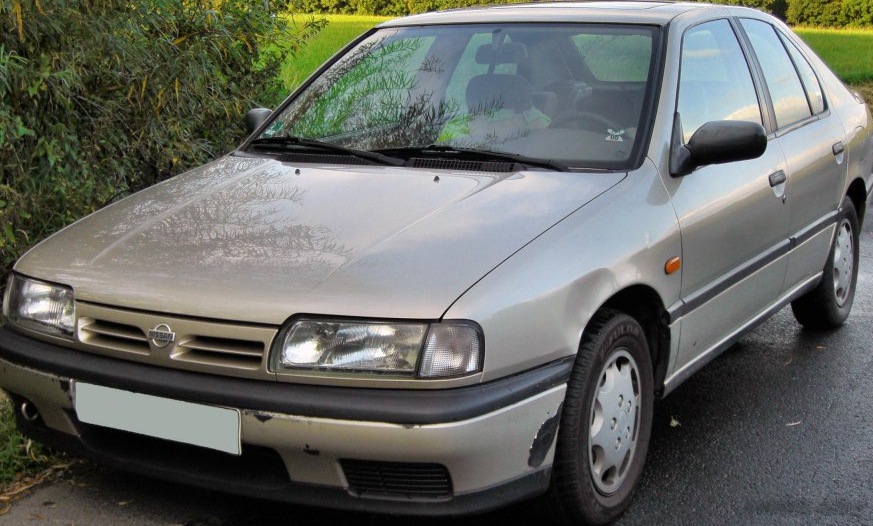
The Nissan Primera (P10) 2.0 D, produced from 1991 to 1996, represented Nissan’s entry into the increasingly competitive European mid-size family car segment. This variant, powered by the CD20 diesel engine, was primarily aimed at buyers seeking fuel efficiency and practicality, particularly in markets where diesel vehicles enjoyed significant tax advantages and were favored for long-distance driving. The P10 Primera, available as both a hatchback and a saloon, was Nissan’s attempt to establish a stronger foothold in Europe, offering a blend of Japanese reliability and a more contemporary design compared to some of its rivals. The 2.0 D trim occupied a position as the base diesel offering within the Primera P10 range, sitting below the more powerful 2.0 TD models.
Technical Specifications
| Brand | Nissan |
| Model | Primera |
| Generation | Primera Hatch (P10) |
| Type (Engine) | 2.0 D (75 Hp) |
| Start of production | 1991 |
| End of production | 1996 |
| Powertrain Architecture | Internal Combustion engine |
| Body type | Hatchback |
| Fuel Type | Diesel |
| Power | 75 Hp |
| Engine Model/Code | CD20 |
| Engine aspiration | Naturally aspirated engine |
| Engine oil capacity | 4.7 l (4.97 US qt | 4.14 UK qt) |
| Coolant capacity | 5.8 l (6.13 US qt | 5.1 UK qt) |
Powertrain & Engine Architecture
The heart of the Primera 2.0 D was the CD20 engine, a 1998cc inline-four cylinder diesel. This engine was a naturally aspirated unit, meaning it did not employ a turbocharger or intercooler. It featured indirect injection, utilizing a pre-chamber combustion system. This system involved a small auxiliary combustion chamber within the cylinder head where fuel was initially injected and ignited, then transferred to the main combustion chamber via a connecting passage. This design aimed to improve combustion efficiency and reduce noise, common concerns with early diesel engines. The CD20 utilized a cast iron block and an aluminum cylinder head. Valve actuation was managed by a single overhead camshaft (SOHC) operating two valves per cylinder. The engine’s relatively low compression ratio (typically around 23:1) contributed to its durability but also limited its power output. Nissan paired the CD20 with a four-speed automatic transmission, a common choice for drivers prioritizing ease of use over outright performance. This transmission was electronically controlled, offering smoother shifts compared to older hydraulic systems.
Driving Characteristics
The Primera 2.0 D Automatic offered a decidedly unhurried driving experience. With only 75 horsepower on tap, acceleration was modest, and overtaking required careful planning. The four-speed automatic transmission, while providing convenience, further emphasized the engine’s limitations. Gear ratios were geared towards fuel economy rather than spirited driving. The automatic transmission’s shift points were programmed to keep the engine within its optimal torque band, but this often resulted in the engine feeling strained under heavy load. Compared to the 2.0 TD variants (which offered significantly more power and torque thanks to turbocharging), the 2.0 D felt noticeably slower. Even against naturally aspirated gasoline Primera models, the diesel lacked the responsiveness and overall refinement. However, the diesel’s strength lay in its fuel efficiency and low-end torque, making it suitable for long motorway journeys and carrying heavy loads. The suspension, tuned for comfort, provided a reasonably smooth ride, absorbing bumps and imperfections in the road surface effectively.
Equipment & Trim Levels
The 2.0 D trim level of the Primera P10 was generally considered the entry-level diesel offering. Standard equipment typically included central locking, power steering, and basic instrumentation. Interior upholstery was usually cloth, with a relatively simple dashboard layout. Air conditioning was often an optional extra, as were electric windows and a radio/cassette player. Higher trim levels, such as the SE or S, added features like alloy wheels, upgraded interior trim, and more sophisticated audio systems. The 2.0 D was often chosen by fleet buyers and private individuals prioritizing value for money over luxury features. Safety equipment was relatively basic for the time, typically consisting of seatbelts and a driver’s airbag, with ABS becoming increasingly common towards the end of the production run.
Chassis & Braking
The Primera P10 utilized a front-engine, front-wheel-drive layout. The suspension consisted of MacPherson struts at the front and a semi-independent torsion beam at the rear. This configuration provided a good balance between ride comfort and handling. The 2.0 D models, being the base diesel variant, typically featured smaller diameter wheels and narrower tires compared to higher-spec models. Braking was typically accomplished with disc brakes at the front and drum brakes at the rear. Anti-lock Braking System (ABS) was available as an option, improving braking performance and stability, particularly on slippery surfaces. Stabilizer bars were fitted to both the front and rear axles to reduce body roll during cornering. The chassis was designed to provide a stable and predictable driving experience, prioritizing comfort and safety over sporty handling.
Market Reception & Comparison
The Nissan Primera 2.0 D received mixed reviews. Critics generally praised its fuel economy and reliability, but criticized its lack of power and refinement compared to competitors like the Ford Mondeo, Vauxhall/Opel Vectra, and Volkswagen Passat. The indirect injection diesel engine, while durable, was noticeably noisier and less responsive than more modern direct injection diesels. Fuel economy figures typically ranged from 45 to 55 mpg, depending on driving conditions. Reliability was generally good, with the CD20 engine proving to be a robust and long-lasting unit. However, maintenance costs could be higher than some gasoline alternatives due to the complexity of the diesel fuel injection system. Compared to the 2.0 TD Primera, the 2.0 D offered significantly lower performance but also a lower purchase price and potentially lower running costs (excluding maintenance).
Legacy
The Nissan Primera P10 2.0 D, while not a performance icon, established Nissan as a credible player in the European mid-size car market. The CD20 engine, despite its limitations, proved to be a reliable and durable powerplant. Today, these vehicles are relatively rare, and well-maintained examples are sought after by enthusiasts and collectors. The 2.0 D variant, due to its lower power output, tends to be less desirable than the turbocharged models, but its simplicity and fuel efficiency make it a viable option for those seeking a classic, economical, and reliable vehicle. Parts availability can be a challenge, but many components are still available through specialist suppliers and online marketplaces. The Primera P10 2.0 D represents a snapshot of automotive engineering from the early 1990s, showcasing the growing importance of fuel efficiency and practicality in the family car segment.