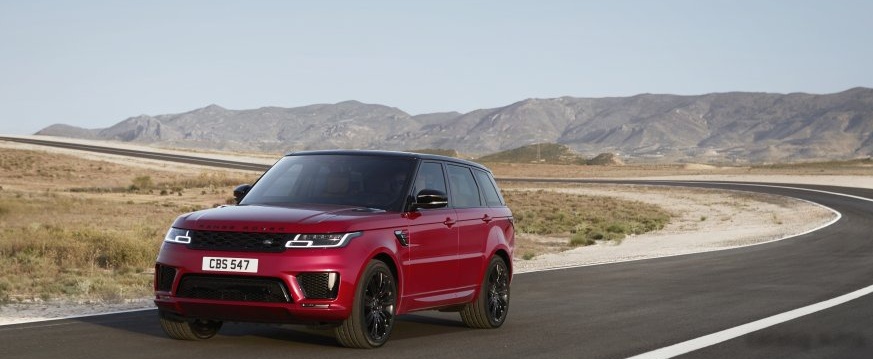
The Land Rover Range Rover Sport II (facelift 2017) 5.0 V8 Supercharged represents the pinnacle of performance within the second-generation Range Rover Sport lineup, produced from 2017 to May 2022. This variant, designated internally as the 508PS model, was positioned as the flagship offering, boasting a substantial power increase over lower-trim engines. It catered to buyers seeking a blend of luxury, off-road capability, and exhilarating on-road performance. The facelift brought styling updates and technological enhancements to the already successful Range Rover Sport platform (L494), solidifying its position in the premium SUV segment.
Technical Specifications
| Brand | Land Rover |
| Model | Range Rover Sport |
| Generation | Range Rover Sport II (facelift 2017) |
| Type (Engine) | 5.0 V8 (525 Hp) AWD Automatic Supercharged |
| Start of production | 2017 |
| End of production | May, 2022 |
| Powertrain Architecture | Internal Combustion engine |
| Body type | SUV |
| Seats | 5 |
| Doors | 5 |
| Fuel consumption (urban) | 18 l/100 km (13.1 US mpg, 15.7 UK mpg, 5.6 km/l) |
| Fuel consumption (extra urban) | 9.9 l/100 km (23.8 US mpg, 28.5 UK mpg, 10.1 km/l) |
| Fuel consumption (combined) | 12.8 l/100 km (18.4 US mpg, 22.1 UK mpg, 7.8 km/l) |
| CO2 emissions | 294 g/km |
| Fuel Type | Petrol (Gasoline) |
| Acceleration 0 – 100 km/h | 5.3 sec |
| Acceleration 0 – 62 mph | 5.3 sec |
| Acceleration 0 – 60 mph | 5 sec |
| Maximum speed | 249 km/h (154.72 mph) |
| Emission standard | Euro 6 |
| Weight-to-power ratio | 4.4 kg/Hp, 226 Hp/tonne |
| Weight-to-torque ratio | 3.7 kg/Nm, 269 Nm/tonne |
| Power | 525 Hp @ 6000-6500 rpm |
| Power per litre | 105 Hp/l |
| Torque | 625 Nm @ 2500-5500 rpm (460.98 lb.-ft. @ 2500-5500 rpm) |
| Engine layout | Front, Longitudinal |
| Engine Model/Code | 508PS |
| Engine displacement | 5000 cm3 (305.12 cu. in.) |
| Number of cylinders | 8 |
| Engine configuration | V-engine |
| Cylinder Bore | 92.5 mm (3.64 in.) |
| Piston Stroke | 93 mm (3.66 in.) |
| Compression ratio | 9.5:1 |
| Number of valves per cylinder | 4 |
| Fuel injection system | Direct injection |
| Engine aspiration | Supercharger, Intercooler |
| Engine oil capacity | 8 l (8.45 US qt | 7.04 UK qt) |
| Coolant | 8.83 l (9.33 US qt | 7.77 UK qt) |
| Kerb Weight | 2323 kg (5121.34 lbs.) |
| Max. weight | 3100 kg (6834.33 lbs.) |
| Max load | 777 kg (1712.99 lbs.) |
| Trunk (boot) space – minimum | 780 l (27.55 cu. ft.) |
| Trunk (boot) space – maximum | 1686 l (59.54 cu. ft.) |
| Fuel tank capacity | 104 l (27.47 US gal | 22.88 UK gal) |
| Max. roof load | 100 kg (220.46 lbs.) |
| Permitted trailer load with brakes (12%) | 3500 kg (7716.18 lbs.) |
| Permitted trailer load without brakes | 750 kg (1653.47 lbs.) |
| Permitted towbar download | 150 kg (330.69 lbs.) |
| Length | 4879 mm (192.09 in.) |
| Width with mirrors folded | 2073 mm (81.61 in.) |
| Width including mirrors | 2220 mm (87.4 in.) |
| Height | 1803 mm (70.98 in.) |
| Wheelbase | 2923 mm (115.08 in.) |
| Front track | 1693 mm (66.65 in.) |
| Rear (Back) track | 1686 mm (66.38 in.) |
| Ride height (ground clearance) | 213-278 mm (8.39 – 10.94 in.) |
| Drag coefficient (Cd) | 0.36 |
| Minimum turning circle (turning diameter) | 12.5 m (41.01 ft.) |
| Approach angle | 24.3-33.0° |
| Departure angle | 24.9-31.0° |
| Ramp-over (brakeover) angle | 19.4-27.2° |
| Wading depth | 800-850 mm (31.5 – 33.46 in.) |
| Drivetrain Architecture | The Internal combustion engine (ICE) drives permanently the four wheels of the vehicle. |
| Drive wheel | All wheel drive (4×4) |
| Number of gears and type of gearbox | 8 gears, automatic transmission |
| Front suspension | Air suspension |
| Rear suspension | Air suspension |
| Front brakes | Ventilated discs |
| Rear brakes | Ventilated discs |
Powertrain & Engine Architecture
At the heart of the Range Rover Sport II 5.0 V8 Supercharged lies Jaguar Land Rover’s 5.0-liter supercharged V8 engine, internally designated as the 508PS. This engine is a significant evolution of the AJ-V8 family, featuring a Roots-type supercharger for instant throttle response and a robust cast-iron block. Direct fuel injection optimizes combustion efficiency, while variable valve timing on both intake and exhaust sides enhances performance across the rev range. The engine produces 525 horsepower at 6000-6500 rpm and a substantial 625 Nm (460.98 lb-ft) of torque between 2500 and 5500 rpm. This power is channeled through an eight-speed automatic transmission, known for its smooth shifts and responsive operation. The transmission is calibrated to provide a balance between performance and fuel efficiency, with adaptive shift programs that adjust to driving style and conditions.
Driving Characteristics
The 5.0 V8 Supercharged powertrain delivers truly impressive performance. Acceleration from 0 to 60 mph takes approximately 5 seconds, and the vehicle feels remarkably composed even at high speeds. The supercharger eliminates turbo lag, providing immediate power delivery. The eight-speed automatic transmission contributes to a refined driving experience, offering seamless gear changes. Compared to the lower-powered 3.0-liter V6 models, the V8 offers a significantly more engaging and exhilarating driving experience. While the V6 prioritizes fuel economy, the V8 prioritizes performance. The air suspension provides a comfortable ride quality, absorbing bumps and imperfections in the road while maintaining excellent body control.
Equipment & Trim Levels
The 5.0 V8 Supercharged trim typically came standard with a comprehensive array of luxury features. These included leather upholstery, heated and ventilated front seats, a panoramic sunroof, a premium sound system, and advanced driver-assistance systems such as adaptive cruise control, lane departure warning, and blind-spot monitoring. Optional extras included upgraded leather packages, rear-seat entertainment systems, and various cosmetic enhancements. The interior design emphasized luxury and sophistication, with high-quality materials and meticulous attention to detail.
Chassis & Braking
The Range Rover Sport II features a robust chassis designed to handle both on-road and off-road driving. The suspension utilizes air springs and adaptive dampers, providing a comfortable ride and excellent handling characteristics. The vehicle is equipped with ventilated disc brakes on all four wheels, providing ample stopping power. The electronic stability control system and traction control system work in conjunction to maintain control in challenging conditions. The standard air suspension allows for adjustable ride height, enhancing off-road capability.
Market Reception & Comparison
The Range Rover Sport II 5.0 V8 Supercharged was generally well-received by automotive critics. It was praised for its powerful engine, luxurious interior, and impressive off-road capability. However, its fuel economy was often criticized, as expected for a vehicle of this size and performance. Compared to the 3.0-liter V6 models, the V8 offered a significant performance advantage but at the cost of increased fuel consumption. The V8 also commanded a higher price tag, making it the most expensive trim level in the Range Rover Sport lineup.
Legacy
The 5.0 V8 Supercharged engine has proven to be a relatively reliable powertrain, although regular maintenance is essential. Common issues include oil leaks and occasional problems with the cooling system. However, with proper care, these engines can provide many years of reliable service. In the used car market, the Range Rover Sport II 5.0 V8 Supercharged remains a desirable vehicle, appealing to buyers who prioritize performance, luxury, and off-road capability. Its strong resale value reflects its enduring appeal and reputation.