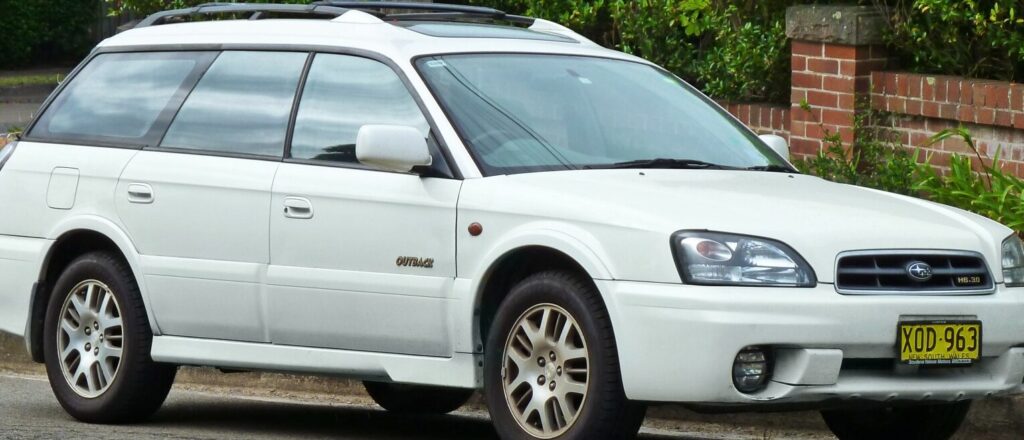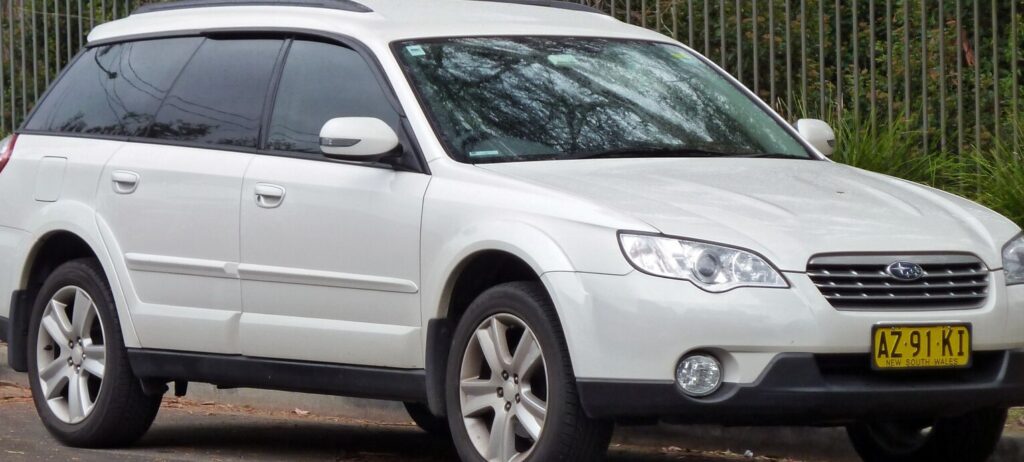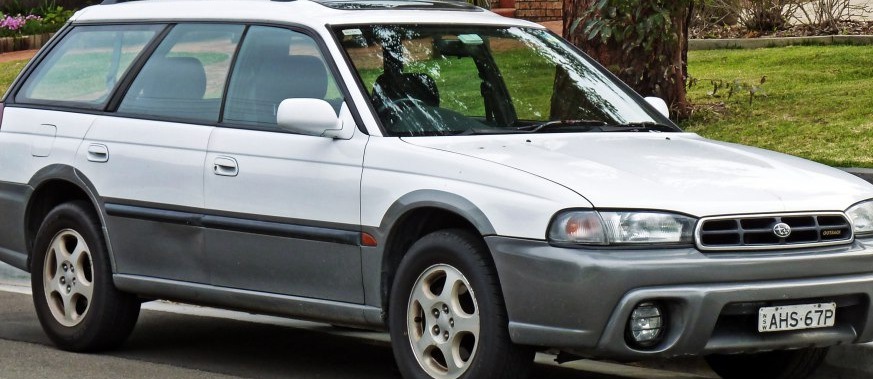
The Subaru Outback I, internally designated as the BD, BG, and BK series, represented Subaru’s foray into the burgeoning sport utility wagon market in 1994. Building upon the Legacy wagon platform, the Outback aimed to offer the practicality of an SUV with the handling and fuel efficiency of a passenger car. The 2.2i 4WD Automatic variant, produced from 1994 to 1999, served as a key entry point into the Outback lineup, offering a balance of affordability, capability, and comfort. It was positioned as a more accessible option compared to the later, more powerful 2.5-liter models, targeting buyers seeking all-weather capability and cargo space without a significant price premium.
Technical Specifications
| Brand | Subaru |
| Model | Outback |
| Generation | Outback I (BD, BG, BK) |
| Type | 2.2i 4WD (135 Hp) Automatic |
| Start of production | 1994 |
| End of production | 1999 |
| Powertrain Architecture | Internal Combustion engine |
| Body type | Station wagon (estate) |
| Seats | 5 |
| Doors | 5 |
| Fuel Type | Petrol (Gasoline) |
| Power | 135 Hp @ 5400 rpm |
| Power per litre | 61 Hp/l |
| Torque | 190 Nm @ 4400 rpm / 140.14 lb.-ft. @ 4400 rpm |
| Engine layout | Front, Longitudinal |
| Engine Model/Code | EJ22E |
| Engine displacement | 2212 cm3 / 134.98 cu. in. |
| Number of cylinders | 4 |
| Engine configuration | Boxer |
| Cylinder Bore | 96.9 mm / 3.81 in. |
| Piston Stroke | 75 mm / 2.95 in. |
| Compression ratio | 9.5:1 |
| Number of valves per cylinder | 4 |
| Fuel injection system | Multi-port manifold injection |
| Engine aspiration | Naturally aspirated engine |
| Valvetrain | OHC |
| Engine oil capacity | 4 l / 4.23 US qt | 3.52 UK qt |
| Coolant | 5.8 l / 6.13 US qt | 5.1 UK qt |
| Fuel tank capacity | 60 l / 15.85 US gal | 13.2 UK gal |
| Length | 4719 mm / 185.79 in. |
| Width | 1715 mm / 67.52 in. |
| Height | 1600 mm / 62.99 in. |
| Wheelbase | 2629 mm / 103.5 in. |
| Drive wheel | All wheel drive (4×4) |
| Number of gears and type of gearbox | 4 gears, automatic transmission |
Powertrain & Engine Architecture
The heart of the 2.2i Outback was the EJ22E 2.2-liter horizontally-opposed (boxer) four-cylinder engine. This engine was a staple of Subaru’s lineup during the 1990s, known for its relatively smooth operation and compact design. The EJ22E featured a single overhead camshaft (OHC) design, operating four valves per cylinder. Fuel delivery was handled by a multi-port fuel injection system, providing precise fuel metering for improved efficiency and emissions. The engine’s boxer configuration, with pistons moving horizontally opposed to each other, contributed to a lower center of gravity, enhancing handling characteristics. Paired with this engine was a four-speed automatic transmission, designed to provide smooth and convenient shifting. This transmission was not known for its sportiness, prioritizing comfort and ease of use over aggressive downshifts.
Driving Characteristics
The 2.2i Automatic Outback offered adequate, but not exhilarating, performance. With 135 horsepower and 190 Nm (140 lb-ft) of torque, acceleration was sufficient for everyday driving, but passing maneuvers required planning. The automatic transmission, while smooth, had relatively wide gear ratios, which could sometimes feel sluggish. Compared to the five-speed manual transmission available on other Outback models, the automatic version sacrificed some responsiveness. The all-wheel-drive system, a hallmark of Subaru, provided excellent traction in various weather conditions, making the 2.2i a capable vehicle for those living in areas with snow or rain. The power delivery was linear, with peak torque arriving at 4400 rpm, making it a reasonably flexible engine for daily commutes and light off-road excursions.
Equipment & Trim Levels
The 2.2i 4WD Automatic Outback typically came standard with features such as air conditioning, power windows and locks, and an AM/FM stereo. Interior upholstery was generally cloth, with a durable and practical design. Optional extras included a sunroof, upgraded audio systems, and alloy wheels. The dashboard layout was functional and straightforward, prioritizing ease of use over stylistic flair. Higher trim levels, though not commonly associated with the base 2.2i, could add features like leather upholstery and woodgrain interior trim. The focus of this trim level was on providing a well-equipped, comfortable, and capable vehicle at a competitive price point.
Chassis & Braking
The Outback I utilized a MacPherson strut front suspension and a double-wishbone rear suspension, providing a comfortable ride and predictable handling. The suspension was tuned for a balance between on-road comfort and off-road capability. Braking on the 2.2i typically consisted of ventilated disc brakes in the front and drum brakes in the rear. Anti-lock brakes (ABS) were often available as an option, enhancing safety in slippery conditions. Stabilizer bars were included both front and rear to reduce body roll during cornering. The chassis was reinforced compared to the standard Legacy wagon to accommodate the Outback’s increased ride height and all-terrain tires.
Market Reception & Comparison
The Subaru Outback I 2.2i 4WD Automatic was generally well-received by automotive critics as a practical and versatile vehicle. It was praised for its all-wheel-drive system, spacious interior, and comfortable ride. However, the engine’s performance was often criticized as being somewhat underpowered, particularly when compared to larger SUVs. Fuel economy was respectable for its class, averaging around 20-24 mpg in combined driving. Compared to the more powerful 2.5-liter Outback models, the 2.2i offered a lower price of entry, making it an attractive option for budget-conscious buyers. The 2.2i also proved to be more fuel-efficient than the larger, V6-powered SUVs of the era.
Legacy
The EJ22E engine, while not known for being particularly high-performance, proved to be relatively reliable when properly maintained. Common issues included oil leaks and occasional head gasket failures, typical of older Subaru engines. The four-speed automatic transmission, while durable, could exhibit some wear and tear over time. Today, the Outback I 2.2i 4WD Automatic is a relatively affordable and readily available used car. It remains a popular choice for those seeking a reliable and capable all-weather vehicle. Its simple mechanical design makes it relatively easy to maintain and repair, and its enduring popularity has ensured a steady supply of aftermarket parts. The Outback I established Subaru as a major player in the sport utility wagon segment, paving the way for the continued success of the Outback model line.