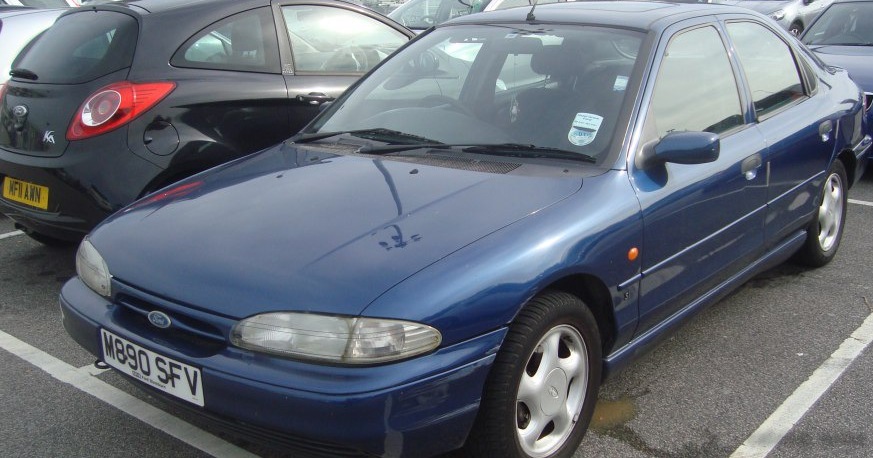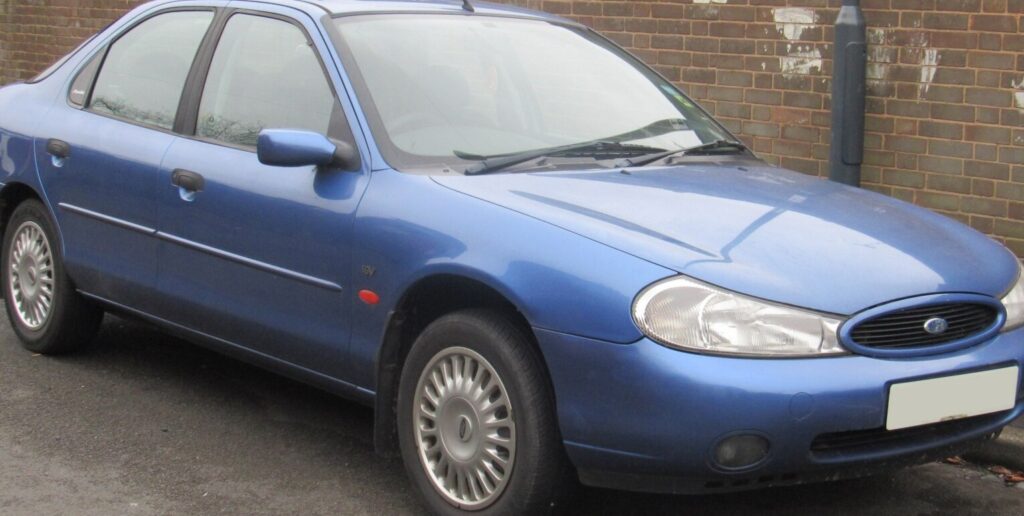
The Ford Mondeo I, particularly the facelifted version introduced in 1996, represented a significant step forward for Ford’s mid-size offerings in Europe. Positioned as a direct competitor to the likes of the Volkswagen Passat and Opel Vectra, the Mondeo aimed to deliver a more modern and sophisticated driving experience. The 1.8i 16V variant, producing 115 horsepower, was a mainstay of the lineup from 1996 through 2001, offering a balance between affordability, reasonable performance, and fuel efficiency. It served as a popular choice for family buyers and company car fleets, representing a middle-ground option within the broader Mondeo range.
Technical Specifications
| Brand | Ford |
| Model | Mondeo |
| Generation | Mondeo I Hatchback (facelift 1996) |
| Type (Engine) | 1.8i 16V (115 Hp) |
| Start of production | 1996 |
| End of production | 2001 |
| Powertrain Architecture | Internal Combustion engine |
| Body type | Hatchback |
| Seats | 5 |
| Doors | 5 |
| Fuel consumption (urban) | 11.2 l/100 km (21 US mpg) |
| Fuel consumption (extra urban) | 5.8 l/100 km (40.6 US mpg) |
| Fuel Type | Petrol (Gasoline) |
| Acceleration 0 – 100 km/h | 11 sec |
| Acceleration 0 – 62 mph | 11 sec |
| Acceleration 0 – 60 mph | 10.5 sec |
| Maximum speed | 195 km/h (121.17 mph) |
| Weight-to-power ratio | 11.3 kg/Hp |
| Weight-to-torque ratio | 8.2 kg/Nm |
| Power | 115 Hp @ 5750 rpm |
| Torque | 160 Nm @ 4500 rpm (118.01 lb.-ft. @ 4500 rpm) |
| Engine layout | Front, Transverse |
| Engine Model/Code | Zetec / RKB, RKF, RKH, RKJ, RKK |
| Engine displacement | 1796 cm3 (109.6 cu. in.) |
| Number of cylinders | 4 |
| Engine configuration | Inline |
| Cylinder Bore | 80.6 mm (3.17 in.) |
| Piston Stroke | 88 mm (3.46 in.) |
| Compression ratio | 9.8:1 |
| Number of valves per cylinder | 4 |
| Fuel injection system | Multi-port manifold injection |
| Engine aspiration | Naturally aspirated engine |
| Valvetrain | DOHC |
| Engine oil capacity | 4.25 l (4.49 US qt | 3.74 UK qt) |
| Coolant capacity | 6.6 l (6.97 US qt | 5.81 UK qt) |
| Kerb Weight | 1305 kg (2877.03 lbs.) |
| Max. weight | 1790 kg (3946.27 lbs.) |
| Max load | 485 kg (1069.24 lbs.) |
| Trunk (boot) space – minimum | 460 l (16.24 cu. ft.) |
| Trunk (boot) space – maximum | 1290 l (45.56 cu. ft.) |
| Fuel tank capacity | 61 l (16.11 US gal | 13.42 UK gal) |
| Length | 4556 mm (179.37 in.) |
| Width | 1751 mm (68.94 in.) |
| Height | 1427 mm (56.18 in.) |
| Wheelbase | 2704 mm (106.46 in.) |
| Front track | 1503 mm (59.17 in.) |
| Rear track | 1487 mm (58.54 in.) |
| Drivetrain Architecture | Front wheel drive |
| Number of gears | 5 |
| Gearbox type | Manual transmission |
| Front suspension | Wishbone |
| Rear suspension | Coil spring |
| Front brakes | Ventilated discs |
| Rear brakes | Disc |
| Assisting systems | ABS (Anti-lock braking system) |
| Steering type | Steering rack and pinion |
| Power steering | Hydraulic Steering |
| Tires size | 185/65 R14 |
Powertrain & Engine Architecture
The 1.8i 16V engine in the Mondeo I facelift utilized the Ford Zetec engine family, specifically the RKB, RKF, RKH, RKJ, or RKK engine codes depending on the specific market and year of production. This engine was a naturally aspirated, inline-four cylinder unit with a displacement of 1796cc. It featured a dual overhead camshaft (DOHC) valvetrain operating four valves per cylinder, contributing to its relatively high power output for its size. Fuel delivery was handled by a multi-port fuel injection system, providing precise fuel metering for improved efficiency and emissions. The engine’s 9.8:1 compression ratio was a compromise between performance and the ability to run on readily available fuel grades. The 1.8L engine was typically paired with a five-speed manual transmission, but a four-speed automatic transmission was also offered, which is the focus of this article. This automatic transmission, while providing convenience, did impact acceleration and fuel economy compared to the manual counterpart.
Driving Characteristics
The 1.8i 16V with the automatic transmission offered a comfortable and relaxed driving experience. Acceleration from 0-60 mph took around 10.5 to 11 seconds, which was adequate for everyday driving but noticeably slower than the manual version or the higher-output 2.0L models. The automatic transmission’s gear ratios were tuned for fuel efficiency and smooth operation, rather than outright performance. Power delivery was linear, with a usable amount of torque available from mid-range revs. While not a sporty setup, the combination was perfectly suited for commuting and long-distance cruising. The automatic transmission did tend to ‘hunt’ for gears on undulating roads, a common characteristic of older four-speed automatics.
Equipment & Trim Levels
The 1.8i 16V automatic typically fell into the mid-range of the Mondeo lineup. Standard equipment generally included central locking, power steering, electric front windows, and an AM/FM radio. Higher trim levels, such as the Ghia, added features like alloy wheels, air conditioning, upgraded upholstery, and a sunroof. Interior upholstery was typically cloth, with options for more premium materials on higher-spec models. The dashboard layout was functional and straightforward, prioritizing usability over flashy design. Optional extras included a CD player, rear electric windows, and upgraded sound systems.
Chassis & Braking
The Mondeo I utilized a front-wheel-drive layout with independent wishbone suspension at the front and a coil spring rear suspension. This setup provided a good balance between ride comfort and handling. The 1.8i models typically featured ventilated disc brakes at the front and solid discs at the rear, providing adequate stopping power for the vehicle’s weight and performance. Anti-lock Braking System (ABS) was standard equipment, enhancing safety. Stabilizer bars were fitted to both the front and rear axles to reduce body roll during cornering.
Market Reception & Comparison
The 1.8i 16V automatic Mondeo was generally well-received by automotive critics as a practical and well-rounded family car. It was praised for its comfortable ride, spacious interior, and reasonable fuel economy. However, the automatic transmission was often criticized for its lack of responsiveness compared to the manual gearbox. Compared to the more powerful 2.0L models, the 1.8i offered a more affordable entry point into the Mondeo range, but at the expense of performance. Against competitors like the Volkswagen Passat and Opel Vectra, the Mondeo offered a compelling package with a focus on driving dynamics and modern styling.
Legacy
The Ford Mondeo I 1.8i 16V automatic has proven to be a relatively reliable powertrain combination. The Zetec engine is known for its durability, and the automatic transmission, while not the most sophisticated, is generally robust if properly maintained. Today, these cars are increasingly sought after by classic car enthusiasts and collectors. Parts availability is generally good, although some trim-specific components may be harder to find. Well-maintained examples command reasonable prices in the used car market, representing a good value for those seeking a comfortable and reliable classic family car.