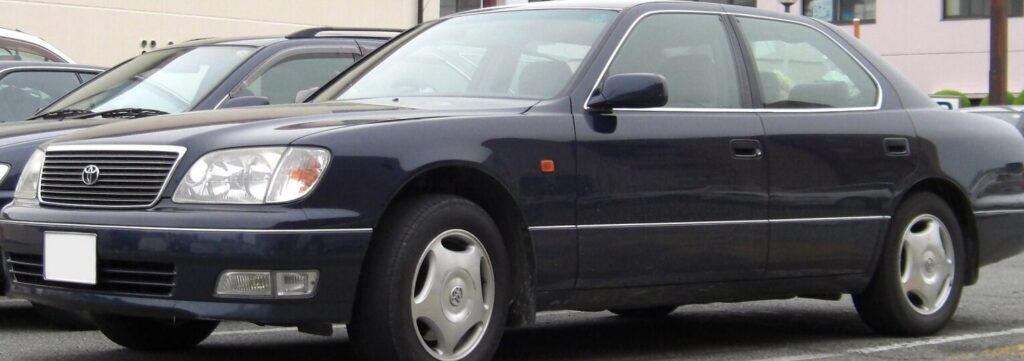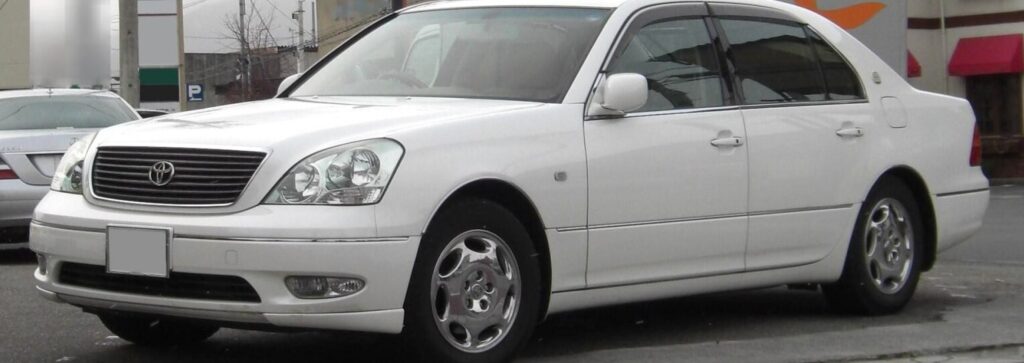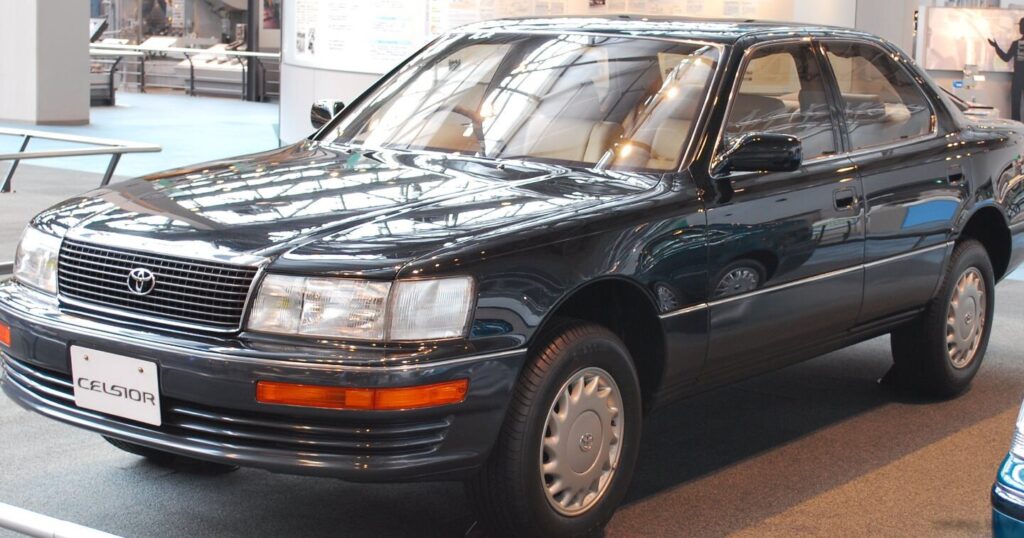
The Toyota Celsior, launched in 1989, represented Toyota’s entry into the full-size luxury sedan market, primarily aimed at domestic Japanese consumption. The first generation, known internally as UCF10, was produced from 1989 to 1994. Positioned above the Crown and Cresta in Toyota’s hierarchy, the Celsior was designed to compete with established luxury brands and offered a blend of opulent comfort, advanced technology, and a powerful, smooth-running V8 engine. This particular variant, the 4.0-liter V8 producing 260 horsepower, was the flagship offering for the initial Celsior lineup, representing the pinnacle of performance and luxury available in the model.
Technical Specifications
| Brand | Toyota |
| Model | Celsior |
| Generation | Celsior I |
| Type (Engine) | 4.0 V8 (260 Hp) |
| Start of production | 1989 |
| End of production | 1994 |
| Powertrain Architecture | Internal Combustion engine |
| Body type | Sedan |
| Seats | 5 |
| Doors | 4 |
| Fuel Type | Petrol (Gasoline) |
| Weight-to-power ratio | 6.5 kg/Hp, 153.8 Hp/tonne |
| Weight-to-torque ratio | 4.8 kg/Nm, 208.9 Nm/tonne |
| Power | 260 Hp @ 5400 rpm |
| Power per litre | 65.5 Hp/l |
| Torque | 353 Nm @ 4600 rpm, 260.36 lb.-ft. @ 4600 rpm |
| Engine layout | Front, Longitudinal |
| Engine Model/Code | 1UZ-FE |
| Engine displacement | 3968 cm3, 242.14 cu. in. |
| Number of cylinders | 8 |
| Engine configuration | V-engine |
| Cylinder Bore | 87.5 mm, 3.44 in. |
| Piston Stroke | 82.5 mm, 3.25 in. |
| Compression ratio | 10:1 |
| Number of valves per cylinder | 4 |
| Fuel injection system | Multi-port manifold injection |
| Engine aspiration | Naturally aspirated engine |
| Valvetrain | DOHC |
| Engine oil capacity | 4.8 l, 5.07 US qt | 4.22 UK qt |
| Kerb Weight | 1690 kg, 3725.81 lbs |
| Fuel tank capacity | 85 l, 22.45 US gal | 18.7 UK gal |
| Length | 4995 mm, 196.65 in |
| Width | 1820 mm, 71.65 in |
| Height | 1425 mm, 56.1 in |
| Wheelbase | 2815 mm, 110.83 in |
| Minimum turning circle | 11 m, 36.09 ft |
| Drivetrain Architecture | The Internal combustion engine (ICE) drives the rear wheels of the vehicle. |
| Drive wheel | Rear wheel drive |
| Number of gears and type of gearbox | 4 gears, automatic transmission |
| Front suspension | Coil spring |
| Rear suspension | Double wishbone |
| Front brakes | Ventilated discs |
| Rear brakes | Ventilated discs |
| Tires size | 215/65R 15 96H |
| Wheel rims size | 6.5JJ x 15 |
Powertrain & Engine Architecture
The heart of the Celsior 4.0 was the 1UZ-FE engine, a 3.968-liter (242.14 cubic inches) naturally aspirated V8. This engine was a landmark achievement for Toyota, being one of the first mass-produced DOHC (Double Overhead Camshaft) V8 engines. It featured a 60-degree V-angle, four valves per cylinder, and multi-port fuel injection. The 1UZ-FE was renowned for its smoothness and quiet operation, characteristics highly valued in the luxury segment. The engine produced 260 horsepower at 5400 rpm and 353 Nm (260.36 lb-ft) of torque at 4600 rpm. Paired with the 1UZ-FE was a four-speed automatic transmission, designed for seamless gear changes and a comfortable driving experience. This transmission was electronically controlled, further enhancing its responsiveness and refinement.
Driving Characteristics
The Celsior 4.0 offered a distinctly grand touring experience. While not a sports sedan, the V8 engine provided ample power for effortless cruising and confident overtaking. The automatic transmission, while not offering manual control, was tuned for smooth shifts and optimized for relaxed driving. The gear ratios were geared towards maximizing comfort and fuel efficiency at highway speeds. Compared to potential future variants with smaller engines or manual transmissions, the 4.0 V8 offered a significant performance advantage, but at the cost of increased fuel consumption. The rear-wheel-drive configuration contributed to a balanced feel, although it wasn’t particularly engaging for enthusiastic drivers.
Equipment & Trim Levels
The Celsior 4.0 was generously equipped, reflecting its luxury positioning. Standard features included power-adjustable seats, leather upholstery, woodgrain interior trim, a high-quality sound system, and climate control. Power windows, power locks, and power mirrors were also standard. Optional extras included a navigation system (a relatively new technology at the time), a premium sound system with a CD changer, and upgraded leather options. The interior design emphasized spaciousness and comfort, with a focus on high-quality materials and meticulous craftsmanship.
Chassis & Braking
The Celsior’s chassis was designed for ride comfort and stability. It utilized a coil spring independent suspension at the front and a double wishbone independent suspension at the rear. This setup provided a smooth and controlled ride, even on uneven surfaces. Braking duties were handled by ventilated disc brakes on all four wheels, providing ample stopping power. The steering was power-assisted, offering light and precise control. The suspension was tuned to prioritize comfort over sporty handling, resulting in a more relaxed driving experience.
Market Reception & Comparison
The Toyota Celsior was exceptionally well-received in Japan, quickly becoming a status symbol and a popular choice among executives and affluent buyers. Critics praised its luxurious interior, smooth ride, and powerful engine. Compared to other luxury sedans available in Japan at the time, such as the Nissan President and the Mitsubishi Proudia, the Celsior offered a more modern design and a more refined driving experience. Fuel economy, while not a primary concern for Celsior buyers, was reasonable for a V8-powered vehicle. Reliability was also a strong point, as expected from a Toyota product.
Legacy
The 1UZ-FE engine, found in the Celsior 4.0, gained a reputation for exceptional durability and longevity. Many examples of this engine have surpassed 300,000 kilometers (186,000 miles) with minimal maintenance. The Celsior itself remains a sought-after classic car in Japan, and increasingly, in other markets as well. The combination of luxury, performance, and reliability has ensured its enduring appeal. In the used car market, the 4.0 V8 variant commands a premium over lower-powered versions, reflecting its status as the original and most desirable Celsior model. The UCF10 Celsior laid the foundation for future generations of Toyota’s flagship luxury sedan, the Lexus LS, and continues to be celebrated as a landmark achievement in Japanese automotive engineering.