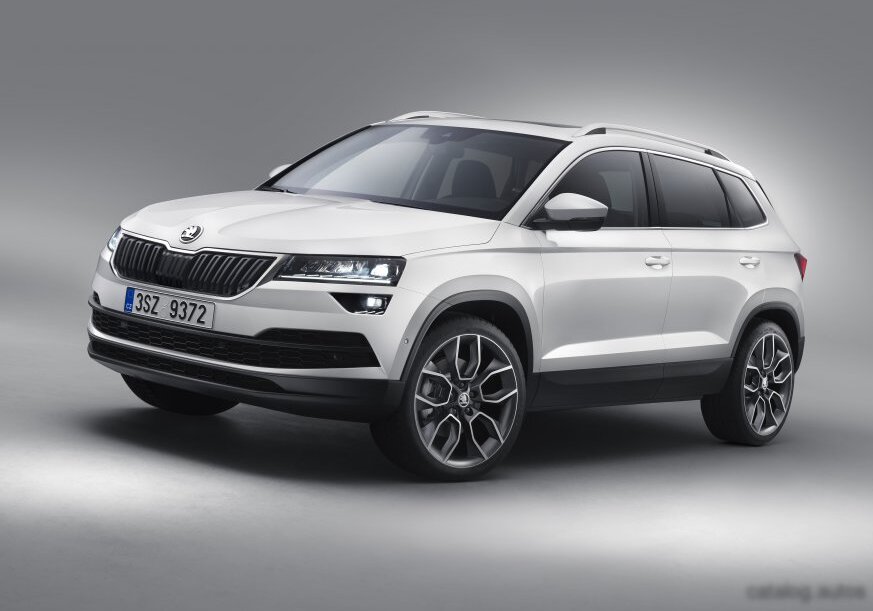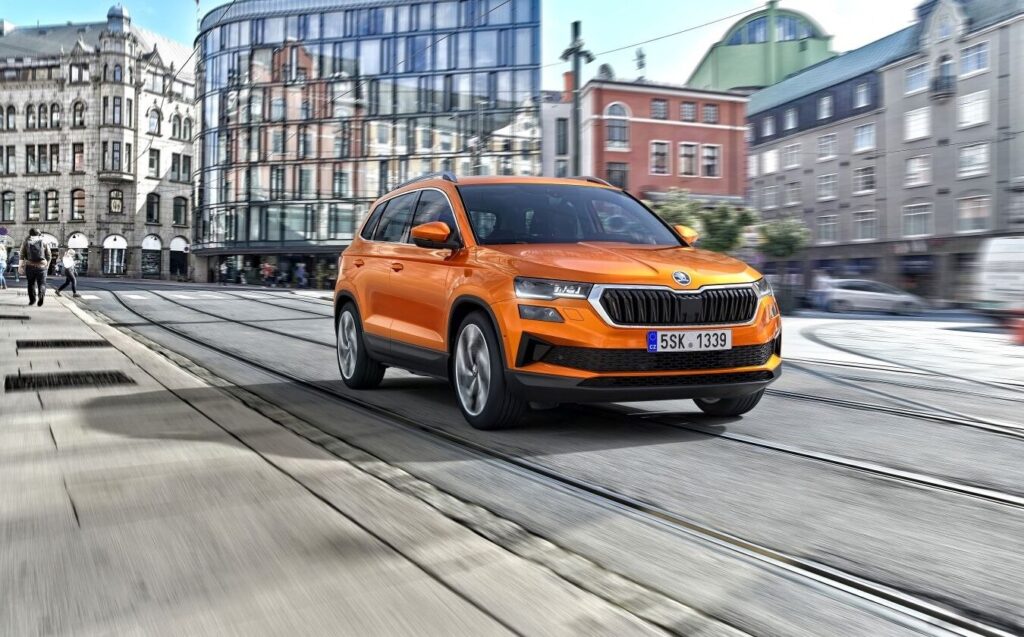
The Skoda Karoq, specifically the facelifted version introduced in November 2021 with the 1.5 TSI 150 horsepower engine, represents a significant iteration of Skoda’s compact SUV offering. Positioned as a mid-range option within the Karoq lineup, this variant aimed to balance fuel efficiency, performance, and practicality for family buyers. The Karoq itself falls within the Volkswagen Group’s broader strategy for the compact SUV segment, sharing its MQB platform with models like the Volkswagen T-Roc and SEAT Ateca. This particular engine and trim level was designed to appeal to customers seeking a refined driving experience without the higher costs associated with more powerful engine options or premium trim levels.
Technical Specifications
| Brand | Skoda |
| Model | Karoq |
| Generation | Karoq (facelift 2021) |
| Type (Engine) | 1.5 TSI (150 Hp) |
| Start of production | November, 2021 |
| Powertrain Architecture | Internal Combustion engine |
| Body type | SUV |
| Seats | 5 |
| Doors | 5 |
| Fuel consumption at Low speed (WLTP) | 6.1 l/100 km (38.6 US mpg, 46.3 UK mpg, 16.4 km/l) |
| Fuel consumption at Medium speed (WLTP) | 6.1 l/100 km (38.6 US mpg, 46.3 UK mpg, 16.4 km/l) |
| Fuel consumption at high speed (WLTP) | 6.1 l/100 km (38.6 US mpg, 46.3 UK mpg, 16.4 km/l) |
| Fuel consumption at very high speed (WLTP) | 6.1 l/100 km (38.6 US mpg, 46.3 UK mpg, 16.4 km/l) |
| Combined fuel consumption (WLTP) | 6.1 l/100 km (38.6 US mpg, 46.3 UK mpg, 16.4 km/l) |
| CO2 emissions (WLTP) | 138 g/km |
| Fuel consumption (economy) – urban | 6.6 l/100 km (35.6 US mpg, 42.8 UK mpg, 15.2 km/l) |
| Fuel consumption (economy) – extra urban | 4.5 l/100 km (52.3 US mpg, 62.8 UK mpg, 22.2 km/l) |
| Fuel consumption (economy) – combined | 5.3 l/100 km (44.4 US mpg, 53.3 UK mpg, 18.9 km/l) |
| CO2 emissions | 122 g/km |
| Fuel Type | Petrol (Gasoline) |
| Acceleration 0 – 100 km/h | 8.9 sec |
| Acceleration 0 – 62 mph | 8.9 sec |
| Acceleration 0 – 60 mph | 8.5 sec |
| Maximum speed | 211 km/h (131.11 mph) |
| Emission standard | Euro 6d |
| Weight-to-power ratio | 8.9 kg/Hp, 112.3 Hp/tonne |
| Weight-to-torque ratio | 5.3 kg/Nm, 187.1 Nm/tonne |
| Power | 150 Hp |
| Power per litre | 100.1 Hp/l |
| Torque | 250 Nm @ 1500-3500 rpm (184.39 lb.-ft. @ 1500-3500 rpm) |
| Engine layout | Front, Transverse |
| Engine Model/Code | EA211 evo / DPCA |
| Engine displacement | 1498 cm3 (91.41 cu. in.) |
| Number of cylinders | 4 |
| Engine configuration | Inline |
| Cylinder Bore | 74.5 mm (2.93 in.) |
| Piston Stroke | 86 mm (3.39 in.) |
| Number of valves per cylinder | 4 |
| Fuel injection system | Direct injection |
| Engine aspiration | Turbocharger, Intercooler |
| Engine oil capacity | 4.3 l (4.54 US qt | 3.78 UK qt) |
| Kerb Weight | 1336-1542 kg (2945.38 – 3399.53 lbs.) |
| Max. weight | 1920 kg (4232.88 lbs.) |
| Max load | 378-584 kg (833.35 – 1287.5 lbs.) |
| Trunk (boot) space – minimum | 521 l (18.4 cu. ft.) |
| Trunk (boot) space – maximum | 1630 l (57.56 cu. ft.) |
| Fuel tank capacity | 50 l (13.21 US gal | 11 UK gal) |
| Max. roof load | 75 kg (165.35 lbs.) |
| Permitted trailer load with brakes (12%) | 1500 kg (3306.93 lbs.) |
| Permitted trailer load without brakes | 700 kg (1543.24 lbs.) |
| Permitted towbar download | 90 kg (198.42 lbs.) |
| Length | 4384 mm (172.6 in.) |
| Width | 1841 mm (72.48 in.) |
| Height | 1629 mm (64.13 in.) |
| Wheelbase | 2625 mm (103.35 in.) |
| Front track | 1576 mm (62.05 in.) |
| Rear (Back) track | 1541 mm (60.67 in.) |
| Minimum turning circle (turning diameter) | 10.9 m (35.76 ft.) |
| Drivetrain Architecture | The Internal combustion engine (ICE) drives the front wheels of the vehicle. |
| Drive wheel | Front wheel drive |
| Number of gears and type of gearbox | 6 gears, manual transmission |
| Front brakes | Ventilated discs |
| Rear brakes | Disc |
| Assisting systems | ABS (Anti-lock braking system) |
| Steering type | Steering rack and pinion |
| Power steering | Electric Steering |
| Tires size | 215/55 R17 94V |
| Wheel rims size | 7J x 17 |
Powertrain & Engine Architecture
At the heart of this Karoq variant lies the EA211 evo series 1.5-liter turbocharged four-cylinder gasoline engine, internally designated DPCA. This engine is a key component of the Volkswagen Group’s modular engine family, known for its efficiency and relatively compact size. The engine utilizes direct fuel injection, delivering fuel directly into the combustion chamber for improved combustion efficiency and reduced emissions. It also features an exhaust gas recirculation (EGR) system and a particulate filter to further minimize harmful emissions, meeting the stringent Euro 6d emission standards. The engine’s turbocharger, coupled with an intercooler, provides a boost in power and torque, enhancing responsiveness. The 1.5 TSI engine produces 150 horsepower and 250 Nm (184 lb-ft) of torque between 1500 and 3500 rpm. This engine is paired with a 6-speed manual transmission, sending power to the front wheels.
Driving Characteristics
The 1.5 TSI engine in the Karoq provides a respectable level of performance for everyday driving. Acceleration from 0 to 60 mph takes approximately 8.5 seconds, and the vehicle has a top speed of 131 mph. While not a particularly sporty setup, the engine delivers adequate power for overtaking and merging onto highways. The manual transmission offers precise shifts, and the gear ratios are well-matched to the engine’s torque curve. Compared to higher-output versions of the Karoq, such as those with the 2.0 TSI engine, this variant feels less urgent in its acceleration. However, it offers a more fuel-efficient and relaxed driving experience. The suspension is tuned for comfort, providing a smooth ride over most road surfaces.
Equipment & Trim Levels
The 1.5 TSI Karoq typically came equipped with a solid range of standard features. These included air conditioning, a touchscreen infotainment system with Apple CarPlay and Android Auto compatibility, alloy wheels, and a suite of safety features such as ABS, electronic stability control, and multiple airbags. Higher trim levels offered additional features like automatic climate control, parking sensors, a rearview camera, and upgraded upholstery. Optional extras included a panoramic sunroof, adaptive cruise control, and a premium sound system. Interior upholstery was typically cloth, with leather options available on higher trims.
Chassis & Braking
The Karoq’s chassis is based on the Volkswagen Group’s MQB platform, providing a stable and well-balanced driving experience. The front suspension utilizes MacPherson struts, while the rear suspension employs a multi-link setup. This configuration provides a good balance between ride comfort and handling. Braking duties are handled by ventilated discs at the front and solid discs at the rear. The braking system is assisted by ABS and electronic stability control, ensuring safe and controlled stopping power.
Market Reception & Comparison
The Skoda Karoq 1.5 TSI received generally positive reviews from automotive critics. It was praised for its spacious interior, comfortable ride, and fuel efficiency. The 1.5 TSI engine was considered a good compromise between performance and economy. Compared to other trims in the Karoq lineup, this variant offered a more affordable entry point while still providing a refined driving experience. Its fuel economy figures were competitive with other compact SUVs in its class. However, some critics noted that the engine could feel slightly underpowered when fully loaded or driving uphill.
Legacy
The 1.5 TSI engine has proven to be a reliable and durable powertrain in the Karoq. While some early versions of the EA211 evo engine experienced issues with particulate filter clogging, these were largely addressed through software updates. Today, the Karoq 1.5 TSI remains a popular choice in the used car market, offering a good balance of practicality, fuel efficiency, and affordability. Its relatively simple engine design and readily available parts contribute to its long-term reliability and ease of maintenance.