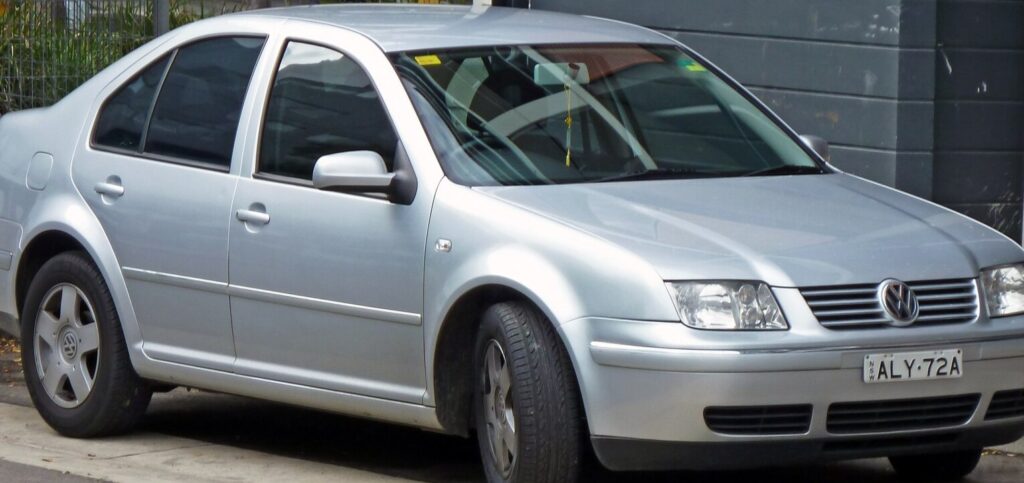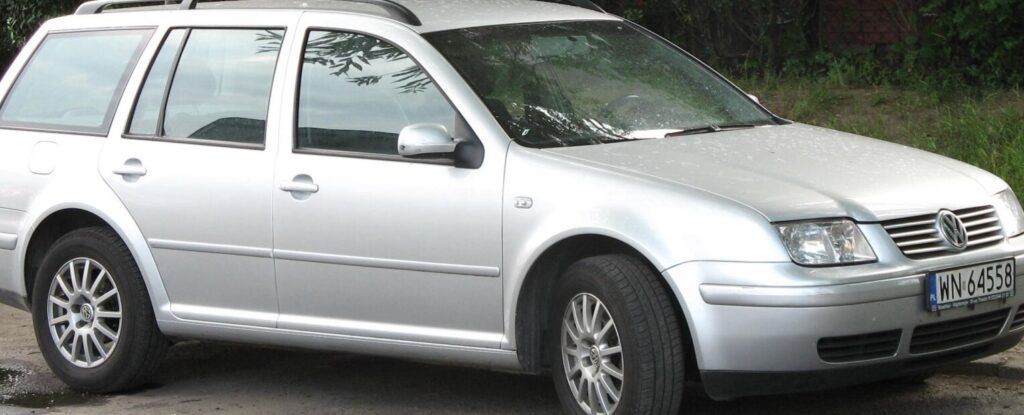
The Volkswagen Bora Variant 2.3 VR5 (150 hp) represents a unique offering within the Bora (Jetta in North America) lineup produced between 1998 and 2005. Positioned as a mid-range trim level, particularly in European markets, this variant combined the practicality of a station wagon (estate) body style with Volkswagen’s distinctive VR5 engine. The Bora Variant, built on the Volkswagen Group’s A4 (1J) platform – also known as the 1HX0 for the wagon – aimed to provide a more versatile alternative to the standard sedan, appealing to families and those requiring increased cargo capacity. This model year saw the introduction of several refinements to the original Mk4 Golf/Jetta platform, enhancing both comfort and driving dynamics.
Technical Specifications
| Brand | Volkswagen |
| Model | Bora |
| Generation | Bora Variant (1J6) |
| Type (Engine) | 2.3 VR5 (150 Hp) |
| Start of production | 1998 |
| End of production | 2005 |
| Powertrain Architecture | Internal Combustion engine |
| Body type | Station wagon (estate) |
| Seats | 5 |
| Doors | 5 |
| Fuel consumption (economy) – urban | 13 l/100 km (18.1 US mpg, 21.7 UK mpg, 7.7 km/l) |
| Fuel consumption (economy) – extra urban | 7 l/100 km (33.6 US mpg, 40.4 UK mpg, 14.3 km/l) |
| Fuel consumption (economy) – combined | 9 l/100 km (26.1 US mpg, 31.4 UK mpg, 11.1 km/l) |
| Fuel Type | Petrol (Gasoline) |
| Acceleration 0 – 100 km/h | 9 sec |
| Acceleration 0 – 62 mph | 9 sec |
| Acceleration 0 – 60 mph | 8.6 sec |
| Maximum speed | 216 km/h (134.22 mph) |
| Weight-to-power ratio | 9.1 kg/Hp, 110.3 Hp/tonne |
| Weight-to-torque ratio | 6.6 kg/Nm, 150.7 Nm/tonne |
| Power | 150 Hp @ 6000 rpm |
| Power per litre | 64.5 Hp/l |
| Torque | 205 Nm @ 3200 rpm (151.2 lb.-ft. @ 3200 rpm) |
| Engine layout | Front, Transverse |
| Engine Model/Code | AGZ |
| Engine displacement | 2324 cm3 (141.82 cu. in.) |
| Number of cylinders | 5 |
| Engine configuration | V-engine |
| Cylinder Bore | 81 mm (3.19 in.) |
| Piston Stroke | 90.2 mm (3.55 in.) |
| Compression ratio | 10:1 |
| Number of valves per cylinder | 2 |
| Fuel injection system | Multi-port manifold injection |
| Engine aspiration | Naturally aspirated engine |
| Valvetrain | OHC |
| Engine oil capacity | 3.9 l (4.12 US qt | 3.43 UK qt) |
| Coolant | 9 l (9.51 US qt | 7.92 UK qt) |
| Kerb Weight | 1360 kg (2998.29 lbs.) |
| Max. weight | 1855 kg (4089.57 lbs.) |
| Max load | 495 kg (1091.29 lbs.) |
| Trunk (boot) space – minimum | 460 l (16.24 cu. ft.) |
| Trunk (boot) space – maximum | 1470 l (51.91 cu. ft.) |
| Fuel tank capacity | 55 l (14.53 US gal | 12.1 UK gal) |
| Length | 4409 mm (173.58 in.) |
| Width | 1735 mm (68.31 in.) |
| Height | 1485 mm (58.46 in.) |
| Wheelbase | 2515 mm (99.02 in.) |
| Front track | 1513 mm (59.57 in.) |
| Rear (Back) track | 1494 mm (58.82 in.) |
| Drivetrain Architecture | The Internal combustion engine (ICE) drives the front wheels of the vehicle. |
| Drive wheel | Front wheel drive |
| Number of gears and type of gearbox | 5 gears, manual transmission |
| Front suspension | Independent, type McPherson with coil spring and anti-roll bar |
| Rear suspension | Semi-independent, coil spring |
| Front brakes | Ventilated discs |
| Rear brakes | Disc |
| Assisting systems | ABS (Anti-lock braking system) |
| Steering type | Steering rack and pinion |
| Power steering | Hydraulic Steering |
| Tires size | 205/55 R16 |
| Wheel rims size | 6.5J x 16 |
Powertrain & Engine Architecture
The heart of the Bora Variant 2.3 VR5 is the AGZ engine code, a 2.3-liter naturally aspirated V5 engine. This engine is notable for its narrow-angle V configuration (15 degrees between cylinder banks), which allows it to be relatively compact while offering a smoother power delivery than an inline-five. The AGZ utilizes multi-port fuel injection and a single overhead camshaft (OHC) per cylinder bank. This configuration, while not the most technologically advanced, proved reliable and relatively easy to maintain. The engine produces 150 horsepower at 6000 rpm and 205 Nm (151.2 lb-ft) of torque at 3200 rpm. The standard transmission for this variant was a 5-speed manual, though a 4-speed automatic transmission was also available, impacting acceleration and fuel economy. The automatic transmission, while offering convenience, was known to slightly diminish performance and increase fuel consumption compared to the manual counterpart.
Driving Characteristics
The 150 hp VR5 engine in the Bora Variant provided adequate, though not exhilarating, performance. Acceleration from 0-60 mph took approximately 8.6 seconds, and top speed was around 134 mph. The engine’s torque curve was relatively flat, providing usable power across a wide range of engine speeds. The automatic transmission, while smooth, featured relatively long gear ratios, prioritizing fuel efficiency over outright acceleration. Compared to the more powerful VR6 variants, the VR5 automatic felt noticeably slower, particularly during overtaking maneuvers. However, it offered a more refined and comfortable driving experience than the base 1.6 or 1.8-liter four-cylinder models. The wagon’s increased weight, compared to the sedan, also contributed to a slightly less agile feel.
Equipment & Trim Levels
The Bora Variant 2.3 VR5 typically came equipped with a reasonable level of standard features. Interior appointments included cloth upholstery, air conditioning, power windows and locks, and a basic audio system. Optional extras included alloy wheels, a sunroof, upgraded audio systems, and leather upholstery. Safety features such as ABS and dual front airbags were standard. The VR5 trim generally sat above the base models in terms of equipment, offering a more premium feel without reaching the luxury levels of the VR6.
Chassis & Braking
The Bora Variant’s chassis featured an independent McPherson strut front suspension and a semi-independent coil spring rear suspension. The front suspension incorporated an anti-roll bar to reduce body roll during cornering. Braking duties were handled by ventilated discs at the front and solid discs at the rear. The braking system, coupled with ABS, provided adequate stopping power for everyday driving. The suspension tuning was geared towards comfort, providing a relatively smooth ride, although it wasn’t as sporty as some of its competitors.
Market Reception & Comparison
The Bora Variant 2.3 VR5 was generally well-received by automotive critics as a practical and comfortable family car. The VR5 engine was praised for its smoothness and refinement, although some reviewers noted its lack of outright performance compared to the VR6. Fuel economy was considered average for its class. Compared to the 1.8T models, the VR5 offered a different character – less about outright speed and more about relaxed cruising and everyday usability. The 1.9 TDI diesel variants were favored by those prioritizing fuel efficiency, while the VR6 appealed to drivers seeking more performance.
Legacy
The Volkswagen Bora Variant 2.3 VR5 has proven to be a relatively reliable vehicle, with the AGZ engine known for its durability. However, like all older vehicles, it requires regular maintenance to prevent issues. Common problems include oil leaks, sensor failures, and wear and tear on suspension components. In the used car market, the Bora Variant 2.3 VR5 represents a good value proposition for those seeking a practical and comfortable station wagon with a unique engine. Its relative rarity compared to other Bora models has also contributed to a growing enthusiast following, ensuring its continued presence on roads for years to come.